Support

Noorvik

About

Welcome to Noorvik, a unique and remote community located in the Northwest Arctic Borough of Alaska. This fascinating village offers travelers a rare glimpse into the authentic lifestyle of the Inupiat people, set against the backdrop of the breathtaking Arctic wilderness. Situated within the vast landscapes of the United States, Noorvik is known for its strong cultural heritage and the serene beauty of its natural surroundings.

Geographically, Noorvik is positioned on the right bank of the Nazuruk Channel of the Kobuk River, approximately 45 miles east of Kotzebue. The village lies north of the Arctic Circle, which defines its subarctic climate characterized by long, cold winters and short, cool summers. With a population of around 700 residents, it is a tight-knit community where subsistence living—hunting, fishing, and gathering—remains a vital part of daily life and local economy.
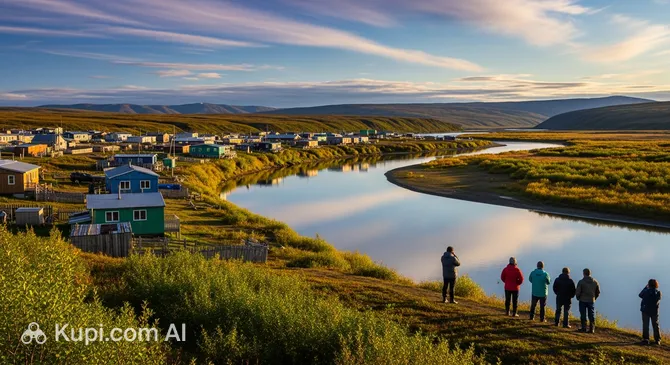
Noorvik. Source: Kupi.Binoculars

The name "Noorvik" translates from Inupiaq as "a place that is moved to," reflecting its origins when settlers relocated here from Deering in the early 20th century due to better access to timber and game. Visitors interested in the roots of this settlement will find that the history of Noorvik is deeply intertwined with the resilience and adaptability of Alaska Native cultures. The village serves as a testament to thriving in one of the planet's most challenging environments.

For those venturing to this part of the world, the Kobuk River is a central attraction, offering opportunities for boating and observing local wildlife. The surrounding region is rich in biodiversity, including caribou, moose, and various fish species, making it a significant area for nature enthusiasts. Additionally, the proximity to the Kobuk Valley National Park allows adventurous travelers to explore unique geological features, such as the Great Kobuk Sand Dunes, which are an unexpected sight in the Arctic.

If you are looking for an off-the-beaten-path destination that offers quiet solitude and a deep connection to nature, Noorvik is a remarkable place to visit. Whether you are there to witness the dancing Northern Lights in winter or the Midnight Sun in summer, this Alaskan village promises an unforgettable experience.

Weather Overview

The climate in Noorvik is distinctly subarctic, characterized by long, frigid winters and short, mild summers. January is typically the coldest month, with average temperatures dropping to -21.0°C and minimums reaching as low as -23.7°C. In contrast, the warmer season peaks in July, where the average temperature rises to 14.2°C, offering a brief but pleasant window for outdoor activities.

While the overall precipitation volume is quite low, rarely exceeding 3mm in any given month, the frequency of wet days increases significantly during the summer. August, for instance, can see up to 14 wet days, despite the low total accumulation. Travelers should expect cool summers with frequent light rain and extremely cold, relatively dry winters. To help plan your trip with the most accurate conditions, be sure to check the latest weather in Noorvik before you travel.

Interesting Facts

Beyond its scenic river views and deep cultural roots, Noorvik holds several unique distinctions that set it apart from other Alaskan communities. This remote village is not just a quiet settlement but a place with modern historical significance and specific local customs that visitors should know.

  • First in the Census: Noorvik gained national attention in 2010 when it was selected as the starting point for the decennial U.S. Census. To emphasize the importance of counting every resident, even in the most remote areas, the Census Bureau Director traveled here to personally count the first person in the United States for that decade, a local World War II veteran.

  • A "Dry" Village: Travelers should be aware that Noorvik is strictly a "dry" community. The sale, importation, and possession of alcohol are banned by local law. This regulation is a community-driven choice designed to promote social well-being and safety within the village.

  • Sled Dog Racing Hub: The village serves as a key checkpoint for the Kobuk 440, one of the premier sled dog races held above the Arctic Circle. Each spring, the community buzzes with excitement as mushers and their dog teams pass through Noorvik while navigating the grueling 440-mile trail across the frozen wilderness.

How to Get There

Reaching the remote village of Noorvik is an adventure that typically begins with a flight to a regional hub, followed by a smaller bush plane connection. Due to its location above the Arctic Circle and the absence of connecting roads, air travel is the lifeline of the community. You can find more about how to get to Noorvik and the specific logistics of travel in this region on our detailed page.

The most significant and closest major transport hub is Ralph Wien Memorial Airport (OTZ), located in the city of Kotzebue. It is approximately 68.6 km away from Noorvik. This airport serves as the primary gateway for the Northwest Arctic Borough, handling a substantial amount of regional traffic. Since there are no roads linking Kotzebue to Noorvik, travelers cannot take a taxi or bus; instead, they must arrange a scheduled or charter flight with a local air carrier to cover the remaining distance.

Other airports in the wider region include Shungnak Airport (SHG), located in the city of Shungnak about 170.6 km from Noorvik, and Point Hope Airport (PHO) in Point Hope, roughly 297.3 km away. These facilities are smaller and primarily serve their local communities. For a tourist, they are less likely to be used as entry points compared to the hub in Kotzebue, but they are part of the vital aviation network connecting these isolated Alaskan settlements.

For clarity, here is a summary of the main airports in the region:

Airport Name City Passenger Traffic Km from City
Ralph Wien Memorial Airport Kotzebue Medium 68.6
Point Hope Airport Point Hope Small 297.3
Nulato Airport Nulato Small 271.5
Shungnak Airport Shungnak Small 170.6

As for rail travel, Noorvik is not accessible by train. The vast and rugged wilderness of Alaska meant that railway infrastructure was never extended to this part of the state. Visitors should rely entirely on air transport to reach the village, or in some cases, snowmachines or boats during specific seasons for local travel between nearby communities.

Main Attractions

Noorvik serves as a gateway to some of the most pristine and remote wilderness in the Arctic. While the village itself is a small, quiet community, its location offers unparalleled access to vast national parks, wild rivers, and unique geological features that attract adventurers from around the world.

Kobuk River is the lifeblood of the community and a primary attraction for visitors. This majestic river winds through the Arctic landscape, offering world-class opportunities for boating, floating, and fishing. Anglers travel here specifically for the chance to catch sheefish, often called the "tarpon of the North," as well as northern pike and Arctic grayling. In the summer, the river is a busy thoroughfare for boats, while in winter, it transforms into an ice road for snowmachines, making it a year-round center of activity.

Just a short distance away lies the expansive Kobuk Valley National Park, one of the least visited but most fascinating national parks in the United States. Accessible only by air or boat, this park is famous for its massive caribou migrations, where half a million animals cross the river in spring and fall. It is a true wilderness experience with no roads or trails, offering solitude and a chance to see nature in its rawest form.

Within the national park, you will find the surreal Great Kobuk Sand Dunes. These golden sands rise up to 100 feet high and cover roughly 25 square miles, creating an unexpected desert-like landscape in the middle of the Arctic wetlands. It is a favorite spot for hikers and photographers who want to capture the contrast of sand dunes against a backdrop of spruce trees and snowy peaks. In the summer, temperatures on the dunes can soar, making it feel truly like a desert.

To the south of the village is the Selawik National Wildlife Refuge, a massive area dedicated to conserving the wildlife and habitats of northwest Alaska. It is a haven for birdwatchers, as it sits at the convergence of major migratory flyways. Visitors can spot thousands of waterfowl, shorebirds, and raptors, along with moose, wolves, and bears that roam the complex network of tundra and wetlands.

Local Cuisine

The culinary experience in Noorvik is fundamentally different from typical tourist destinations. You will not find fine dining restaurants, street food stalls, or bustling cafes here. Instead, the local food culture is deeply rooted in the Inupiat tradition of subsistence, revolving around the seasons and the resources of the land and river. For visitors, eating here is an opportunity to taste the authentic flavors of the Arctic, often shared through the hospitality of local families.

The staple of the diet comes directly from the surrounding wilderness. The Kobuk River provides an abundance of fish, with sheefish being a local specialty. Often called the "tarpon of the North," it is prized for its rich, white meat and is enjoyed dried, frozen (known as quaq), or baked. During the migration seasons, caribou and moose meat become the primary protein sources, typically prepared in hearty soups or stews that provide essential warmth and energy for the cold climate.

One of the most famous traditional treats you might encounter is Akutaq, widely known as "Eskimo Ice Cream." Unlike the dairy-based dessert, this unique dish is traditionally made by whipping animal fat (though modern versions often use vegetable shortening) with sugar and an assortment of hand-picked local berries, such as cloudberries (salmonberries) or blueberries. It is a high-energy food that serves as both a dessert and a practical meal for life in the North.

When it comes to beverages, hot coffee and tea are staples in every household, offering comfort against the chill. It is crucial for travelers to remember that Noorvik is a "dry" community. The sale and importation of alcohol are strictly prohibited, so you will not find any bars or liquor stores. Instead, the focus is on warm, non-alcoholic drinks shared during social visits and community gatherings.

Since there are no commercial restaurants in the village, tourists should plan their meals carefully. Most visitors rely on the local general store, often an Alaska Commercial Company (AC) outlet, to purchase groceries and snacks. However, if you are staying with a host family or visiting during a community feast, you may be honored with a home-cooked meal featuring these traditional subsistence foods, offering a genuine taste of life above the Arctic Circle.

Travel Tips

Traveling to Noorvik is a true Arctic adventure that demands careful preparation and a mindset geared towards resilience. Because this remote community is isolated from the road system and deeply rooted in traditional values, having the right practical knowledge is essential for a safe, respectful, and enjoyable visit.

  1. Clothing and Gear: The Arctic weather is unforgiving, so function must always triumph over fashion. In winter, you need heavy-duty insulated gear, including a rated parka, windproof pants, and "bunny boots" (vapor barrier boots) to withstand temperatures that can drop below -40°C. In summer, layers are key, but the most critical accessory is high-quality insect repellent and a head net; the mosquitoes and biting flies in the tundra can be overwhelming.

  2. Transportation: There is no public transport, taxi service, or car rental agency in Noorvik. The village is small enough to navigate on foot, which is how most visitors get around. Locals primarily use ATVs (four-wheelers) in the summer and snowmachines (snowmobiles) in the winter. If you are visiting for a specific program or staying with a host, arrange for someone to meet you at the airstrip, as it is a bit of a walk to the main housing areas with luggage.

  3. Finances: The local currency is the US Dollar (USD). While the main general store (AC Store) typically accepts credit and debit cards, telecommunication outages can happen, rendering card machines useless. It is highly recommended to bring enough cash for your entire stay to cover small purchases or to pay local artists for handicrafts, as ATM access is not guaranteed.

  4. Health and Safety: Medical facilities are limited to a local clinic staffed by health aides; there is no hospital or pharmacy in the village. For any serious medical emergency, you would need to be flown to Kotzebue or Anchorage. Therefore, medevac insurance is strongly advised for all travelers. Additionally, be "bear aware" if you venture to the outskirts of the village, as wildlife frequently roams near the community.

  5. Communication: English is widely spoken, though you will hear locals speaking Inupiaq, the indigenous language. Mobile coverage can be spotty; GCI is the primary provider in rural Alaska, and other major carriers may not have service. Wi-Fi is rare outside of schools or specific institutions, so prepare to be disconnected or rely on slow satellite data connections.

  6. Local Etiquette: The community is tight-knit and values respect. It is polite to greet people you pass on the street or boardwalks. If you wish to photograph locals, their homes, or their subsistence activities (like drying fish or tanning hides), always ask for permission first. Listening to elders is a cornerstone of the culture; give them space to speak and show deference in social situations.

  7. What to Avoid: Strictly avoid bringing alcohol or drugs into the village. Noorvik is a "dry" community, meaning the importation, sale, and possession of alcohol are illegal. Violating this rule is not only a legal offense but also highly disrespectful to the community's decision to remain alcohol-free. Also, avoid walking on private property or disturbing fish camps along the riverbank.

  8. Grocery Tip: Be prepared for "bush prices." Due to the high cost of air freight, groceries and basic supplies at the local store can be significantly more expensive than in the contiguous United States. Many seasoned travelers bring their own non-perishable snacks, coffee, and essential toiletries to save money and ensure they have their preferred brands.

By packing the right gear and respecting the local customs, you will find that the challenges of visiting Noorvik are far outweighed by the warmth of its people and the raw beauty of the land. Approach your trip with flexibility and an open heart, and you will gain a profound appreciation for life in the Far North.

Entertainment & Nightlife

Travelers planning a visit to Noorvik must set aside traditional expectations of nightlife. As a strictly "dry" community, you will not find any bars, nightclubs, cocktail lounges, or liquor stores here. The sale and importation of alcohol are prohibited by local law, and this regulation is strictly enforced to maintain the health and safety of the village. Instead of bustling club districts, the "nightlife" in Noorvik is centered around community gatherings, school sports, and the awe-inspiring natural phenomena of the Arctic.

The social heartbeat of the village in the evenings is often the Aqqaluk High School. In rural Alaska, high school basketball is more than just a sport; it is a major community event that draws nearly everyone out of their homes. If you visit during the season, attending a game in the school gymnasium is the best way to experience local culture. The atmosphere is electric, filled with cheering families and a strong sense of community spirit. It is a wholesome, energetic alternative to a typical night out, offering a genuine connection with the local residents.

Another hub for evening activity is the Noorvik Community Hall. This venue frequently hosts community events such as potlucks, traditional dance performances, and the ever-popular Bingo nights. Bingo is a favorite pastime in many Alaskan villages, serving as a social mixer where elders and youth come together. These events are casual and welcoming, but visitors should always be respectful of local customs. There is no dress code—warm, practical clothing is the standard—and the vibe is relaxed and friendly.

For nature enthusiasts, the "nightlife" is provided by the sky itself. In the deep winter months, when darkness prevails, Noorvik becomes a prime location for viewing the Northern Lights (Aurora Borealis). With zero light pollution, the dancing green and purple lights put on a spectacular show that rivals any city entertainment. Conversely, during the summer months of the Midnight Sun, the sun does not set, allowing for "nighttime" activities like boating and fishing on the Kobuk River at 2:00 AM. It is a surreal experience to read a book or cast a line in broad daylight in the middle of the night.

When venturing out in the evening, safety is paramount. The village is small enough to navigate on foot, but always be aware of your surroundings. Bears and other wildlife frequently roam near the village, especially around the riverbanks and outskirts, even at night. It is advisable to walk in groups and carry bear spray. There are no taxis or public transport services; locals get around on ATVs in the summer and snowmachines in the winter. If you need a ride, it is usually a matter of asking a friendly local or your host.

During the day, entertainment remains focused on the outdoors and cultural immersion. Visitors can explore the rugged terrain, visit the local Noorvik Native Store to see daily village life, or take boat trips to explore the nearby wilderness. While there are no museums or amusement parks, the rich culture of the Inupiat people and the pristine Arctic landscape offer a profound experience that replaces the need for commercial entertainment.

Parks & Museums

In the remote village of Noorvik, the concepts of parks and museums take on a different meaning compared to urban destinations. Here, "green space" encompasses millions of acres of pristine Arctic tundra surrounding the community, and culture is not stored behind glass cases but is lived daily through the traditions of the Inupiat people. Visitors will not find manicured gardens or ticketed art galleries; instead, they will discover a landscape that serves as a vast, natural sanctuary and a community that acts as a living museum of indigenous heritage.

Kobuk Valley National Park serves as the ultimate natural playground for the region. Located just north of the village, this expansive park is a true wilderness area with no roads or designated trails. It is globally unique for the Great Kobuk Sand Dunes, which look like a slice of the Sahara dropped into the Arctic. For tourists, it offers an unmatched opportunity for hiking and photography, where you can witness the tracks of wolves, bears, and the massive Western Arctic Caribou Herd migration without the crowds found in other national parks.

To the south and surrounding much of the area lies the Selawik National Wildlife Refuge. This massive protected area is a paradise for birdwatchers and nature enthusiasts. Straddling the Arctic Circle, it is a critical breeding ground for migratory birds that travel from as far away as Asia and South America. The refuge offers a serene environment for boating and wildlife observation, providing a glimpse into the rich biodiversity that thrives in this harsh climate.

While there are no formal museum buildings in Noorvik, the Noorvik Community Hall acts as the cultural heartbeat of the village. This is where the community gathers for potlucks, traditional dances, and celebrations. For a visitor, attending an event here is far more educational than reading a plaque; it is a chance to see handmade regalia, listen to the rhythmic drumming of Inupiaq songs, and observe the social structure that has sustained the community for generations.

Another venue that reflects the local spirit is the Aqqaluk High School. In many rural Alaskan villages, the school serves as a gallery of sorts, often displaying student artwork, cultural projects, and historical photos in its hallways and gymnasium. The school is named after Robert Aqqaluk Newlin, a respected leader, and it plays a pivotal role in passing down language and traditional skills to the younger generation.

For those seeking a more traditional museum experience, the Northwest Arctic Heritage Center in the nearby hub of Kotzebue is the primary repository for the region's history. Since most travelers must pass through Kotzebue to reach Noorvik, a stop here provides essential context. The center features high-quality exhibits on the ecosystem, subsistence lifestyle, and the history of the Inupiat people, offering a deep dive into the culture you will experience firsthand in the village.

For an authentic local experience, simply walk along the banks of the Nazuruk Channel. This riverfront area functions as the village's central park, where locals prepare their boats, process fish, and socialize. Observing the daily rhythm of river life here offers an unscripted and genuine insight into the resilience and resourcefulness of the people of the United States' far north.

Getting Around

Visitors arriving in Noorvik will quickly realize that the public transport system here is virtually non-existent in the traditional sense. There are no buses, trams, metros, or trolleybuses operating within the village. Due to its small population and compact layout, the community does not require a municipal transit network. The entire village is connected by a series of boardwalks and gravel paths, making walking the most common and practical way for tourists to navigate the area.

For the local residents, the primary modes of transportation are adapted to the rugged Arctic terrain. In the summer months, All-Terrain Vehicles (ATVs) or "four-wheelers" are the standard vehicles seen on the streets. During the long winter, these are swapped for snowmachines (snowmobiles), which are essential for travel over snow and ice. While there are no official rental agencies for these vehicles, they represent the pulse of movement in the village, buzzing back and forth between the airstrip, the store, and homes.

Since there is no formal public transport, there is no ticketing system, travel card, or mobile app to worry about for intra-village travel. You will not need to purchase passes or validate tickets. However, for the regional flights that serve as the "bus service" connecting Noorvik to the hub of Kotzebue and other villages, tickets must be purchased in advance through local airlines. These flights accept standard credit card payments online or over the phone, but once you are on the ground in the village, the economy operates largely on cash.

Tourists should be aware that commercial taxi services and ride-sharing apps like Uber or Lyft are completely unavailable here. There is no dispatch number to call for a cab. If you have heavy luggage upon arrival at the airstrip, transportation is typically arranged informally. Often, a host or a friendly local may offer a ride on an ATV or a sled attached to a snowmachine. It is polite to offer a small amount of cash as a gesture of thanks for the gas and help, though it is not a formal fare.

A unique feature of transport in this region is the seasonal use of the river. The Kobuk River acts as a natural highway. In the summer, aluminum skiffs with outboard motors are the equivalent of family cars, used for visiting fish camps or neighboring communities. In winter, the frozen river becomes an ice road for snowmachines. For a visitor, the lack of conventional transport is not a hindrance but rather part of the immersive experience of life in a remote Arctic community, where travel is dictated by the weather and the landscape rather than a schedule.

Accommodation

Accommodation options in Noorvik are extremely limited, reflecting the remote and non-commercial nature of the village. Visitors should not expect the standard array of hotels, motels, or bed and breakfasts found in larger cities. There are no luxury resorts, chain hotels, or backpacker hostels here. Instead, lodging is typically functional and rustic, designed primarily to house visiting workers, officials, or the occasional adventurer.

The village is small enough that "areas" are not a significant factor; everything is within walking distance of the airstrip and the river. The primary option for travelers is often a single, small community hotel or lodging facility operated locally. These accommodations usually offer basic amenities—a warm bed, shared or private bathrooms, and a communal kitchen area. In some cases, if official lodging is full, visitors may need to arrange homestays with local families or secure space in teacher housing during the summer break, though this requires prior approval and networking.

Booking accommodation in Noorvik requires advance planning and direct communication. You cannot book a room on standard travel websites or apps. It is essential to contact the City of Noorvik or the local tribal council by phone weeks or even months before your arrival to inquire about availability. Turning up without a reservation is highly risky, as there may be no vacancy, and alternative shelter is not readily available in the harsh Arctic environment.

regarding costs, prices can be higher than expected for the level of amenities provided, often categorized as mid-range to high due to the cost of maintaining facilities in such an isolated location. Payment methods are also limited; while some places may accept checks or credit cards, it is strongly advised to carry enough cash to cover your entire stay. Travelers should also be prepared to bring their own toiletries and perhaps a sleeping bag, as supplies can be scarce.

Nearby Cities

Situated in the vast expanse of the Northwest Arctic Borough, Noorvik is part of a network of remote communities connected by air and waterways rather than roads. While the village is secluded, it shares the region with several other unique settlements that offer insight into life in this challenging environment. These nearby locations are not typical day-trip destinations due to the logistics of travel, but they represent the broader cultural and geographical context of the area.

The most vital regional connection is Kotzebue, located approximately 68 km to the west. As the commercial and transportation hub of the borough, it provides essential services and serves as the primary gateway for travelers entering or leaving the region. It is also home to the Northwest Arctic Heritage Center, which preserves the area's rich history and ecology.

Just 52 km to the southeast lies Selawik. This village is closely linked to the Selawik National Wildlife Refuge, a massive wetland complex that is a haven for migratory birds and subsistence hunters. The community shares many cultural similarities with Noorvik, revolving around the seasonal rhythms of the land and river.

Although significantly more distant at 295 km, Point Hope is a destination of immense historical importance. Known as one of the oldest continuously inhabited sites in North America, it offers a profound look into ancient whaling traditions and the enduring heritage of the Inupiat people on the Arctic coast.

City Population Distance (km)
Kotzebue 3300 68
Selawik 830 52
Point Hope 700 295
Shishmaref 600 232
Buckland 550 96

Exploring these communities requires careful planning, as travel is primarily conducted by small bush planes, snowmachines in winter, or boats in summer.

Shopping & Souvenirs

Shopping in Noorvik is a strictly functional affair, vastly different from the retail therapy found in larger cities or tourist hubs. As a remote subsistence-based community, the village does not have shopping districts, fashion boutiques, or souvenir shops. Instead, the local economy focuses on providing essential goods to residents, such as groceries, hardware, and fuel. For visitors, the experience offers a stark look at the logistics of life in the Arctic, where every item on the shelf has been flown in by plane or barged up the river, often reflected in the "bush prices" that are significantly higher than in the contiguous United States.

There are no designated shopping streets or commercial zones in Noorvik. The retail landscape is essentially comprised of one or two general stores located near the center of the village, accessible via the network of wooden boardwalks. The primary establishment is typically the Alaska Commercial Company (AC) store, which functions as a lifeline for the community. Here, you can find everything from fresh produce (stock permitting) and canned goods to winter clothing, ammunition, and snowmachine parts. It is the central hub where locals cross paths daily.

Travelers looking for shopping malls or department stores will not find them here. The infrastructure of Noorvik is built for survival and community living, not commercial expansion. The nearest retail chains or larger stores are located in Kotzebue, a plane ride away. Consequently, visitors should arrive with all specialized gear, medications, and personal items they might need, as the local selection is limited to basic necessities.

While there are no formal marketplaces, the concept of a "market" exists in a more community-driven form. Occasionally, the Noorvik Community Hall or the school may host bazaars or fundraising events where locals sell homemade goods, baked treats, and handicrafts. These events are sporadic and usually coincide with holidays or festivals. If you are lucky enough to visit during one of these times, it is the best opportunity to support the local economy directly.

For souvenirs, the best treasures are those made by the hands of the local Inupiat people. Noorvik is home to skilled artisans who practice traditions passed down for generations. You may find exquisite beadwork, hand-sewn skin sewing items like mittens or slippers, and carvings. Since there are no souvenir shops, purchasing these items often involves asking around or being introduced to an artist by your host. Buying directly from a local creator not only provides you with an authentic piece of Arctic art but also puts money directly into the hands of the families living there.

Store opening hours in the village can be variable. The main general store typically operates daily, often from morning until early evening, though hours may be reduced on Sundays. Smaller local enterprises, if open, may have irregular schedules. regarding payment, cash is the most reliable method. While the main store usually accepts credit and debit cards, internet and phone line outages are not uncommon in the Arctic. If the system goes down, electronic payments become impossible. Therefore, it is highly recommended to bring sufficient cash for your entire stay.

One financial advantage for visitors to Alaska is the absence of a state sales tax. While some local boroughs or municipalities may impose their own small sales tax, the overall cost of goods is driven more by freight charges than by taxation. There is no "tax-free" refund system for tourists as seen in some international destinations, but the lack of state tax simplifies the pricing structure, even if the base prices are higher due to the remote location.

Reached the end of the page?

That means the route is fully explored