Support

Kaltag

About

Kaltag is a serene and remote village situated on the west bank of the mighty Yukon River, offering a unique perspective on life in the far north. Nestled against the Nulato Hills, this small community is defined by its stunning natural surroundings and a pace of life dictated by the seasons.

Located in the vast wilderness of Alaska, this village is a part of the United States that feels worlds away from the hustle of modern cities. With a population of approximately 200 residents, Kaltag maintains a close-knit atmosphere where traditional subsistence lifestyles are still practiced. The climate here is subarctic, characterized by cold, snowy winters and surprisingly warm, short summers.

The area has long been significant for trade and travel due to its strategic location. The village marks the start of the Kaltag Portage, an ancient overland route through the mountains to the coast. Visitors can delve deeper into the region's past and the heritage of the Koyukon Athabascan people by exploring the history of Kaltag, which reveals its role as a vital link between the interior river systems and the Bering Sea.
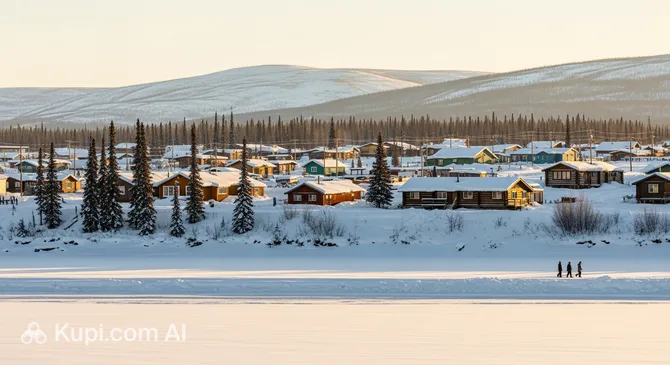
Kaltag. Source: Kupi.Binoculars

For many travelers, Kaltag is best known as a crucial checkpoint on the legendary Iditarod Trail Sled Dog Race. Every March, the quiet village buzzes with energy as mushers and their dog teams pass through before making the push toward the coast. Beyond the excitement of the race, the surrounding wilderness offers incredible opportunities for viewing the mesmerizing Northern Lights during the dark winter months, while the Yukon River provides a stunning backdrop for boating and fishing in the summer.

Whether you are an adventurer tracing historic trails or a traveler seeking the quiet majesty of the Alaskan bush, Kaltag invites you to experience the authentic spirit of the Last Frontier.

Weather Overview

The climate in this region is subarctic, defined by long, freezing winters and short, mild summers. Travelers planning a visit should check the current weather in Kaltag to ensure they are adequately prepared for the conditions, which vary significantly depending on the season.

January is typically the coldest month, with average temperatures dropping to -18.3°C, while July offers the warmest conditions, averaging 14.3°C with highs occasionally reaching 18.2°C. Although the total precipitation volume is recorded as quite low—often between 1mm and 4mm per month—precipitation events are frequent, with August seeing up to 18 wet days. Expect mild summers with regular light rain and cold winters characterized by consistent freezing temperatures.

Interesting Facts

Beyond the excitement of the annual sled dog races, Kaltag holds a deep history etched into the rugged Alaskan landscape. This remote village serves as a guardian of ancient routes and cultural traditions that have defined the region for centuries.

  • The Ancient Superhighway: Kaltag sits at the eastern terminus of the Kaltag Portage, a 90-mile overland trail cutting through the Nulato Hills. Long before modern maps existed, this route was a vital trade corridor used by Athabascan and Inupiat people to transport goods between the interior Yukon River and the Bering Sea coast, bypassing hundreds of miles of river travel.

  • A Local Namesake: Unlike many locations in the region named after Western explorers or prospectors, the village bears the name of a Koyukon Athabascan man named Kaltaga. He was a prominent local figure encountered by early telegraph expeditions in the late 19th century, keeping the indigenous heritage at the forefront of the town's identity.

  • A Strategic Turning Point: For mushers in the Iditarod Trail Sled Dog Race, Kaltag represents a critical psychological and physical shift. It is the final checkpoint on the frozen Yukon River; from here, teams leave the flat river ice to tackle the overland portage, often marking the moment where race strategies change for the push toward the coast.

  • Serum Run Legacy: The village played a crucial role in the historic 1925 Serum Run to Nome. It was at Kaltag that the life-saving diphtheria antitoxin was transferred to a fresh team for the treacherous journey over the portage, bridging the gap between the interior wilderness and the coastal communities during the race against time.

How to Get There

Reaching the remote village of Kaltag is an adventure that immerses you in the Alaskan wilderness. Because the village is located off the state's road system, there are no highways or roads connecting it to the rest of Alaska or the mainland. Air travel is the primary means of access, often involving small aircraft. You can find more about how to get to Kaltag and the unique logistics of wilderness travel to help plan your trip.

The village does not have a major airport for large commercial jets. The closest facility is Nulato Airport (NUL) in the neighboring village of Nulato, approximately 54 km away. It is important to note that despite the relatively short distance, there is no road connecting Nulato and Kaltag. Travelers arriving in Nulato typically need to arrange a transfer via boat along the Yukon River during the summer or by snowmachine in the winter.

For those flying from larger cities, regional hubs serve as essential gateways. Edward G. Pitka Sr. Airport (GAL) in Galena is located about 97 km away and handles moderate passenger traffic for the area. Similarly, Unalakleet Airport (UNK) lies approximately 112 km to the west on the coast. From these hubs, visitors must catch a connecting bush plane flight to reach Kaltag, as overland travel is not possible during most of the year.

Below is a summary of the regional airports that serve as transit points:

Airport Name City Passenger Traffic Km from City
Unalakleet AirportUnalakleetModerate112.3
Edward G. Pitka Sr. AirportGalenaModerate97.2
Nulato AirportNulatoSmall54.0
McGrath AirportMcGrathSmall217.7
Shungnak AirportShungnak294.2

Kaltag is not accessible by train, and there are no railway stations in this part of Alaska. The village's location on the Yukon River makes boat travel a viable option during the ice-free summer months. In the winter, the frozen river and the historic Iditarod Trail become highways for snowmachines and dog sleds, offering a rugged and traditional way to traverse the landscape.

Main Attractions

While Kaltag does not feature typical tourist infrastructure like museums or shopping centers, its appeal lies in its raw, natural beauty and historical significance. The attractions here are the landscapes themselves and the ancient trails that cross them, offering visitors a chance to disconnect and experience the true Alaskan wilderness.

The Yukon River is the undeniable heart of the community and a major draw for visitors. In the summer, the river is a hive of activity, perfect for boating and fishing for salmon, which is a staple of the local lifestyle. During the winter months, the frozen river transforms into a massive ice highway, used by snowmachines and dog sleds, offering a unique way to traverse the landscape and view the stark beauty of the frozen north.

For history buffs and outdoor adventurers, the Kaltag Portage is a site of immense importance. This 90-mile overland trail cuts through the mountains to the coast and has been used for centuries by Indigenous people and later by gold rush prospectors. Today, it serves as a challenging route for trekkers and is a key section of the Iditarod Trail, allowing travelers to walk in the footsteps of history while surrounded by pristine forests.

The Nulato Hills provide a dramatic backdrop to the village and offer excellent opportunities for hiking and wildlife viewing. Rising to the west of the river, these rolling hills are home to moose, bears, and wolves. Exploring the foothills gives visitors a vantage point to look out over the vast river valley, a view that conveys the sheer scale and isolation of this remote part of the world.

Finally, the night sky itself is one of Kaltag's greatest attractions. Situated far from the light pollution of major cities, the village is a prime location for viewing the Northern Lights (Aurora Borealis). From late autumn to early spring, the dancing ribbons of green and violet light frequently illuminate the dark skies, creating a mesmerizing natural light show that attracts photographers and dreamers alike.

Local Cuisine

The local cuisine in Kaltag is not defined by five-star restaurants or bustling food markets but by the rhythms of the seasons and the bounty of the surrounding wilderness. In this remote Koyukon Athabascan village, food is a vital part of the subsistence lifestyle, where "farm-to-table" is replaced by "river-to-table." Visitors here will find a diet deeply rooted in tradition, relying heavily on what can be hunted, fished, and gathered from the land and the mighty Yukon River.

The undisputed staple of the local diet is salmon. During the summer runs, the riverbanks are busy with families harvesting King, Chum, and Silver salmon. A signature preparation worth trying if you are offered some is smoked salmon strips. These are brined and slow-smoked over driftwood fires, creating a chewy, savory, and energy-rich snack that sustains locals through the long winters. Another comforting dish is moose soup or stew, a hearty meal often made with fresh vegetables and served with dense, filling fry bread, a beloved staple across rural Alaska.

For something sweet, the tundra provides an abundance of wild berries. In late summer and fall, families gather blueberries, highbush cranberries, and salmonberries. These are often eaten fresh, preserved as jams, or mixed into Indian ice cream (a variation of Akutaq), which traditionally blends whipped fat with berries and sometimes sugar for a high-energy dessert.

When it comes to drinks, hot coffee and tea are the beverages of choice to keep warm in the subarctic climate. Travelers should be aware that Kaltag is often a "dry" or "damp" community, meaning the sale and importation of alcohol may be restricted or prohibited. It is respectful and practical to stick to non-alcoholic warm drinks during your stay.

Dining out in Kaltag is a unique experience because there are no commercial restaurants, cafes, or street food vendors. Visitors typically bring their own provisions or purchase basic groceries at the village trading post. However, the true food culture is found in the community hall during gatherings and potlatches. If you are fortunate enough to visit during a celebration like the Stick Dance or a dog sled race, you may be invited to share in a communal feast, which is the best way to experience the authentic hospitality and flavors of the region.

Travel Tips

Visiting a remote village like Kaltag requires a different level of preparation than a standard city trip, as its isolation and wilderness setting dictate the rules of travel. To ensure your journey to this unique community on the Yukon River is safe and enjoyable, here are some essential practical tips to help you pack and plan effectively.

  1. Clothing and Gear: The weather in the Alaskan interior can be unforgiving, so dressing in layers is non-negotiable. In winter, you need heavy-duty thermal underwear, a parka rated for sub-zero temperatures, and insulated boots. For summer visits, waterproof clothing is essential, but the most important accessory is high-quality insect repellent and a head net; the mosquitoes and biting flies in the bush can be intense. Since electricity is standard US 110V, international travelers will need a Type A or B adapter.
  2. Transportation: Forget about ride-hailing apps, taxis, or car rentals; they simply do not exist here. The village is small enough to navigate entirely on foot. Locals travel by ATV (four-wheeler) in the summer and snowmachine (snowmobile) in the winter. If you need to move heavy gear or travel further afield, you will likely need to arrange a ride with a local resident or your lodging host in advance.
  3. Finances: Kaltag operates on the US Dollar (USD). While the local trading post may accept credit cards, telecommunication outages can happen, rendering card machines useless. There are no ATMs in the village, and banks are hundreds of miles away. It is critical to bring enough cash to cover your entire stay, including money for food, lodging, and tips for any local guides.
  4. Health and Safety: There is no pharmacy or hospital in Kaltag, only a small local clinic staffed by health aides for basic care. You must bring a full supply of any prescription medications you need, plus a basic first-aid kit. In terms of safety, be "bear aware" whenever you leave the immediate village center; carrying bear spray is recommended during the warmer months.
  5. Communication: English is the primary language spoken by all residents. Mobile phone coverage in rural Alaska is often limited to specific carriers (typically GCI); other major networks may have no signal at all. Wi-Fi is rare and often slow due to satellite connections. It is best to download offline maps and necessary documents before you arrive.
  6. Local Etiquette: The community is tight-knit and values respect. Always ask for permission before photographing locals, their homes, or their equipment (such as sled dogs and fish drying racks). A friendly wave or "hello" to passersby is the norm. If you are invited into a home, it is customary to remove your shoes at the door.
  7. What to Avoid: Do not bring alcohol into the village without explicitly checking the current local laws. Kaltag has historically been a "dry" or "damp" community, meaning the importation and sale of alcohol may be strictly prohibited or limited. Violating these rules is considered highly disrespectful and can lead to legal trouble.
  8. Additional Tip: Supplies in the village store have to be flown in, making them significantly more expensive than in urban areas. To save money and ensure you have what you like, pack your own snacks, toiletries, and batteries. If you visit in March during the Iditarod, book your accommodation months in advance, as the village population swells with race volunteers and mushers.

By respecting the local customs and coming prepared for the rugged environment, you will find that the hospitality in Kaltag is as warm as the winter is cold. A well-planned trip allows you to focus less on logistics and more on the breathtaking silence and beauty of the Alaskan wilderness.

Entertainment & Nightlife

If you are looking for neon lights, thumping bass, and crowded nightclubs, Kaltag will offer a surprising but refreshing change of pace. Nightlife in this remote Athabascan village is not defined by commercial entertainment but by the profound silence of the wilderness and the warmth of community gatherings. The "nightlife district" here is the vast, open sky, and the "light show" is provided by nature itself rather than a DJ.

There are no bars, pubs, or discos in Kaltag. In fact, visitors should be aware that the village is often a "dry" or "damp" community, meaning the sale and public consumption of alcohol are restricted or prohibited. The evening social scene revolves entirely around private homes and the Community Hall. This building serves as the heart of the village, hosting potlatches, traditional Stick Dances, and community meetings. If you are lucky enough to visit during a festival or the Iditarod race, the hall becomes a vibrant venue filled with drumming, singing, and storytelling that lasts well into the night.

The most spectacular evening entertainment in Kaltag takes place outdoors. During the long winter nights, the banks of the Yukon River become the premier spot for viewing the Northern Lights (Aurora Borealis). With zero light pollution, the display here is intense and magical. Locals and visitors alike often head out to the river ice or the edge of the airstrip to watch the green and violet ribbons dance across the sky. It is a dress code of heavy parkas and insulated boots, and the "cover charge" is simply braving the sub-zero temperatures.

For those seeking a quiet evening, the atmosphere is one of introspection and rest. Evenings are typically spent sharing meals with hosts, mending gear, or listening to elders share stories of the land. Practical advice for "going out" at night is simple: bring a high-quality flashlight or headlamp, as there are no streetlights outside the immediate village center. Walking is the only way to get around, but be vigilant; in the shoulder seasons, bears can venture close to the village, so carrying bear spray and making noise is recommended even at night.

As for daytime entertainment, do not expect to find cinemas, amusement parks, or shopping malls. Kaltag's cultural scene is embedded in the landscape. The forest serves as a living museum of botany and wildlife tracking, while the river offers a dynamic stage for the drama of the salmon run. Cultural "theaters" are found in the daily activities of the residents, such as checking fish wheels or preparing dog teams, offering an authentic glimpse into a lifestyle that has thrived here for thousands of years.

Parks & Museums

In the remote village of Kaltag, the concepts of "parks" and "museums" take on a different meaning. You will not find manicured gardens with paved walkways or climate-controlled galleries housing artifacts behind glass. Instead, the entire region serves as a boundless natural park, and the community itself acts as a living museum, where ancient traditions are not just displayed but practiced daily against the backdrop of the Alaskan wilderness.

Nature and Green Spaces

The Nulato Hills serve as the village's vast, unmapped backyard and primary recreational area. Rising gently to the west, these hills offer an authentic wilderness experience that far surpasses any city park. For visitors, this area provides unlimited opportunities for hiking and berry picking in the late summer, where the tundra turns a vibrant red and gold. It is a place to disconnect completely and observe the local flora and fauna, including moose and migratory birds, in their undisturbed natural habitat.

The banks of the Yukon River function as the community's central gathering space and "waterfront park." During the warm months of the short summer, the gravel bars and river edges are bustling with activity. Families gather here to process salmon, children play near the water, and elders watch the river flow. It is the best spot for visitors to sit and appreciate the sheer scale of the landscape, watching the interplay of light on the water and the thick forests on the opposite bank.

Cultural Heritage and Historical Sites

While there are no formal museums in Kaltag, the Kaltag Portage Trailhead stands as a significant historical monument. This site marks the beginning of the ancient overland route that connected the Athabascan tribes of the interior with the Inupiat people of the coast. Walking even a short section of this trail allows tourists to tread on history, following the same path used by dog sled mail carriers, gold rush prospectors, and the heroic mushers of the 1925 Serum Run. It is an open-air exhibit of the region's transportation history.

St. Teresa’s Catholic Church is one of the most prominent architectural landmarks in the village. Established in the early 20th century, the church represents the historical intersection of traditional Koyukon culture and Western missionary influence. The simple yet sturdy wooden structure is a focal point for the community. Visitors who stop by can often learn about the village's genealogy and social history through the stories attached to the parish and its role in local life over the decades.

Authentic Experiences

For a true glimpse into the local culture, keep an eye out for the fish wheels turning slowly in the river current. These ingenious traditional devices, built from wood and wire, are feats of engineering used to catch salmon without a rod or net. Observing a local family checking their wheel or hanging fish on drying racks offers a more profound understanding of Athabascan subsistence culture than any museum display could provide. Always remember to watch from a respectful distance or ask for permission to come closer, as these are vital tools for winter survival.

Getting Around

Travelers planning a visit to Kaltag must adjust their expectations regarding public transportation, as the village operates completely differently from urban centers. There is no public transport system here: you will not find buses, metros, trams, or fixed-route shuttles. The infrastructure is minimal, designed for a small, remote community where everything is located within a relatively compact area.

Because there is no formal transit network, there are no tickets, travel cards, or mobile apps to worry about. The concepts of ticket validation, zones, and operating hours do not apply. If you require transportation—for example, to move heavy luggage from the airstrip to your accommodation—arrangements are typically informal. Most visitors rely on their lodging hosts to provide a pickup service, often using an ATV or a truck.

For the vast majority of your stay, your primary mode of transport will be walking. The village is small enough to navigate entirely on foot, with most houses and the general store located within a short distance of the riverbank. Roads are unpaved gravel tracks, which can be dusty in summer and covered in snow or ice in winter, so sturdy, weather-appropriate footwear is the most important "transportation gear" you can bring.

Standard alternatives found in cities, such as taxis, ride-sharing services like Uber or Lyft, and car rental agencies, do not exist in Kaltag. You cannot hail a cab or rent a bicycle from a kiosk. The local equivalent of a private car is the ATV (all-terrain vehicle) in the summer and the snowmachine (snowmobile) in the winter. While you cannot rent these commercially, they are the heartbeat of local movement.

In terms of special transport features, the "highway" here changes with the seasons. During the summer, the river serves as the main thoroughfare for boats, while in winter, the frozen river and trails become the domain of dog sleds and snowmachines. While these are not public transport in the traditional sense, they represent the unique, historic logistical lifeline of the community that visitors may experience if they arrange a guided tour or transfer.

Accommodation

Finding accommodation in Kaltag is a unique aspect of the travel experience here, as the village does not have the commercial tourism infrastructure found in larger towns. Travelers should not expect to find standard hotels, motels, luxury resorts, or online rental apartments. Instead, lodging options are extremely limited, rustic, and often communal, reflecting the remote and subsistence-based lifestyle of the community.

The primary form of accommodation for visitors is often informal. There may be a small, city-run lodging facility or "transient housing" intended for visiting workers and officials, which can sometimes accommodate tourists if space permits. Alternatively, visitors may find opportunities for homestays, where local families rent out a room. These arrangements offer a warm and authentic insight into Athabascan culture but require respect for the host's private space and way of life.

Because the village is compact, "location" is rarely a deciding factor. Any accommodation you secure will be within walking distance of the airstrip, the general store, and the Yukon River. Staying near the riverbank offers beautiful views and easy access to the water, while staying closer to the school or community hall places you in the center of village social life.

For outdoor enthusiasts and adventurers visiting during the summer, camping is a viable option. Pitching a tent near the river allows you to sleep under the Midnight Sun, but this requires complete self-sufficiency. You must bring all your own camping gear, sleeping bags suitable for the climate, and bear-proof food storage containers. Always ask for permission from the local tribal council or city office before setting up camp, as land ownership can be a mix of private and native corporation holdings.

Booking Tip: You cannot book accommodation in Kaltag via major travel websites or apps. Planning requires direct communication. It is essential to contact the City of Kaltag or the local Tribal Council by phone weeks or even months in advance to inquire about availability. Do not simply arrive without a plan, as you may find yourself without a place to stay, especially in winter.

Prices for the limited lodging available are generally fixed and can be higher than expected for the level of amenities provided, due to the high cost of maintaining buildings in the Arctic. Payment is almost exclusively in cash (USD). Credit cards are rarely accepted for lodging, and with no ATM in the village, bringing sufficient funds to cover your entire stay is critical. During the Iditarod Trail Sled Dog Race in March, accommodation is virtually impossible to find as the village fills with mushers, veterinarians, and race officials, often sleeping on the floor of the school gymnasium.

Nearby Cities

For those looking to explore the surroundings, Kaltag serves as an excellent base for day trips to several interesting nearby locations. While the lack of connecting roads means travel is typically by bush plane, boat, or snowmachine, these neighboring communities offer a deeper look into the rich indigenous cultures and varied landscapes of Western Alaska.

Unalakleet is perhaps the most significant neighbor to Kaltag, located approximately 113 km to the west on the coast of the Norton Sound. Historically connected to Kaltag by the famous Kaltag Portage trail, this bustling village is known for its excellent silver salmon and king salmon fishing. Visitors can experience the vibrant Inupiat culture, walk along the rocky beaches of the Bering Sea, and see the terminus of the overland route that mushers traverse during the Iditarod.

Another intriguing destination is Stebbins, situated about 196 km away on St. Michael Island. This Yup'ik village offers a glimpse into a coastal subsistence lifestyle that differs slightly from the river-based culture of Kaltag. It is known for its traditional arts, particularly intricate driftwood carvings and grass baskets, making it a culturally enriching stop for travelers interested in authentic Alaskan native craftsmanship.

City Population Distance (km)
Selawik830261
Unalakleet700113
Noorvik700299
Stebbins600196
Buckland550216

These nearby destinations offer a glimpse into the diverse culture and landscapes of the region, ranging from river valleys to the rugged coastline of the Bering Sea.

Shopping & Souvenirs

Shopping in Kaltag is a strictly functional experience rather than a recreational one. As a small, remote subsistence village in the Alaskan interior, the community does not have boutiques, souvenir shops, or fashion outlets. Instead, the local retail scene consists of a single general store or trading post designed to provide residents with essential groceries, fuel, and survival gear. For visitors, "shopping" here usually means picking up a few snacks, batteries, or personal hygiene items rather than browsing for luxury goods.

There are no shopping districts or commercial streets in Kaltag. The village layout is simple, and the primary commercial activity is concentrated in the village center, typically near the community hall or the post office. This area serves as the social and logistical hub of the town. You will not find window displays or promotional signage; the store is a utilitarian building meant to serve the practical needs of the 200 residents living off the road system.

Travelers should be aware that there are no shopping malls or department stores in Kaltag or the surrounding region. The nearest large-scale retail centers are hundreds of miles away in cities like Fairbanks or Anchorage. Visitors must arrive fully equipped with all necessary clothing, medications, and specialized equipment, as the local inventory is limited to basic provisions and cannot be relied upon to replace major gear.

Formal markets, such as flea markets or farmers' markets, do not exist in the village. However, the concept of trade is alive in a more traditional sense. During community gatherings, festivals, or the Iditarod Trail Sled Dog Race, the Community Hall may host informal bazaars where locals sell homemade goods. Fresh food is rarely sold in a market setting; instead, it is harvested directly from the land and river by families for their own consumption.

Despite the lack of tourist shops, you can find incredible, authentic souvenirs if you know where to look. The Koyukon Athabascan people are renowned for their exquisite craftsmanship. The best items to bring back include hand-beaded jewelry, moose hide mittens, and slippers (moccasins) trimmed with fur. Another prized local product is smoked salmon strips, prepared traditionally over driftwood fires. To purchase these items, it is best to ask a local resident or check the bulletin board at the post office, as sales are often direct from the artisan's home.

Opening hours for the local store are generally limited compared to urban standards. The store may close for a lunch break and typically shuts its doors by early evening and on Sundays. Cash is the absolute best method of payment. While the store may have a card terminal, internet and phone line outages are common in the bush, rendering electronic payments impossible. There are no ATMs in Kaltag, so visitors must bring enough US dollars to cover all potential purchases.

Alaska is one of the few states in the United States with no state sales tax, which is a benefit for travelers. However, local municipalities may levy their own small sales tax to support village infrastructure. Due to the informal nature of most transactions (especially for handicrafts) and the lack of a "tax-free" refund system for tourists in remote villages, visitors should not expect to process any VAT refunds here.

Reached the end of the page?

That means the route is fully explored