Support

Nuiqsut

About

Nuiqsut is a remarkable destination for travelers seeking to experience the authentic culture and breathtaking landscapes of the Far North. This traditional Iñupiat village offers a rare glimpse into life in the Arctic, characterized by a deep connection to the land and a strong sense of community. Far removed from the hustle and bustle of major metropolises, Nuiqsut provides a serene and unique atmosphere where ancient traditions blend with modern life.

Located on the Nechelik Channel of the Colville River Delta, roughly 35 miles from the coast of the Beaufort Sea, this village is situated in the northernmost part of the United States. The geography here is defined by the vast, open tundra of Alaska's North Slope, a region known for its stark beauty and extreme climate. With a population of approximately 540 residents, Nuiqsut is a tight-knit community where subsistence hunting and fishing remain central to the local lifestyle.
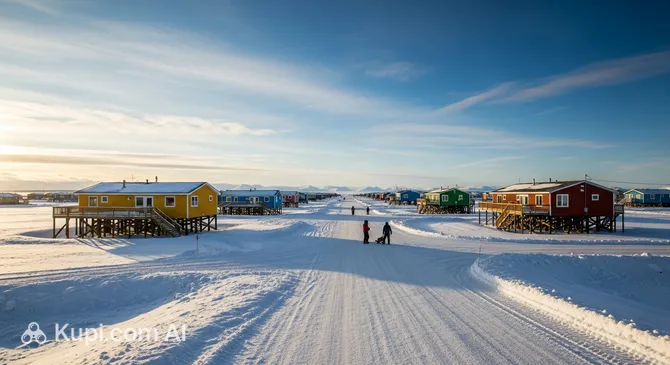
Nuiqsut. Source: Kupi.Binoculars

The history of Nuiqsut is particularly fascinating, as the modern village was re-established in 1973 by families trekking overland from Barrow (now Utqiaġvik) to return to their ancestral hunting and fishing grounds. Today, visitors can witness this enduring heritage through the daily activities of the residents. The area is also a prime location for wildlife enthusiasts, offering opportunities to spot caribou, arctic foxes, and a variety of migratory birds that thrive in the river delta.

One of the main draws for adventurous tourists is the Colville River itself, which serves as a vital transportation route and a source of sustenance. The surrounding wilderness invites exploration for those prepared for the Arctic environment, offering unparalleled views of the tundra under the Midnight Sun in summer or the Northern Lights in winter. Whether you are interested in indigenous culture or the raw beauty of the polar north, Nuiqsut extends a warm welcome to those willing to make the journey.

Weather Overview

Travelers planning a trip to the North Slope should be prepared for a true Arctic climate defined by extreme seasonality. The weather in Nuiqsut is characterized by long, frigid winters and short, cool summers. Visitors must dress appropriately for the conditions, as temperatures can remain below freezing for the majority of the year, while the brief summer offers a distinct but mild thaw.

Winter is the dominant season, with February being the coldest month, averaging -26.1°C and seeing lows dip to -29.4°C. As spring transitions into summer, temperatures rise above freezing, peaking in July with an average of 11.1°C and maximums reaching around 15.3°C. This period provides the most comfortable conditions for exploring the surrounding tundra and river delta.

Precipitation is generally very low in volume, often recorded at 0mm to 2mm, but the frequency of precipitation events varies. While winter and spring are relatively dry with only 3 to 4 wet days per month, the late summer sees more activity; August, for example, typically experiences about 13 wet days. Expect cool, relatively dry summers with frequent light precipitation and cold, dry winters.

Interesting Facts

Beyond the main attractions, Nuiqsut holds many fascinating secrets that reveal the deep determination of its residents and the unique challenges of Arctic life. Here are some little-known facts about this resilient community on the Colville River.
  • The "Tent City" Origins: While the re-establishment of the village in 1973 is known, few realize the hardship involved. The 27 founding families lived in a temporary "tent city" for nearly 18 months. They endured two harsh Arctic winters in canvas tents while constructing the first permanent homes, demonstrating incredible perseverance to reclaim their ancestral land.

  • Inland Whalers: Although Nuiqsut is located roughly 35 miles inland, it is a passionate whaling community. Unlike coastal villages that hunt directly from their shores, Nuiqsut hunters must travel nearly 100 miles by boat to Cross Island in the Beaufort Sea to harvest bowhead whales, a logistical feat that underscores their commitment to tradition.

  • The Seasonal Ice Road: For most of the year, the village is an island in the tundra, accessible only by small plane. However, in the depths of winter, a specially constructed ice road physically connects Nuiqsut to the North Slope road system, allowing residents to drive south towards the rest of the continent for a few short months.

  • A Historic Trade Hub: Long before the modern village existed, the Colville River Delta was a bustling center of commerce known as Nigliq. It served as a vital meeting point where coastal Iñupiat people exchanged seal oil and ivory for furs and snowshoes with Athabascan groups traveling from the interior of Alaska.

How to Get There

Reaching the remote village of Nuiqsut is an adventure in itself, typically involving a combination of commercial flights and smaller bush planes. Due to its location on the vast North Slope of Alaska, the village is not connected to the state's main road system for most of the year. Travelers should plan their journey carefully, usually routing through major northern hubs. You can find more about how to get to Nuiqsut and the specific logistics of Arctic travel on our detailed page.

The city of Nuiqsut does not have its own major commercial airport, but you can fly into Prudhoe Bay/Deadhorse Airport (IATA: SCC) in the city of Prudhoe Bay, which is about 96 km from Nuiqsut. This airport serves as a primary logistical hub for the region. During the winter months, when the seasonal ice road is operational, the ground journey via taxi or shuttle takes approximately 2 hours and 45 minutes. At other times of the year, travelers transfer here to smaller aircraft for the final leg of the trip.

Another significant regional gateway is Wiley Post-Will Rogers Memorial Airport (IATA: BRW), located in Utqiagvik. Situated roughly 243 km from Nuiqsut, this airport handles a considerable volume of passenger traffic and serves as a key connection point for flights across the North Slope. While there is no direct road connection between Utqiagvik and Nuiqsut, it remains a vital link for accessing the village by air.

For clarity, here is a summary of the main airports:

Airport Name City Passenger Traffic Km from City
Prudhoe Bay/Deadhorse AirportPrudhoe BayMedium95.8
Wiley Post-Will Rogers Memorial AirportUtqiagvikSmall243.2

Main Attractions

The Colville River Delta is undoubtedly the most significant natural landmark surrounding the village. As the largest river delta in northern Alaska, a remote region of the United States, it creates a vast, nutrient-rich wetland ecosystem that supports an incredible diversity of wildlife. Tourists and nature enthusiasts are drawn to this area to spot migratory birds, including yellow-billed loons and tundra swans, as well as terrestrial wildlife like caribou and moose. The river bluffs in the region are also of interest to paleontologists for containing a rich collection of dinosaur fossils, adding a layer of prehistoric intrigue to the scenic landscape.

For a deeper understanding of the local way of life, the Nigliq Channel offers a unique perspective on both history and modern subsistence. This specific waterway has served as a vital trade route and fishing ground for centuries, historically hosting the Nigliq trade fair where coastal and inland Iñupiat people exchanged goods. Today, it remains a bustling area for local fishers and boaters. Visitors can observe traditional fishing techniques or simply enjoy the serene views of the water, which reflects the vast Arctic sky.

The cultural heart of the village is often found at the Kisik Community Center. This facility serves as the primary gathering place for residents and is the venue for major celebrations, including traditional feasts and dances. While it acts as a hub for daily activities like bingo and sports, it is particularly interesting to tourists during community holidays, such as the Fourth of July or the blanket toss festivals, where the vibrant traditions of the Iñupiat people are proudly displayed through song, dance, and regalia.

For those visiting during the coldest months, the Seasonal Ice Road presents a rare travel adventure. Constructed annually when the tundra freezes solid, this temporary route connects the secluded village to the wider road system of the North Slope. Traversing this road is an experience in itself, offering unparalleled views of the pristine, snow-covered wilderness that stretches to the horizon. It represents a vital lifeline for the community and provides adventurous visitors with a distinct perspective on the ingenuity required for Arctic transportation.

Local Cuisine

The culinary landscape of Nuiqsut is defined by a distinct duality: the traditional subsistence diet that has sustained the Iñupiat people for thousands of years, and the limited commercial options available in this remote Arctic village. For visitors, the "local cuisine" is less about hopping between restaurants and more about understanding the deep connection between the community and the land. The food culture here revolves around the seasons, with the harvest from the Colville River and the surrounding tundra playing a central role in daily life.

True local delicacies are found in the homes of residents rather than on menus. The diet is heavy on protein and fat, essential for survival in the cold climate. Muktuk (bowhead whale skin and blubber) is a prized traditional food, often served during community celebrations like the Nalukataq whaling festival. Other staples include caribou, which is harvested from the herds that migrate through the North Slope, and various types of waterfowl. The river provides an abundance of fish, particularly Arctic cisco (Qaaktaq), whitefish, and burbot, which are often dried, smoked, or frozen for winter storage. In the summer, locals gather cloudberries (aqpik) and blueberries, often mixing them with fat and sugar to make akutaq, commonly known as Eskimo ice cream.

For tourists looking for a sit-down meal, options are very limited, as is typical for small, isolated Arctic villages. The primary dining establishment is the restaurant at the Kuukpik Hotel. This facility serves as the community's social and logistical hub, catering to both locals and the seasonal workforce. The menu features hearty American comfort food designed to fuel hard work in harsh weather. You can expect generous portions of burgers, sandwiches, steaks, and classic breakfast platters with eggs and bacon. While not traditional indigenous fare, the food is hot, filling, and provides a welcoming atmosphere for travelers.

When it comes to beverages, it is critical for visitors to understand local regulations. Nuiqsut is a dry community, meaning the possession, sale, and importation of alcohol are strictly prohibited. You will not find bars, liquor stores, or beer on any menu, and bringing your own is illegal. Instead, the local drinking culture centers around hot drinks that offer warmth and comfort. Coffee and tea are consumed throughout the day, often serving as a catalyst for social interaction at the hotel or during visits to local homes. The hotel also features a coffee stand serving espresso-based drinks, which is a popular treat in the village.

Travelers should also be aware that due to the village's remote location, all imported food must be flown in, making grocery prices significantly higher than in the contiguous United States. Fresh produce can be a luxury, and the selection at the local store may be limited depending on flight schedules and weather conditions. Despite these challenges, the spirit of hospitality is strong. If you are fortunate enough to be invited to a community feast or a local's home, accept the offer graciously; sharing food is a fundamental part of Iñupiat culture and the best way to taste the authentic flavors of the Arctic.

Travel Tips

Visiting Nuiqsut is a unique adventure that requires significantly more preparation than a standard vacation, as this remote Iñupiat village operates on the rhythm of the Arctic. To help you navigate the extreme climate and respect the local culture while ensuring a safe and memorable experience, we have compiled a list of essential practical tips for your journey.

  1. Clothing and Gear: Function must strictly take precedence over fashion here. In winter, you will need arctic-grade gear: a heavy down parka, insulated snow pants, thermal base layers, and boots rated for at least -40°C. Do not forget a windproof face mask and quality mittens. If visiting in summer, dress in layers to adapt to fluctuating temperatures, and bring heavy-duty insect repellent and a head net; the mosquitoes on the tundra can be intense and relentless.

  2. Transportation: Nuiqsut is a small, walkable village, and there is no public transportation like buses or taxis in the traditional sense. Most locals travel by ATV (four-wheeler) in the summer or snowmachine in the winter. For visitors, the Kuukpik Hotel typically provides shuttle service to and from the airstrip. Car rentals are not available in the village, so plan to explore the immediate area on foot or via arranged transport with local guides.

  3. Finances: The local currency is the US Dollar (USD). While the hotel and the local general store generally accept credit and debit cards, systems can occasionally go offline due to connectivity issues. It is highly recommended to bring enough cash for small purchases or tips. Be prepared for "bush prices"—food and supplies are flown in, making them significantly more expensive than in the lower 48 states.

  4. Health and Safety: The village is served by the Nuiqsut Clinic, which handles basic medical needs and emergencies, but serious cases require a medevac flight to a larger city. The most critical safety rule involves wildlife: polar bears and grizzly bears can be present near the village. Never walk outside the village limits alone or without a knowledgeable local guide, and always stay alert to your surroundings.

  5. Communication: English is the primary language spoken by everyone, though you may hear Iñupiaq spoken among elders. Mobile coverage can be limited; GCI is the primary provider in rural Alaska, and other carriers may not have service. Wi-Fi is available at the hotel but may be slower than what you are used to, so download any necessary maps or documents before you arrive.

  6. Local Etiquette: The community values respect and privacy. Always ask for permission before photographing residents, their children, or their property. This is especially important if you see locals engaged in subsistence activities, such as processing fish or game; these are private, essential tasks, not tourist displays. It is also polite to remove your shoes when entering a local home.

  7. What to Avoid: Strictly avoid bringing any alcohol or drugs into Nuiqsut. As a "dry" village, the importation and possession of alcohol are illegal and strictly enforced. Additionally, avoid walking on the tundra during nesting season without guidance, as you might disturb migratory birds or damage the fragile permafrost vegetation.

  8. Additional Tip: If you are visiting during the summer months (May to August), prepare for the Midnight Sun, where daylight lasts 24 hours a day. It can be disorienting for your sleep cycle, so bringing a high-quality sleep mask is a simple "life hack" that will make your stay much more rested and enjoyable.

By packing the right gear and approaching the community with an open heart and respect for their traditions, you will find Nuiqsut to be a welcoming and deeply moving destination. These preparations will allow you to focus less on the cold and more on the incredible warmth of the people and the majestic beauty of the North Slope.

Entertainment & Nightlife

Travelers accustomed to the bustling nightlife of metropolitan cities will find a completely different rhythm in Nuiqsut. As a small, traditional Iñupiat village located on the remote North Slope, there are no nightclubs, cocktail lounges, or neon-lit districts. Instead, the "nightlife" here is defined by the profound silence of the Arctic, the warmth of community gatherings, and, depending on the season, the spectacular natural light shows in the sky. The atmosphere is quiet and intimate, focusing on social connection rather than commercial entertainment.

It is crucial for visitors to remember that Nuiqsut is a "dry" community. The sale, importation, and possession of alcohol are strictly prohibited by local law. Consequently, you will not find any bars or pubs, and local restaurants do not serve alcoholic beverages. The evening social scene revolves around safe, alcohol-free environments where locals catch up on the day's news. The dress code is universally "Arctic practical"—warm layers and comfortable boots are the standard attire everywhere, regardless of the time of day.

The primary social hub for visitors and seasonal workers in the evenings is the Kuukpik Hotel. While it is not a nightlife venue in the traditional sense, its dining area and lobby serve as the village's living room. Here, you can enjoy a hot cup of coffee, engage in conversation with residents, or simply relax after a day of exploration. It is the best place to get a sense of the local community spirit in a warm, welcoming setting. Another key venue for evening activity is the Kisik Community Center. This facility often hosts community events, including the incredibly popular pastime of bingo, as well as traditional dances and feasts during holidays. If you are lucky enough to be in town during a community celebration, attending an event here is the highlight of any trip.

For many travelers, the real evening entertainment is found outdoors. In the winter months, Nuiqsut offers some of the best opportunities in the world to view the Aurora Borealis (Northern Lights). Without the light pollution of big cities, the night sky comes alive with dancing ribbons of green and violet. Conversely, during the summer months, the phenomenon of the Midnight Sun means the sun never sets, allowing for "nighttime" walks on the tundra or birdwatching at 2:00 AM in broad daylight.

Safety is paramount when venturing out at night. There are no taxis or public transport services for late-night travel; the village is small enough to walk, but the extreme cold in winter demands serious preparation. More importantly, you are in bear country. Polar bears and grizzly bears can roam near or through the village, especially under the cover of darkness. It is highly advisable to avoid walking alone at night and to stay within well-lit areas or near buildings. If you must go out, remaining alert and carrying a flashlight is essential.

While the nights are quiet, daytime entertainment offers a chance to connect with the land and culture. Visitors can explore the local history at the school or community displays, or take guided trips to the Colville River Delta to witness the subsistence lifestyle in action. Whether it is watching the river flow or listening to stories from elders, the entertainment in Nuiqsut is grounded in a deep appreciation for the Arctic environment and its people.

Parks & Museums

In a remote village like Nuiqsut, the concepts of "parks" and "museums" take on a different meaning than in a typical city. Here, you will not find manicured botanical gardens or sprawling exhibition halls with ticket counters. Instead, the entire surrounding landscape serves as a vast, untamed natural park, and the culture is preserved not in glass cases, but in the daily lives, stories, and artistry of the Iñupiat residents. The village invites visitors to step outside the conventional tourist framework and experience a connection to the land and history that is raw, immediate, and deeply authentic.

The wilderness surrounding the village effectively functions as one boundless nature preserve. While there are no designated paths or benches, the open tundra offers a profound experience for nature lovers, particularly during the short summer season. In July and August, the stark landscape transforms into a vibrant carpet of wildflowers, including Arctic poppies, lupines, and woolly lousewort. This "green space" is also a prime location for berry picking, a popular local pastime. Walking the tundra allows for quiet reflection and the chance to observe small wildlife, though visitors must always remain vigilant for bears and respect the fragile permafrost environment.

Another significant natural area is the shoreline along the Nechelik Channel. Unlike a recreational beach, this riverbank is a working waterfront that offers a fascinating look at the intersection of nature and subsistence culture. It is an excellent spot for birdwatching, as the Colville River Delta is a nesting ground for numerous migratory species, including the spectacled eider and yellow-billed loon. Visitors can stroll near the water to watch the seasonal changes of the river, from the dramatic spring breakup of the ice to the calm flow of summer, all while breathing in the crisp, unpolluted Arctic air.

When it comes to cultural heritage, Nuiqsut does not have a dedicated museum building within the village. Instead, the Kisik Community Center serves as the beating heart of local tradition. This multi-purpose venue is where the living culture of the community is most visible. It hosts significant gatherings, traditional feasts, and dances where the rhythms of Iñupiat drumming fill the air. For visitors, attending a community event here offers a far more immersive cultural experience than viewing static exhibits, as it allows for witnessing traditions that are actively practiced and passed down through generations.

The preservation of history and identity in Nuiqsut is also championed by the Kuukpik Corporation, which manages the land and supports initiatives to keep Iñupiat values alive. Rather than relying on a physical gallery, the village preserves its heritage through oral storytelling, subsistence activities, and community programs. For travelers seeking a formal museum experience with curated artifacts and historical displays, the nearest institution is the Iñupiat Heritage Center located in Utqiaġvik. This world-class facility is worth a visit if your travel itinerary includes a stop in the regional hub before or after your time in Nuiqsut.

For a truly authentic "gallery" experience within the village, look for local artisans. Nuiqsut is home to skilled craftspeople who create exquisite works of art using materials harvested from the land, such as baleen, ivory, and caribou skin. Instead of browsing a commercial art shop, you might find yourself invited to an artist's home to see hand-sewn skin boots (mukluks), intricate baleen etchings, or fur masks. Purchasing directly from these artists not only provides you with a unique keepsake but also supports the local economy and ensures the continuation of these ancient artistic skills.

Getting Around

Travelers visiting Nuiqsut will quickly realize that the public transport infrastructure found in larger cities is completely absent here. There are no subways, trams, municipal buses, or trolleybuses in the village. The community is small, compact, and isolated, meaning that the standard urban transit network is neither necessary nor available. Instead, the "transport system" is informal and adapted to the rugged Arctic environment, relying heavily on private vehicles and the specific seasonal conditions of the North Slope.

For the majority of visitors, the primary mode of getting around the village is walking. The footprint of Nuiqsut is small enough that most points of interest, including the school, the community center, and the general store, are within a reasonable walking distance of the airstrip and the hotel. However, walking here requires preparation; in the winter, extreme cold and wind chill demand arctic-grade clothing, while summer walkers should be prepared for muddy roads and mosquitoes. There are no sidewalks in the traditional sense, so pedestrians share the gravel roads with vehicles.

The local population moves differently depending on the season, and observing this is a key part of the travel experience. In the summer months, All-Terrain Vehicles (ATVs or "four-wheelers") are the standard way to navigate the gravel streets and the surrounding tundra. During the long winter, these are swapped for snowmachines (snowmobiles), which are essential for travel over snow and ice. While there are no official rental agencies for these vehicles for tourists, they are ubiquitous in the village and represent the true "local transport" of the Arctic.

Regarding payment and tickets, the concepts of travel passes, transport apps, or validation machines do not apply in Nuiqsut. There is no ticketing system because there is no scheduled service. If you require a ride—for instance, from the airstrip with heavy luggage—services are typically arranged informally or through the Kuukpik Hotel, which often operates a shuttle van for its guests. In the rare event that you arrange a private ride with a local, cash in United States dollars (USD) is the only accepted method of payment. Credit cards and mobile wallets are not useful for transportation here.

Alternatives like Uber, Lyft, or conventional taxi companies do not exist in this remote location. Similarly, there are no bike sharing schemes or car rental agencies within the village itself. If you need to travel outside the immediate village limits, for example to the river for a boat tour or onto the tundra, this must be organized in advance with a local guide or outfitter who has the appropriate vehicle and knowledge of the terrain. Tourists should never attempt to hike far onto the tundra alone without a means of transport or communication, due to the risk of getting lost or encountering wildlife.

Accommodation

Finding accommodation in Nuiqsut requires a shift in expectations for the average traveler. As a small, remote village on the North Slope, there is no tourism infrastructure in the conventional sense. You will not find a variety of budget hostels, luxury resorts, or vacation rentals here. The accommodation landscape is purely functional, designed primarily to serve seasonal workers, visiting government officials, and the occasional contractor. For tourists, options are extremely limited, and securing a place to stay is the most critical step in planning a visit.

The village is compact, meaning that "location" is rarely a deciding factor; anywhere you stay will be within walking distance of the airstrip, the store, and the community center. There are no distinct tourist districts. The primary and practically only formal lodging option is the Kuukpik Hotel. This facility serves as the logistical and social hub of the village. It offers clean, comfortable, and utilitarian rooms that are well-suited to the harsh Arctic environment. Guests typically have access to shared or private bathrooms, dining facilities, and Wi-Fi, which is a significant luxury in this region.

Because the hotel caters largely to the oil and gas industry and other professional sectors, availability fluctuates wildly based on work schedules rather than tourist seasons. During peak operational times, the hotel can be fully booked by crews for weeks. Therefore, it is absolutely essential to book your accommodation well in advance. Do not arrive in Nuiqsut without a confirmed reservation, as there are no alternative hotels to fall back on, and the extreme weather makes camping dangerous and impractical for most.

Regarding costs, visitors should be prepared for "bush prices." Accommodation rates are significantly higher than for comparable facilities in the contiguous United States, reflecting the high cost of operating in the Arctic. Prices typically fall into the high mid-range to luxury bracket simply due to logistics, not amenities. Booking is generally done by calling the hotel directly, as online booking platforms are rarely used or updated for this location. Payment is usually accepted via credit card, but carrying backup cash is always a wise precaution in rural Alaska.

In very rare instances, visitors with personal connections to the community might arrange informal homestays, but this is not a standard service available to the general public. For the vast majority of travelers, the local hotel is the sole, safe, and warm refuge against the Arctic elements.

Nearby Cities

Located on the vast expanse of the North Slope, Nuiqsut is one of the most remote communities in the United States. In this region, neighboring settlements are few and far between, often separated by hundreds of kilometers of open tundra. The concept of a "neighbor" here implies a connection by small plane or winter ice road rather than a short drive next door.

The closest settlement of significant size is Prudhoe Bay, located approximately 98 km to the east. It serves as the industrial heart of the region and a primary logistical hub for flights and cargo. Another vital neighbor is Utqiagvik (formerly Barrow), which lies about 244 km to the northwest. As the largest city in the borough, it acts as the administrative and commercial center for Nuiqsut and other surrounding villages.

Other communities in the wider vicinity include the industrial area of Kuparuk and the traditional coastal village of Wainwright. Much further to the southeast lies Fort Yukon, a distant interior community. The table below details the distances and populations of these nearby locations.

City Distance (km) Population
Kuparuk 83 2,000
Prudhoe Bay 98 2,114
Utqiagvik 244 4,000
Wainwright 341 3,600
Fort Yukon 471 500

Shopping & Souvenirs

Shopping in Nuiqsut is a strictly functional experience, far removed from the commercial tourism found in larger cities. As a small, remote village on the North Slope, the retail landscape is designed solely to sustain the local community with essential supplies. Visitors will not find promenades, boutiques, or souvenir shops; instead, they will encounter a subsistence-based economy where the most valuable goods—such as fish, game, and handmade clothing—are often traded or shared rather than sold in a store.

There are no shopping districts or high streets in the village. The commercial activity is concentrated in a single location: the local general store (typically affiliated with the Alaska Commercial Company or the local Kuukpik Corporation). This all-purpose retailer serves as the grocery store, hardware supplier, clothing outlet, and pharmacy. You can find everything here from expensive fresh produce and canned goods to heavy-duty winter gear and snowmachine parts. It is located centrally within the village, easily accessible on foot from the airstrip or hotel.

Travelers looking for shopping malls or department stores will find none in Nuiqsut. The infrastructure simply does not support large-scale retail. The nearest shopping centers are hundreds of miles away in Fairbanks or Anchorage. In this Arctic setting, the focus is on survival and utility, so the "mall" experience is replaced by the singular, vital general store that acts as the lifeline for imported goods.

While there are no formal flea markets or food bazaars, the village does have a vibrant, albeit informal, market for traditional arts and crafts. This usually takes place at the Kisik Community Center during festivals, holidays, or community gatherings. At these times, local artisans display their work on tables, offering a rare chance to purchase goods directly from the creators. Outside of these events, "shopping" for local goods often involves asking around and being invited to an artist's home to view their work.

For those seeking souvenirs, Nuiqsut offers the opportunity to acquire incredible, authentic Iñupiat art. The items available here are of museum quality and carry deep cultural significance. Look for baleen baskets or etchings, which are made from the flexible plates found in the mouths of bowhead whales—a material unique to whaling communities. Intricate ivory carvings, hand-sewn mukluks (skin boots), and fur masks are also prized possessions. When buying these items, you are directly supporting the local economy and the preservation of ancient skills.

Store opening hours are generally limited compared to urban centers. The general store typically operates from late morning until early evening, often closing for a lunch break. On Sundays, hours may be reduced or the store may be closed entirely. Regarding payment, the United States Dollar (USD) is the only currency used. While the main store usually accepts credit and debit cards, telecommunications in the Arctic can be unreliable. It is highly recommended to carry sufficient cash to cover your purchases, especially if buying crafts from local artists who may not have card readers.

Alaska is known for having no state sales tax, which can be a benefit for shoppers. However, tourists in Nuiqsut should be aware that the lack of tax does not equate to low prices. Due to the extreme logistical challenges of flying freight into the village, shelf prices are significantly higher—often double or triple—than what you would find in the "lower 48" states. This "bush price" reality is the primary financial consideration when shopping here.

Reached the end of the page?

That means the route is fully explored