Support

Blackstone/Ft Pickett (Blackstone AAF)

About the Airport

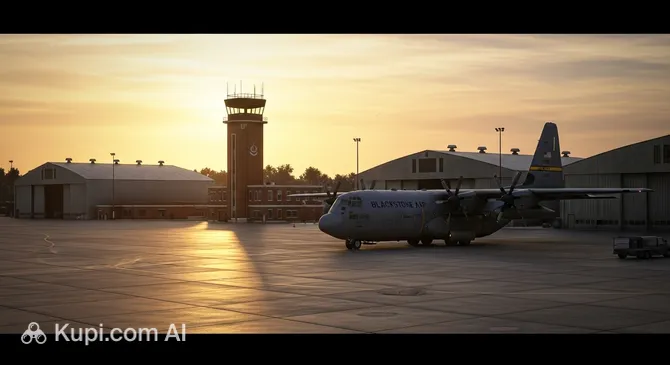
Blackstone/Ft Pickett (Blackstone AAF). Source: Kupi.com Binoculars

Blackstone/Ft Pickett Airport, officially known as Allen C. Perkinson Army Airfield, represents a unique transport hub in the state of Virginia. This joint-use facility serves both military needs and general civil aviation, offering private flight pilots and passengers a tranquil alternative to busy hubs. Located amidst the scenic landscapes of Nottoway County, the airfield serves as a convenient aerial gateway to the region's historical landmarks and the Fort Barfoot training centre (formerly Fort Pickett). Thanks to its compact size and operational specifics, an atmosphere of professionalism and freedom from fuss prevails here.

IATA Code BKT
ICAO Code KBKT
City Blackstone, Virginia
Distance to Centre ~4 km
Status Domestic / Joint-Use
Annual Passengers Serves general aviation (no scheduled flights)
Schedule Online board

This airfield possesses a number of distinctive features that make it an important infrastructure object in the region:

High Service Standards: As a joint-use airfield, Blackstone maintains its runway and technical equipment at a high level, complying with army standards, which ensures additional safety for civilian pilots.

Speed and Comfort: The main advantage for travellers on private jets is the absence of queues and bureaucratic delays. Arrival and departure here proceed as efficiently as possible, allowing you to save precious time.

Accessibility: The airport is located in the immediate vicinity of the town of Blackstone. The journey to the town centre with its shops and dining establishments takes just a few minutes by car, making it a convenient stopover point when travelling through Virginia.

Contact Information

  • Official Airport Website: townofblackstoneva.com (The airport does not have its own separate website; information is posted on the Blackstone town portal).
  • Inquiry Service Phone: +1 (434) 292-7251 (Town and Airport Administration).
  • Airport Address: 49 Dominy Corner Road, Blackstone, VA 23824, USA.
  • Email: There is no direct public e-mail for the airport. For official enquiries, it is recommended to use the contact form on the town administration website.
  • Airport Social Media: There are no dedicated accounts. Current news about the region can be found on the official social media pages of the town of Blackstone.
  • Lost Luggage Information: Since the airport serves primarily private aviation and does not have a large passenger terminal, for questions regarding forgotten items, please contact the airfield administration directly or the FBO operator's office.
  • Passenger Support Contacts: +1 (434) 294-7558 (Line for aircraft handling and service/FBO questions).

How to Get to the Airport

Since Blackstone/Ft Pickett Airport (BKT) does not serve scheduled commercial flights from major airlines, the arrival process here differs from a typical visit to large international hubs. Most visitors are private aviation pilots, military personnel, or guests arriving by car to meet those flying in. The transport infrastructure here is oriented towards personal vehicles and taxis.

By Car

This is the most reliable and common way to reach the airfield. The airport is located just 4 kilometres east of Blackstone town centre. The drive takes 5–7 minutes.

  • Route: From the town centre, follow Main Street, then turn onto Route 40 (East) or Military Road. Signs for "Allen C. Perkinson Airport" or "Fort Barfoot" will help orient you.
  • From other cities: Blackstone is conveniently located near the US-460 highway, connecting Petersburg and Lynchburg.

Taxi and Transfer

There are no large taxi services with extensive fleets in Blackstone itself, so it is better to book a car in advance.

  • Apps: Services like Uber or Lyft may operate in the region, but waiting times for a car can be lengthy due to the small number of drivers in this rural area.
  • Cost: A trip from the centre of Blackstone to the terminal will cost approximately 10–15 USD.
  • Transfer: If you are arriving by private jet, it is recommended to contact the airport's FBO (Fixed Base Operator) in advance. Staff can often assist with organising a transfer or calling a trusted local taxi by the time the aircraft lands.

Public Transport

It is important to note that direct public transport connections (buses, trains, or metro) to the airfield itself do not exist. The nearest bus station (Greyhound or Virginia Breeze) is within the Blackstone town limits, but from there you will still need to travel to the airport by taxi or on foot (which is difficult with luggage due to the lack of pavements on country roads).

Car Rental

Renting a car directly inside the terminal building upon arrival without a prior booking can be difficult. Rental companies (such as Enterprise) are usually located in neighbouring larger settlements but may deliver a vehicle to the aircraft by prior arrangement with the airfield administration.

Parking

Parking is provided directly at the civil aviation terminal building for greeters and pilots.

  • Cost: Typically, parking for short-term and long-term stays at airfields of this type is free of charge.
  • Security: The parking is open-air, but the territory is under general surveillance due to the status of the joint-use facility.

Nearest Major Airports for Tourists

If you are planning a tourist trip to this region of Virginia and do not own a private aircraft, it will be most convenient for you to fly into one of the large neighbouring airports and then rent a car to travel to Blackstone.

The nearest and most convenient option is Richmond International Airport (RIC), located approximately 75 km away (about 50 minutes by car). It receives many scheduled flights from across the country.

Alternative arrival options:

Terminals and Map

Since Blackstone/Ft Pickett Airport (BKT) does not accept scheduled commercial flights from major airlines, its infrastructure differs radically from busy international hubs. Here you will not find endless corridors, a multitude of gates, or a confusing system of passageways.

Number and Purpose of Terminals

The airport operates one main terminal for General Aviation. This is a small, standalone single-storey building that functions as an administrative centre and waiting lounge. It serves:

  • Private civil aircraft (business jets, light aviation).
  • Crews and passengers of charter flights.
  • Transit pilots stopping for refuelling.

The military section of the airfield (army aviation) has its own hangars and operational zones, access to which is strictly limited for civilians.

Layout and Navigation Inside

The terminal is designed to ensure maximum efficiency and speed of service. Navigation here is intuitive even on the first visit:

  • Entrance Group: Leads from the car park directly into the main hall.
  • FBO Counter (Fixed Base Operator): Located immediately at the entrance. Payment for fuel, parking, and the resolution of organisational matters takes place here.
  • Waiting Zone: A space combined with the lobby where passengers and greeters can spend time in comfort.
  • Exit to Apron: The door leading to the aircraft is just a few steps from the waiting zone.

Terminal Features

Despite its modest size, the BKT civilian terminal is equipped with everything necessary for a comfortable short-term stay:

  • Lounge Zone: Cosy sofas, a television, and free Wi-Fi for passengers.
  • Pilots' Room: A separate room for crews with flight planning capabilities (computers, access to meteorological charts) and a rest area ("snooze room").
  • Amenities: Clean washrooms and vending machines with drinks and light snacks (there is no cafe or full-service restaurant inside the terminal).
  • Conference Room: A small room for conducting briefings or meetings.

Departure and Arrival Zones

Blackstone Airport lacks the rigid separation into departure and arrival zones characteristic of large air terminals. Passenger flows do not cross simply because a small number of flights are handled simultaneously. The exit to the aircraft and the entrance to the building upon arrival are through the same doors leading to the Apron.

Processing Times

The main advantage of this airport is the absence of queues. The departure and arrival process is simplified to the maximum:

  • Check-in: Does not exist as such for private owners. For charter flights, document checks take 2–5 minutes.
  • Security Screening: There are no standard metal detector frames or TSA luggage scanners here as in commercial airports. However, given that the airport is a joint-use facility with the army, staff may conduct random checks or require strict adherence to safety rules on the apron.
  • Recommended Arrival Time: It is sufficient for pilots and passengers to arrive 15–20 minutes before the planned departure time.

Navigation Recommendations

When arriving at the airport by car, carefully follow the signs. The entrance to the civilian terminal is located off Dominy Corner Road. It is important not to confuse the entrance to the civilian car park with the checkpoint of the Fort Barfoot military base located nearby. The civilian terminal is an open zone that does not require passing through a military checkpoint.

Airport History

The history of Blackstone/Ft Pickett Airport (BKT) is inextricably linked with the development of military aviation in the United States and the transformation of the region into a strategic training centre. Over the decades of its existence, this facility has journeyed from an urgently built military airfield to a significant joint-use hub playing a key role in modern Virginia aviation.

Foundation and Military Roots (1940s)

The history of the airfield began at the height of the Second World War. In 1942, the US government acquired vast tracts of land in Nottoway County to create a training camp, named Camp Pickett. The airfield was built as an integral part of this base to ensure logistics and pilot training. In those years, training in operating gliders and light spotter planes was actively conducted here, which was critical for military operations in Europe.

Post-War Period and the Perkinson Name

After the end of the war, activity at the base decreased, but the strategic importance of the airfield remained. An important milestone in the facility's history was naming it after Allen C. Perkinson. Colonel Perkinson was a prominent figure in the state's history: he served as the Director of the Virginia Division of Aeronautics and commander of the Civil Air Patrol. His contribution to the development of the region's aviation infrastructure was immortalised in the name of the airport, which became a symbol of the link between the military past and the civilian future.

Era of Joint Use

In the second half of the 20th century, the airfield underwent significant changes in status. Understanding the importance of developing the regional transport network, the authorities concluded a joint-use agreement. This allowed the military runway to be opened for civil aviation. The town of Blackstone gained access to first-class infrastructure, while the military retained priority in using the facility for National Guard needs.

Modernisation and New Technologies

In the 2000s, the airport became a platform for innovation. Thanks to its location in a sparsely populated area and the availability of restricted airspace, Blackstone/Ft Pickett transformed into a centre for testing Unmanned Aerial Vehicles (UAVs). The latest systems for the army and private developers are tested here, bringing the airfield's technological status to a new level.

Change of Eras: Fort Barfoot

An important historical event of recent times was the renaming of the military base. In 2023, Fort Pickett was officially renamed Fort Barfoot in honour of Colonel Van T. Barfoot, a World War II hero and Medal of Honor recipient. Although civilian pilots often use old names out of habit, this event opened a new chapter in the official history of the facility.

Interesting Facts:

  • Runway Length: The airfield's runway has been extended multiple times and is now approximately 1,400 metres long, allowing it to accommodate fairly large business jets and military transport aircraft such as the C-130 Hercules.
  • Architectural Heritage: Hangars and buildings from the 1940s have been preserved on the base territory, neighbouring modern flight control terminals, creating a unique historical contrast.
  • Role in Emergencies: Thanks to its location and reliable infrastructure, the airport is often used as a staging base for rescue services and firefighting aviation during natural disasters in the region.

Services and Facilities

Since Blackstone/Ft Pickett Airport (BKT) is oriented towards private and corporate aviation, the range of services here differs substantially from what passengers are accustomed to seeing in large commercial terminals. The emphasis here is not on shopping and entertainment, but on functionality, speed of service, and basic comfort for a short wait.

Dining and Nutrition

Inside the civilian terminal, there are no full-service restaurants, cafes, or dining lounges. Catering infrastructure is limited to:

  • Vending Machines: Here you can purchase bottled water, fizzy drinks, crisps, chocolate, and other snacks for a light bite.
  • Coffee Station: Free freshly brewed coffee and tea are usually available for visitors and crews in the waiting zone.

If you require a full lunch or dinner, it is recommended to visit the town of Blackstone (just 5–7 minutes by car). There you will find cosy local diners, pizzerias, and cafes with home-style cooking, popular among travellers.

Shopping and Stores

There are no Duty Free shops, souvenir stalls, or clothing boutiques on the airfield territory. The only things purchasable on-site are aviation charts and related goods for pilots at the FBO counter, subject to availability.

Waiting Lounges and Comfort

The entire civilian terminal essentially represents one general enhanced comfort lounge. Access here is open to all passengers and pilots using the airport's services, without the need to purchase a separate membership or business class ticket.

  • Amenities: Soft leather sofas, armchairs, a television with satellite channels.
  • Atmosphere: A quiet and calm environment, ideally suited for reading or working before a flight.

Connectivity and Work

For business travellers and pilots who need to stay connected, all conditions have been created:

  • Wi-Fi: Free high-speed wireless internet is active throughout the terminal territory.
  • Charging Stations: The lounge zone is provided with a sufficient number of sockets for charging laptops and smartphones.
  • Conference Room: A small room for negotiations or briefings is available upon prior request to the airport administration.
  • Flight Planning: A separate zone is equipped for pilots with a computer and access to weather radars (WSI weather briefing).

Financial Services

Please note that there are no currency exchange points or bank branches at the airport. The airport mainly serves domestic flights, so there is no demand for currency operations. The presence of an ATM in the terminal is not guaranteed, so it is recommended to carry cash US dollars or bank cards in advance.

Medical Services

There is no specialised medical centre or pharmacy in the building. Staff are trained in first aid, and a basic first aid kit is available at the reception desk. In case of serious health problems, ambulances arrive from the town of Blackstone, where medical centres are located.

Services for Passengers with Children

Special playrooms or changing tables are not provided in the terminal due to its small size. However, thanks to the absence of crowds and noise, staying here with children is much calmer than in large airports. Staff are always ready to help warm up baby food if necessary.

Accessible Environment

The terminal is a single-storey building, which significantly facilitates the movement of passengers with reduced mobility:

  • Entrances and Exits: Equipped with ramps or are at ground level.
  • Washrooms: Comply with accessibility standards (ADA compliant), equipped with handrails and wide doorways.
  • Boarding the Aircraft: Since there are no jet bridges, boarding takes place from the apron. Passengers in wheelchairs may require staff assistance to board a private vessel, which should be arranged with the air carrier in advance.

Hotels and Accommodation

There are no hotels on the airport territory itself. Capsule hotels are also absent. Travellers requiring overnight accommodation should look for options in the town of Blackstone or its surroundings:

  • The Inn at Blackstone: A historic boutique hotel in the town centre (about 4 km from the airport), offering atmospheric rooms and a high level of service.
  • Grey Swan Inn: A cosy Bed & Breakfast (B&B), popular among tourists visiting this region of Virginia.
  • To find chain hotels of familiar brands (such as Hampton Inn or Holiday Inn), you will have to drive a little further — to the towns of Farmville or South Hill, located 30–40 minutes' drive away.
Where to Eat

It is important to note immediately that Blackstone/Ft Pickett Airport (BKT) is a small general aviation hub and does not possess the developed catering infrastructure characteristic of large passenger hubs. There are no restaurants, cafes, or food court zones directly in the terminal building.

However, passengers and crews will not go hungry thanks to the proximity to the town and the availability of basic services on-site. An overview of available options is presented below.

Dining at the Airport (Inside the Terminal)

In the single civil aviation terminal building (General Aviation Terminal), snack options are limited to self-service formats.

  • Quick Snacks (Snacks and Drinks): Vending machines are installed in the waiting zone. The assortment includes a standard set: fizzy drinks, bottled water, chocolate bars, crisps, crackers, and nuts.
    • Price Range: Low (usually $1.50 – $3.00 per item).
    • Opening Hours: Available during terminal operating hours (typically from 8:00 to 17:00 or until the arrival of the last scheduled aircraft).
  • Hot Drinks: A "coffee corner" is organised in the lobby. Here you can always drink freshly brewed coffee, tea, or hot chocolate for free. This is a popular place for pilots to socialise and wait for departure.

Specialised Nutrition and Dietary Requests

Due to the lack of a kitchen on the airfield territory, specialised options (vegan, gluten-free, Halal menu) are unavailable.

  • Recommendation: If you follow a specific diet or require Halal food, it is strongly recommended to bring food with you in advance or order catering on board through your flight operator before departure.

Full Lunch: Restaurants in Blackstone

Since the journey from the airport car park to the town centre takes just 5–7 minutes by car (about 4 km), passengers and crews usually head to local establishments for a full meal. This is an excellent opportunity to taste the cuisine of the American heartland.

In the town of Blackstone, you can find:

  • Classic American Diners: Hearty breakfasts, burgers, and sandwiches are served here. An excellent option to feel the atmosphere of "old Virginia". (Note: Please check ingredients for Halal compliance).
  • Pizzerias and Italian Cuisine: Several family establishments offer pizza, pasta, and salads.
  • Mexican Cuisine: Popular places for a substantial and inexpensive lunch with spicy dishes.
  • Fast Food: Chain establishments (for example, McDonald's, Subway, Wendy's) are present in the town for those in a hurry.

Catering and Delivery (For Private Flights)

For passengers of private jets, an onboard food ordering service is available. FBO (ground handling) staff can help organise the delivery of dishes from the best restaurants in Blackstone directly to the aircraft steps.

  • How to Order: You must contact the airport administration or FBO at least 24 hours before departure.
  • Assortment: Depends on the menu of local partner restaurants (usually sandwich platters, salads, hot dishes in containers).

Summary: What to Choose?

  • If you have 15–20 minutes: Limit yourself to coffee and a snack from the machine in the terminal.
  • If you have 1 hour or more: Take a taxi or a courtesy car and head to the centre of Blackstone for a hot lunch.

Tips for Travellers

Travelling through Blackstone/Ft Pickett Airport (BKT) differs radically from the experience of flying through large international hubs. Since only private, corporate, and military aviation is served here, many familiar rules of commercial airlines do not apply here or work differently. Here are some useful tips to help make your journey as comfortable as possible.

Optimal Arrival Time

Forget the rule of "arriving 2–3 hours before departure". In the conditions of private aviation, such time margins are unnecessary.

  • Recommended Margin: Arrive at the terminal 20–30 minutes before the scheduled take-off. This time is quite enough to meet the pilot, load luggage, and drink a cup of coffee.
  • Flexibility: If you are delayed, be sure to contact your pilot or the FBO. Unlike scheduled flights, a private aircraft can often wait for a passenger, but this depends on the crew's schedule and weather conditions.

Check-in and Security: What You Need to Know

Control procedures here are kept to a minimum, but the status of the joint-use facility (next to the Fort Barfoot base) leaves its mark.

  • Documents: Keep your identification document (passport or driving licence) with you. Although there are no check-in counters issuing boarding passes here, the pilot is obliged to verify passenger data before departure.
  • Access Zones: Strictly follow staff instructions on the apron. Never go outside the civilian zone without an escort. The airfield borders active military facilities, and violating boundaries can lead to serious problems with base security.
  • Absence of TSA: There are no metal detector frames and no need to remove shoes or belts. This significantly saves nerves and time.

Luggage and Hand Luggage

Luggage carriage rules are dictated not by airline policy, but by the type of aircraft you are flying on.

  • Liquids in Hand Luggage: The "100 ml" rule does not apply here. You can take a bottle of water, your favourite shampoo, or even a full lunch on board if permitted by the vessel's captain.
  • Type of Bags: For flights on small business jets or turboprop aircraft, it is better to use soft bags instead of rigid suitcases. They are easier to stow in a limited luggage compartment.
  • Weight: Check weight limits with the flight operator in advance. On small vessels, balancing is critically important for safety.

Tips on Seat Selection

In private flights, seats are not assigned by a system. Seat selection is a matter of agreement.

  • Best View: Small aviation flights often take place at a lower altitude than liners. Take a window seat to enjoy the picturesque views of the forests and fields of Virginia.
  • Communication: If you are flying on a small plane where the cockpit is not separated by a partition, you can observe the crew's work. However, try not to distract pilots with conversation during take-off and landing ("sterile cockpit" rule).

For Passengers with Connections

Blackstone Airport is the final or starting point of a route; there is no transit zone here.

  • Change of Transport: If after arriving in Blackstone you need to transfer to a commercial flight, allow at least 1.5 hours for a taxi ride to Richmond International Airport (RIC). Take road traffic into account.
  • Car Rental: Order a car in advance. Ask the rental company to deliver the car directly to the terminal by the time of your arrival ("rampside delivery" service is often available by agreement).

Customs Nuances

Blackstone is primarily a domestic airport. There is no permanent customs service post here.

  • International Flights: If you plan to arrive here from abroad, your pilot or flight operator must arrange the arrival of Customs and Border Protection (CBP) officers in advance (at least 24–48 hours) to process entry. Without a prior request, landing an international flight here is impossible.

How to Save Time and Money

  • Courtesy Car: Instead of calling a taxi for a short trip to town for lunch, ask at the FBO counter about the availability of a free car for crews. Often it is provided for a couple of hours free of charge (on condition of returning with a full tank).
  • Dining: Since there is no cafe in the terminal, and catering for private flights is expensive, buy food in Blackstone restaurants before departure. It will be tastier and significantly cheaper.

What to Do in Case of Delay

Delays in small aviation are most often related to unfavourable weather (wind, fog), as small aircraft are more sensitive to meteorological conditions.

  • Plan "B": Always have a backup ground transport option. If the weather is unflyable, renting a car to the nearest major city may be the only solution.
  • Waiting Comfort: Make use of the lounge in the terminal. It is quiet, there is Wi-Fi and coffee. It is an excellent place to work or read a book while waiting for the weather to improve, without crowding in queues.

Reached the end of the page?

That means the route is fully explored