Support

Anza-Borrego Desert State Park Visitor Center

About

Imagine the vast expanses of the Colorado Desert, where rugged mountains meet valleys teeming with life. Here, in the cozy town of Borrego Springs, lies the main information hub of one of California's largest reserves. The Anza-Borrego Desert State Park Visitor Center serves as the starting point for anyone choosing to explore 650,000 acres of wilderness.

This isn't just an information desk, but a full-scale interpretive center where modern exhibits reveal the secrets of the local ecosystem. Visitors can explore the history of indigenous peoples and learn how the harsh environment of the USA shaped the culture of the Cocopah and Cahuilla tribes over centuries. The center's architecture blends seamlessly into the landscape, literally "going" underground to stay cool and preserve the desert panorama.

The center is a key feature of the park, which was founded back in 1932. Here, you can not only pick up a map but also grasp the scale of this amazing place, which stretches from sea level to nearly two kilometers in elevation, offering an incredible diversity of flora and fauna.
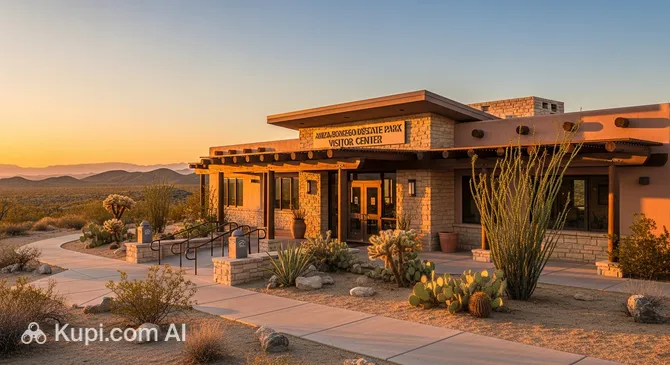
Anza-Borrego Desert State Park Visitor Center. Source: Kupi.com AI

Contacts

To find current information about park operations and plan your routes, you can use the official contact details.

Address 200 Palm Canyon Drive, Borrego Springs, CA 92004, USA
Phone +1 760-767-4205
Official Website parks.ca.gov

What to Do

The main reason to visit the visitor center is for knowledge and orientation. Here, you can get detailed maps and ranger recommendations for choosing routes, which is critical in the ever-changing desert environment. Inside the center, there are interactive exhibits dedicated to the geology and unique inhabitants of the region, including the famous desert bighorn sheep.

Botany enthusiasts will be delighted: over 600 plant species have been identified in the park. During the blooming season, the center is the place to find out which areas of the desert have turned into a vibrant carpet of flowers. Additionally, you can get the Anza Trail Passport Stamp #13, a nice souvenir for collectors of travel experiences.

For those interested in our planet's past, the park reveals its paleontological treasures. The exhibits feature information on ancient animal and plant fossils found in these parts. After visiting the center, it's worth heading to the eroded badlands or the historical sites of the Anza expedition to see history with your own eyes.

Getting There

The most convenient way to travel to this natural gem is by car, as public transportation in this part of the desert is extremely limited. The main route to Borrego Springs is from San Diego, heading east through the picturesque town of Julian. The distance is about 145–160 kilometers, and the drive takes just over two hours.

If you are planning a trip from other regions, look for a route through the San Felipe Valley. The nearest major international air hub is San Diego Airport, where you can rent a car. Within the town center, you can use taxi services, but to explore the park's territory, your own or a rental vehicle will be indispensable.

History & Facts

The park owes its name to two important elements: the 18th-century Spanish explorer Juan Bautista de Anza and the Spanish word borrego, meaning "sheep" (honoring the bighorn sheep living here). The Anza expedition made an important stop here in December 1775 at Coyote Creek to rest their animals after a difficult trek.

However, the history of these lands began long before Europeans arrived. Indigenous peoples, such as the Cocopah and Cahuilla tribes, utilized the desert valleys for at least 1,100 years. Archaeological finds confirm that this region was an important site for ceremonies and seasonal settlements of ancient inhabitants.

In later times, in the 1920s, the first motor roads were laid here, and in 1929, a prison camp was established, which later became a popular campground. During World War II, vast areas of the park were even used by the USA Army as a training ground.

Time Needed

To leisurely explore the visitor center's exhibits, watch the introductory film, and consult with rangers, 1–2 hours is usually sufficient. This time is enough to get your bearings and choose suitable routes for further exploration.

However, visiting the center itself is just a prelude to experiencing the vast park. If your goal is to see the famous "badlands" or find blooming cacti, you should plan for at least a full day of daylight. Experienced travelers often stay in the area for several days to fully experience the majesty of the desert.

Working Hours

The visitor center is typically open to visitors daily from 9:00 AM to 5:00 PM. However, consider the seasonal factor: in the hot summer months (June to September), the schedule may change, and the center sometimes only welcomes guests on weekends. It is highly recommended to check the official website before your trip.

Anza-Borrego Desert State Park itself is accessible 24 hours a day, allowing tourists to enjoy the incredible starry sky. Please note that an entrance fee of approximately $10 per vehicle is usually charged for park entry.

Nearby

Exploring the surroundings of the visitor center allows you to dive deeper into the atmosphere of the desert region and learn about its culture. Nearby, you will find both the park's administrative buildings and cozy spots within the town itself.

Name Distance (km)
Anza-Borrego Desert State Park Headquarters 0.3
Big Horn Burgers & Shakes 0.7
Pablito's Mexican Bar & Grill 2.4
Carlee's 2.7
Village Liquor 2.7
Borrego Art Institute 2.7
Museum of Borrego 2.9
Red Ocotillo 3.0
Sky Art Desert Sculpture Gardens 4.1
Breceda's Vineyard 4.6

Reached the end of the page?

That means the route is fully explored