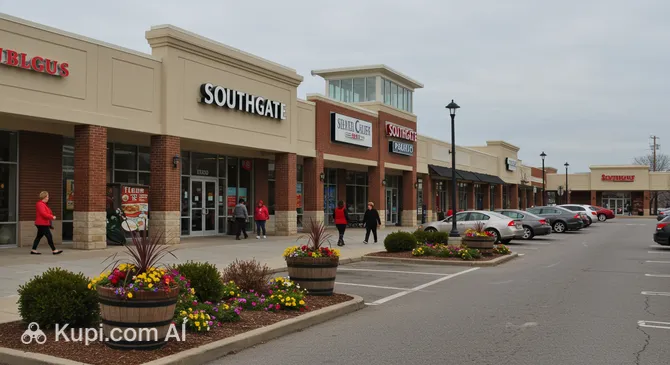
Finding exact, documented historical facts about Southgate Plaza, such as the year of its founding or the names of the first "anchor" tenants, can be a challenging task, as detailed records for every shopping center are not always maintained or published. However, like many similar shopping complexes in the USA, Southgate Plaza, located in Buffalo, is a prime example of the suburban retail development era. It most likely emerged in the second half of the 20th century, a period of active suburbanization when American families moved en masse from city centers to the suburbs. This created a strong demand for convenient shopping outlets located close to new housing and, importantly, offering extensive parking for private cars, which became an integral part of the American lifestyle.
It is safe to assume that over the decades of its existence, Southgate Plaza has undergone many changes, adapting to evolving economic conditions, consumer preferences, and new trends in retail. Initially, such plazas were often built around one or more large department stores or supermarkets that acted as a magnet for visitors. Over time, the tenant mix may have changed repeatedly: some stores closed, others opened, and renovations were carried out to modernize the exterior and interior spaces so that the shopping center remained attractive and competitive.
Notably, shopping centers of this type, such as Southgate Plaza, have often played and continue to play an important social role that goes beyond just a place to shop. They frequently became community centers for residents of surrounding neighborhoods: a place for meetings, leisure, and even local events. Despite growing competition from online retail and the emergence of more modern shopping formats, many traditional plazas like Southgate Plaza maintain their significance in their community infrastructure, offering familiar convenience and a wide range of goods and services.