Support

Little Rock Air Force Base

About the Airport

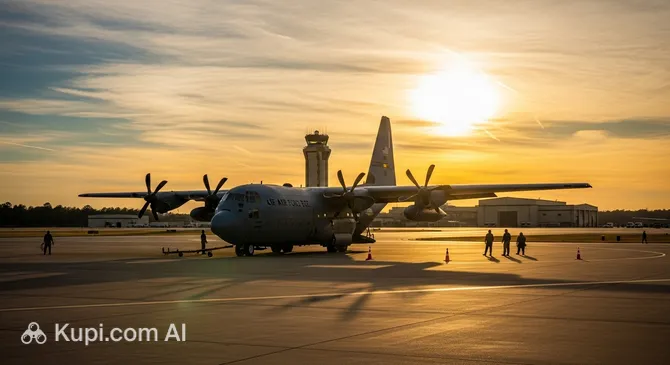
Little Rock Air Force Base is not merely an airport in the traditional sense, but a key military transport hub for the USA Air Force. Located in the heart of Arkansas, it is the world's largest training centre for C-130 Hercules tactical transport aircraft crews. This base plays a crucial role in ensuring the global mobility of the American armed forces, serving as home to several air wings and training squadrons. For the city of Cabot and its surroundings, the base is not only a significant economic centre but also a symbol of aviation power and history.

Little Rock Air Force Base. Source: Kupi.com Binoculars
IATA Code LRF
ICAO Code KLRF
City Cabot
Distance to centre About 20 km
Status Military Air Base
Annual Passengers Does not serve commercial passenger flights
Popular Airlines United States Air Force

The main feature of Little Rock Air Force Base is its unique specialisation. It is the primary training centre for pilots, navigators, flight engineers, and loadmasters for C-130 aircraft used worldwide. The base is equipped with modern simulators and infrastructure allowing for training at the highest level. Although the base does not serve civilian flights, its contribution to the regional economy is immense. Furthermore, air shows and open days are periodically held on the base grounds, attracting thousands of visitors and allowing them to experience the world of military aviation.

Contact Information

Below is the essential contact information for Little Rock Air Force Base (LRF). It is important to understand that this is an active military base, not a civilian commercial airport, so some standard tourist services may be unavailable or operate differently.

  • Official Website: www.littlerock.af.mil
  • Directory Assistance Phone: For general information, it is recommended to call the base operator at (501) 987-1110.
  • Airport Address: 1255 Vandenberg Blvd, Jacksonville, AR 72099, USA.
  • Email: A general email address for public inquiries is typically not provided. For communication, it is recommended to use the contact forms on the official website or contact the Public Affairs office.
  • Social Media: The air base maintains an official Facebook page where news and events are published: Little Rock Air Force Base.
  • Lost Luggage Information: As this is not a commercial airport, there is no standard lost luggage service for civilian passengers here. Service members should contact their Traffic Management Office (TMO).
  • Passenger Support Contacts: Support is provided to service members and their families through relevant base services. Civilians requiring access or information must obtain permission in advance and coordinate their actions through the base Public Affairs office.

How to Get to the Airport

When planning a trip to Little Rock Air Force Base, it is important to remember that it is an active military base located near the city of Cabot in the USA. Access to its territory is generally permitted only for military personnel and authorised visitors. Before travelling, strictly ensure you contact your sponsor or host on the base to clarify all entry procedures. Most travellers arrive in the region via the main commercial airport — Bill and Hillary Clinton National Airport (LIT), and make their way to the base from there.

Taxi and Car Sharing

The simplest and most convenient way to reach the air base is to use taxi services or ride-hailing apps such as Uber and Lyft. The journey from Little Rock city centre or LIT airport usually takes 30 to 45 minutes, depending on traffic conditions. Please note that drivers without a base pass will only be able to take you to the main gate and the Visitor Control Center. From there, you will likely require further assistance from your sponsor.

Car Rental

Renting a car offers maximum flexibility and freedom of movement. This is particularly convenient if you plan not only to visit the base but also to explore the surroundings. Major rental companies have counters at both Bill and Hillary Clinton Airport and in nearby towns. With a car, you can easily navigate the region and, upon obtaining necessary permits, the base itself. The drive from the centre of Cabot to the base takes just 10–20 minutes.

Public Transport

There are no direct public transport routes onto the military base territory. The local bus service, Rock Region METRO, serves surrounding areas, including the city of Jacksonville, but buses stop outside the base. This option may be inconvenient for guests, as you will have to organise transport from the bus stop to the checkpoint yourself. There is no direct rail or metro connection to the base.

Parking

If you arrive in a personal or rented vehicle, parking spaces are provided on the base territory. However, there are strict rules and designated zones for visitor parking. It is strongly recommended to check with your host in advance regarding exactly where to leave your car to avoid misunderstandings.

Terminals and Map

It is important to clarify that Little Rock Air Force Base (LRF) is an active military base of the USA Air Force and is not intended for serving regular commercial passenger flights. All of its infrastructure is used for military needs, and access to the territory for civilians is strictly limited.

Passengers heading to Cabot or other cities in the region arrive at the main civilian airport — Bill and Hillary Clinton National Airport, which holds the IATA code: LIT. It is this airport that serves all commercial airlines and travellers.

Since Little Rock Air Force Base (LRF) is not a civilian airport, it lacks passenger terminals in the traditional sense. Consequently, there are no standard departure and arrival zones, check-in counters, security screening points for tourists, or other services familiar to travellers here. All information regarding terminals, navigation, and pre-flight procedures applies to LIT airport.

Thus, when planning a trip to Little Rock or its vicinity, all information regarding flights, terminals, and services should be sought on the official resources of Bill and Hillary Clinton National Airport (LIT).

Airport History

The history of Little Rock Air Force Base (LRF) begins in the mid-20th century. Officially opened in 1955, it was initially created as a base for the US Strategic Air Command. In its early years, strategic B-47 Stratojet bombers were based here, defining its key role in the defence system of that time.

Over time, the base's mission changed radically. In the 1970s, Little Rock became a centre for tactical aviation, and it was then that the legendary C-130 Hercules military transport aircraft became firmly established here. This event was a turning point in LRF's history, transforming it into the primary training and operational centre for C-130 crews from around the world. Since then, the air base has been unofficially called the "Home of Hercules".

Throughout the decades, the air base has played an important role in numerous humanitarian and peacekeeping missions across the globe. Aircraft taking off from its runways have delivered aid to disaster zones, evacuated people, and supported international operations. One notable, albeit tragic, moment in its history involves an incident at a Titan II missile silo in 1980, which drew nationwide attention.

Today, Little Rock Air Force Base continues to remain the world's largest centre for the operation and training of C-130 aircraft crews, including their modern variation, the C-130J Super Hercules. It houses the so-called "Center of Excellence", where pilots and technical personnel from the USA and allied nations undergo training. This fact highlights the unique status and global significance of the air base in modern military aviation.

Services and Amenities

It is important to understand that Little Rock Air Force Base (LRF) is an active US Air Force military base, not a commercial civilian airport. Consequently, the range of services familiar to tourists is absent here, and access to the territory is strictly limited.

The air base has no public restaurants, cafés, or shops for the general public. Existing dining and retail outlets are intended exclusively for military personnel, their families, and authorised staff. The same applies to lounges, VIP halls, bank branches, and currency exchange points — these services are not provided to civilian passengers.

Although the base may have modern amenities such as Wi-Fi and device charging points, they are not a public service for travellers. Medical assistance is provided in military hospitals and is also not designed for civilians, except in emergency cases. Specialised services for passengers with children or those with reduced mobility in a civilian airport format are not provided.

There are no hotels, conference halls, or business centres on the Little Rock Air Force Base territory open for public booking. Travellers requiring accommodation or business services should look for options in nearby cities such as Jacksonville or Little Rock.

Where to Eat

When planning travel through Little Rock Air Force Base (LRF), it is important to consider that this is an active military facility serving flights under the Space-A program (travel on a space-available basis). Unlike major civilian airports, there are no multiple terminals with fine dining restaurants here. Dining infrastructure is concentrated not in the passenger terminal itself, but on the base territory, accessible to passengers before passing security control.

The AMC (Air Mobility Command) Passenger Terminal offers a minimal set of services. In the departure waiting area (airside) and check-in area (landside), mainly vending machines with drinks and light snacks are available. Therefore, experienced travellers strongly recommend having a substantial meal or buying food to take away before arriving at the terminal, utilising establishments on the main part of the base.

The primary place for dining is the Base Exchange (BX) Food Court, located in Building 787. This is the main gastronomic hub "landside" where you can find familiar chain establishments for a quick bite:

  • Starbucks — the ideal place for morning coffee and pastries before a flight.
  • Charley’s Grilled Subs — hot sandwiches popular among military personnel and their families.
  • Taco Bell — an option for fans of Tex-Mex cuisine.
  • Subway — offers sandwiches and salads, which is the best choice for those seeking healthier or vegetarian options.
  • Burger King and Popeye’s — located in separate buildings nearby the BX, offering classic burgers and Southern-style chicken.

If you have time and are looking for an opportunity for a full lunch in a quieter setting, it is worth visiting Rickenbacker’s. This is a café and dining venue located inside the Air Force Inn. The establishment is open to everyone with base access and offers a menu with breakfasts, lunches, and dinners. Here you can try classic American dishes in a more comfortable atmosphere than at the food court.

Another option for leisure and dining is Hangar 1080 (Consolidated Club). This is a club space where lunches and dinners are often served, and themed evenings are held. The menu varies but often includes hearty meat dishes, pizza, and snacks.

Practical Information for Passengers:

  • Opening Hours: The passenger terminal usually operates from 08:00 to 15:00 on weekdays, although flights may operate at other times. The BX Food Court is open longer (usually until 18:00–19:00), but late in the evening, the choice of places is limited.
  • Prices: The price range on the base is below average. Lunch for one person will cost approximately $8–15.
  • Dietary Preferences: There are no specialised vegan or certified Halal restaurants, however, at Subway and the food court, you can assemble a meat-free meal. Gluten-free options are limited to salads and specific snacks.

For a quick snack before check-in, it is best to head to the BX Food Court. If your flight is delayed or you have just arrived and want a full meal, we recommend Rickenbacker’s as the most comfortable place with a diverse menu.

Travel Tips

Travelling through a military airport such as Little Rock Air Force Base differs significantly from flying with standard commercial airlines. Since flights are conducted under the Space-A program (space available), the key factors for success here are flexibility, patience, and preparation. Here are some useful tips to help make your experience as comfortable as possible.

Arrival Time and Check-in

Unlike civilian flights where departure times are fixed, everything here depends on the so-called "Roll Call". It is recommended to arrive at the passenger terminal at least 2 hours before the roll call time, not the departure time. This will give you enough time to mark your presence and check the flight status.
For check-in, you will need:

  • Valid identification (Military ID or passport).
  • Leave forms for military personnel.
  • All necessary documents for family members.

Be prepared for staff to check your luggage weight more strictly than commercial airlines.

Seat Selection and Onboard Comfort

Little Rock is the "home" of the C-130 Hercules aircraft. These are military transport planes, not passenger liners.
Important nuances:

  • Seats: Most likely, you will be sitting on side-facing fold-down seats made of red canvas or mesh. Seat selection is done on a first-come, first-served basis upon boarding.
  • Temperature and Noise: It is often very cold or hot on board military aircraft, and the noise level is very high. Be sure to bring a warm jacket (even in summer) and high-quality noise-cancelling headphones or earplugs (although simple foam earplugs are usually provided by the crew).
  • Clothing: Avoid open footwear (sandals, flip-flops) — safety rules may prohibit boarding certain types of military aircraft in such shoes. The best choice is trainers or boots.

Hand Luggage and Baggage

TSA (Transportation Security Administration) safety rules apply here as well. Liquids must be in containers up to 100 ml, packed in a transparent bag.
Features:

  • On cargo aircraft, access to checked baggage during the flight is impossible as it is secured on pallets.
  • Keep all valuables, medication, warm clothing, and documents in your hand luggage. A backpack is the most convenient format, as there may be no space under the seat, and you might have to hold items on your lap or secure them nearby.

Tips for Transit Passengers

Space-A flights do not guarantee connections. If you are flying with a transfer, remember: the next flight could be in an hour, or it could be in three days.
Always have a "Plan B" and sufficient funds to buy a commercial ticket or pay for a hotel if you get stuck at an intermediate point.

Customs Control

If you arrive at Little Rock from abroad, customs control takes place directly on the base. The procedure is standard but often faster than in major hubs due to fewer passengers. Ensure you are not carrying prohibited food items or agricultural produce.

Saving Time and Money

  • Parking: Long-term parking is available on the base for terminal passengers. It is free or costs a nominal amount, allowing significant savings compared to civilian airports.
  • Dining: As mentioned earlier, buy food on the base before entering the terminal. It is cheaper and tastier than dry rations on board (if offered at all).

What to Do in Case of Flight Delay

Delays and cancellations due to technical reasons or priority military missions are common occurrences.
Recommendations:

  • Do not panic and remain polite with terminal staff — they do not control the mission schedule.
  • Have a list of nearby hotels handy (both the Air Force Inn on base and hotels in Cabot).
  • Ensure you have spare leave days. Never plan a return via Space-A too close to your date of returning to duty.
Reached the end of the page?

That means the route is fully explored