Support

Chapel Hill

About

Chapel Hill is a city with a unique atmosphere where southern small-town charm harmoniously intertwines with the energy of a major intellectual center. Situated among the picturesque hills of North Carolina, this city is one of the cultural gems of the USA. It is a place for leisurely strolls along shaded streets, lively discussions in local cafes, and quality outdoor recreation.
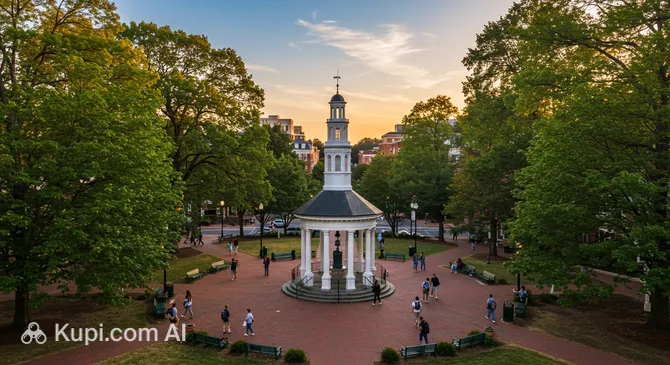
Chapel Hill. Illustration.
Source: Kupi.com AI

With a population of just over 60,000, Chapel Hill retains the charm of a small town while boasting the infrastructure and cultural life of a metropolis. The heart of the city is the famous University of North Carolina (UNC), one of the oldest public universities in the country. Thanks to its students and faculty, the city is filled with a spirit of youth, creativity, and constant forward motion. Together with the neighboring cities of Durham and Raleigh, Chapel Hill forms the renowned "Research Triangle," attracting scientists and innovators from all over the world.

The city's name refers to the small New Hope Chapel that once stood here. The fascinating history of Chapel Hill can be traced through the architecture of the old campus buildings and the historic center, which is carefully preserved by locals. The city is literally immersed in greenery, making it attractive to visit at any time of year, though it is particularly picturesque in spring and autumn.

Travelers should stop by to enjoy the relaxed pace of life, visit the botanical gardens, and immerse themselves in the intellectual environment of the university town. Chapel Hill will give you a sense of homey comfort and demonstrate true southern hospitality, leaving you with the warmest memories of your trip.

Weather Overview

The climate in Chapel Hill delights travelers with a clear change of seasons, allowing you to enjoy the diversity of North Carolina's nature year-round. Weather conditions here are generally mild, without extreme fluctuations, making walks through the university town comfortable in most cases.

Summer in the city is truly southern: hot and sometimes humid. The warmest month is July, with an average temperature of 27.1°C, while daytime temperatures often reach 31.8°C. Travelers should be prepared for precipitation, as summer is the wettest season; for example, about 16 rainy days are recorded in August. Winter, on the other hand, is quite gentle: in January, the average temperature is about 6.4°C, and although nighttime lows can drop to 2.0°C, severe frosts are rare.

Spring and autumn are considered the "golden times" for tourism. In April and May, the air warms to a comfortable 16-21°C, while October brings a pleasant coolness (around 17.8°C) and minimal precipitation. Overall, you can expect a hot summer with occasional rain and cool, relatively dry winters. To choose the perfect dates for your trip, we recommend checking the detailed monthly weather in Chapel Hill in advance.

Average monthly temperature

Average monthly precipitation

Interesting Facts

Beyond its well-known landmarks, Chapel Hill holds many fascinating secrets and surprising stories that reveal the city from a new perspective. Here are a few facts that will give you a different look at this university town:

  • Origin of the Name. The city owes its name to the small New Hope Chapel, which stood at a crossroads on a hilltop in the late 18th century. It was around this site that the city began to grow, and the modern name Chapel Hill literally reflects its origin.

  • A Historic Record. The Old East building, located on the University of North Carolina campus, is officially recognized as the oldest state university building in the USA. Its foundation was laid in 1793, and it still serves as a student dormitory today.

  • Birthplace of a Sports Legend. Chapel Hill is where the career of the greatest basketball player of all time began. Michael Jordan honed his skills playing for the local university team, the UNC Tar Heels, which is a source of immense pride for residents and a six-time NCAA champion.

  • A Mystical Castle. Hidden in a wooded area near campus, Gimghoul Castle looks like it stepped out of a medieval novel. Built in the 1920s, it is shrouded in legends about a secret order and is considered one of the most mysterious places in the county.

  • Cinematic Fame. The city's cozy streets and unique architecture have repeatedly caught the attention of filmmakers. Scenes for the movie "Super Mario Bros." and episodes of the well-known series "Under the Dome," based on Stephen King's novel, were filmed here.

How to Get There

When planning a trip to the "Research Triangle," it's important to think through the logistics in advance. Chapel Hill boasts excellent accessibility thanks to its proximity to North Carolina's major transportation hubs. You can explore all ways to get to the city to choose the most comfortable route, whether by air or by train followed by a transfer.

There is no airport in Chapel Hill itself, but travelers can use the air harbors of neighboring cities. The most convenient and popular option is Raleigh-Durham International Airport (IATA: RDU), located in Raleigh. It is only 24.5 km from the center of Chapel Hill. A trip from the terminal to the city by taxi or transfer will take approximately 57 minutes.

As an alternative, you can consider Piedmont Triad International Airport (IATA: GSO), located in Greensboro. The distance to Chapel Hill is about 82.3 km, so the journey will take longer—roughly 2 hours and 23 minutes. This can be a convenient option if you plan to rent a car and visit several cities in the region.

For clarity, here is summary information for the main airports:

AirportPassenger trafficDistance
Raleigh-Durham International Airport15.5 mln25 km
Piedmont Triad International Airport2.0 mln82 km
Fayetteville Regional Airport500 000104 km
Pitt-Greenville Airport91 000155 km
Preston-Glenn Field148 077157 km

If you prefer ground transportation, keep in mind that the nearest major railway hubs are quite far away. There is no railway station in Chapel Hill itself, but you can arrive at the Richmond Train Station (IATA: ZRD) in Glen Allen. This station is approximately 234.9 km from Chapel Hill, and a transfer from there will take about 6 hours. This option is better suited for those on a longer trip along the East Coast.

Below is information on the nearest available railway stations:

StationPassenger trafficDistance
Richmond Railway Station461 871235 km
Williamsburg Railway Station74 837259 km
Newport News Railway Station97 597264 km

Main Attractions

The attractions of Chapel Hill are closely intertwined with the university's history and the region's natural beauty. The city offers travelers a unique combination of intellectual leisure, art, and outdoor recreation. Most iconic spots are located compactly, allowing them to be explored during a leisurely walk.

One of the city's main natural gems is the North Carolina Botanical Garden. This is not just a park, but the largest center for the conservation of native plant species in the Southeast. It features picturesque trails passing through diverse landscapes, from forests to medicinal herb gardens. Tourists come here to enjoy the silence, see rare species of carnivorous plants, and visit educational exhibits dedicated to the region's ecology.

Science and space enthusiasts should visit the Morehead Planetarium and Science Center. This place has a rich history: in the 1960s, astronauts from the Gemini and Apollo programs trained here, studying celestial navigation. Today, the planetarium offers exciting full-dome shows, interactive science demonstrations, and exhibits that will interest both children and adults.

Art connoisseurs must stop by the Ackland Art Museum. Its collection includes about 20,000 works of art spanning a wide range of time and geography—from ancient Asian art to works by European masters and contemporary American artists. The museum is an important cultural center for the city, regularly organizing temporary exhibitions and lectures.

The heart of social life in Chapel Hill is considered to be Franklin Street. This is where the best restaurants, cozy coffee shops, bookstores, and souvenir shops are concentrated. Strolling along it, it's impossible to pass by the city's main symbol—The Old Well. This neoclassical rotunda, modeled after the Temple of Love at Versailles, is the most photographed object on campus. Local legend has it that a sip of water from the drinking fountain on the first day of classes brings students good luck and excellent grades.

Local Cuisine

Chapel Hill's culinary map is a vibrant kaleidoscope of flavors, where the hearty traditions of the American South harmoniously blend with sophisticated modern accents. The city actively supports the "farm-to-table" movement, so many restaurants focus on organic products from local producers, guaranteeing the freshness and quality of every dish.

An absolute must-try for any tourist is the famous pulled pork barbecue. This is the true pride of North Carolina: the meat is slow-cooked until incredibly tender and served with a signature tangy, vinegar-based sauce. Equally popular is the golden fried chicken, usually eaten with aromatic cornbread and seasonal vegetable sides. For dessert, be sure to order homemade pies, with recipes often passed down through generations.

As for drinks, no meal here is complete without the legendary southern sweet tea, which is perfectly refreshing on a hot day. For connoisseurs of bar culture, Chapel Hill offers products from local craft breweries and wineries. Tasting flights and production tours are a great way to get acquainted with the region's beverage traditions.

The local food culture is very democratic and diverse. Residents love visiting farmers' markets, where you can not only buy fresh berries, honey, and artisanal cheeses but also grab a bite of street food. In the fall, the city becomes a magnet for foodies: harvest festivals and gastronomic events take place here, allowing you to discover new facets of southern cuisine in an atmosphere of general celebration.

Travel Tips

Chapel Hill is famous for its southern hospitality and relaxed atmosphere, but knowing a few local particulars will make your trip truly carefree. We have prepared a list of practical recommendations to help you feel confident and comfortable in this university town.

  1. Clothing and Essentials. The climate in North Carolina is humid, so in summer, prioritize clothing made from light, natural fabrics. Winters here are mild but changeable: the principle of layering (t-shirt, sweater, light jacket) is the ideal solution. Since Chapel Hill is a pedestrian-friendly city with hilly terrain, comfortable shoes are a must for walking around campus. Don't forget an adapter for American-style power outlets (Type A and B).

  2. Transport. A huge advantage for tourists is the Chapel Hill Transit bus system, which is absolutely free for everyone. Routes cover the city center, the university, and major shopping areas. For trips to neighboring cities or the airport, it is more convenient to use ride-sharing apps (Uber, Lyft) or rent a car.

  3. Finances. Credit cards are accepted everywhere, but having some cash dollars (bills of 1, 5, 10) is useful for tipping or small purchases at markets. Remember that tipping culture in the USA is very well-developed: in restaurants and taxis, it is customary to leave 15–20% of the bill, as service is usually not included.

  4. Health and Safety. Chapel Hill is a quiet and safe city; however, you should not neglect general precautions or leave your belongings unattended. Large chain pharmacies (CVS, Walgreens) are easy to find downtown, where you can also buy basic over-the-counter medications. The emergency services number is 911.

  5. Communication. Free Wi-Fi (networks like UNC-Guest) is available throughout the university campus and in many cafes on Franklin Street. For constant connectivity, it is most convenient to purchase a local SIM card (T-Mobile, AT&T) or activate an eSIM in advance. Locals are very friendly and will gladly help you if you get lost, provided you have a basic grasp of English.

  6. Local Etiquette. Southern politeness is a way of life here. It is customary to greet bus drivers when entering, hold doors for those behind you, and smile when making eye contact. Queues are strictly observed, and attempting to cut ahead will be viewed very negatively.

  7. What to Avoid. Be careful with your choice of clothing colors on game days. The sporting rivalry with nearby Duke University is legendary, so wearing the dark blue of the "rivals" might draw sideways glances and teasing but persistent comments from local fans.

  8. Insider Tip. On home game days for the Tar Heels basketball team, city parking is overflowing, and restaurant tables are booked long before evening. If you want to dine downtown on such a day, book your spot in advance or arrive several hours before the game to soak up the unique atmosphere of a city-wide celebration.

By following these simple tips, you can easily blend into the rhythm of life in Chapel Hill and avoid minor inconveniences. Enjoy your walks, connect with the locals, and discover this charming corner of America with pleasure!

Entertainment & Nightlife

Nightlife in Chapel Hill is a vibrant reflection of its status as a university town, where youthful energy meets southern comfort. After sunset, the city transforms: students, locals, and tourists fill the streets, creating a bustling yet friendly atmosphere. There is none of the pretension of major metropolises here; instead of expensive clubs with face control, you will find atmospheric dive bars, craft beer pubs, and live music venues.

The epicenter of evening entertainment remains Franklin Street. This is where most establishments are concentrated. Generally, the nightlife can be divided into two zones: the west end (West Franklin) is more oriented toward noisy bars and dancing, while the eastern part offers quieter restaurants and lounge areas. During the warmer months, the fun often spills out onto the sidewalks, and many establishments open their terraces and patios.

The Chapel Hill music scene is legendary. The city, which gave the world several famous indie rock bands, carefully preserves the tradition of live performances. One of the cult spots is The Cave—the city's oldest bar, operating since 1968. This is an intimate basement venue with a unique interior resembling a cavern, where local and touring musicians regularly perform. Another landmark spot is Top of the Hill Restaurant & Brewery. Not only is it an excellent brewery, but it also features a spacious rooftop terrace offering the best panoramic view of downtown, which is especially beautiful at sunset.

For those who want to experience the true student spirit, a visit to the bar He's Not Here is a must. This open-air venue, tucked away in a courtyard, is famous for its laid-back atmosphere and signature massive "Blue Cups" of beer. The crowd here is diverse: from freshmen to professors and tourists enjoying conversation under the starry sky.

Practical Tips and Dress Code:

  • Style: Most venues have no dress code or define it as "casual." Jeans, t-shirts, and comfortable shoes are appropriate almost everywhere.
  • Time: Bars are usually open until 2:00 AM. The busiest times are Friday and Saturday after 10:00 PM. If you want to snag a table on a terrace, it's best to arrive early, around 7:00–8:00 PM.
  • Prices: Prices in the city are affordable, catering to a student budget, though cocktail bars may have prices on par with major cities.

Safety in Chapel Hill is maintained at a high level. The city center and Franklin Street are well-lit and patrolled, making night walks comfortable. To return to your hotel, we recommend using ride-sharing services (Uber or Lyft). Additionally, during the school year, special P2P and Safe Ride night buses operate, providing safe transport along main routes.

If you're looking for an alternative to bars, consider cultural entertainment. The city is home to the historic The Varsity Theatre, which screens both new releases and cinema classics. Performing arts lovers should check the schedule at Memorial Hall or the PlayMakers Repertory Company, which offer high-quality productions and concerts, making for an excellent intellectual evening.

Parks & Museums

Chapel Hill rightfully takes pride in its reputation as a "city in a garden." Here, the urban environment doesn't just sit alongside nature but literally dissolves into it. For tourists, this means that exploring the cultural heritage and history of the USA can easily be combined with relaxation in the picturesque green zones that abound in this university center.

Among the natural areas, the Coker Arboretum holds a special place. Located in the very heart of campus, this historic garden was founded back in 1903. A unique collection of trees and flowers that bloom at different times of the year is gathered on its 5-acre territory, making the park attractive in any season. For travelers, it's an ideal place to catch their breath after excursions: there are convenient gravel paths and benches in the shade of centuries-old trees, and the atmosphere of tranquility lets you forget the city bustle.

For those who prefer a more wild natural setting, Battle Park will be a real discovery. This woodland area, adjacent to the university, offers a network of winding hiking trails right within the city limits. Here you can feel far from civilization, enjoying the singing of birds and the rustle of leaves. The park is interesting not only for its nature but also for its historical significance—it is protected as an important natural heritage site of the state.

The city's cultural life is not limited to art galleries. Given the region's sporting fame, it's impossible to overlook the Carolina Basketball Museum. This modern interactive space is dedicated to the history of the legendary "Tar Heels" team. Even if you're not a sports fan, the museum will impress you with its scale: it houses championship trophies, players' personal items, and, of course, exhibits related to Michael Jordan. This place helps you understand why basketball here is not just a game, but a true religion.

Local history enthusiasts should visit the Horace Williams House. This beautifully preserved 19th-century mansion, managed by the Preservation Chapel Hill organization, serves as both a museum and a venue for exhibitions by local artists. Visiting the house offers a rare glimpse into the lifestyle of the past and an appreciation for the architectural traditions of the Old South.

Among the architectural monuments harmoniously integrated into the landscape is the Forest Theatre. This outdoor stone amphitheater, built in the early 20th century in Battle Park, resembles ancient structures. It is still used for productions and concerts. The massive stone steps and a stage surrounded by tall trees create a mystical and solemn atmosphere.

Insider Tip: If you want to see the "off-the-beaten-path" but incredibly beautiful Chapel Hill, take a walk along the Bolin Creek Trail. This is a favorite spot for locals for morning jogs and bike rides, running along a picturesque stream and connecting several city parks, revealing hidden natural corners of the city.

Getting Around

The public transport system in Chapel Hill is a real gift for tourists, distinguished by its convenience and, most pleasantly, its accessibility. There are no subways or trams in the city, but they aren't needed here: the primary means of transportation is the extensive and efficient Chapel Hill Transit bus network. It serves not only the city itself but also the University of North Carolina campus and the neighboring town of Carrboro. Buses run frequently; they are clean, safe, and air-conditioned, which is especially relevant during hot summer days.

The main feature of local transport that pleasantly surprises guests is that it is Fare-Free. You don't need to look for ticket offices, buy transit cards, figure out validators, or have exact change for the driver. You simply go to a stop marked with a blue sign featuring a bus logo, enter through the front door, and take a seat. This policy applies to all Chapel Hill Transit routes and is co-funded by the university and the municipalities, encouraging residents and tourists to leave their personal cars behind.

To navigate the city, it is highly recommended to use mobile apps. The most popular are NextBus or TransLoc, which allow you to track bus movements in real-time and find out the exact arrival time. This is very useful as schedules can change depending on the season: during student breaks (summer and winter), intervals between buses increase, and some routes may be temporarily suspended. Standard Google Maps also does a great job with route planning.

If you plan to travel outside the city, for example to Durham or Raleigh, you will need the regional buses operated by GoTriangle. Unlike local lines, these may require a fare (about $2–3 per trip), although fare-free periods are occasionally introduced. You can pay for a ticket in cash to the driver (no change given) or via the Umo mobile app, which serves as an electronic wallet. Regional bus stops often coincide with local ones, so watch the display on the front of the vehicle carefully.

As an alternative to public transport, taxi and ride-sharing services such as Uber and Lyft are widely available in the city. You can call a car 24/7, and the wait time in the center usually doesn't exceed 5–7 minutes. This is the best option for late-night travel, as many bus routes stop running around midnight or earlier.

Chapel Hill is also bike-friendly. The local terrain is hilly, justifying the city's name, but the presence of bike lanes and picturesque greenways makes two-wheeled travel pleasant. Electric scooter and bike rental services operate in the city and can be found through their respective apps (e.g., Spin or Lime). However, remember that riding on sidewalks in the center (especially on Franklin Street) is often restricted due to heavy pedestrian traffic.

Accommodation

The choice of accommodation in Chapel Hill can satisfy the needs of a wide range of travelers: from students with backpacks to connoisseurs of luxury vacations. The city offers a broad spectrum of lodging options, including cozy bed and breakfasts (B&Bs), classic motels, modern mid-range chain hotels, and historic boutique hotels. For those who prefer a home-like environment, apartments and houses for short-term rent are widely available, which is particularly convenient for families or large groups.

The most popular and convenient area for tourists is downtown and the surroundings of Franklin Street. By staying here, you will be within walking distance of the University of North Carolina campus, major museums, restaurants, and nightlife, allowing you to get around almost entirely without transport. If you are traveling by car and looking for more budget-friendly options, consider hotels along Fordham Boulevard or near the I-40 highway, from where it is easy to reach both central Chapel Hill and neighboring Durham.

Of special note is the legendary The Carolina Inn, often referred to as the "university's living room." This historic building, constructed in 1924, is the epitome of southern elegance and hospitality. Even if you don't plan to stay there, it's worth stopping by the lobby or the veranda just for the atmosphere. Another interesting option is the Graduate Chapel Hill hotel, whose interiors are permeated with student spirit and love for local sports, making it popular among alumni and fans.

Booking Tip: Chapel Hill lives by the university calendar, and this is critically important to consider when planning your trip. During graduation ceremonies (May) and home basketball games (especially against major rivals), demand for housing skyrockets, and rooms are booked six months or even a year in advance. If your trip coincides with these dates, take care of your reservation as early as possible.

Price ranges vary depending on the season and the category of accommodation. Budget options and motels usually cost from $80–100 per night, mid-level hotels range from $130–180, and staying in historic or luxury hotels can cost $250–300 and up. It is most convenient to book through major international online platforms, though checking hotel websites directly can sometimes yield special offers or packages.

Nearby Cities

For those who want to explore the surroundings, Chapel Hill serves as an excellent starting point for day trips to several interesting nearby locations:

Very close by, literally 17 km away, is Durham. This city, which together with Chapel Hill and Raleigh forms the famous "Triangle," is known for its historic American Tobacco Campus, where former industrial warehouses have been transformed into stylish restaurants and offices. Duke University is also located here, with its magnificent Gothic architecture and famous gardens that every nature lover should see.

The state capital, Raleigh, is less than an hour's drive away. Often called the "City of Oaks," it attracts tourists with its world-class free museums, including the Museum of Natural Sciences and the North Carolina Museum of Art. It is an excellent choice for a family trip, offering a combination of educational leisure and walks through picturesque parks.

If you drive a bit further west, you can visit Greensboro. This destination is interesting for its rich historical heritage related to the civil rights movement, as well as an excellent Science Center that combines an aquarium, museum, and zoo.

CityPopulationDistance
Carrboro21 2372 km
Durham399 76217 km
Morrisville28 82423 km
Apex58 06627 km
Cary171 60328 km

These nearby destinations provide a good overview of the diverse culture and landscapes of the region.

Shopping & Souvenirs

Shopping in Chapel Hill is characterized by a relaxed and cozy atmosphere typical of university towns. You won't find endless rows of luxury boutiques like in New York, but instead, you can discover many unique independent shops, bookstores, and art galleries. The city is known for supporting local businesses, so many items, from clothing to home decor, are often made by local artisans or have their own unique story.

The main shopping artery of the city remains Franklin Street. It is an ideal place for a shopping stroll. It features clothing stores, vintage shops, and, of course, numerous outlets selling official university merchandise. While walking down this street, tourists often visit independent bookstores, which are an essential part of the city's intellectual culture, offering not only bestsellers but also rare editions.

For those who prefer a more traditional format of shopping under one roof, University Place is worth a visit. This is the city's main shopping center, featuring well-known American clothing brands, home goods, and specialty stores. It is not just a mall, but a community space where events are often held, and where you can find everything you need in a comfortable environment, escaping the summer heat or winter chill.

A special flavor of local life can be experienced at the markets. The Chapel Hill Farmers' Market operates year-round and is a magnet for foodies. Here you can buy the freshest seasonal fruits, artisanal cheeses, homemade baked goods, and flowers. In addition to food, the market often sells items from local crafters: ceramics, natural soaps, and handmade jewelry, which make for great reminders of your trip.

When choosing souvenirs, it's impossible to ignore the cult of the local sports team. Clothing, hats, or accessories in "Carolina Blue" featuring the UNC Tar Heels logo are the most popular gifts from Chapel Hill. Also worth noting are products from local producers: a bottle of signature North Carolina-style barbecue sauce (vinegar-based), a bag of freshly roasted coffee from local roasters, or ceramic pieces for which this region is famous.

Most stores in shopping centers are open from 10:00 AM to 9:00 PM Monday through Saturday, with reduced hours on Sundays (usually 12:00 PM to 6:00 PM). Small private boutiques on Franklin Street may close earlier, around 6:00 or 7:00 PM. Bank cards (Visa, MasterCard, American Express) are accepted everywhere, and contactless mobile payment is also widespread. Cash may only be useful for small purchases at the market.

Tourists should remember that in the USA, Sales Tax is not included in the price on the tag and is added to the total at the register. In North Carolina, the total tax rate is about 7%. There is no Tax-Free system (tax refund for foreign tourists) in the state, so you should not count on a VAT refund upon departure.

Reached the end of the page?

That means the route is fully explored