Support

Willis Tower

About

Willis Tower, known as the Sears Tower until 2009, is not just a skyscraper but a true symbol of the architectural greatness of Chicago and the entire USA. Rising 442.1 meters, this 108-story building is a prominent example of the "Second Chicago School" of architecture. Its innovative bundled tube structure, designed by engineer Fazlur Khan, allowed the building to hold the title of one of the world's tallest for many years.

Today, Willis Tower remains one of the tallest buildings in the Western Hemisphere and attracts millions of tourists from around the world. The main attraction is the Skydeck observatory, located at the dizzying height of the 103rd floor. From here, at an elevation of over 412 meters, panoramic views stretch for dozens of miles. On a clear day, you can see not only all of Chicago but also parts of four different states.
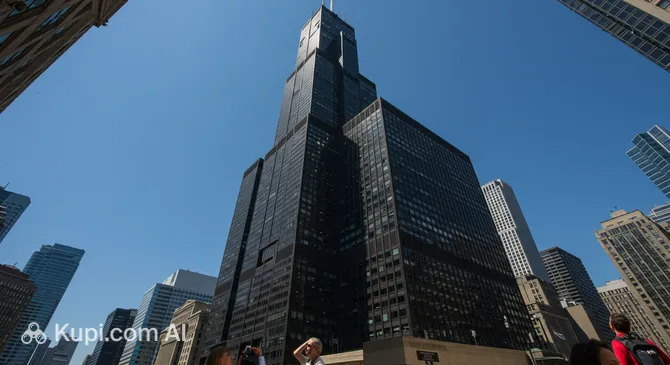
Willis Tower. Illustration.
Source: Kupi.com AI

Traveler photos:

But the main highlight of the Skydeck is undoubtedly The Ledge attraction. It consists of several fully glass balconies that extend nearly one and a half meters beyond the building's facade. Stepping onto one of these balconies, you find yourself literally floating over the city, with a breathtaking drop unfolding beneath your feet. It’s an unforgettable sensation that provides not only an adrenaline rush but also unique photos to remember your visit to this architectural wonder.

Contacts

To plan your visit to the Skydeck observatory, check ticket prices, or get information about special events, it is recommended to visit the attraction's official website. All key visitor contacts have been gathered here for your convenience.

How to contactContact
Address233 S Wacker Dr, Chicago, IL 60606, USA
Phone number+1 312-875-0066
Websitewww.willistower.com

What to Do

The primary activity for visitors to Willis Tower is, of course, ascending to the famous Skydeck observatory. This is where you'll find spectacular panoramic views of Chicago. The highlight of the deck is The Ledge—a series of glass balconies extending beyond the building's edge. Stepping onto one, you'll feel as though you are literally floating over the city at a height of more than 400 meters, which offers an unforgettable and thrilling experience.

In addition to the observatory, the skyscraper houses other points of interest. Visitors can browse various shops and restaurants located inside. It is also a great opportunity to learn more about the skyscraper's history, its unique architectural features, and its importance to the city. Interactive exhibits on the lower levels provide insight into Chicago's culture and history before you head up. Take note of the impressive scale of the tower's internal infrastructure: there are 25 miles of plumbing, 1,500 miles of electrical wiring, and over 145,000 light fixtures keeping this giant alive.

Getting There

Willis Tower is located in the heart of Chicago's business district, known as The Loop, so getting there is easy. Thanks to its central location, the skyscraper is easily accessible from any part of the city using various modes of transport. The most convenient and cost-effective way for most tourists is Chicago's extensive public transportation network.

If you plan to ride Chicago's famous elevated metro, known as the 'L,' the nearest station to the tower is Quincy. It is just one block from the entrance and is served by the Brown, Orange, Pink, and Purple lines. Other stations, such as Jackson (Blue and Red lines), are also within walking distance. Additionally, the area is served by numerous bus routes with stops right by the skyscraper on Wacker Drive and adjacent streets. For those arriving from the suburbs, Willis Tower is located in close proximity to two major train stations—Union Station and the Ogilvie Transportation Center.

Taking a taxi or using rideshare services (such as Uber or Lyft) is another simple way to reach your destination, as every driver in the city knows where Willis Tower is located. If you are staying at a downtown hotel, for example in The Loop, River North, or West Loop, a walk to the skyscraper can be a pleasant part of your day. However, driving a personal car can be difficult due to heavy traffic and high parking costs in downtown Chicago, so this option should be considered a last resort.

Nearest city: Chicago

History & Facts

The history of Willis Tower began in 1969 with an ambitious idea from Sears, Roebuck & Co.—to consolidate all their scattered employees under one roof in the heart of Chicago. Construction of this giant started in August 1970 and was completed in just three years, by May 1973. The creation of this architectural masterpiece involved brilliant minds: chief architect Bruce Graham and talented engineer Fazlur Khan, whose innovative solutions defined the building's look.

Immediately after its opening in 1974, the skyscraper, then still called the Sears Tower, took the title of the tallest building in the world from the Twin Towers of the World Trade Center in New York. It held this prestigious title for nearly 25 years, until 1998, when the Petronas Towers were built. More than 2,000 workers participated in the construction, and the final beam placed at the top was decorated with the signatures of 12,000 construction workers, employees, and local residents—a beautiful symbol of a collective effort.

One of the most famous facts in the tower's modern history is its renaming. In 2009, after the British insurance company Willis Group Holdings leased a significant portion of the office space, the skyscraper was officially renamed Willis Tower. Despite this, many Chicagoans and tourists still fondly call it by its old name—Sears Tower—as a tribute to its original history and its significance to the city and the entire USA.

Time Needed

When planning a visit to Willis Tower, you should set aside 2 to 3 hours. This time is usually enough to go through all the stages without rushing: from security checks and exploring interactive exhibits on the lower levels to riding the high-speed elevator and, of course, enjoying the views from the Skydeck observatory. Just visiting the exhibits detailing the history of Chicago and the skyscraper itself can take 30 to 60 minutes. Most of the time on the 103rd floor is spent admiring the panorama and waiting in line for photos on the famous glass balconies of The Ledge.

The duration of your visit can vary greatly depending on several factors. During peak hours, especially on weekends and during sunset, wait times in lines can increase significantly, sometimes adding an hour or more to your visit. To avoid the crowds, it's best to come on a weekday morning shortly after opening. If your goal is to see the city in the light of the setting sun, be prepared for a large number of visitors. Buying tickets online in advance will also help save time by eliminating the need to wait at the ticket office.

Working Hours

The Skydeck observatory at Willis Tower is open to visitors year-round, 365 days a year, though hours may vary by season. Generally, during the summer months (March to September), the deck is open longer, approximately from 9:00 AM to 10:00 PM. During the winter period (October to February), hours are reduced—usually from 9:00 AM to 8:00 PM. Last entry is 30 minutes before closing. As the schedule may change for holidays or private events, it is highly recommended to check the current operating hours on the official Skydeck website before planning your visit.

To avoid long lines, especially during peak tourist season or popular times like sunset, it is strongly recommended to buy tickets online in advance. This not only saves you time but also guarantees entry on your chosen day. The best time to visit to avoid crowds is a weekday morning right after opening. If you want to see the city lights at night, be prepared for a larger influx of visitors.

9:00 – 22:00

Nearby

A visit to Willis Tower is undoubtedly a highlight, but exploring the surrounding area can make your trip to Chicago even more rewarding and interesting. The area around the skyscraper, known as The Loop, is full of iconic landmarks, cultural sites, and cozy spots just a few minutes' walk away.

Exploring nearby attractions will allow you to dive deeper into the city's atmosphere and discover its architectural diversity and cultural heritage. From world-famous museums to unique sculptures and theaters, everything is located nearby, waiting to be explored.

NameDistance
The Chicago Theatre1 km
Medieval Torture Museum1 km
The Art Institute of Chicago1.1 km
Aba1.4 km
Puttery1.4 km
Field Museum2.1 km
Shedd Aquarium2.2 km

Have you reached the end of the page?

So the route has been studied inside and out