Support

Wrigley Field

About

Wrigley Field is a legendary baseball stadium located in Chicago, USA. As the home field for the famous Chicago Cubs, it is considered one of the oldest and most recognizable sports venues in the country. A visit here is not just about watching a game, but a true immersion into the history of American baseball.
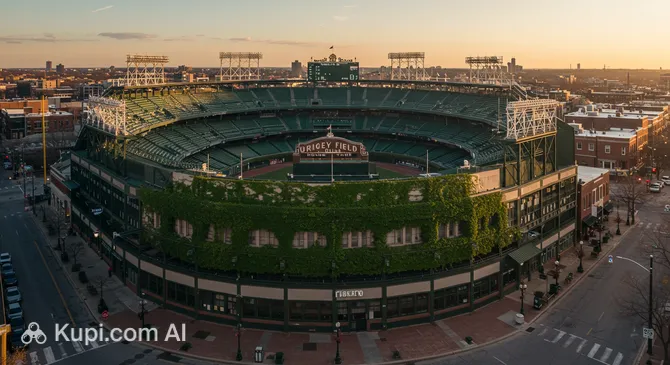
Wrigley Field. Illustration.
Source: Kupi.com AI

Traveler photos:

The stadium is famous for its unique architectural features that create an unmistakable atmosphere. One of the most famous traits is the outfield wall, completely covered in thick ivy. This green wall not only gives the stadium incredible charm but also creates additional challenges for players when a ball gets lost in the foliage. Another iconic detail is the rooftop seating on neighboring residential buildings, which is a signature of Wrigley Field.

Besides the ivy, the stadium's outer wall is made of brick and, unlike many modern arenas, lacks protective padding, which emphasizes its historical character and makes the game more unpredictable. Wrigley Field is more than just a stadium; it is a true monument to sports culture, attracting not only fans but everyone who wants to touch living history.

Contacts

To get the most accurate and up-to-date information regarding events, ticket purchases, or stadium visitor rules, it is recommended to consult official sources. The primary contact details for reaching the Wrigley Field administration are listed below.

How to contactContact
Address1060 W Addison St, Chicago, IL 60613, USA
Phone number+1 800-843-2827
Websitewww.mlb.com

What to Do

The main attraction at Wrigley Field is, of course, attending a Chicago Cubs baseball game. It is a unique opportunity to dive headfirst into the authentic atmosphere of American baseball with its centuries-old traditions and special fan culture. The stadium is known for its inimitable spirit, where historical heritage blends harmoniously with the modern energy of major league sports. Going to a game is more than just a sporting event; it's a true cultural experience that will be remembered for a long time.

Besides the game itself, visitors should take note of the stadium's iconic details. One of these is the historic scoreboard, which has remained virtually unchanged since 1937 and is still operated manually. It is considered a major attraction of Wrigley Field in its own right. Additionally, watching the game from the rooftops of neighboring buildings, where special spectator seats are set up, provides an unforgettable experience—this is one of the stadium's most famous "features," offering a completely different perspective and atmosphere.

Getting There

Getting to Wrigley Field is quite simple, as the stadium is located in a vibrant area of Chicago and is well-served by public transport. The most convenient and popular way, especially on game days, is using the city's rapid transit system, known as the 'L'. This option helps avoid traffic jams and the difficulties of finding parking, which are inevitable during events.

The key route for traveling to the stadium is the Red Line of the Chicago 'L'. The Addison station is literally just steps away from the entrance to Wrigley Field, making this the fastest and most direct method. Stations on other lines, such as Belmont (Red, Brown, and Purple lines), are also within walking distance, providing additional route options from different parts of the city.

In addition to the 'L' trains, the stadium can be reached via numerous bus routes. Buses No. 22 (Clark) and No. 152 (Addison) stop right at Wrigley Field, providing easy connections to other neighborhoods. For those who prefer comfort, taxi and rideshare services are available. However, keep in mind that on game days, fares can increase significantly and traffic near the stadium will be heavy.

Driving a personal or rental car is not recommended due to heavy traffic and very limited parking. Parking around the stadium is generally paid, and rates on game days can be quite high. As an alternative, the Chicago Cubs offer free remote parking with a free shuttle to the stadium on night and weekend game days.

Nearest city: Chicago

History & Facts

The history of Wrigley Field began in 1914 when it was built for the Chicago Whales baseball team of the short-lived Federal League. Originally, the stadium was named Weeghman Park, after team owner Charles Weeghman. After the league folded in 1915, Weeghman joined an investment group that purchased the Chicago Cubs and moved the team to his modern stadium, which was known as Cubs Park from 1920 to 1926.

The stadium received its current, world-famous name in 1927. This happened after control of the team passed to William Wrigley Jr., the tycoon who founded the famous chewing gum company of the same name. Thus, the name today associated with a baseball legend is actually a tribute to one of the USA's most successful entrepreneurs.

Interestingly, Wrigley Field served as a home arena for more than just baseball. For nearly half a century, from 1921 to 1970, the NFL team Chicago Bears played their home games here. This fact highlights the stadium's versatility and its deep roots in Chicago's sports history, which extends far beyond a single sport.

Time Needed

When planning a visit to Wrigley Field, you should consider what kind of experience you want to have. The time needed for a visit depends heavily on your plans: whether you are going to a baseball game or just want to see the legendary stadium as part of a tour. Both options provide unforgettable impressions but require different amounts of time.

If your goal is to attend a Chicago Cubs game, be prepared to set aside at least 4–5 hours. The average duration of a baseball game is about three hours, but true enthusiasts arrive early. This allows you to find your seat without rushing, grab a snack, visit the souvenir shop, and most importantly, soak up the unique atmosphere that permeates the stadium and its surroundings long before the first pitch.

For those who don't have the chance to attend a game or want to dive deeper into the stadium's history, an official tour is an ideal choice. A standard tour lasts approximately 75–90 minutes. During this time, you can peek into the visiting team's clubhouse, the press box, step onto the field, and learn many interesting facts about the arena's more than century-long history. Thus, about an hour and a half to two hours is sufficient for an informative tour.

Working Hours

The operating hours of Wrigley Field depend directly on the game and tour schedule. The stadium is open to the public primarily on event days, as well as for special tours available on both game and non-game days. The baseball season typically runs from March/April to September/October, which is when the stadium is most active. Since specific hours vary, it is highly recommended to check the current schedule on the official Chicago Cubs website in advance.

For both games and stadium tours, it is strongly recommended to book tickets in advance. This is due to high demand, especially during the peak of the season. Tours, which last about 75–90 minutes, are held regularly, but their schedule and availability can change. Purchasing tickets online in advance not only guarantees your spot but also allows you to choose the most convenient time for your visit.

Nearby

Visiting Wrigley Field is an exciting event, but exploring its surroundings can make your trip to Chicago even more fulfilling. The Wrigleyville neighborhood, where the stadium is located, is a lively hub in its own right with many bars, restaurants, and shops, but there is plenty to see beyond it as well.

Exploring nearby attractions will allow you to dive deeper into the city's atmosphere and see it from different perspectives—from picturesque parks and beaches on the shores of Lake Michigan to iconic cultural sites. Below is a list of interesting places located near the stadium that are worth adding to your itinerary.

NameDistance
Kingston Mines2.3 km
Montrose Beach2.5 km
North Avenue Beach4.2 km
Church of Saint John Cantius5.7 km
Oak Street Beach5.7 km
360 Chicago6.1 km
Aba6.8 km

Have you reached the end of the page?

So the route has been studied inside and out