Support

Denver Zoo

About

Denver Zoo is one of the main attractions of the Colorado state capital, Denver, conveniently located in the large City Park. This major zoological complex in the USA is one of the region's most popular ticketed tourist sites and attracts visitors of all ages.
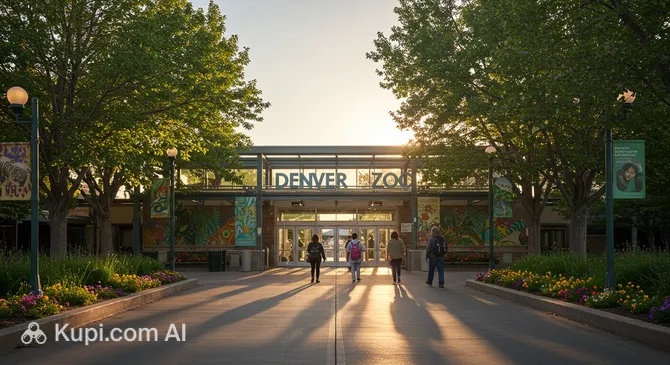
Denver Zoo. Illustration.
Source: Kupi.com AI

Traveler photos:

The zoo covers an impressive area of 80 acres (about 32 hectares), inhabited by numerous animal species from around the world. A special feature of the Denver Zoo is the creation of spacious and highly natural habitats that mimic the living conditions of its residents in the wild. This ensures the animals' comfort and allows guests to observe them in environments close to nature.

Animal care and visitor comfort are top priorities for the zoo, which employs about 350 staff members. Guests often note the excellent service: the staff is always ready to help and provide directions to specific enclosures. For convenience, there are several cafes on-site offering a variety of food where you can rest and have a snack during your walk.

Contacts

To plan your visit and check for up-to-date information such as opening hours, ticket prices, or event schedules, it is recommended to consult the zoo's official sources. You can contact Denver Zoo representatives by phone or through their official website.

How to contactContact
Address2300 Steele St, Denver, CO 80205, USA
Phone number+1 720-337-1400
Websitedenverzoo.org

What to Do

A visit to the Denver Zoo is an opportunity to take a world tour of wildlife by exploring its many themed zones. Each exhibit offers a unique experience and introduces you to inhabitants from different continents, allowing you to observe their behavior in meticulously designed environments.

One of the most impressive areas is Predator Ridge, which recreates the landscape of the African savanna. It uses an innovative rotation system: African lions, spotted hyenas, and African wild dogs take turns moving through three different enclosures. This approach enriches the habitat by leaving the scents of other species behind, stimulating the animals' natural instincts and making their behavior more dynamic.

The seven-acre Primate Panorama exhibit is equally fascinating. Here, arboreal monkeys live in massive mesh enclosures as tall as a four-story building, while rare Sumatran orangutans and Western lowland gorillas can be seen in spacious open areas. Another large-scale complex, the Toyota Elephant Passage, is one of North America's largest habitats for Asian elephants, Indian rhinos, and Malayan tapirs, which are also kept using the rotation method.

In addition to the large complexes, the zoo offers other unique experiences. For example, you can see extremely rare animals such as the aye-aye — the Denver Zoo was the first in North America to successfully breed this species. It's also worth visiting the Tropical Discovery pavilion, where colorful frogs, snakes, and other exotic animals live in a recreated rainforest, making a visit to the zoo a truly educational adventure.

Getting There

Getting to the Denver Zoo is quite simple, as it is conveniently located in City Park, Denver. This makes it easily accessible for both locals and tourists traveling by car or public transport. Thanks to its central location, the trip from most parts of the city won't take much time.

For those who prefer public transport, several bus routes run to the zoo. Routes #20 and #40 are among the most convenient. Buses stop at the intersection of East 23rd Avenue and Colorado Boulevard, from where it is a short walk west to the zoo's main entrance on Steele Street. A bus ride from the city center, for example, from Union Station, takes about 40 minutes. This is a great way to avoid traffic and parking concerns.

If you are traveling by car, finding the zoo is easy using the address: 2300 Steele St, Denver, CO 80205. There are several parking areas near the zoo, including a multi-level parking garage and an open lot. Accessible parking spaces for visitors with disabilities are available on all levels of the garage near the elevators. You can also always use taxi or ride-sharing services; a trip from downtown Denver to the zoo takes only 5-10 minutes depending on traffic.

Nearest city: Denver

History & Facts

The history of the Denver Zoo began quite modestly in 1896 with a single inhabitant — an orphaned American black bear named Billy, who was donated to the city. This animal became the first resident of the menagerie established in City Park, laying the foundation for its future rich collection.

In the first decades of the 20th century, the zoo began to expand actively. Initially, Victorian-style cages were built for the animals according to Reinhard Schuetze's design, and care was entrusted to park staff. However, already in 1918, a revolutionary step for its time was taken — the opening of Bear Mountain. This became one of the first structures in the USA where a natural habitat was recreated, setting a new, progressive direction for zoo development.

A new stage in the zoo's history began with the arrival of Victor H. Carlson as director in 1938. He made the innovative approach tested during the construction of Bear Mountain the core philosophy of the entire zoo. Under his leadership, a large-scale replacement of outdated cages with spacious enclosures mimicking natural landscapes began. This transition to more natural animal care defined the modern look of the Denver Zoo and solidified its reputation as one of the most advanced in the world.

Time Needed

When planning a visit to the Denver Zoo, it is worth considering its impressive size and variety of exhibits. For a thorough introduction to most inhabitants and the main zones, it is recommended to set aside at least half a day. The average visit lasts from 3 to 5 hours. This time is usually sufficient to leisurely walk around the grounds, observe the animals, and take memorable photos.

If you want to get the most out of your experience, your visit can easily take longer. For instance, for families with children or those planning to attend special events like feeding demonstrations or keeper talks, it's worth budgeting 5–6 hours or even a whole day. The zoo offers many interactive areas and daily demonstrations that make the visit even more engaging and educational. Considering that the main loop around the zoo is about 4 km, a slow stroll with stops at the enclosures and a lunch break will quickly fill your day.

Working Hours

Denver Zoo welcomes guests almost year-round; however, it is closed for two holidays: Thanksgiving and Christmas. Operating hours vary depending on the season, so it's always worth checking the current schedule on the official website before your visit. For example, between August and October, the zoo is open to the general public from 10:00 AM, and admission closes at 4:00 PM. During peak months (March through October), zoo members enjoy a nice perk — the option for early entry starting at 9:00 AM.

Advance online ticket purchase is required for visiting the zoo, with a specific time slot selected for entry. This rule applies to all visitors who are not zoo members. Tickets go on sale 10 days before the visit date, and popular slots sell out quickly, so planning your purchase in advance is recommended. Rules for zoo members have been updated: they no longer need to reserve a free ticket online in advance for daytime admission — simply showing their membership QR code at the entrance is enough.

10:00 – 16:00

Nearby

Visiting the Denver Zoo is an exciting adventure in itself, but its location in the heart of Denver's large City Park opens up a wealth of additional opportunities. Exploring the surroundings will allow you not only to diversify your day but also to dive deeper into the cultural and natural atmosphere of the Colorado capital. Just a few minutes' walk or a short drive from the zoo are museums, gardens, and historical sites that will perfectly complement your experience.

Turn your zoo visit into a full day trip by exploring nearby treasures. City Park and the surrounding areas offer entertainment for all tastes, from scientific discoveries and botanical walks to getting a taste of the city's nightlife. Below is a list of interesting nearby places to help you plan a packed itinerary.

NameDistance
City Park Pavilion0.4 km
Denver Museum of Nature & Science0.7 km
Denver Botanic Gardens2.1 km
Cervantes' Masterpiece Ballroom & Cervantes' Other Side2.4 km
Molly Brown House Museum2.9 km
Denver Central Market3.1 km
Grand Hyatt Denver3.3 km

Have you reached the end of the page?

So the route has been studied inside and out