Support

Fort Yukon

About

Fort Yukon is a truly distinctive destination nestled in the heart of the Alaskan interior, lying just north of the Arctic Circle. This remote community offers travelers a rare opportunity to experience the rugged beauty and authentic lifestyle of the far north in the United States. Accessible primarily by air or river, the journey itself sets the stage for an unforgettable adventure into the wild.

Situated at the confluence of the mighty Yukon River and the Porcupine River, the city serves as a vital hub for the region. With a population of approximately 500 residents, Fort Yukon maintains a close-knit atmosphere where traditional values remain strong. The climate here is known for its dramatic extremes; the area is famous for having recorded Alaska's highest temperature, yet winters bring the profound chill and pristine snowy landscapes characteristic of the Arctic.

The settlement has deep roots as a trading center. Established in 1847, it holds the distinction of being the oldest English-speaking establishment in Alaska. Those wishing to delve deeper into the history of Fort Yukon will discover a fascinating past linked to the Hudson's Bay Company and the rich heritage of the Gwich'in Athabascan people, who have called this land home for thousands of years.
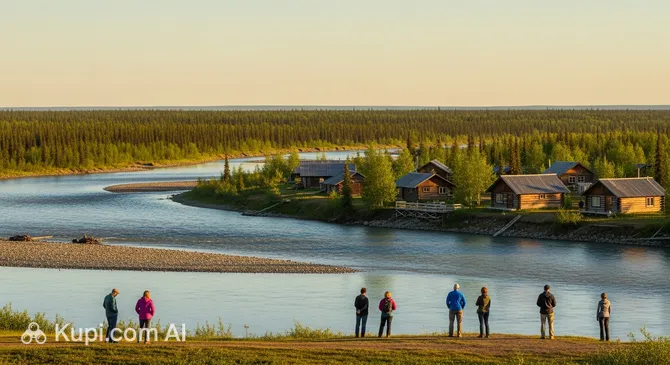
Fort Yukon. Source: Kupi.Binoculars

Visitors are drawn to the area for its unparalleled access to nature. As the gateway to the Yukon Flats National Wildlife Refuge, it is a prime spot for birdwatching and observing wildlife in its natural habitat. The city is also an exceptional location for witnessing the mesmerizing Northern Lights (Aurora Borealis) during the darker months or experiencing the phenomenon of the Midnight Sun in summer.

Whether you are an avid adventurer seeking the solitude of the wilderness or a cultural enthusiast eager to learn about life in the Arctic, Fort Yukon welcomes you. It is a place where the spirit of the frontier is still very much alive, promising a travel experience unlike any other.

Weather Overview

The climate in this part of Alaska is defined by extreme contrasts, offering a true subarctic experience. Visitors should expect warm summers with occasional rain and cold, dry winters, making the timing of your visit crucial for comfort.

Winter is long and severe, with January and February seeing average temperatures plummet to around -24.5°C, and minimums frequently reaching -28°C. In sharp contrast, the summer months bring surprising warmth to the region. July is typically the hottest month, boasting average highs of 23.5°C, while June remains pleasant with daily averages around 16°C.

Precipitation is generally very low in volume, often recorded at just 0-2mm per month, although August tends to be the dampest month with about 13 wet days. For a comprehensive look at what to expect during your specific travel dates, consult the detailed report on the weather in Fort Yukon.

Interesting Facts

Beyond the main attractions, Fort Yukon holds many fascinating secrets that reveal the resilience required to live in such a remote environment. Here are a few unique details about this Arctic community.

  • A Century-Long Heat Record: While one might expect the Arctic to be perpetually cold, Fort Yukon holds the undisputed record for the highest temperature ever recorded in Alaska. In 1915, the thermometer hit 100°F (38°C), a surprising extreme that has stood as the state's highest recorded temperature for more than a century.

  • Built on the Wrong Side: The settlement was originally established by the Hudson's Bay Company in 1847, but it was technically built on Russian soil. After the United States purchased Alaska, a survey revealed the encroachment, and the British traders were eventually forced to relocate their operations upriver to Canadian territory.

  • The Ice Highway: Since there are no permanent roads connecting the city to the rest of Alaska, the frozen Yukon River transforms into a vital transportation corridor in winter. During these months, the river ice becomes thick enough to support snowmachines and dog sleds, creating a temporary "highway" linking remote villages.

  • A Seasonal Lifeline: For heavy items like construction materials, vehicles, or bulk fuel, residents rely entirely on river barges. These massive vessels can only reach the city during the short summer window when the river is free of ice, meaning all major supplies for the year must be planned and delivered within a few brief months.

How to Get There

Reaching this remote destination is an adventure in itself, as the city is located in the expansive Alaskan Interior, far from the state's road system. Access is almost exclusively by air or, during the summer months, by boat along the river. For a detailed overview of logistics and travel tips, you can read more about how to get to Fort Yukon.

The city of Fort Yukon does not have its own major commercial hub for incoming long-distance flights, but travelers typically fly into Fairbanks International Airport (FAI) in the city of Fairbanks. Located approximately 229 km from Fort Yukon, this airport serves as the primary regional gateway. While the theoretical travel time by car would be around 6 hours based on the distance, it is crucial to note that there are no roads connecting the two cities. Therefore, after arriving in Fairbanks, visitors must connect to a scheduled small aircraft flight or a charter service to reach Fort Yukon.

For clarity, here is a summary of the main airports:

Airport Name City Passenger Traffic Km from City
Fairbanks International Airport Fairbanks Large 229.0
Old Crow Old Crow Small 260.6

There is no railway station in Fort Yukon, and the rugged, roadless terrain of the surrounding wilderness means that train travel is not an option for reaching the city directly. The Alaska Railroad system extends only as far north as Fairbanks. From there, travelers relying on public transport must switch to air travel to complete their journey to the Arctic Circle.

Main Attractions

Fort Yukon may be small, but it offers unique sights for those willing to venture off the beaten path. The attractions here are not man-made theme parks but rather deeply rooted in the history of the Alaskan frontier and the immense wilderness that surrounds the community. Visitors will find that the highlights of the town are intimately connected to the land and the traditions of its people.

One of the primary draws is the Yukon Flats National Wildlife Refuge. As the community sits right in the center of this vast wetland basin, visitors are perfectly positioned to witness a spectacular array of wildlife. It is particularly famous among birdwatchers, as millions of waterfowl migrate here during the summer months to nest in the rich, marshy environment, making it a world-class location for ornithology enthusiasts.

For history enthusiasts, St. Stephen's Episcopal Church stands as a testament to the area's past. This historic log structure is a focal point of the town and reflects the enduring presence of the mission established here in the 19th century. Near the church, you can find the grave of Hudson Stuck, the Archdeacon of the Yukon who played a pivotal role in Alaskan history and was part of the first expedition to summit Denali.

A walk along the riverbank offers a view of the confluence of the Porcupine and Yukon Rivers. In the summer, this area often bustles with activity as locals utilize traditional fish wheels—ingenious devices powered by the river's current to catch salmon. Watching these wheels turn is a mesmerizing experience that provides insight into the subsistence lifestyle that has sustained the Gwich'in people for generations.

Visitors should also look for opportunities to view and purchase authentic Athabascan beadwork and furs. Local artisans in Fort Yukon are renowned for their intricate craftsmanship. Finding a handmade pair of moccasins or a beautifully beaded accessory is not just about buying a souvenir; it is a way to connect with the living culture and artistry of the region.

Local Cuisine

The culinary experience in Fort Yukon is defined by the subsistence lifestyle of the Gwich'in Athabascan people, offering a rare chance to taste foods harvested directly from the surrounding wilderness. In this remote village, there are no chain restaurants or fine dining establishments. Instead, the "cuisine" is a hearty, survival-focused tradition centered on wild game, fish, and berries, prepared using methods that have sustained the local population for thousands of years.

The most iconic food in the region is Yukon River salmon. Known for its exceptionally high oil content, the salmon here is rich and flavorful. It is most commonly enjoyed as smoked strips—a savory, chewy delicacy cured in smokehouses—or grilled fresh over an open fire during the summer fishing season. Alongside fish, red meat plays a crucial role in the local diet. Moose and caribou are the primary sources of protein, often slow-cooked into rich, warming stews or roasted. A bowl of traditional moose soup, typically containing vegetables and rice, is the ultimate comfort food on a cold Arctic day.

No meal in the village is complete without fry bread, also known as bannock. This golden, deep-fried dough is a staple at every table, used to soak up soup broth or eaten as a snack with jam and berries. Speaking of berries, the tundra provides an abundance of cloudberries, blueberries, and cranberries in the late summer. These are gathered by families and used in desserts or mixed with fats to create high-energy traditional treats.

For visitors, finding a place to eat requires a shift in expectations. There is no bustling restaurant scene; instead, the community hub is the Alaska Commercial (AC) Company store. This general store typically includes a deli section serving hot, quick meals like fried chicken and pizza, which is often the only commercial option for a hot lunch. Most travelers rely on their Bed & Breakfast hosts for meals, which is often the best way to sample authentic home-cooked dishes made with local ingredients.

Beverages in Fort Yukon are simple and functional, with hot coffee and tea being the drinks of choice to combat the subzero temperatures. It is important for tourists to note that Fort Yukon is a "damp" community with strict alcohol regulations. There are no bars or pubs in the city, and the sale of alcohol is prohibited. While limited possession for personal use may be allowed under specific permits, visitors should verify current local laws before arriving and respect the community's restrictions on alcohol.

Travel Tips

Visiting Fort Yukon is a true adventure into the Alaskan interior, but it requires careful preparation unlike a standard city trip. Because of its isolation and extreme climate, packing the right gear and understanding local logistics will ensure your stay is safe and enjoyable.

  1. Gear Up for the Elements: The weather dictates your wardrobe here. In winter, heavy-duty arctic gear, including a rated parka and insulated boots, is non-negotiable. In summer, while it can be surprisingly warm, the mosquitoes in the Yukon Flats are legendary; a high-quality insect repellent (DEET) and a head net are absolute necessities for outdoor comfort.

  2. Village Transportation: There are no car rental agencies, taxis, or ride-sharing apps like Uber in Fort Yukon. The village is compact enough to navigate on foot. You will see locals using ATVs in the summer and snowmachines in the winter, but as a visitor, walking is your primary mode of transport unless your host provides a ride.

  3. Financial Preparedness: The local currency is the US Dollar. While the main general store typically accepts credit cards, telecommunication outages can happen in the Arctic. It is highly recommended to bring enough cash for your entire stay to cover small purchases or tips, as reliable ATM access is not guaranteed.

  4. Health and Safety: A local health clinic provides basic medical care, but serious emergencies require a medical evacuation flight to Fairbanks. When exploring near the river or outskirts, always practice bear safety; you are in the wilderness, and both black and brown bears inhabit the area.

  5. Connectivity: English is the primary language spoken by everyone. Mobile coverage is generally limited to the GCI network; if you use a different carrier, you may have no signal at all. Wi-Fi is scarce and often slow, so plan to be offline or check with your lodging host about availability beforehand.

  6. Respect Local Culture: This is a close-knit community, not a tourist park. Always ask for explicit permission before taking photographs of residents, their children, or their property (including fish wheels and drying racks). A friendly greeting and respect for privacy go a long way.

  7. Alcohol Restrictions: Be aware that Fort Yukon is a "damp" community. The sale of alcohol is prohibited within the city, meaning there are no bars or liquor stores. While limited possession for personal use may be legal, consuming alcohol in public or appearing visibly intoxicated is socially unacceptable and can lead to legal trouble.

  8. Bring Your Essentials: Due to the high cost of air freight, prices for groceries and everyday items are significantly higher than in the "Lower 48." Bring all essential toiletries, prescription medications, and any specific dietary snacks with you, as the local store's inventory can be limited.

By respecting these guidelines and the local way of life, you will find the community welcoming and the experience deeply rewarding. A trip to Fort Yukon is a unique chance to disconnect from the busy world and witness the raw, authentic beauty of life at the Arctic Circle.

Entertainment & Nightlife

Travelers accustomed to bustling metropolitan nightlife will find a completely different rhythm in Fort Yukon. As a small, remote community that observes "damp" alcohol regulations, there are no bars, nightclubs, or discos in the city. The sale of alcohol is prohibited, and you will not find a nightlife district or late-night cocktail lounges. Instead, the "nightlife" here is dictated by the celestial cycles of the Arctic and the close-knit traditions of its residents.

During the winter months, the primary evening entertainment is provided by nature itself. Fort Yukon is one of the premier locations in the world for viewing the Aurora Borealis. With no light pollution to obscure the sky, the Northern Lights frequently dance overhead in mesmerizing shades of green and purple. Visitors often spend their nights bundled up on the banks of the Yukon River, watching this spectacular display. Conversely, in the summer, the sun simply does not set. Under the Midnight Sun, "night" becomes a concept rather than a reality, with locals and visitors alike enjoying fishing, boating, or walking well past midnight in broad daylight.

Social life in the village revolves around community gatherings rather than commercial venues. Events are often held at the local Community Hall, where residents may gather for traditional dances, potlatches, or the ever-popular bingo nights, which are a staple of social entertainment in rural Alaska. These events offer a warm, welcoming atmosphere where the dress code is strictly functional—think heavy parkas and insulated boots rather than evening wear. If you are lucky enough to be invited to such an event, it is a rare privilege to experience the authentic Gwich'in culture firsthand.

For those looking to stock up on snacks for a late-night vigil watching the sky, the Alaska Commercial Company store is the village's main retail hub, though it typically closes in the early evening. Since there are no 24-hour convenience stores or late-night restaurants, visitors should plan their evening meals and supplies in advance. The atmosphere in the village at night is incredibly peaceful, interrupted only by the sound of sled dogs or the wind.

Safety and logistics at night require special attention in this wilderness setting. There are no taxis or public transport services; getting around is done entirely on foot or by arrangement with your host. While the village is generally safe from urban crime, the real danger lies in the environment. In winter, temperatures can drop to life-threatening lows within minutes, and in summer, bears may wander near the settlement. It is advisable not to walk alone far from lodging after dark (or during the quiet hours of the midnight sun) without bear spray and proper cold-weather gear.

During the daytime, entertainment shifts towards cultural and historical appreciation. Visitors can explore the Gwich'in Council offices to learn about tribal governance or visit the historic cemetery near the river. The slow pace of life allows for immersive experiences, such as watching local artisans create intricate beadwork or observing the daily operations of fish wheels on the river, activities that define the unique character of this Arctic outpost.

Parks & Museums

In a remote village like Fort Yukon, the concepts of "parks" and "museums" take on a different meaning than in a typical city. Here, you will not find manicured city parks with playgrounds or large glass-walled museums with ticket counters. Instead, the entire region serves as a vast, open-air nature reserve, and the community itself acts as a living museum, where history is preserved in log structures and ancient traditions that are practiced daily.

Yukon Flats National Wildlife Refuge serves as the ultimate natural area for the region. Surrounding the village, this protected expanse covers millions of acres of wetlands, forest, and riverine habitat. It is a world-class destination for nature lovers, particularly ornithologists, as it provides a critical breeding ground for millions of migrating waterfowl. Visitors can explore the edges of this refuge simply by walking out of town, immersing themselves in a landscape that remains virtually unchanged by human development.

The Confluence of the Yukon and Porcupine Rivers acts as the community's central "park" and gathering space. The riverbanks offer a rugged but scenic area for walking, boat launching, and observing the flow of life in the Arctic. In summer, this natural area is bustling with activity as locals manage their fish wheels and prepare salmon, offering visitors a chance to relax by the water while witnessing the subsistence lifestyle in action.

For those interested in history and culture, St. Stephen's Episcopal Church stands as the most significant architectural landmark in the city. While it is an active place of worship rather than a secular museum, the building houses immense historical value. Constructed from logs in the traditional style, it dates back to the early missionary era. The church grounds and the interior reflect the blending of Gwich'in culture with Christianity, and the site includes the grave of the famous Archdeacon Hudson Stuck.

While there is no formal art gallery in Fort Yukon, the local Gwich'in Beadwork Tradition transforms the village into a showcase of indigenous artistry. The "galleries" here are the homes and workshops of local artisans who create exquisite moccasins, vests, and gloves featuring intricate floral patterns. Visitors can often view these masterpieces at the tribal council office or the general store, where the craftsmanship tells the story of the Gwich'in people's connection to the land and their artistic heritage.

For a deeper look into the past, the Old Post Office and the historic Hudson's Bay Company site offer a glimpse into the trading era. Although the original 1847 fort is long gone, the location itself is steeped in history as the oldest English-speaking settlement in Alaska. Walking through the older sections of the village feels like stepping back in time, where the layout and remaining structures whisper stories of fur traders, explorers, and the resilience of the residents.

An insider tip for those seeking a quiet, reflective experience is to visit the Fort Yukon Cemetery. Located near the river, it is not a park in the traditional sense, but it is a beautifully serene place that honors the generations who have lived and died in this harsh environment. The unique spirit houses and grave markers provide a poignant insight into the local customs and the deep respect the community holds for its ancestors.

Getting Around

When planning a trip to Fort Yukon, it is essential to adjust your expectations regarding public transportation. Unlike larger urban centers, this remote community does not possess a public transit network. You will not find buses, trams, metros, or fixed-route shuttles operating within the village. The settlement is small and compact, covering just a few square miles, which means that the primary and most reliable mode of getting around for visitors is simply walking.

Due to the absence of a formal transport system, there are no complex payment methods to navigate. There is no need to purchase travel passes, validate tickets, or download transportation apps. You will not require a smart card or exact change for fares. The logistics of moving around are straightforward: you simply step out the door and walk to your destination, free of charge.

For tourists, the most practical advice is to focus on footwear rather than bus schedules. Since you will likely be on foot for the duration of your stay, wearing appropriate shoes is critical. In the summer, the unpaved gravel roads can be dusty or muddy, requiring sturdy walking shoes. In the winter, the streets are packed with snow and ice, making heavy-duty, insulated boots with good traction an absolute necessity for safe and comfortable travel.

Regarding alternatives such as taxis or car rentals, these services are virtually non-existent in the commercial sense. There are no car rental agencies, and ride-sharing platforms do not operate in the region. However, local hospitality often fills this gap; most Bed & Breakfast hosts provide complimentary transfers to and from the airstrip for their guests. It is highly recommended to confirm this service when you book your accommodation to ensure you have a ride upon arrival with your luggage.

While there are no historic cable cars or trains, the local flow of traffic offers a unique glimpse into Arctic life. Instead of city cars, you will frequently see residents traveling on All-Terrain Vehicles (ATVs) during the warmer months and snowmachines (snowmobiles) during the winter. In the coldest months, the frozen river itself acts as a specialized "transport route," serving as a natural highway for snow travelers and dog sleds, a distinctive feature that replaces standard infrastructure in this wild environment.

Accommodation

Finding a place to stay in Fort Yukon is quite different from booking a hotel in a major city. The options here are limited and reflect the remote, community-focused nature of the village. Travelers will primarily find accommodations in the form of small Bed & Breakfasts or guest rooms operated by local entities. There are no luxury resorts, international hotel chains, or hostels in the area. Instead, visitors should expect rustic, comfortable, and functional lodging that offers a warm, home-like atmosphere.

Given the compact size of the settlement, location is rarely an issue. Most accommodations are situated within walking distance of the Fort Yukon Airport and the Yukon River. Staying near the airstrip is particularly convenient for arrival and departure, while locations closer to the riverbank offer scenic views of the water and easy access to the boat launch areas. Since the entire village is concentrated in a small area, you are never far from the general store or the community hall.

Booking Tip: Because the number of available rooms in the entire village is very small, it is absolutely critical to book your accommodation well in advance. Do not arrive without a confirmed reservation, as you may find yourself without a place to stay in a harsh environment. It is also highly recommended to confirm your arrival time with your host, as they often provide personal transport from the airstrip.

Regarding costs, travelers should be prepared for prices that may seem high relative to the level of luxury provided. The cost of living in the Arctic is significant, and utility costs are high, which is reflected in room rates. Prices generally fall into the mid-range to high category. Booking is rarely done through major online travel aggregators; instead, you will likely need to contact hosts directly via phone or email to secure your reservation.

Nearby Cities

Due to the extreme isolation of Fort Yukon, the concept of "nearby cities" differs significantly from standard travel destinations. There are no roads connecting the village to the rest of Alaska, meaning a casual drive to a neighboring town is impossible. Instead, connections to the outside world are maintained primarily by air, defining the relationship between the village and the rest of the state.

The most critical link for any traveler is Fairbanks. Situated approximately 223 km to the south, it acts as the logistical lifeline and the primary gateway for anyone entering or leaving the Arctic circle region. As the largest city in the Interior, it provides the essential airport hub for flights to Fort Yukon, along with museums, medical services, and extensive dining options that are unavailable in the bush.

For those exploring the wider Interior region before or after their flight to the village, there are other significant communities accessible via the road system from the main hub. Delta Junction is famous as the official end of the Alaska Highway and offers spectacular views of the Alaska Range. Tok serves as a major trade center near the Canadian border, often welcoming travelers driving into the state. Meanwhile, Nenana is a historic river town celebrated for its railroad heritage. While these locations cannot be reached directly from Fort Yukon, they represent the broader network of communities in this vast part of Alaska.

City Population Distance (km)
Fairbanks 64160 223
Tok 1279 375
Delta Junction 945 282
Big Delta 593 270
Nenana 400 285

Shopping & Souvenirs

Shopping in Fort Yukon is a unique experience defined by the remote nature of the community. Visitors will not find bustling high streets, luxury boutiques, or sprawling retail complexes here. Instead, the shopping scene is strictly functional, catering to the daily needs of the residents, with a special emphasis on authentic local craftsmanship. For tourists, the primary appeal lies in purchasing handmade items that reflect the rich cultural heritage of the Gwich'in Athabascan people, rather than browsing commercial goods.

There is no designated shopping district or "main street" in the traditional sense. The commercial heart of the village is the Alaska Commercial (AC) Company store. This general store serves as the lifeline for the community, stocking everything from groceries and hardware to outdoor gear and clothing. It is the only place in town for general retail therapy and is where you will find essential supplies if you forgot to pack something. Beyond this central hub, commerce is informal and often takes place in community buildings or private homes.

Travelers should be aware that there are no shopping malls in Fort Yukon. The village's infrastructure is built for subsistence and practicality in the Arctic environment, not for consumer tourism. Those expecting department stores or branded fashion outlets will find the retail landscape very quiet. The focus here is on survival gear and community necessities.

While there are no permanent daily markets, the spirit of a marketplace exists through the local artisans. Occasionally, pop-up sales or holiday bazaars are held at the Community Hall or tribal council buildings, where locals sell baked goods and crafts. However, the most interesting "market" experience often involves asking around the village to find out which artisans have items available for sale. This direct interaction with the creators adds a personal layer to every transaction.

When it comes to souvenirs, Fort Yukon offers some of the finest authentic indigenous art in Alaska. The region is renowned for its exquisite Athabascan beadwork. Visitors should look for handmade moose hide moccasins, gloves, and vests featuring intricate floral bead patterns, which are a hallmark of the local culture. Furs are also a significant local product, with trappers offering high-quality pelts. purchasing these items directly supports the local economy and preserves traditional skills.

Store hours in the village are generally limited compared to big cities. The main general store typically operates from morning until early evening, often closing around 6:00 PM or 7:00 PM, and may have reduced hours on Sundays. Regarding payment, the main store accepts credit and debit cards. However, if you plan to buy beadwork or crafts from local artists, cash is essential. Internet connectivity can be unreliable, occasionally affecting card machines, so carrying sufficient cash is a smart precaution for all transactions.

Regarding taxes, it is worth noting that while the state of Alaska does not impose a state-level sales tax, local municipalities are free to levy their own. Fort Yukon generally implements a small local sales tax on goods and services. Visitors should be prepared for this modest addition to the price of groceries and general merchandise at the commercial store.

Reached the end of the page?

That means the route is fully explored