Support

Kam Wah Chung State Heritage Site

About

Imagine a place where time stood still over a hundred years ago. The Kam Wah Chung Historical Complex is a unique cultural monument located in the small town of John Day in the vast state of Oregon, USA. It is not just a museum, but a true "time capsule" that has preserved the daily life and traditions of Chinese immigrants from the late 19th century.
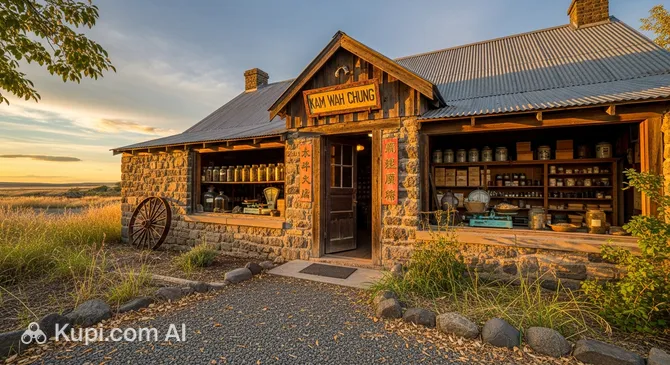
Kam Wah Chung State Heritage Site. Source: Kupi.com AI

The building, constructed back in 1865, served as a trading post, pharmacy, temple, and even a boarding house at various times. Today, it is recognized as a National Historic Landmark. Its walls, made of local tuff and wood, house thousands of artifacts: from ancient Chinese medicines and tools to personal letters and interior items that have remained untouched for decades.

The complex includes the historic Kam Wah Chung & Co. building itself and a modern interpretive center. Visitors value this place for its authenticity and the opportunity to touch the little-known pages of the American West's history through the lens of the Chinese community's life.

Contacts

To confirm details before your visit or to book a tour, you can use the following contact information:

AddressJohn Day, OR 97845, USA
Phone+1 541-575-2800
Websitehttp://oregonstateparks.org/index.cfm?do=parkPage.dsp_parkPage&parkId=5

What to Do

The main reason to visit the complex is the guided tour through the seven rooms of the historic building. You can peek into Dr. Hay's original pharmacy, where hundreds of types of herbs and medical instruments are still stored, and see the general store with shelves brimming with century-old goods.

An amazing atmosphere is recreated in the living quarters and kitchen: it feels as if the owners just stepped out for a minute, leaving dishes, newspapers, and personal belongings on the table. Be sure to notice the religious altars—they provide insight into the spiritual life of the community at that time. The interiors are so well-preserved that you can literally smell the herbs and old wood.

In the interpretive center, modern audiovisual materials complement the guide's story. Here, you can examine the most valuable exhibits in detail and learn about the lives of the complex's owners—Doc Hay and Lung On. In the summer, the grounds sometimes host cultural events and festivals dedicated to Eastern traditions.

Getting There

The site is located in the heart of John Day, in the Canyon Creek area, just steps away from the main street. If you are traveling through Eastern Oregon by car, the most convenient way to reach it is via US Route 26 or Highway 395.

For those planning a trip from major cities, the drive from Portland takes about 5–6 hours (approximately 450 km). The main route follows Interstate 84 to Baker City, after which you need to turn onto Highway 7 and US 26. Free parking is provided on-site for visitors.

If you prefer flying, the nearest airports are in Pendleton (about 140 km) and Baker City (100 km), from where you can reach the town by taxi or rental car. Public transportation in this region is limited, so a personal vehicle or a transfer from nearby hubs is the most reliable option.

History & Facts

The history of this site began in the mid-1860s when the building was constructed as a trading post during the Gold Rush era. In those years, the town of John Day became a haven for hundreds of Chinese immigrants working in mines and road construction. Following a major fire in neighboring Canyon City in 1885, one of the region's most significant Chinese communities formed here.

The true heyday of the complex is linked to the names of Ing "Doc" Hay and Lung On, who purchased the building in 1887. They transformed it into the thriving business Kam Wah Chung & Co., which became a social and medical center for their compatriots. Doc Hay was famous for his skill in traditional Chinese medicine, while Lung On successfully managed the trading business and the post office.

Remarkably, after the owners passed away and the building was closed in the mid-20th century, it remained sealed for decades. When the doors were opened again in the 1960s, researchers discovered a pristine "time capsule": medicinal herbs sat on the shelves, letters remained in the archives, and personal belongings in the living quarters were perfectly preserved. Since 2005, the complex has been officially recognized as a National Historic Landmark.

Time Needed

To leisurely explore all corners of the complex, the average tourist will need about 1.5–2 hours. This is plenty of time to take part in the main guided tour of the historic building and independently study the exhibits in the interpretive center.

The guided tour itself usually takes between 45 to 60 minutes. It is recommended to spend the remaining time viewing multimedia materials and getting a closer look at the artifacts displayed separately. If you are passionate about medical history or Chinese culture, you might want to stay longer to study the ancient recipes and tools.

Working Hours

The historical complex is typically open to visitors from Wednesday through Sunday. Working hours are from 09:00 to 16:00. Please note that Monday and Tuesday are closed days.

Since operating hours and tour schedules may change depending on the season or special events, it is highly recommended to check for the latest information on the official Oregon State Parks website before your trip.

Nearby

A visit to the complex can easily be combined with a walk to other interesting sites that John Day has to offer. Exploring the surroundings will allow you to dive deeper into the Wild West atmosphere and learn more about the history of Oregon's settlement.

AttractionTypeDistance (km)
Kam Wah Chung Interpretive CenterInterpretive center0.2
Outpost Pizza Pub & GrillRestaurant/Pub0.3
John Day Historic DistrictHistoric district0.5
The Ugly Truth Bar & GrillBar/Grill0.5
John Day Opera HouseOpera house0.6
Grant County Ranch & Rodeo MsmRodeo museum0.6
Canyon City Historic DistrictHistoric district3.3
Grant County Oregon Historical MuseumHistory museum3.3

Reached the end of the page?

That means the route is fully explored