Support

REACH Museum

About

The REACH Museum is a unique interpretive center located in the city of Tri-Cities, USA. It serves as the primary "gateway" to the Hanford Reach National Monument, telling the fascinating story of the Columbia River Basin. This is a place where nature meets science, and ancient layers of the earth sit alongside artifacts of the Atomic Age.
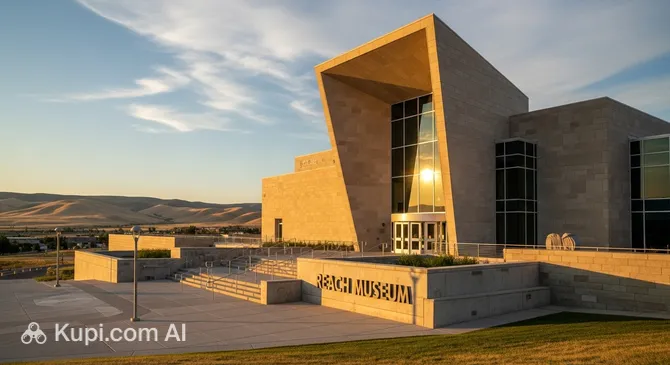
REACH Museum. Source: Kupi.com AI

Spanning approximately 1,300 square meters, the museum offers a *deep dive* into the cultural and natural heritage of the region. Here, visitors can learn about the cataclysmic Ice Age floods and how the secret developments of the Manhattan Project in the 1940s forever changed this landscape. The museum building itself is an architectural landmark, *harmoniously* integrated into the surrounding environment.

The name "REACH" refers to the longest free-flowing stretch of the Columbia River, which has become a *symbol* of ecological sustainability and Washington State's scientific pride. The museum inspires thousands of students and tourists, offering not just dry facts, but living stories of people whose contributions to technology and agriculture are known far beyond the country's borders.

Contacts

To find out current information about events or to book group tours, you can contact the museum administration *directly* using the details provided below.

Address 1943 Columbia Park Trail, Richland, WA 99352, USA
Phone +1 509-943-4100
Official Website visitthereach.us

What to Do

Inside the museum, two main galleries await, each offering a unique experience. In the first part, you can *literally* transport yourself back to the Ice Age, learning about the formation of canyons and steppes. The second gallery is dedicated to the Atomic Age: here you can see how employees of the secret Hanford site lived and worked in the middle of the last century, creating world-scale history.

For those who prefer *active learning*, the museum has prepared an interactive outdoor zone. Here you can get acquainted with the basics of irrigation farming, learn how the famous local hops are grown, and study the flora and fauna of the shrub-steppe. Families with children will particularly enjoy the STEAM workshops, where young researchers can try their hand as engineers or ecologists.

Don't forget to stop by the museum's outdoor stage, which often hosts musical performances and community forums. It is a *great place* to enjoy views of the Columbia River. And before you leave, be sure to visit the local gift shop to purchase unique books or educational kits as a souvenir of your trip.

Getting There

The museum is conveniently located at 1943 Columbia Park Trail in Richland. The *most comfortable* way to get here is by car: the site is easily accessible via highway I-182 or WA-240, following signs for Columbia Park. Ample parking is provided on-site, as well as bicycle parking racks.

If you plan to arrive from the central areas of the Tri-Cities, you can use taxi services or a rental vehicle, as the public transport network in this part of the city is *not very dense*. For accurate navigation, it is recommended to use Google Maps by entering the name "REACH Museum."

The museum's picturesque location on the banks of the Columbia River makes it an *excellent point* for those who enjoy combining cultural leisure with outdoor walks. Convenient pedestrian paths lead to the building through the park area.

History & Facts

The REACH Museum opened its doors to its first visitors on July 1, 2014. It succeeded the CREHST exhibition, completely transforming the concept and presenting the region as a unique meeting point for science and nature. The design and construction of this *modern complex* took over ten years, resulting in a truly deep and well-thought-out exhibition.

The central theme of the museum is the Hanford Reach — the only free-flowing stretch of the Columbia River, 82 kilometers long. This place was preserved in its original form *paradoxically*: due to the secrecy of the Manhattan Project in the mid-20th century, a closed buffer zone was created here, where nature remained untouched by human activity for many decades.

Today, the museum tells the story of how the cataclysmic Ice Age floods shaped this landscape and how indigenous peoples lived on these lands for centuries. The history of the Hanford Site and its role during the Cold War also occupies an important place, highlighting the region's *incredible contribution* to world history and scientific progress.

Time Needed

To *carefully* explore the museum's two main galleries, view the temporary exhibitions, and walk through the outdoor learning area, it usually takes about 2–3 hours. If you are planning a visit with children, the time may increase due to participation in interactive STEAM workshops or educational programs.

Photography enthusiasts and those seeking quiet contemplation *should allow* an extra half hour to relax on the outdoor stage, which offers magnificent panoramic views of the Columbia River. Overall, a visit to the museum is an ideal format for a half-day educational outing.

Working Hours

The museum welcomes guests from Tuesday to Saturday, 10:00 AM to 4:30 PM. The exhibition halls are usually closed on Mondays and Sundays. *It is important to remember* that during special educational forums or holiday events, the schedule may change slightly.

We *strongly recommend* checking the current schedule on the official website before your visit, especially if your trip falls on a holiday, to ensure your introduction to the region's history goes perfectly.

Nearby

A visit to the museum can be *nicely complemented* by exploring local gastronomy and recreation areas. Cozy establishments and interesting historical markers are located nearby, helping to make your day in the city even more fulfilling.

Attraction Type Distance (km)
Fable: Craft Bar, Wine Saloon, Food Joint Restaurant / Bar 0.4
Outback Steakhouse Restaurant 1.1
Twigs Bistro and Martini Bar Bistro / Bar 1.3
Compass Seas Travel Agency Travel Agency 1.5
Olive Garden Italian Restaurant Restaurant 1.6
Buffalo Wild Wings Restaurant 1.9
First Federal Road Marker Historical Marker 2
Splash Down Cove Water Park Water Park 2.1
Applebee's Grill + Bar Restaurant / Grill 2.3
Cleo Island Natural Feature 2.7

Please note that most restaurants are within walking distance or a few minutes' drive, which is very convenient for lunch after exploring the exhibits.

Reached the end of the page?

That means the route is fully explored