Support

Grand Coulee Dam

About

Imagine a colossal concrete wall rising above the powerful currents of the Columbia River—this is the Grand Coulee Dam, one of the most impressive engineering achievements in the USA. It's not just a dam, but a true legend of hydropower, located in the small town of Grand Coulee. The structure is striking in its scale: its height is 168 meters, and the crest length stretches for almost 1.7 kilometers, holding back the massive volumes of water in Lake Franklin D. Roosevelt.
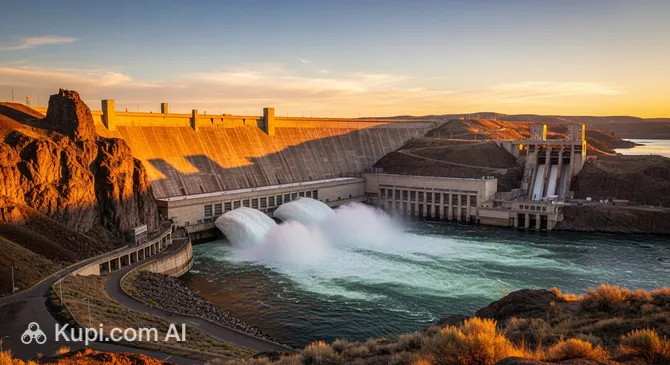
Grand Coulee Dam. Source: Kupi.com AI

As the largest hydroelectric power station in the country, Grand Coulee serves several vital functions. In addition to generating a colossal amount of electricity, it provides water to more than 670,000 acres of farmland and reliably controls flood levels. Creating this concrete giant required 12 million cubic yards of material—enough to build a highway from Los Angeles to New York City.

Today, this site has become a popular tourist destination. Guests are drawn by the opportunity to see three powerful power plants firsthand and experience the unique engineering genius of the Great Depression era. Panoramic views of the canyon and modern multimedia exhibitions make visiting the dam a must-see for anyone traveling through northwestern Washington State.

Contacts

To plan your visit and get details about tours or the laser show, you can use the official contact information for the dam's visitor center.

Address Visitors Access Route, Grand Coulee Dam, Coulee Dam, WA 99116, USA
Phone +1 509-633-9265
Website usbr.gov/pn/grandcoulee/visit/

What to Do

The best way to start exploring the dam is at the Visitor Center. Here you can watch free documentaries about the construction, study interactive turbine models, and learn how giant pumps lift water over 100 meters high for land irrigation. For the most curious, guided tours are available that reveal the station's hidden mechanisms.

The main magnet for tourists during the summer is the evening Laser Light Show. Every day at 9:00 PM, the dam wall turns into a giant screen where powerful lasers project the colorful history of the Columbia River's development set to music. This spectacle is considered one of the largest light shows in the world and leaves an unforgettable impression on both adults and children.

Nature and outdoor enthusiasts should take a stroll along the hiking trails surrounding the hydroelectric complex. From the viewpoints on the upper and lower terraces, it's easy to go bird watching—majestic bald eagles can often be seen here. Boating on Lake Franklin D. Roosevelt and fishing are also popular. Don't forget to bring binoculars to get a detailed look at the locks in operation and the grand spillway during seasonal water releases.

Getting There

The easiest way to reach this engineering giant is by car. The dam is located approximately 145 kilometers (90 miles) west of Spokane. The drive from Spokane takes about 2.5 hours: first along US-2 and then via WA-155 (Grand Coulee Dam Hwy) directly to the site. For travelers coming from Seattle, the trip takes about 4.5 hours via Interstate I-90. Free parking is available near the visitor center, which is suitable for large tour buses and RVs.

If you plan to use public transport, keep in mind that there is almost no direct service to the dam. You can take a Spokane Transit bus to nearby towns like Electric City and then take a taxi from there. The nearest major airport is in Spokane (GEG), where it is recommended to rent a car for convenient travel around the region.

In winter, the roads can be complicated by snowfall, so drivers are advised to carry tire chains and check mountain pass conditions in advance. In summer, the route to the dam turns into a scenic drive through canyons, also popular with cycling enthusiasts.

History & Facts

The origins of this grand project date back to the 1920s, when the need arose to develop the arid lands of the Columbia River Basin. In the midst of the Great Depression, in 1933, President Franklin D. Roosevelt approved the construction of the dam as part of a job creation program. Work officially began on July 16, 1933; originally, the project was intended to be a much more modest structure, but engineers soon moved to the ambitious "high dam" plan.

Construction became a true battle with nature: workers faced massive landslides and difficult terrain. At one point, engineers even had to freeze the ground with a special refrigeration plant to stop the earth from moving. The scale of the work was staggering: the world's longest conveyor belt (3.2 km) was built to move the soil, and up to 12,000 workers were involved in the project at any one time.

The first generator was launched in the spring of 1941, just in time to become a key power source for US industry during World War II. Later, in the 1960s and 70s, a third power plant was added to the complex, designed by the famous modernist architect Marcel Breuer. Today, the Grand Coulee Dam remains not only an important energy hub but also a monument to the engineering genius that managed to harness one of the continent's most powerful rivers.

Time Needed

To take a leisurely look at this monumental structure, the average tourist should set aside about 3–4 hours. This is enough time to visit the information center, watch educational films, and walk through the main viewpoints, which offer the best photo opportunities.

If you plan to stay for the famous evening laser show or have a picnic on the shores of Lake Franklin D. Roosevelt, your visit could extend to 5–6 hours or even a whole day. If you have very limited time, a quick look at the dam from the terraces will take no more than 1.5 hours.

Working Hours

The Visitor Center is generally open daily from 8:30 AM to 5:00 PM throughout the year. However, it's worth noting that access to the viewpoints and external viewing of the dam itself is available 24/7.

The famous laser show runs only during the warmer months—from late May to early September. The show's start time is tied to sunset, usually at 9:00 PM. Since the schedule for tours and special events can change, it is strongly recommended to check the current schedule on the official Bureau of Reclamation website before your trip.

Nearby

The area around Grand Coulee Dam offers many interesting places to complement your trip and help you dive deeper into the history and culture of the region. Exploring local museums and natural landmarks will show you how people's lives have become closely intertwined with the power of the Columbia River.

Name Type Distance (km)
Grand Coulee Tour Center Visitor Center 0.8
12 Tribes Coulee Dam Casino Entertainment 1.1
Rio Grande Attraction 1.1
The Spillway Bar & Grill Restaurant 1.1
Colville Tribal Museum & Gift Shop Museum 1.2
Sand Pile - World's Largest Sandbox Attraction 1.9
Centennial Time Capsule Historic Site 3.3
Horns Electric City Bar & Grill Restaurant 5
Home Of The Coulee Pioneer Museum Museum 5
Ruby Rock Natural Site 11.7

Reached the end of the page?

That means the route is fully explored