Support

Dishman Hills Natural Area

About

Imagine a green oasis of over 200 hectares, spread just a few minutes' drive from the city bustle. Dishman Hills Natural Area is a unique combination of rocky granite hills, deep ravines, and dense ponderosa pine forests. Located on the edge of the city of Spokane, this territory in the USA serves as an important refuge for wildlife and a favorite spot for peaceful outdoor recreation.
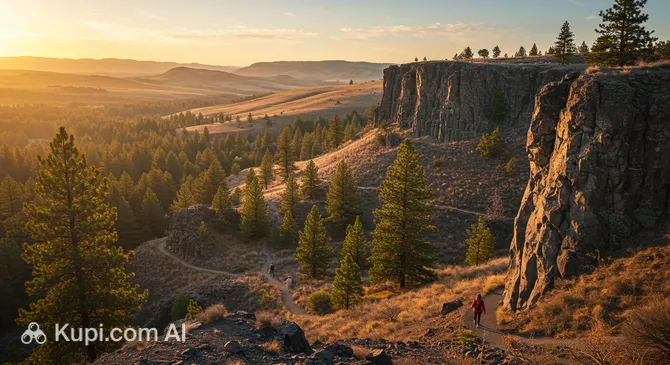
Dishman Hills Natural Area. Source: Kupi.com AI

The area is officially recognized as a conservation site due to its exceptional geological history and biodiversity. Here, at the junction of two eco-zones, more than 300 species of flowers grow, and dozens of species of butterflies and birds reside. The main highlight of the landscape is the ancient granite outcroppings, millions of years old, and traces of great past floods that formed the whimsical terrain.

For tourists, Dishman Hills is valuable for its panoramic views of the Spokane Valley and a network of scenic trails. It is a place where you can feel the primal power of nature without traveling far from civilization, making it a must-visit for all ecotourism and hiking enthusiasts.

Contacts

To plan your visit or inquire about events, you can use the official communication channels. Staff and volunteers of the organization protecting this natural area are always ready to share up-to-date information on trail conditions.

Phone +1 509-598-0003
Website dishmanhills.org
Address 625 S Sargent Rd, Spokane Valley, WA 99212, USA
Google Maps View on map

What to Do

The main reason to visit Dishman Hills is hiking. Miles of well-maintained trails of varying difficulty levels are laid out across the territory. Be sure to check out the route through the Enchanted Ravine — it's a short but impressive walk past sheer cliffs that are up to one and a half billion years old. The hilltops offer breathtaking panoramas of the Spokane Valley, perfect for photography.

Nature lovers will find a true paradise for observation here. In spring, the meadows are covered with a carpet of wildflowers, among which the Indian camas especially stands out. You may encounter deer, marmots, or coyotes, as well as see rare species of butterflies. Please note that gathering mushrooms and plants is prohibited here, but photo hunting is allowed in unlimited quantities.

The natural area is great for family outings and walking dogs (must be on a leash). You can create a loop route of any length by following the signs. It is important to remember that bicycles and any motorized transport are banned here, which creates an atmosphere of absolute peace and quiet, disturbed only by birdsong and the rustle of pines.

Getting There

Getting to this scenic spot is quite simple. The main entrance to the natural area is located near Camp Caro Community Park in Spokane Valley. If you are traveling by car from downtown Spokane, the drive via I-90 will take only about 15–20 minutes. Free parking is provided for visitors on-site.

For those who prefer public transport, you can use Spokane Transit Authority (STA) buses. Look for routes heading to Spokane Valley with stops near Sargent Rd. From the bus stop, you will need to walk a short distance to the official entrance.

If you are in the nearby residential areas, the hills can be reached on foot or by bicycle. However, remember that within the conservation area itself, traveling by bicycle or motorized transport is strictly prohibited to preserve the fragile ecosystem. A taxi from the city center is also a quick and convenient option to find yourself alone with nature without any extra hassle.

History & Facts

The history of this place begins long before the first settlers arrived. The foundation of the landscape is granite outcroppings that are approximately 70 million years old. They were formed from volcanic magma that solidified deep underground. Later, at the end of the Ice Age, the catastrophic Missoula Floods swept through the region, washing away soil and creating the deep ravines and basins we see today.

In the 19th century, these lands were settled by Addison Dishman, who arrived here in 1886. His name became firmly attached to the area: by 1895, Dishman's store was already operating here, and the district began to be gradually developed. However, despite its proximity to the growing city, the hills have retained their pristine wild character with meadows and pine forests.

The current status of the protected territory is thanks to the non-profit organization Dishman Hills Conservancy, founded in 1966. It is the oldest land trust in Washington state, created to protect the unique nature from urban development. Thanks to the efforts of activists and the support of government services, this zone has been recognized as a Natural Resources Conservation Area for over 30 years, ensuring its preservation for future generations of explorers and nature lovers.

Time Needed

The time needed to visit Dishman Hills largely depends on your goals. If you are only planning a short introductory walk, for example, to the famous Enchanted Ravine trail, 1–2 hours will be quite enough. This is enough time to enjoy the silence of the forest and see ancient rock formations.

For those who want to thoroughly explore the extensive network of trails, capture panoramic views of the valley, and observe wildlife, it is better to set aside 3 to 5 hours. Many visitors prefer to spend half a day here, arranging small picnics in specially designated areas and leisurely studying the diversity of the local flora.

Working Hours

Dishman Hills Natural Area is open to the public daily, allowing guests to choose a convenient time for a walk both on weekdays and weekends. The operating hours are:

Monday — Sunday: 06:00 to 20:00.

Please keep in mind that depending on the season and weather conditions, access hours may change slightly. It is recommended to plan your return to the parking lot before dusk for your safety.

Nearby

A visit to the Dishman Hills Natural Area can easily be combined with exploring other interesting places in the vicinity. The city of Spokane and its suburbs offer many options for leisure — from cozy historic pubs to modern entertainment centers and quiet memorial parks.

Exploring the surroundings will allow you to better feel the atmosphere of the region, transitioning from the silence of conservation trails to the vibrant cultural life of the city. Below are some sites located nearby:

Attraction Name Distance (km)
Checkerboard Pub 7.1
Southside Family Aquatic Facility 7.5
The Big Dipper 9.5
The United States Pavilion, Expo '74 9.7
The Fox Theater 10.2
Blue Zoo Aquarium Spokane 10.6
Woman's Club of Spokane 10.7
Greenwood Memorial Terrace 13.1
Greenwood haunted staircase/Thousand Steps 13.3
Fairmount Memorial Park 15.9

Reached the end of the page?

That means the route is fully explored