Support

Pioneer Park Aviary

About

In the heart of Walla Walla's oldest park lies a wonderful place—the Pioneer Park Aviary. This unique site, located in the USA, is a free open-air exhibit where approximately 200 birds live in naturalistic conditions. The aviary is harmoniously integrated into the landscape near a lush rose garden, creating an oasis of tranquility and beauty.
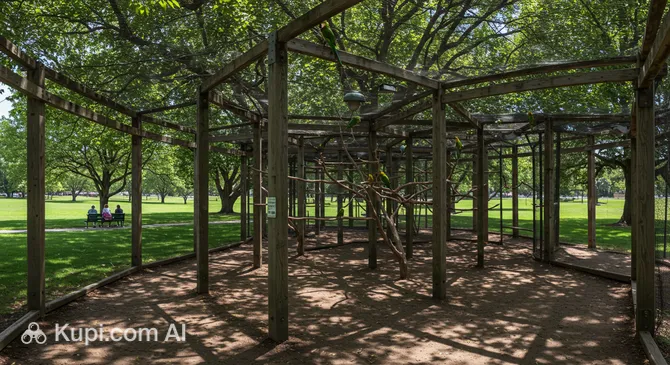
Pioneer Park Aviary. Source: Kupi.com AI

Here, you can see representatives of 30–35 different species, from majestic white peacocks and vibrant golden pheasants to graceful Mandarin ducks and rare swans. The centerpiece of the complex is a large enclosed pond surrounded by specialized bird care facilities, including incubation and quarantine zones. It is not just an exhibit, but a true ecosystem protected by a special mesh from external predators.

The Pioneer Park Aviary is managed by the city authorities and supported largely through donations from local residents and tourists. Its primary mission, unchanged since 1986, is environmental education. Informational signs installed along the paths allow guests not only to observe bird habits from up close but also to learn fascinating facts about their lives in the wild.

Contacts

For information on special events or visiting rules, you can use the official contact details of the park administration and tourist center.

Address 925 Whitman St, Walla Walla, WA 99362, USA
Phone +1 509-527-4403
Official website wallawallawa.gov
Tourist portal wallawalla.org

What to Do

A visit to the aviary is primarily an opportunity for close observation of exotic birds. You can see Indian Blue and rare White Peacocks fan their magnificent tails, or watch the bustle of Nene (Hawaiian geese) and Coscoroba swans. One of the most amusing features of the place is the behavior of the Reeves's pheasants, who sometimes show curiosity and literally follow visitors along the fence.

For photography enthusiasts, there is plenty of room here: the bright plumage of golden pheasants and Mandarin ducks looks great on camera. While walking through the area, be sure to study the informational signs—they contain many interesting facts about bird habits, such as how they hide synchronously under tree canopies if they sense a threat from the air.

This place is ideal for a family vacation. Children are delighted by the opportunity to see rare birds without bars or glass (thanks to the fine mesh of the aviary), and adults appreciate the atmosphere of serenity. After visiting the aviary, you can continue your walk through Pioneer Park, stopping by the rose garden or relaxing by one of the historical monuments.

Getting There

Getting to this picturesque spot in Walla Walla is easy, as it is located in the southwestern part of Pioneer Park, almost in the very center. The main entrance is located at 925 Whitman St, as well as from E Alder St. If you are staying in downtown hotels, a walk to the aviary will take very little time and will be a pleasant addition to your exploration of the city.

For those who prefer a car, free parking is available right on the park grounds. If you plan to use public transport, Walla Walla Transit buses regularly run through the center, and the nearest stop is within walking distance of the entrance. Cyclists will also find this route convenient thanks to the presence of dedicated paths.

Travelers arriving via Walla Walla Regional Airport (ALW) will need about 15–20 minutes to reach the park by taxi or rental car. There are no direct shuttles, but its proximity to major city arteries makes the location easily accessible for any tourist.

History & Facts

The history of the site where the aviary stands today began long before its official opening. The land for the future Pioneer Park was purchased from the USA government back in 1865 by Samuel Phinney. After changing owners several times, in 1897 the city of Walla Walla acquired this plot for $60,000 to create a public space for residents' recreation.

The park opened its doors on September 6, 1908, and quickly became a center of cultural life: a bandstand, a fountain, and even a small zoo appeared here, which housed bears, deer, and raccoons over the years. From 1915 to 1955, a fish hatchery also operated on the grounds. The current name—Pioneer Park—was established for this location in 1931.

The Pioneer Park Aviary itself, in its current form, was built entirely on charitable donations and opened in 1983. It became a logical continuation of the park's zoological traditions, focusing on the preservation and display of ornamental bird species. Since 1986, the aviary has adhered to an educational mission, introducing visitors to a variety of birds in a naturalistic habitat.

Time Needed

To leisurely see all the inhabitants of the Pioneer Park Aviary and read the information signs, 30–60 minutes is usually sufficient. It is a compact but very rich exhibit, ideal for a short educational break during a walk.

If you plan a full introduction to Pioneer Park itself, including its famous rose garden, ancient record-breaking trees, and picturesque ponds, we recommend allowing 1 to 2 hours for your visit. This time is enough to enjoy the peace and beauty of one of the region's oldest parks.

Working Hours

The Pioneer Park Aviary is generally open to the public daily from 8:00 AM to 10:00 PM. This allows guests to plan their visit both early in the morning and during the sunset hours when the birds can be particularly active. Admission to the grounds is completely free.

It is worth noting that Pioneer Park itself is accessible for walks during a wider range of hours—from 5:00 AM to 11:00 PM. Since the operating hours of individual sections may change depending on the season or technical maintenance, it is recommended to check the official city website for the most up-to-date information before your trip.

Nearby

Exploring the surroundings of Pioneer Park can significantly enrich your trip experience. The city of Walla Walla is famous for its cozy atmosphere, where historical monuments harmoniously coexist with modern gastronomic locations. A walk beyond the aviary will allow you to dive deeper into the cultural heritage of the region.

Attraction Type Distance (km)
First Treaty Council Monument (Pe-Wa-Oo-Yit) Monument 1
Red Monkey Downtown Restaurant/Entertainment 1.7
Chief Peopeomoxmox Monument Monument 1.8
Hattaway's on Alder Restaurant 1.8
1911 Statue of Columbus Statue 2
Interurban Depot of the Walla Walla Valley Traction Company Historical Building 2
Mullan Road Historic Site Historical Site 2.9
Historic Mullan Road Park Park 3
Fort Walla Walla Fort/Museum 3.3
Veterans memorial Memorial 4

Reached the end of the page?

That means the route is fully explored