Support

Lompoc (Vandenberg AFB)

About the Airport

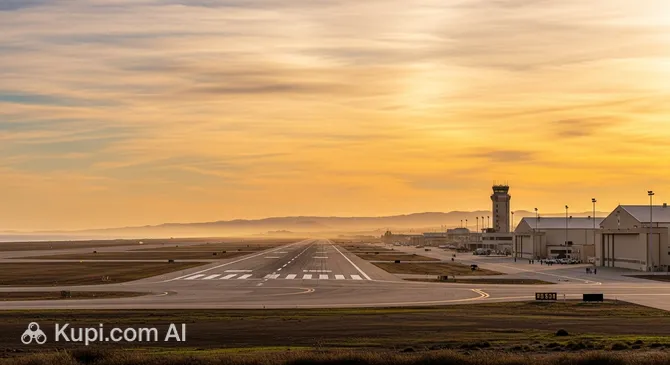
Lompoc Airport, known by the code VBG and closely linked to Vandenberg Space Force Base, is more than just a runway on the California coast. It is a unique aerial gateway where civil aviation meets advanced US space technology. Located in a picturesque corner known for its flower fields and scenic vineyards, this airport offers travellers a rare opportunity to be at the very heart of American aerospace history, beginning their adventure in close proximity to the launch pads.

Lompoc (Vandenberg AFB). Source: Kupi.com Binoculars
IATA Code VBG
ICAO Code KVBG
City Lompoc
Distance to Centre approx. 15 km
Status Military / Civil
Annual Passengers Regular commercial service suspended; primarily serves military and charter flights
Popular Airlines United Express (historically), charter airlines

The main feature of Vandenberg Airport is its strategic location within an active Space Force base. This gives the journey a truly special atmosphere, as important launch vehicles and satellites are deployed from here. Although the airport cannot compare in scale to major international hubs, its compact size is an undeniable advantage: all pre-flight formalities here are completed quickly and without fuss.

The airport serves as a key transport hub for base personnel, contractors, and visitors involved in the aerospace industry. For tourists arriving in the region, it is a convenient starting point for exploring the famous Santa Ynez valleys and the picturesque California coast. It is important to note that due to the facility's military status, access to certain areas may be restricted, and information regarding the availability of civil flights should always be checked in advance, as schedules may be irregular.

Contact Information

  • Official Website: Information about the airport is available on the official City of Lompoc website.
  • Phone: +1 (805) 736-3423 (Airport Administration)
  • Address: 1801 North H Street, Lompoc, CA 93436, USA
  • Email: An official email address is not published. It is recommended to use the phone for enquiries.
  • Social Media: The airport does not have official social media accounts.
  • Lost Luggage and Passenger Support: Since the airport mainly serves private and general aviation rather than major commercial airlines, there are no centralised lost luggage or passenger support services. For these issues, you should contact your air carrier directly.

How to Get to the Airport

Getting to Lompoc Airport (VBG), located in close proximity to the city of Lompoc, California, is quite simple, but the specific nature of this location should be taken into account. It is important to understand that this is a small airport serving primarily private and business aviation, rather than regular commercial flights. It is located next to the Vandenberg Space Force Base but is a civil facility. Consequently, transport options will differ from major aviation hubs in the United States.

Taxis, Ridesharing, and Transfers

The fastest and most reliable way to get to the airport from the centre of Lompoc is to book a taxi or use mobile apps such as Uber and Lyft. The journey will take just 5–10 minutes, as the airport is only a few kilometres from the city. The cost will be low, approximately 10–20 USD. For greater convenience, you can pre-book a private transfer, especially if you have a lot of luggage or are travelling as a group.

Public Transport

There is no direct public transport connection to Lompoc Airport. The local City of Lompoc Transit (COLT) bus system serves city routes, but none of them go directly to the terminal. You can take a bus to the stop nearest the airport and take a taxi from there. There is also an Amtrak train station (Lompoc-Surf) in the area, but it is located at some distance and is not a convenient option for a direct route to the airport.

Car Rental

Car rental is an excellent choice for travellers who want to move freely around Lompoc and explore the picturesque Central Coast region of California. Rental company offices (e.g., Hertz, Enterprise) are located in the city itself, not at the airport. By renting a car, you can not only reach the airport in comfort but also visit local vineyards, beaches, and other attractions. This is the most flexible and recommended method of transport for tourists.

Airport Parking

Lompoc Airport has simple and accessible parking located within walking distance of the main building. Since the airport does not handle a large passenger flow, finding a free space is usually not a problem. Parking is likely to be free or very inexpensive, which is convenient for pilots, private jet owners, and those meeting or seeing them off.

Terminals and Map

Lompoc Airport (VBG), which also serves the nearby Vandenberg base, is a small and compact aviation hub. It is important to understand that this is not a major international airport, so its structure is very simple and convenient for passengers. There is no complex system of multiple terminals here—all infrastructure is concentrated in one building.

This single terminal serves both departing and arriving passengers. The layout of the building is intuitive: check-in counters, the security screening area, a small waiting lounge, and boarding gates are all within walking distance of each other. Transitions between zones take literally a few minutes, as everything is located in one common space. It is practically impossible to get lost here.

Departure and arrival zones are clearly separated but are housed in the same building. After passing security, passengers enter the secure area with the boarding gate. The arrival zone includes a baggage claim belt and an exit to the city. Thanks to the low passenger volume, all procedures are completed quickly and without unnecessary hassle.

Check-in and security procedures at Lompoc airport usually take a minimum amount of time. Unlike major hubs, there are rarely long queues here. It is recommended to arrive at the airport approximately 60-90 minutes before departure—this is more than enough time to calmly check in luggage and pass security control. The main navigation tip is simple: follow the signs, of which there are few, and you will easily find everything you need within the limits of one small hall.

Airport History

The history of the airport in the city of Lompoc is unique and closely intertwined with the development of space and military technologies in the United States. What is known today as Vandenberg Space Force Base, on the territory of which the airfield is located, began its history in 1941 as the Army training camp Camp Cooke. After World War II, the facility was transferred to the Air Force and in 1957 became Cooke Air Force Base, and as early as 1958 was renamed Vandenberg Air Force Base in honour of General Hoyt Vandenberg, one of the ideologues of the US Air Force.

The main stage of the airfield's development occurred at the beginning of the space age. Thanks to its coastal location, the base became an ideal site for launching satellites into polar orbit. Already in 1958, the first launch of a Thor ballistic missile was conducted from here, and in 1959, the world's first satellite in polar orbit, Discoverer 1, was launched. Throughout the Cold War, Vandenberg was a key centre for testing intercontinental ballistic missiles and launching reconnaissance satellites.

An interesting fact from the base's history is the construction of the SLC-6 launch complex, which was intended for Space Shuttle launches. It was planned that Vandenberg would become the western launch site for the Space Shuttle programme. However, after the Challenger disaster in 1986 and a review of the safety programme, manned shuttle launches from this site were cancelled, and the complex was never used for its original purpose.

In recent decades, the base has undergone significant modernisation to support launches of modern launch vehicles, including those of private companies such as SpaceX. In 2021, Vandenberg Air Force Base was officially renamed Vandenberg Space Force Base, reflecting its current key role in space activities. Parallel to military and space activities, the civil Lompoc Airport, located nearby, serves the needs of the local community and private aviation, acting as the aerial gateway to this unique region.

Services and Facilities

Lompoc Airport (VBG), serving the city of Lompoc and the adjacent Vandenberg Space Force Base, is a small aviation facility. Consequently, the range of services and amenities for passengers here is basic and focused on meeting essential needs before departure. Travellers should note that the terminal infrastructure is significantly more modest than in major airports.

Restaurants, cafes, and shops are practically absent at the airport. Passengers are advised to have a meal or make necessary purchases in the city before arriving at the airport. Vending machines with drinks and snacks may be available. High-comfort lounges or VIP areas are not provided here.

For passenger convenience, free Wi-Fi may be available in the terminal. The number of charging stations for electronic devices is limited, so it is better to bring a portable power bank. Banking services, currency exchange points, as well as specialised business centres or conference rooms are not provided at the airport.

The terminal is equipped for the needs of passengers with reduced mobility, ensuring basic accessibility. However, specialised services such as mother and child rooms or play areas are absent. In case medical assistance is required, one should contact airport staff to call the appropriate services. There are no hotels on the airport grounds, but various accommodation options can be found in the nearby city of Lompoc.

Where to Eat

When planning a departure from Lompoc Airport (VBG), it is important to consider its specific features. This is a small regional airport that mainly serves private and military aviation. Consequently, infrastructure for passengers, including dining outlets, is extremely limited here. There are no restaurants or cafes in the terminal building itself. Therefore, travellers should arrange for food in advance.

The best strategy would be to have a full lunch or dinner in the city of Lompoc before heading to the airport. The city is located just a few minutes' drive away and offers a wide choice of establishments for every taste and budget—from restaurants serving California cuisine to fast-food chains. There, you will easily find vegetarian options and can also check with staff regarding ingredients to ensure meals meet your dietary or Halal requirements. This is the best way to enjoy local food and not remain hungry before your flight.

If you only need a quick snack, do not count on a large selection. At best, vending machines with drinks, sandwiches, or snacks may be installed in the waiting area. It is strongly recommended to bring food with you or eat before arriving at the airport. This approach will allow you to avoid inconvenience and wait for your flight calmly while travelling across the USA.

Traveller Tips

When planning a trip to Lompoc, it is important to consider that the local airport (Lompoc Airport) is used primarily for private aviation and is located in close proximity to Vandenberg Space Force Base. It does not accept regular commercial passenger flights. Most tourists arrive in the region via the nearest civil airports: Santa Maria (SMX), located approximately 30 minutes away by car, or Santa Barbara (SBA), which is about an hour away. Below are tips relevant for travelling to this region of California via neighbouring aviation hubs.

The optimal arrival time at Santa Maria or Santa Barbara airports depends on your itinerary. For domestic flights within the US, it is recommended to arrive 1.5–2 hours before departure. Although these regional airports are smaller than major hubs, security screening procedures are conducted according to the same strict standards, and allowing extra time will help avoid rushing.

The check-in and security procedure is conducted in accordance with the federal requirements of the US Transportation Security Administration (TSA). Prepare your passport and boarding pass in advance. Be ready to remove shoes, belts, and light outerwear, as well as remove laptops and large electronic devices from your bag. If you have a TSA PreCheck subscription, the procedure will be significantly faster and easier.

When choosing a seat on the plane, keep the scenic route in mind. Flights over the Central Coast of California are often accompanied by beautiful views. If possible, choose a Window Seat to enjoy the panorama of the Pacific Ocean, vineyards, and hilly landscapes surrounding the Lompoc Valley during descent or takeoff.

Regarding hand luggage, strictly observe the 3-1-1 rule for liquids: all containers must be no more than 100 ml and packed in a single transparent resealable bag with a volume of 1 litre. It is forbidden to carry sharp objects and imitation weapons. Lithium batteries and portable chargers (power banks) must be taken with you in the cabin, as checking them into luggage is prohibited by safety rules.

For passengers with connections, it is important to note that flights to Santa Maria or Santa Barbara are often operated via transit through major hubs (for example, Los Angeles, San Francisco, or Denver). Ensure that the connection time is at least 1–1.5 hours to have time to transfer between terminals in a large airport. If the ticket is issued as a single booking, luggage usually follows to the final destination automatically.

If your route begins abroad, remember the specifics of US customs control. You will pass through it at the first airport of arrival in the country, not at the final regional airport. The import of fresh fruits, vegetables, meat, and seeds is strictly prohibited—high fines are provided for this. Cash amounts exceeding 10,000 USD are subject to mandatory declaration.

To save time and money, always check in for the flight online 24 hours before departure and save your electronic boarding pass. To avoid buying expensive water in the terminal, bring an empty reusable bottle—US airports have special stations (bottle filling stations) where you can fill up with drinking water for free after passing security.

In case of a flight delay, remain calm. It is recommended to install the official app of your airline on your smartphone: notifications about changes in flight status or gate numbers often appear there earlier than on the boards in the waiting hall. If the delay is significant, contact airline staff to clarify options for rebooking or compensation.
Reached the end of the page?

That means the route is fully explored