Support

Flying Cloud Airport

About the Airport

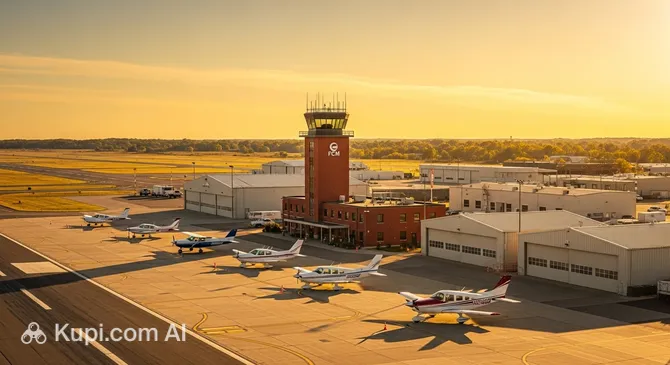
Flying Cloud Airport. Source: Kupi.com Binoculars

Flying Cloud Airport is not merely a transport hub, but a cosy and strategically important air harbour located in the picturesque town of Eden Prairie, part of the Minneapolis metropolitan area. This airport serves as the main alternative for private pilots and corporate aircraft, helping to relieve the region's main international hub of small aviation traffic. Here, travellers are greeted by an atmosphere of exclusivity and tranquillity, far removed from the hustle and bustle of giant terminals. Thanks to its location and high level of service, Flying Cloud has become a favourite destination for the business elite and aviation enthusiasts.

IATA Code FCM
ICAO Code KFCM
City Eden Prairie (Minneapolis)
Distance to Centre ~20 km
Status Regional (General Aviation)
Passengers per Year ~122,000 take-offs/landings (private aviation)
Schedule Online board

Features and Advantages of the Airport:

Flying Cloud is rightfully considered the busiest airport in the Minneapolis reliever airport system, offering its guests a unique set of benefits.

A key feature is its specialisation in private and corporate flights. There are no typical check-in queues or long waits for luggage here; everything is organised to save passengers maximum time. Several high-class operators (FBOs) operate on the premises, providing comfortable lounge zones, hangars, and a full range of aircraft maintenance services.

Furthermore, the airport is exceptionally conveniently located regarding entertainment centres. It is in the immediate vicinity of the Valleyfair amusement park and the popular Mystic Lake complex. For those who dream of the skies, Flying Cloud is also known for its flight schools, where one can undergo training to pilot helicopters and aeroplanes.

Contact Information

To plan your visit or resolve operational questions, you can use the following contact details for Flying Cloud Airport (FCM):

  • Official Airport Website: metroairports.org/flying-cloud-airport
  • Information Service Phone: +1 952-944-1035 (Airport Administration).
  • Airport Address: 9960 Flying Cloud Drive, Eden Prairie, MN 55344, USA.
  • E-mail: There is no direct public e-mail; for official enquiries, it is recommended to use the feedback form on the Metropolitan Airports Commission (MAC) website.
  • Social Media: News and updates are published on the Metropolitan Airports Commission (MSP Airport) accounts on major social networks.
  • Lost and Found Information: Due to the specific nature of private aviation, there is no centralised lost and found office. In case of lost items, you must contact the ground handling operator (FBO) you used directly, or the administration office at the phone number above.
  • Passenger Support Contacts: Support is provided through specific private operators (FBOs) on the airport territory, such as Modern Avionics, Inflight Pilot Training, or Premier Jet Center.

How to Get to the Airport

Flying Cloud Airport is located in the suburb of Eden Prairie, approximately 20 kilometres southwest of downtown Minneapolis. Since this airport serves primarily private and business aviation, the transport infrastructure here is oriented towards maximum comfort and an individual approach. Unlike large commercial hubs, there are no mass flows of passengers here, making the trip quick and predictable.

By Car, Taxi, and Transfer

The most convenient and common way to get to the airport is by car. The journey from Downtown Minneapolis usually takes 20–30 minutes in the absence of serious traffic. The main route runs via highways I-35W South and I-494 West, transitioning into US-212 West. This is a scenic and high-quality road, allowing quick access to the terminals of private operators (FBOs).

Popular taxi booking services, such as Uber and Lyft, operate actively in this area. The cost of a trip from the city centre varies between 30–50 US Dollars depending on the time of day and car class. For VIP passengers, it is recommended to pre-book an individual transfer or limousine service, which can be delivered directly to the aircraft stairs or the lounge entrance.

Public Transport

Getting to Flying Cloud exclusively by public transport can be difficult, as there are no direct bus or rail routes to the terminal. The nearest major transport hub is SouthWest Station in Eden Prairie. Express buses from the SouthWest Transit company run here from downtown Minneapolis.

From the station to the airport, you will have to travel another 5–7 minutes by taxi or use local ridesharing services. This option is suitable for those wishing to save money (bus cost is about 3–5 dollars), but it is not recommended for travellers with bulky luggage or a tight departure schedule.

Car Rental

For those who prefer freedom of movement, renting a car is an excellent option. Major chain rental companies (such as Enterprise, Hertz, or Avis) often cooperate with airport FBOs. You can arrange for the rented car to be delivered directly upon your arrival at the Flying Cloud Airport parking lot. This is especially convenient for business trips around the region.

Parking at the Airport

One of the main advantages of Flying Cloud is the convenience of parking. Unlike its giant neighbour, Minneapolis-Saint Paul International Airport, parking spaces here are located in immediate proximity to the ground handling operator buildings. Typically, parking for private aviation clients is provided free of charge for the duration of the trip or is included in the flight service cost. The spaces are under round-the-clock surveillance, ensuring the safety of your vehicle.

Recommendations for Travellers

If you are planning a departure or meeting at Flying Cloud, verify with your pilot or charter company exactly which FBO (Fixed Base Operator) you need to drive to (for example, Modern Avionics or Premier Jet Center), as their entrances are located in different parts of the airfield. This will save you time and spare you the need to search for the correct hangar.

Terminals and Map

The structure of Flying Cloud Airport (FCM) differs significantly from familiar passenger hubs. Here you will not find a single huge building with endless corridors, Duty Free zones, and hundreds of gates. Instead of the traditional "one terminal for all" concept, the airport is organised on the principle of a decentralised service system oriented towards an individual approach.

Terminals and FBOs: Structural Features

The role of passenger terminals at Flying Cloud is performed by FBOs (Fixed Base Operators) — these are separate complexes managed by private companies. Each such complex represents an autonomous "mini-airport" with its own registration area, waiting lounge, and exit to the apron. Several key operators function within the FCM territory, each serving its own clients:

  • Premier Jet Center: One of the largest and most luxurious complexes. This "terminal" is oriented towards business jets and VIP service. Inside, guests are greeted by spacious lounge zones with a fireplace, conference rooms for business negotiations right before departure, and concierge services.
  • Modern Avionics (Thunderbird Aviation): This complex is often used both for charter flights and for the needs of the flight school. The atmosphere here is more democratic, but the level of comfort remains high. There are rest zones for pilots and a cosy lobby for passengers.
  • Inflight Pilot Training: Although this building is primarily a training centre, it also functions as a departure point for private pilots and small aircraft.

Map and Navigation Between Facilities

The airport territory is divided by runways into two main zones: Southern (along Flying Cloud Drive) and Northern. Most passenger services and FBOs are concentrated in the southern part, ensuring a convenient exit from the main road. Since the operator buildings are at a significant distance from each other (sometimes up to a kilometre), pedestrian walkways between them are not provided. Movement is carried out exclusively by car or taxi along external roads.

Departure and Arrival Zones

Unlike commercial airports, the departure and arrival zones here are brought as close together as possible for the convenience of guests:

  • Departure Zone: Represents a comfortable hall, reminiscent of a fine hotel lobby. You pass through it and immediately step onto the apron to the aircraft stairs. The entire path from the building door to the seat in the plane takes less than 2 minutes.
  • Arrival Zone: Passengers disembark from the aircraft and either pass through the lobby or, in the case of a pre-order, get into a car delivered directly to the aircraft side (service known as rampside pickup).

Registration and Screening Procedures

The main advantage of Flying Cloud is the phenomenal speed of service. There are no habitual security screening queues (TSA) characteristic of regular flights (unless it is a special charter with specific security requirements).

Time for Formalities:

  • Registration and luggage processing take 5–10 minutes.
  • Recommended arrival time at the airport is just 15–20 minutes before the scheduled departure time.
  • There is no need to remove shoes, take out liquids or laptops, making the start of the journey absolutely stress-free.

Navigation Recommendations for Tourists

A critically important point when planning a trip to Flying Cloud is to know the exact name of your FBO. If you simply tell the taxi driver "to the airport", they might bring you to the administration building or the wrong hangar. Each operator (Premier Jet Center, Modern Avionics, etc.) has its own postal address and separate entrance. Always verify with your pilot or charter company manager exactly which building you will be met at, and enter the specific address of that operator into your navigator.

Airport History

The history of Flying Cloud Airport is a chronicle of the transformation of a modest airfield amidst farmland into one of the key nodes of business aviation in the Midwest. Over the decades of its existence, this aerodrome has not only preserved the spirit of aviation romance but has also become an important economic asset for the region, ensuring Minneapolis's connection with the entire country.

Foundation and the Era of "Pappy" Grill

The airport was founded in 1941. At its origins stood not a major investor, but an enthusiastic aviator and local farmer, Martin 'Pappy' Grill. Initially, it was a small private field with grass strips designed for light aircraft. In the 1940s, when civil aviation was just gaining altitude, such aerodromes were centres of attraction for enthusiasts. A fateful year for the facility was 1948, when the Metropolitan Airports Commission (MAC) acquired the airfield, including it in the developing system of regional air harbours. This decision guaranteed that the airfield would not be built over with residential quarters.

Infrastructure Development and Traffic Growth

With the transition under MAC management, gradual modernisation began. In the 1950s and 60s, dirt paths were replaced with hard surfaces, allowing for the reception of faster aircraft. A major milestone was the construction of the first control tower, which began operation in 1963. This was a necessity: the popularity of private flights grew so rapidly that Flying Cloud quickly became one of the busiest small aviation airports in the central United States.

21st Century Modernisation

The newest chapter in the airport's history is connected with a large-scale reconstruction project completed in 2009. After years of approvals and planning, the main runway (10R/28L) was successfully extended to 1524 metres (5000 feet). This change had strategic importance: the new runway length opened the airport to modern business jets capable of making non-stop flights from Minneapolis to any US coast with a full fuel load and passengers on board.

Interesting Facts from History:

  • Origin of the Name: Contrary to the popular legend about a clipper ship, the airport was named by one of its first managers, John Stuber. The name Flying Cloud refers to local Indigenous legends and the history of the native peoples who inhabited the Minnesota River valley, giving the place a special historical colour.
  • Contribution to Defence: During the Second World War, the airfield was used for initial flight training of cadets. US Navy pilots honed their take-off and landing skills here, using training aircraft of that time known as "Yellow Perils".
  • Regional Leadership: For many years, Flying Cloud has held the title of the busiest reliever airport in the MAC system, second only to the main international hub Minneapolis-Saint Paul in the number of operations.
  • Generational Connection: Despite modern infrastructure and new hangars, the airport preserves the memory of its founder — Martin Grill, whose enthusiasm laid the foundation for the current success of this air harbour.

Services and Amenities

Services and amenities at Flying Cloud Airport (FCM) are organised quite differently than in large commercial aviation hubs. Since the airport serves private aviation, the focus here is not on mass appeal and a variety of retail outlets, but on exclusivity, privacy, and speed of service. The infrastructure is concentrated within the private operator terminals (FBOs), each of which strives to create maximum comfortable conditions for its guests.

Restaurants, Cafés, and Shops

Flying Cloud Airport lacks the usual restaurants, food courts, or Duty Free shops. The "General Aviation" format assumes that passengers spend a minimum amount of time in the terminal before departure.

  • Dining in Terminals: In operator lobbies (for example, Premier Jet Center or Modern Avionics), guests are usually offered complimentary hot beverages (coffee, tea), soft drinks, fresh pastries, fruit, or light snacks.
  • Catering: For dining on board the aircraft, you can order meal delivery from the best restaurants in Minneapolis. This service is organised by FBO staff upon prior request.
  • Shopping: There are no retail shops on the premises, however, just a 5–10 minute drive away is the large Eden Prairie Center shopping complex with a huge selection of boutiques and restaurants. In the small shop at the flight school (Thunderbird Aviation), one can purchase aviation-themed souvenirs, maps, and accessories for pilots.

Lounges and VIP Service

The waiting area here is not a crowded hall with hard seats, but a cosy living room with soft furniture, fireplaces, and televisions. Each FBO offers its own VIP lounge, access to which is included in the flight service. Here you can relax in silence, read the press, or simply enjoy the view of the airfield through panoramic windows. The atmosphere resembles a private club where no one will disturb you.

Connectivity and Business Services

The airport is ideally adapted for business people who value every minute.

  • Wi-Fi and Device Charging: Free high-speed Wi-Fi operates throughout the FBO territory. Lounge zones are equipped with plenty of sockets and USB ports for charging devices.
  • Conference Rooms: Operators such as Premier Jet Center have their own meeting rooms and conference halls. You can hold a business meeting immediately upon arrival without leaving the airport territory. Audio-visual equipment for presentations is available.
  • Business Centres: For working with documents, quiet work zones with computers, printers, and fax machines are provided.

Financial and Medical Services

There are no currency exchange points or bank branches directly at the airport. It is recommended to arrange for cash in advance or use ATMs in the city of Eden Prairie. A specialised medical centre is also absent, however, staff are trained in first aid, and first aid kits are available in every building. In case of emergency, city rescue services and the nearest hospitals are a few minutes' drive away.

Services for Passengers with Children

Although the airport does not have specialised playrooms or mother-and-child rooms, travelling with children through Flying Cloud is much easier than through large hubs.

  • The absence of crowds and queues reduces stress for the child.
  • Staff often show flexibility, allowing children (under supervision) to look at the planes closer.
  • In waiting zones, there is enough space for a child to feel free without disturbing other passengers.

Services for Passengers with Disabilities

The airport infrastructure fully complies with barrier-free environment requirements. Since FBO buildings are single-storey, there is no need for lifts or escalators.

  • Boarding the Aircraft: Staff organise the transport of the passenger by car or golf cart directly to the aircraft stairs (rampside service).
  • Assistance: Employees provide individual assistance when moving through the terminal and boarding, ensuring maximum comfort and safety.

Hotels Near the Airport

There are no hotels on the airfield territory itself, but thanks to its location in a developed suburb, travellers have access to a wide selection of well-known hotel chains within a radius of just 3–5 kilometres. Most of them offer transfer to the airport upon request.

  • SpringHill Suites by Marriott Minneapolis Eden Prairie — a comfortable hotel located literally a couple of minutes' drive away.
  • Residence Inn by Marriott — an excellent option for long stays with kitchens in the rooms.
  • TownePlace Suites by Marriott — another popular option nearby, convenient for families and business travellers.

Where to Eat

The gastronomic situation at Flying Cloud Airport (FCM) differs radically from what passengers of large international hubs are accustomed to. Since the airport serves exclusively private and business aviation, you will not find noisy food courts, chain fast foods, or full-service restaurants directly in the departure zone. The dining system here is built around individual comfort, catering, and proximity to excellent city establishments.

Dining in Terminals (FBOs)

Inside the buildings of private operators (Fixed Base Operators), such as Premier Jet Center or Modern Avionics, the dining concept is limited to a "light snack" format. Self-service stations are usually organised in cosy lounge zones for passengers and pilots.

Here, guests are offered complimentary:

  • Freshly brewed coffee (often high quality), tea, and hot chocolate.
  • Soft drinks, juices, and bottled water.
  • Light snacks: fresh pastries (biscuits, muffins), fruit, popcorn, or packaged snacks.

These zones are available both before departure and immediately after arrival. They operate during FBO opening hours (usually from 06:00 to 22:00 or round-the-clock upon request) and are perfect for refreshing yourself with a cup of coffee before a flight.

In-Flight Dining and Catering

For a full meal during the flight, the bespoke catering service is used. This is the main way of dining for Flying Cloud passengers. The order is placed in advance through your broker or FBO staff. Dishes are delivered from the best restaurants in Minneapolis and Eden Prairie directly to the aircraft stairs.

Thanks to an individual approach, any menu options are available here: from exquisite haute cuisine dishes to dietary meals. You can order Halal, vegan, gluten-free, or children's sets. There are practically no limitations — everything depends on your preferences and budget. The average cheque for catering is significantly higher than restaurant prices and belongs to the premium segment.

Restaurants Nearby (Landside)

If you wish to have a full lunch or dinner before departure (or after landing), it is worth taking advantage of the airport's proximity to the gastronomic centre of Eden Prairie. Just a 5–10 minute drive by car are establishments frequently visited by pilots and FCM passengers:

1. Lions Tap

A legendary local establishment located not far from the airport. This place is famous for its burgers, which many consider the best in the state of Minnesota. The atmosphere is simple and casual. This is an ideal option for a quick and hearty lunch in "comfort food" style.
Average bill: 15–25 $
Signature dish: Classic cheeseburger with French fries.

2. Tavern 4 & 5

A modern American restaurant with a more refined setting, perfectly suitable for a business lunch or dinner. There is an extensive menu with steaks, salads, and wood-fired pizza. The menu features a wide range of gluten-free items and dishes for vegetarians.
Average bill: 25–50 $
What to try: Pizza with pear and gorgonzola or ribeye steak.

3. Wildfire

Located in the Eden Prairie Center shopping mall, this 1940s-style steakhouse offers an Old Hollywood atmosphere. An excellent choice for those who want to celebrate a successful flight or hold an important meeting. Meat here is cooked over an open fire.
Average bill: 40–80 $
Features: Extensive selection of premium beverages.

Recommendations for Travellers

Since it is impossible to buy a full meal directly on the airport territory (Airside), plan your schedule in advance. If you are short on time, limit yourself to coffee and snacks in the FBO lounge. If you have at least an hour to spare, it is strongly recommended to visit one of the restaurants within a two-mile radius — this will allow you to get acquainted with the local cuisine of Minnesota without haste and queues.
Travel Tips

Travelling through a private aviation airport such as Flying Cloud (FCM) differs radically from the experience of flying with regular airlines. There is no habitual fuss, long queues, or rigid restrictions here, but there are unwritten rules of etiquette and logistics. To ensure your flight goes flawlessly, make use of the following recommendations.

Optimal Arrival Time

Forget the rule of "arriving 2–3 hours early". The main advantage of private aviation is saving time. In most cases, it is sufficient to arrive at the terminal (FBO) 15–20 minutes before departure. This time is enough to meet the pilot, hand over luggage, and enjoy a cup of coffee. If you are running late, be sure to warn your broker or pilot — the plane will wait for you, but this may affect the flight slot schedule.

Check-in and Security: Stress-Free

Flying Cloud lacks the traditional TSA screening zone with metal detector frames and the need to remove shoes (except for rare cases of large charter programmes). The "check-in" procedure usually comes down to presenting identification (passport) to the aircraft captain or the FBO receptionist. The entire process takes literally a couple of minutes. Often you can drive directly to the aircraft stairs if this is agreed in advance.

Luggage and Hand Luggage: What is Important to Know

Luggage rules here are dictated not by airline policy, but by the physical dimensions of the luggage compartment of the specific aircraft.

  • Type of Bags: It is strongly recommended to use soft travel bags instead of rigid suitcases. They are much easier to place in the limited space of a small jet's luggage compartment.
  • Liquids in Hand Luggage: The "100 ml" rule does not apply here. You can calmly bring your favourite beverages, cosmetics, or perfumes of any volume on board, as security screening follows a simplified scheme.
  • Pets: Usually, pets can fly with you in the cabin without cages, but this point must be agreed with the flight operator in advance.

Choosing a Seat on the Plane

In private flights, as a rule, there are no boarding passes with a seat number. You can occupy any seat you like. However, if the aircraft is small (for example, a light jet or turboprop plane), the pilot may ask you to sit in a specific seat to ensure the correct centre of gravity (balance) of the aircraft. Always follow the crew's instructions in this matter — it is a guarantee of safety.

Tips for Transit Passengers

If Flying Cloud is only an intermediate point and you have a transfer to a regular flight at Minneapolis-Saint Paul International Airport (MSP) ahead, allow sufficient time for the connection. There is no direct shuttle between the airports. A taxi ride will take about 20–30 minutes. Factor in the time for passing full security screening at the large airport, which you avoided at FCM.

Customs Control

If you are arriving at Flying Cloud from abroad (for example, from Canada), the border crossing procedure will be as comfortable as possible. Customs officers usually approach the aircraft directly or meet you in a designated FBO zone. You do not need to stand in a general queue. However, it is important that your pilot submits the appropriate arrival applications in advance, as the customs service here works on request.

How to Save Time and Money

  • Know Your FBO: The most frequent mistake leading to lost time and money on taxis is arriving "just at the airport". The FCM territory is large, and operators are located far from each other. Verify the exact address of your terminal in advance (for example, Premier Jet Center or Thunderbird Aviation).
  • Free Parking: Use the advantage of free parking lots at FBO buildings. This is a significant saving compared to the expensive car parks of commercial airports.
  • Dining: Since there are no restaurants in the "airside zone", and on-board catering is expensive, you can bring food with you from your favourite city restaurant — this is absolutely permissible and will help save your budget.

Actions in Case of Flight Delay

Delays in private aviation are most often related to weather conditions, as small aircraft are more sensitive to the meteorological situation than huge liners. If the departure is postponed:

  • Do not panic and do not stand by the exit. Make use of the comfortable FBO lounge, where there is Wi-Fi, coffee, and TV.
  • Maintain direct contact with the pilot. Unlike airlines, where information is given by a faceless board, here the captain will personally explain the situation and forecast to you.
  • Use this time for work — most FBOs have excellently equipped business rooms.

Reached the end of the page?

That means the route is fully explored