Support

Minneapolis–St. Paul International Airport

About the Airport

Minneapolis–St. Paul International Airport (MSP), frequently recognised as the best airport in North America, is not just a transit hub but a true gateway to the "Twin Cities" region in the northern United States. Located between Minneapolis and St. Paul, it serves as a major hub for Delta Air Lines and the home base for Sun Country Airlines. Thanks to its supreme level of service, efficiency, and comfort, MSP regularly receives high ratings from travellers and experts, confirmed by awards from J.D. Power and the Airports Council International (ACI).
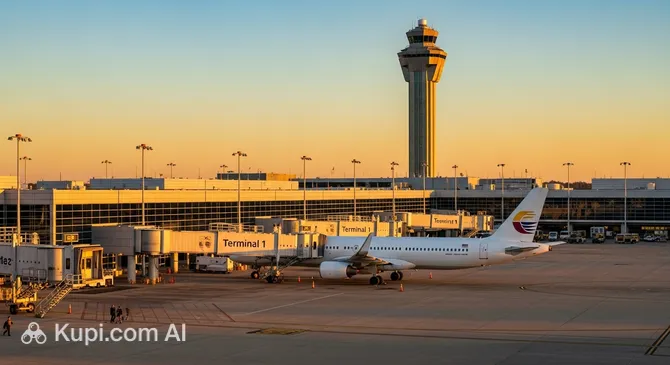
Minneapolis–St. Paul International Airport. Source: Kupi.com Binoculars
IATA Code MSP
ICAO Code KMSP
City Minneapolis
Distance to Centre 16 km
Status International
Annual Passengers Over 33 million
Popular Airlines Delta Air Lines, Sun Country Airlines, United Airlines.
Schedule Online Flight Information "Minneapolis–St. Paul International Airport"

Minneapolis–St. Paul Airport is renowned for its thoughtful infrastructure and passenger convenience. It consists of two terminals — Terminal 1 (Lindbergh) and Terminal 2 (Humphrey), connected by a free light rail train. This same light rail line connects the airport to the city centre of Minneapolis and the famous Mall of America, making getting around the city fast and economical.

Travellers note the cleanliness, ease of navigation, and high level of service. Inside the terminals, you will find over 100 shops and restaurants, featuring both local brands and well-known national chains. Furthermore, the airport is adorned with numerous art installations, and live music can often be heard in the waiting areas, creating a pleasant and welcoming atmosphere. Thanks to its efficiency and wide range of services, MSP is rightfully considered one of the most comfortable airports for travel within the United States.

Contact Information

Below is the essential contact information for Minneapolis–St. Paul International Airport (MSP) in the city of Minneapolis (USA), which will help you plan your trip and navigate upon arrival.

  • Official Website: www.mspairport.com — here you will find the most up-to-date information on flights, services, parking, and terminal maps.
  • Information Service Phone: +1 (612) 726-5555. Operators are ready to answer general questions about airport operations.
  • Airport Address: Terminal 1 (Lindbergh Terminal) - 4300 Glumack Dr, St. Paul, MN 55111, USA; Terminal 2 (Humphrey Terminal) - 7150 Humphrey Dr, Minneapolis, MN 55450, USA.
  • Email: To contact the administration or specific departments, it is recommended to use the contact forms available on the airport's official website.
  • Social Media: Follow airport news and updates on its official pages on X (formerly Twitter), Facebook, and Instagram under the username @mspairport.
  • Lost and Found: If you have lost personal items within the airport building, you should fill out the online form in the "Lost and Found" section on the official website. In case of lost luggage or items on board the aircraft, you must contact your airline's representative office directly.
  • Passenger Support Contacts: Traveler's Assistance volunteers work in the terminals and are always ready to help with navigation and answer questions. They are easily recognisable by their distinctive uniforms. Information desks are also located in key areas of the airport.

How to Get to the Airport

Minneapolis–St. Paul International Airport (MSP) is the main air gateway to the Twin Cities of Minneapolis and St. Paul in the USA. Thanks to developed transport infrastructure, there are several convenient ways to reach it from the city centre or surrounding areas, suitable for any budget and travel style.

Public Transport

The most popular, fastest, and economical option is light rail transport. The METRO Blue Line directly connects downtown Minneapolis, the Mall of America, and both airport terminals (Terminal 1-Lindbergh and Terminal 2-Humphrey). Trains run regularly from early morning until late at night. The trip from the city centre takes approximately 25-30 minutes, and the ticket price is quite reasonable. You can also reach the airport via Metro Transit bus No. 54, which runs from St. Paul, which is convenient for those travelling from the eastern part of the metropolitan area.

Taxis, Shuttles, and Rideshare

For those who value comfort, travel with a lot of luggage, or are in a group, taxis or services like Uber and Lyft are the optimal choice. A car journey from downtown Minneapolis will take 20-30 minutes depending on traffic conditions. The cost will be significantly higher than public transport, but you receive "door-to-door" service. Designated zones for pick-up and drop-off for taxis and rideshare services are conveniently located at both terminals.

Car Rental and Parking

If you plan to actively travel around the region, renting a car is an excellent option. All major rental companies are represented at the airport. You can pick up or drop off a car directly upon arrival or before departure. For those arriving at the airport in their own vehicle, numerous parking options are provided: from short-term hourly to more economical long-term parking. It is recommended to book a parking space online in advance, especially during peak seasons — this will help save time and money.

Terminals and Map

Minneapolis–St. Paul International Airport (MSP) consists of two terminals: Terminal 1 (Lindbergh) and Terminal 2 (Humphrey). It is important to verify in advance which terminal your flight departs from, as they are not connected by pedestrian walkways and are located at a significant distance from each other.

Terminal 1 (Lindbergh) is the main and largest building of the airport. It serves the majority of major airlines, including Delta Air Lines, for which MSP is a key hub. The terminal has seven concourses (A, B, C, D, E, F, and G) that radiate from a central retail hall. A vast number of shops, restaurants, and business lounges are concentrated here. Navigation is intuitive thanks to clear signage. Arrival zones (baggage claim) are located on the lower level, while check-in counters and security checkpoints are on the upper level.

Terminal 2 (Humphrey) is significantly smaller and primarily serves budget and charter airlines, such as Southwest Airlines and Sun Country Airlines. There is only one concourse here (H). Despite its compact size, Terminal 2 has everything necessary: its own check-in counters, security zone, baggage claim, as well as several cafes and shops. The terminal structure is simple, making navigation very easy.

To move between terminals, a free light rail train (Light Rail Transit, LRT) is used. The journey takes just a few minutes. LRT stations are located underground in both terminals and are easily accessible by lift or escalator. This is the only public transport method for transfer between the airport buildings.

It is recommended to allocate sufficient time for check-in and security screening. During peak hours and the tourist season, waiting times can be lengthy. On average, you should arrive at the airport 2 hours before a domestic flight and 3 hours before an international one. To speed up the process, you can use TSA PreCheck lines if you have the appropriate clearance. The main advice for travellers is to always check the terminal number on your ticket or the airline's website before travelling to the airport to avoid unnecessary haste and transfers.

Airport History

The history of Minneapolis–St. Paul International Airport (MSP) began in the 1920s when a small airfield was founded on this site. Originally, it was called Wold-Chamberlain Field in honour of two local pilots who died in World War I, and was used primarily for airmail. The first passenger flight was operated in 1929, marking the beginning of the airfield's transformation into a full-fledged commercial airport serving the "Twin Cities" metropolitan area — Minneapolis and St. Paul.

A key stage in the airport's development was the construction of Terminal 1, which opened in 1962 and was named after the famous aviator Charles Lindbergh. This building, modern for its time, allowed for a significant increase in passenger flow and became the hallmark of MSP. In subsequent decades, the airport continued to grow, becoming an important hub for Northwest Airlines. To cope with growing traffic, Terminal 2 was opened in 2001, named after former US Vice President Hubert Humphrey. This terminal was designed to serve budget and charter carriers.

At the turn of the 21st century, the airport underwent massive modernisation under the MSP 2010 programme. New runways were built, concourses were expanded, and infrastructure was improved, including the launch of light rail transport connecting both terminals with the centres of Minneapolis and St. Paul. Following the merger of Northwest Airlines with Delta Air Lines in 2008, the airport strengthened its status as one of the key hub airports in the USA.

Today, Minneapolis–St. Paul International Airport regularly receives high marks for service quality, cleanliness, and efficiency. It is famous for its ability to operate without disruption even in severe winter conditions, which is a point of pride for locals. The airport is not just a transport hub but an important part of Minnesota's history and economy, continuing to develop and offer passengers one of the best experiences in North America.

Services and Facilities

Minneapolis–St. Paul International Airport (MSP) offers passengers a wide range of services and amenities to make waiting for a flight as comfortable as possible. In both terminals — Terminal 1 (Lindbergh) and Terminal 2 (Humphrey) — you will find everything needed for a pleasant journey. There are numerous restaurants, cafes, and bars to suit every taste: from fast food outlets to full-service restaurants where you can enjoy local and international cuisine. Additionally, numerous shops are at your service, including Duty Free, souvenir shops, bookstores, and clothing stores.

For those who need to stay connected or work, free Wi-Fi is available throughout the airport. Numerous charging stations for electronic devices are located everywhere, so you can easily recharge your phone or laptop. Passengers preferring enhanced comfort can utilise several lounges, such as the Delta Sky Club, which offer a private atmosphere, snacks, beverages, and business services. Conference rooms and work areas are also provided for business travellers.

MSP Airport cares about the needs of all categories of passengers. Special nursing rooms and play areas are equipped for travellers with children. ATMs and currency exchange points operate within the terminals. If necessary, medical assistance can be sought at first aid stations. The airport is fully adapted for passengers with reduced mobility: there are ramps, lifts, specially equipped restrooms, and assistance services available.

If you have a long layover or an early departure, you can stay at one of the hotels located in the immediate vicinity of the airport. For example, the InterContinental Minneapolis-St. Paul Airport hotel is connected to Terminal 1, making it a particularly convenient option. Other hotels are located a few minutes' drive away and offer free shuttle transfers for their guests.

Where to Eat

Minneapolis–St. Paul International Airport (MSP) offers a wide selection of establishments for every taste and budget, allowing travellers to enjoy both a quick snack and a full meal. Most cafes and restaurants are located in the "airside" zone, meaning after passing through security control.

Terminal 1 (Lindbergh), being the main terminal, features the largest variety of options. For a leisurely lunch or dinner, you can visit Stone Arch Craft Eatery, which serves American cuisine and local craft beer, or stop by Blue Door Pub to try the famous Minnesota "Juicy Lucy" burger. If you are in a hurry, there are plenty of coffee shops at your service, such as Caribou Coffee (a local chain) and Starbucks, as well as fast-food points. Most establishments are open from early morning until late evening to serve passengers on morning and evening flights.

Terminal 2 (Humphrey) is smaller but also offers decent options. Here you can find establishments such as Cocina del Barrio featuring Mexican cuisine or the Surdyk's Flights wine bar, where you can relax with a glass of wine and light snacks before your flight. Options for a quick bite are also present here.

Particular attention should be paid to local gastronomic specialities. Do not miss the opportunity to try dishes with wild rice, which is a hallmark of Minnesota, or appreciate the variety of local craft beer. Many restaurants at the airport take pride in using local produce.

For passengers with specific dietary needs, MSP has many options. It is easy to find vegetarian, vegan, and gluten-free dishes on the menus of most restaurants — they are often marked with special icons. Prices vary: you can find budget sandwiches and coffee for $10-$15, as well as a full dinner in a restaurant, which will cost $30-$50 and above per person. It is recommended to check the opening hours and menus of specific establishments on the official airport website, as they may change.

Travel Tips

Travelling through Minneapolis–St. Paul International Airport (MSP), one of the largest hubs in the USA, will be easier if you prepare in advance. To avoid rushing, it is recommended to arrive at the airport at least 2 hours before a domestic flight departure and 3 hours before an international one. This time is usually sufficient to calmly check in, drop off luggage, and clear security control, which can be busy during peak hours.

To save time, check in for your flight online and save your boarding pass on your phone. At the airport, you will only need to leave your luggage at the designated bag drop counter. The TSA screening procedure is standard: be prepared to remove laptops and other large electronics from your hand luggage. Members of the TSA PreCheck® programme can go through screening via an expedited procedure.

When packing hand luggage, remember the rule for liquids: containers up to 100 ml packed in a single transparent bag are allowed. Sharp objects and flammable substances are prohibited. Always check your airline's rules, as they may set additional restrictions on the weight and size of hand luggage.

If you have a transfer in Minneapolis, note that the airport consists of two terminals (Terminal 1 and Terminal 2), between which a free light rail tram runs. Immediately after landing, check the gate number of your next flight on the information board — distances can be significant, so allocate enough time for moving between gates.

Passengers arriving on international flights will have to pass through customs and border control. Have your passport and customs declaration ready. For expedited border crossing, citizens of the USA and several other countries can use Global Entry kiosks.

To save money, bring an empty reusable water bottle and fill it after passing control at special water fountains. Prices for food and drinks at the airport are high, so light snacks from home will help reduce expenses. If you are getting to the airport by car, book parking online in advance — this is often cheaper.

In case of a flight delay or cancellation, first check your airline's mobile app for the latest information. Contact an airline representative to find out about rebooking options or possible compensation. Fortunately, MSP Airport offers many shops, restaurants, and even works of art to brighten up the wait.

A small tip on choosing a seat on the plane: a window seat will give you beautiful views during takeoff and landing, while an aisle seat provides more legroom and the ability to stand up freely without disturbing neighbours. The choice depends on your personal preferences.

Reached the end of the page?

That means the route is fully explored