Support

Mobile Downtown Airport

Airports in the city

About the Airport

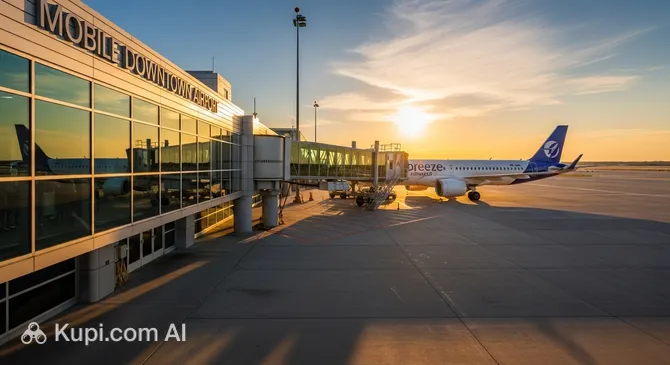
Mobile Downtown Airport. Source: Kupi.com Binoculars

Mobile Downtown Airport, also known as Brookley Field, is not merely a transport hub but a genuine aerospace stage where the history of aviation intertwines with its future. Located on the picturesque shores of Mobile Bay, this airport shares its runway with the Airbus assembly plant, so passengers can often observe the maiden flights of the newest airliners right from the terminal. Currently, the air harbour is undergoing a major transformation: by 2025, it prepares to become the city's main gateway, taking over the role from the regional airport and offering travellers maximum proximity to the historic centre and business districts.

IATA CodeBFM
ICAO Code KBFM
City Mobile
Distance to Centre 6 km
Status International (under reconstruction)
Annual Passengers ~11,000 (primarily private aviation)
ScheduleOnline board

Features and Advantages of the Airport:

The main advantage of the airport is its exceptional location just a few minutes' drive from the city centre (Downtown) and major tourist locations, making it much more convenient than the remote regional airport. Brookley Field is part of the vast Mobile Aeroplex aerospace complex, where aircraft of the A320 and A220 families are assembled, creating a unique atmosphere for aviation enthusiasts. Currently, a brand-new international terminal is under construction here, promising a modern level of comfort, multimodal connections to the port and railway, as well as an expanded route network as commercial flights are transferred.

Contact Information

  • Official Airport Website: flymobile.com
  • Information Desk Phone: +1 251-438-7334 (Mobile Airport Authority)
  • Airport Address: 2455 Michigan Avenue, Mobile, AL 36615, USA
  • Email: info@mobairport.com
  • Airport Social Media: Official pages of the Mobile Airport Authority can be found on Facebook, Instagram, and X (Twitter) under the handle @flymobile.
  • Lost and Found Information: For items left within the Brookley Field complex, it is recommended to contact the administration office at +1 251-438-7334.
  • Passenger Support Contacts: The airport is managed by the Mobile Airport Authority; the administration office is located in the immediate vicinity of the terminal.

How to Get to the Airport

Thanks to its location virtually within the city limits, getting to Mobile Downtown Airport (BFM) is much easier and faster than reaching many other air hubs in the USA. Its proximity to the historic centre and business districts makes the journey short and untiring.

Taxis and Ridesharing Services

This is the most popular and convenient way to reach the terminal. Since the distance from the city centre is only about 6–7 kilometres, the trip takes minimal time.

  • Travel Time: From the city centre (Downtown), the journey will take approximately 10–15 minutes depending on traffic.
  • Cost: A trip via Uber or Lyft from the centre usually costs between 12–20 US Dollars. A standard taxi may cost slightly more.
  • Tip: When ordering a car via an app, ensure you specify Mobile Downtown Airport (BFM), and not the regional airport, to avoid confusion.

Car Rental

For travellers planning to explore the Gulf Coast, renting a car is the optimal solution. Counters of popular rental companies are present in the arrivals area. The route to the airport by car is simple: it is located next to the I-10 interstate highway (exit 24 or 22), providing convenient access from both the city and the suburbs.

Parking

The airport offers convenient parking zones in the immediate vicinity of the terminal. Unlike large busy hubs, there is no need to spend much time searching for a space or taking a transfer from the parking lot to the check-in counter. During the airport's reconstruction and development period, parking conditions may change, so it is recommended to watch for signs at the entrance. Parking here is often more affordable or even free (for short-term stays) compared to major international airports.

Public Transport

The city of Mobile operates The Wave Transit System bus network. However, it is worth noting that there may not be a direct express route stopping directly at the terminal doors, or it may run with long intervals.

  • Bus: The nearest city bus stops are located on Michigan Avenue. This is the most budget-friendly option (fare usually does not exceed 2 dollars), but it is the least convenient for tourists with luggage.
  • Metro and Trains: The city does not have a metro system or light rail transport to the airport.

Alternative Nearby Airports

As Mobile Downtown is currently under active development, travellers often use neighbouring aviation hubs to reach the region and then rent a car or take a transfer.

Terminals and Map

The navigation and layout of Mobile Downtown Airport (BFM) differ strikingly from the usual standards of large international hubs. Currently, the air harbour is in a unique transition period: it primarily services private aviation, charter flights, and government aircraft, while regular commercial transport is paused until the new infrastructure opens.

Current Terminal Structure

Today, the airport operates with one compact passenger terminal. It is a small single-storey building acting as a temporary hub until the completion of the main complex. Due to the absence of stairs, elevators, and escalators, the space is maximally convenient for passengers with luggage and people with limited mobility.

Departure and Arrival Zones

Logistics inside the building are extremely simple and linear, eliminating the possibility of getting lost:

  • Check-in: Counters are located literally a few steps from the entrance doors. During periods of commercial flight activity, there are no mazes of barriers here, and the procedure takes mere minutes.
  • Security Screening: The security control zone is in the immediate vicinity of the check-in counters. Due to the low passenger flow characteristic of this airport, queues here are an exceptional occurrence.
  • Waiting Area: The "sterile area" is a small common space with basic amenities. The main feature of the hall is the panoramic windows overlooking the airfield of the Mobile Aeroplex complex, from where one can often observe tests of new Airbus aircraft.
  • Arrivals: The baggage claim area is integrated into the general contour of the building; the path from the aircraft steps to the parking exit takes no more than 5 minutes.

Future Prospects: New International Terminal

It is important to consider that the current infrastructure is transitional. The airport is implementing an ambitious project to construct a new international terminal, the opening of which is scheduled for 2025–2026. The new complex will include 5 boarding gates (with the possibility of expansion to 12), modern retail zones, and an improved security system, which will allow for the transfer of all commercial flights from the regional airport to this location.

Procedure Times

One of the main characteristics of the BFM terminal is the speed of service.

  • Check-in and Control: In the current operational format, completing all formalities rarely takes more than 10–15 minutes.
  • Boarding: The airport lacks jet bridges ("sleeves"); boarding is carried out on foot across the tarmac, adding an atmosphere of classic air travel to the journey.

Navigation Recommendations

The terminal is located within an industrial and aerospace park, so upon approach, follow signs for Brookley Field or Mobile Aeroplex. The infrastructure inside the building is minimalist: there are no Duty Free shops or food courts here, so travellers are advised to arrange for snacks in advance. Car parking is within walking distance of the entrance, making the process of dropping off and meeting passengers maximally comfortable.

Airport History

The history of Mobile Downtown Airport (BFM) is a fascinating chronicle of transformation from a small city airfield to a powerful military-industrial centre and, finally, to a modern world-class aerospace hub. Unlike many other airports that developed linearly, Brookley Field has experienced several radical rebirths, each of which changed the fate of the entire city of Mobile.

Origins and the Airbase Era

The history of this site began in 1929, when city authorities purchased a plot of land by Mobile Bay to create a municipal airport, named Bates Field. However, its civilian career was short-lived. On the eve of global world events in the late 1930s, the strategically advantageous location by the water attracted the attention of the military.

In 1938–1940, the territory was transferred to the US Army Air Corps. The airfield was renamed Brookley Field in honour of Captain Wendell H. Brookley. In the mid-20th century, the base became the largest employer in the state of Alabama and a key logistics centre. Aircraft were repaired here, cargo was shipped worldwide, and advanced technologies of the time were implemented. Huge hangars and runways capable of receiving heavy machinery were built during this period.

Crisis and Industrial Renaissance

A turning point in history was 1969, when the closure of the military base was announced. This was a serious blow to Mobile's economy, but city authorities saw an opportunity. The territory was transformed into the industrial and aerospace complex Mobile Aeroplex at Brookley. Instead of abandoning the infrastructure, the city turned it into a magnet for aviation companies.

The Airbus Era and the Return of Passengers

The recent history of the airport has been marked by grand success. In the early 2010s, the European giant Airbus chose this very site to build its first assembly plant in the USA.

  • 2015: Official opening of the final assembly line for A320 family aircraft. This event forever cemented Mobile's status as one of the world's centres of aviation manufacturing.
  • 2019: Start of production of A220 aircraft.
Parallel to the industrial boom, discussions began about the return of regular passenger flights. In 2019, low-cost carrier Frontier Airlines briefly launched flights from BFM, proving the convenience of the location for passengers. This experience became the catalyst for the current large-scale reconstruction and the decision to move the city's main commercial flights here by 2025.

Interesting Facts and Achievements

  • Presidential Visit: In its time, many historical figures landed at Brookley airfield, including US Presidents visiting the region on official visits.
  • Unique Logistics: The airport is one of the few places in the world where aircraft parts are delivered by sea directly to the assembly hall, and finished airliners take off from the adjacent runway.
  • Cultural Footprint: There is a legend that Elvis Presley landed here during his tours of the southern states.
  • Record Runway: The airport's runway (about 2,900 metres) was originally designed for heavy bombers, which today allows it to easily accept the world's largest cargo and passenger liners, including the Antonov An-124 and the Boeing 747 Dreamlifter.

Services and Amenities

It is important to remember that currently, Mobile Downtown Airport (BFM) is in a unique stage of transformation. Since at the moment it primarily serves private aviation, charter flights, and government delegations, while regular commercial service is only preparing for a full launch in the new terminal, the range of services here differs from a standard large airport. The current infrastructure is focused on speed and functionality.

Restaurants, Cafés and Shops

To date, there are no full-service restaurants, cafeterias, or Duty Free zones in the passenger terminal.

  • Dining: Vending machines with drinks and light snacks are available to passengers.
  • Recommendation: Given the airport's location just 10 minutes from downtown Mobile, travellers are strongly advised to have lunch or dinner at city restaurants before heading to the airport.
  • Shopping: There are currently no souvenir shops or newsstands inside the terminal.

Lounges and VIP Service

The situation with lounges depends on the type of your flight:

  • For Commercial Passengers: There are no specialised airline business lounges in the current temporary terminal. The waiting area is shared, but thanks to panoramic glazing and the small number of people, it is quite comfortable and quiet.
  • For Private Aviation: The airport has FBO (Fixed Base Operator) infrastructure, such as Signature Flight Support. These terminals offer premium service: luxurious lounges, personal service, catering, and rest rooms for crews.

Wi-Fi and Charging Stations

The airport provides basic communication services. Free Wi-Fi is available in the terminal, allowing you to check email or messaging apps before departure. The number of sockets for charging gadgets is limited; they are located primarily in the waiting area along the walls, and specialized charging stands may not be available.

Banks and Currency Exchange

There are no bank branches or currency exchange points within the airport territory.

  • ATMs: May be available for withdrawing US dollars cash, but their availability should be confirmed in advance.
  • Tip: It is recommended to settle all financial matters and withdraw cash in the city before arriving at the airport.

Medical Services and Safety

There is no pharmacy or medical point in the terminal. In emergencies, first aid is provided by airport security staff or the city emergency service (911) is called. Travellers should carry necessary medications with them.

Services for Passengers with Children

Infrastructure for families with children is limited to basic amenities. Mother and child rooms or playgrounds are not provided in the current building. However, the compactness of the terminal and the absence of crowds make going through procedures with children less stressful than in large hubs.

Services for Passengers with Reduced Mobility

This is one of the strong points of the current BFM terminal due to its design.

  • Barrier-Free Environment: The building is entirely single-storey. There are no stairs, escalators, or elevators here, making movement in a wheelchair maximally convenient.
  • Parking: Spaces for disabled persons are located as close as possible to the entrance.
  • Restrooms: Sanitary rooms are equipped in accordance with the Americans with Disabilities Act (ADA).
  • Boarding: Since there are no jet bridges, special ambulifts or ramps are used for boarding the aircraft (the airline must be notified in advance).

Hotels Near the Airport

There are no hotels on the airport territory itself, but thanks to the proximity to the centre (Downtown) and the I-10 highway, the choice of accommodation is vast. The nearest options are within a 5–10 minute drive:

  • In the Downtown Area: High-level chain hotels are located here, such as Renaissance Mobile Riverview Plaza, The Battle House Renaissance, and Hampton Inn & Suites. This is the best choice for those who want to combine the trip with walks around the city.
  • Along I-10: More budget-friendly motels and hotels, convenient for transit passengers.

Conference Halls and Business Centres

There are no business centres inside the passenger terminal. However, the airport is part of the Mobile Aeroplex at Brookley complex, which is a huge business cluster. In the administrative buildings of the Aeroplex and neighbouring office centres, there are opportunities to rent meeting rooms and hold meetings, which is often used by partners of Airbus and other aviation companies.
Where to Eat

Since Mobile Downtown Airport (BFM) is currently operating with limited infrastructure (using a temporary terminal), a full food service zone is currently absent here. Travellers should take this important nuance into account when planning their trip so as not to remain hungry before the flight.

Current Options Inside the Terminal

To date, there are no operating restaurants, cafés, or coffee shops with baristas in the passenger building. The only available snack option directly at the airport is automated vending.

  • Assortment: Vending machines are installed in the waiting hall (both in the public zone and in the "sterile" zone after screening). You can purchase bottled water, carbonated drinks, juices, as well as a standard set of snacks: chips, chocolate bars, cookies, nuts, and crackers.
  • Opening Hours: Machines are available around the clock, 24/7.
  • Price Range: Prices are standard for the USA, from 2 to 5 dollars per item.
  • Dietary Requirements: There are no specific options for vegans or Halal, with the exception of packs of nuts or dried fruits that may be found in the machine.

Recommendations: Where to Eat Before Departure

The main advice for all passengers departing from BFM: be sure to have lunch in the city before travelling to the airport. Due to the fact that the airport is only a 10–15 minute drive from central Mobile (Downtown) and the Causeway area, you have access to the region's best gastronomic spots almost until the moment of departure.

What to Try (Local Cuisine Near the Airport):

Within a radius of 5–8 kilometres from the terminal, there are restaurants offering the famous cuisine of the Southern states and the Gulf Coast. If you have time before your flight, it is recommended to visit establishments in the Dauphin Street area or on the waterfront.

  • Gulf Coast Seafood: Mobile is famous for its fresh oysters (fried or raw), shrimp, and crabs.
  • Gumbo: A thick spicy soup that is the hallmark of the region. It is believed that one of the best versions of this dish is prepared in Mobile.
  • Barbecue: Traditional Southern grilled meat is an excellent option for a hearty lunch before a flight.

Future Prospects: Dining in the New Terminal

The dining situation will change radically with the opening of the new international terminal (planned for 2025). The project for the new complex already includes areas for:

  • A full-service restaurant with hot meals.
  • A coffee shop from a well-known chain for morning flights.
  • A lounge area offering local refreshments.
  • A "Grab & Go" format shop with fresh sandwiches and salads.

Until then, the passenger strategy is simple: enjoy the rich cuisine of Mobile in the city, and arrive at the airport full, relying only on water and a light snack from a machine.

Tips for Travellers

Travelling through Mobile Downtown Airport (BFM) differs significantly from the experience of using large international hubs. Due to the compactness of the terminal and its specific status (transitional reconstruction period), its own unwritten rules of comfort apply here. Here are a few recommendations that will help make your departure maximally pleasant and trouble-free.

Arrival Time Recommendations

Unlike the giant airports of Atlanta or Dallas, there is no need to arrive 3–4 hours in advance here.

  • Optimal Time: Arriving 1.5 hours before departure will be more than sufficient to pass all formalities without rushing. If you are flying on a domestic flight and have already checked in online, one hour is often enough.
  • Peak Hour: Since passenger flow here is small, the concept of "peak hour" is practically absent. Queues for screening arise extremely rarely.

Check-in and Security Features

Procedures here proceed quickly but require compliance with standard US federal regulations.

  • Documents: Keep your passport and boarding pass at hand. Standard TSA (Transportation Security Administration) equipment is used in the screening zone.
  • Footwear and Electronics: Be prepared to remove your shoes and belt, and take your laptop out of your bag, unless instructed otherwise. The scanners here are modern, but the screening process is classic.
  • Electronic Boarding Passes: The airport accepts mobile boarding passes, so printing a ticket is not mandatory, but ensure your phone is charged.

Choosing a Seat on the Plane

Flying from Mobile is an opportunity to enjoy unique views.

  • Bay View: When departing, try to choose a Window Seat. The airport is located right on the shore of Mobile Bay, and upon takeoff, a stunning panorama of the water surface and the coast opens up.
  • Aviation Plant: If you are lucky, from the aircraft board you can see the production facilities of Airbus and, possibly, new airliners standing in the factory parking lot.

Hand Luggage: What is Allowed and Prohibited

Rules for carrying hand luggage are regulated by US federal standards.

  • Liquids: Observe the 3-1-1 rule: liquids, gels, and aerosols must be in containers of no more than 100 ml (3.4 oz), packed in a single transparent resealable bag with a volume of 1 litre.
  • Prohibited Items: Sharp objects, lighters (in large quantities), and sports equipment (for example, baseball bats) should be checked in as luggage.
  • Size Tip: If your flight is operated by a small regional aircraft, overhead bins may be smaller than standard. Be prepared to hand over large hand luggage to the luggage compartment at the steps (Valet Check) — it will be returned to you immediately after landing.

Recommendations for Transfer Passengers

Mobile Downtown is, as a rule, the final or starting point of a route, not a transit hub.

  • Connections: Direct transfers within this terminal are currently a rarity. If you are planning a complex route with a self-transfer (different tickets), allow a large margin of time, as in the event of a delay of one flight, there may be few alternative departure options.
  • Change of Airport: Be attentive when booking! The city has a second airport (Regional, MOB). Ensure that your departure and arrival take place from the same air harbour, or allow a minimum of 40 minutes for a taxi between them.

Customs Control

Although the airport has international status, at this stage regular international flights are limited. If you arrive by private jet from abroad:

  • Declaration: It is necessary to declare the import of cash exceeding 10,000 US dollars, as well as food products (fruit, meat).
  • Biometrics: When crossing the border, your fingerprints will be scanned and a digital photo taken — this is a standard procedure for entering the USA.

Tips for Saving Time and Money

  • Food to Go: The main advice is to eat before leaving for the airport. There are no cafés in the terminal, only vending machines. A sandwich brought with you will save you nerves and money.
  • Empty Bottle: Take an empty reusable water bottle with you. After passing screening, you can fill it at a drinking fountain, avoiding the purchase of expensive water from a machine.
  • Transport: Use Uber or Lyft apps for the trip to the airport. This is often cheaper than paying for daily parking, especially if you are flying away for several days.

What to Do in Case of Flight Delay

Since entertainment infrastructure in the terminal is minimal, you need to prepare for waiting yourself.

  • Gadgets: Download films, books, or music to your devices in advance. There is Wi-Fi at the airport, but its speed may not be sufficient for high-quality streaming video.
  • Charging: Fully charge your devices before leaving home and take a portable battery (power bank) with you. The number of sockets in the waiting hall is limited.
  • Clothing: Boarding the plane is often carried out via the street (without a jet bridge). If the weather forecast predicts rain or strong wind, keep a light jacket or raincoat at hand to walk comfortably from the terminal to the steps.

Reached the end of the page?

That means the route is fully explored