Support

St. George Island Airport

About the Airport

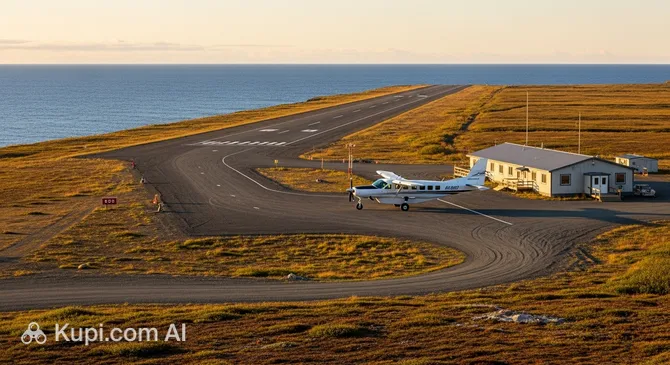
St. George Island Airport. Source: Kupi.com Binoculars

St. George Island Airport (St. George Airport) is not merely a transport hub, but a true "lifeline" for the residents of this remote corner of Alaska, located in the middle of the Bering Sea. The air harbour serves the eponymous city and island, famous for its rocky shores and giant bird colonies that attract ornithologists from around the world. The airport is distinguished by its modest size and harsh northern charm, where flight schedules are often dictated by the capricious Arctic weather. Arriving here marks the beginning of a real adventure in the world of wild nature, where civilisation gives way to the elements.

IATA Code STG
ICAO Code PAPB
City St. George
Distance to centre ~7 km
Status Domestic (Regional)
Passengers per year Less than 1000

Features and Advantages of the Airport

The main feature of St. George Airport is its extreme location and dependence on weather conditions. Since the island is located in a region with frequent fogs and strong winds, travellers should be prepared for potential flight delays, which are part of the local experience. The airport itself consists of a small paved strip and minimalist infrastructure, as it is not designed for mass tourism.

For tourists, this airport serves as a gateway to unique natural attractions. Even during the landing approach, one can see breathtaking panoramas of cliffs and the sea from the window. The airport plays a critical role in ensuring the island's connection with the "mainland" and the neighbouring St. Paul Island, delivering mail, cargo, and passengers.

Contact Information

  • Official Airport Website: dot.alaska.gov (Alaska Department of Transportation)
  • Help Desk Phone: +1 (907) 859-2263 (City of St. George Administration)
  • Airport Address: St. George Airport, St. George, AK 99591, USA (approximately 7 km from the city)
  • Email: No direct address available (it is recommended to contact the city administration or the airline)
  • Airport Social Media: No official accounts available
  • Lost Luggage Information: Baggage handling is carried out by the air carrier. Please contact Grant Aviation
  • Passenger Support Contacts: Airline Grant Aviation: tel. +1 888-359-4726, email: res@flygrant.com

How to Get to the Airport

Transport connections on St. George Island have their own specifics due to its remoteness and small size. You will not find standard taxi services, apps like Uber, bus stops, or railway stations here. Planning a trip to St. George Island Airport requires prior arrangement with local residents or the administration.

Transfers and Taxi

Since the island is a closed community with a small population, there is no regular taxi service. The main and practically the only way to get to or from the airport is via an organised transfer.

  • Hotel Transfer: Most tourists stay at the only hotel on the island — St. George Hotel. When booking a room, be sure to confirm the airport pick-up and drop-off service. Typically, hotel staff meet guests by car upon flight arrival.
  • City Administration: If you are not travelling through the hotel, it is recommended to contact the City of St. George administration office in advance to arrange transport.

Public Transport

Public transport (buses, minibuses, trains) is completely absent on the island. The infrastructure is designed for the use of personal SUVs and quad bikes (ATVs) by local residents.

Car Rental

There are no familiar international rental agency counters (Hertz, Avis, etc.) in the terminal. It is officially practically impossible to rent a car on the spot. Movement around the island is usually done on foot (for viewing bird colonies) or via transport provided by guides and the hotel. The roads on the island are mostly gravel, so standard passenger cars are not used here.

Airport Parking

The parking zone is a small gravel area next to the only airport building. It is free and unguarded, as the crime rate on the island is extremely low. Spaces are usually always available given the low passenger flow.

Travel Time and Cost

  • Travel Time: The journey from the residential part of the city (village) to the airport takes about 15–20 minutes by car (distance approximately 7 km). Allow extra time in case of poor visibility or washed-out roads.
  • Cost: Hotel transfers are often included in the accommodation cost or offered for a fixed moderate fee. Private arrangements with locals may cost between 20 to 50 USD, but prices are best negotiated in advance.

Other Airports in the Region

Given the geography of Alaska, the concept of a "nearest airport" is relative here. Neighbouring transport hubs are located at a significant distance and often require flights through major hubs or the use of local aviation.

  • Unalaska Airport (Dutch Harbor): A major regional hub located approximately 358 km away. Popular among tourists heading to the Aleutian Islands.
  • Cold Bay Airport: Located at a distance of about 460 km. It boasts one of the longest runways in the state and is often used as an alternate airfield.
  • Kwigillingok Airport: A small airport, 530 km away, serving the local community.
  • Kongiganak Airport: Located 548 km away, important for connecting remote settlements.
  • Chevak Airport: Located almost 600 km from St. George Island.

Recommendations for the Tourist

The main advice when planning logistics on St. George Island is autonomy and prior communication. Never arrive without a confirmed place to stay and an arrangement for a meeting. The weather can change suddenly, and departure may be delayed for several days, so always have a reserve of time and funds.

Terminals and Map

Structure and Terminals

St. George Island Airport (STG) is the embodiment of northern minimalism. You will not find confusing labyrinths of glass and concrete characteristic of large international hubs here. The airport complex consists of one small passenger terminal. This compact single-storey building performs all necessary functions for serving arriving and departing passengers, as well as processing mail and cargo, which are vital for the island.

Layout and Navigation

Navigation at St. George Airport is intuitively clear and does not require the use of maps or diagrams. The entire passenger journey — from the entrance door to the aircraft steps — takes mere steps. Inside the building, everything is within direct line of sight:

  • Check-in Counter: Located immediately at the entrance. Here, airline staff check documents and weigh luggage.
  • Waiting Area: A small zone with seating where passengers await boarding, sheltering from the frequent winds of the Bering Sea.
  • Boarding Gate: The single door leads directly onto the apron to the aircraft.

Departure and Arrival Zones

Due to the small size of the terminal, the departure and arrival zones are effectively combined in one space. Passengers arriving by flight immediately leave the airfield and pass through the building or head to the meeting transport. Flows of people are separated by time: the disembarkation of arrivals takes place before the boarding of departing guests begins.

Transfers Between Terminals

Since the airport has only one building, there is no need for transfers, shuttles, or travelators. This makes logistics maximally simple: you will never confuse a gate or miss a connection inside the airport.

Service Features and Procedures

The atmosphere in the terminal is almost home-like, but safety rules are strictly observed.

  • Check-in and Screening: Procedures are very quick. Usually, there are no queues, however, due to the specifics of small aircraft (often these are small turboprop planes), each passenger and piece of luggage is carefully weighed for proper aircraft balancing.
  • Arrival Time: It is recommended to arrive at the airport 45–60 minutes before departure. This time is quite sufficient to complete all formalities.
  • Comfort: Infrastructure is basic. The main function of the terminal is to provide warmth and protection from the weather. It is recommended to take care of snacks and water in advance, as there are no shops or cafes inside.

Navigation Recommendations

The main guide at St. George Airport is the staff. Airline employees (usually Grant Aviation) personally escort passengers from the terminal building to the aircraft. Walking onto the airfield independently is strictly prohibited. Be prepared that boarding is done on foot across open space, so dress warmly, even if flying in summer.

Airport History

The history of aviation on St. George Island is not just a chronicle of runway construction, but a record of human struggle with the harsh elements of the Bering Sea. For a remote island with no marine docks for large passenger ships, the airport has always been and remains the only reliable thread connecting the local Aleut community with the outside world.

Opening and Establishment

The modern airport (STG) is a relatively new infrastructure facility. It was officially opened and put into operation in 1993. Prior to this, aviation service to the island was carried out via an old runway located in close proximity to the city (village). The old airfield was known for its difficult conditions: a short strip and proximity to hills made landing here a real test for pilots, especially during strong crosswinds characteristic of this region.

Stages of Development and Modernisation

The construction of the current airport became a large-scale state project designed to improve flight safety. The new air harbour was moved approximately 6-7 kilometres away from the residential zone, to a more open and flat plateau.

  • 1990s: Completion of the new paved runway with a length of about 1500 metres (4980 feet). This allowed for the accommodation of more reliable turboprop aircraft and reduced the number of cancelled flights.
  • 2000s and 2010s: The airport underwent regular maintenance stages. In conditions of salty sea air and constant storms, maintaining the runway surface and lighting equipment requires constant effort and investment from the Alaska Department of Transportation (DOT&PF).

Historical Events and Change of Carriers

An important milestone in the airport's history was the change of key air carriers, which directly influenced the lives of the islanders. For decades, the main operator was PenAir (Peninsula Airways), whose planes became a familiar part of the St. George landscape. However, the financial collapse and bankruptcy of the airline in 2019–2020 threatened the stability of the connection.

This period became one of the most anxious in the airport's recent history, as the island risked being left in isolation. As a result of reorganisation and government tenders under the Essential Air Service (EAS) programme, the baton was picked up by Grant Aviation, which services the route today.

Interesting Facts

  • "The Old Airport": Locals still remember the old strip, which literally abutted city buildings. Today, its traces can still be found near the historical centre of the settlement.
  • Most Expensive Project: The construction of the new airport in the early 90s became one of the most expensive infrastructure projects per capita in this region, considering the complexity of delivering materials by sea.
  • Birds vs Planes: Since the island is a giant bird colony, the airport's history includes constant work by ornithological services. Pilots have to show special skill to avoid collisions with million-strong flocks of seabirds nesting on the cliffs.
  • Vital Subsidy: The existence of the airport and regular flights is possible exclusively thanks to a federal subsidy programme. Without state support, commercial flights here would be economically impossible due to the small number of passengers.

Services and Amenities

Services and Infrastructure: What Passengers Should Expect

Travellers heading to St. George Island need to understand the specifics of this place. The Airport (STG) is not a familiar commercial hub with boutiques and food courts, but a basic point for ensuring transport accessibility. The level of service here is dictated by the remoteness and sparse population of the island, so passengers are recommended to be maximally autonomous and prepared for Spartan conditions.

Restaurants, Shops, and Dining

There are completely absent food outlets and shops within the terminal territory.

  • Food and Drinks: There are no cafes, vending machines, or newsstands here. It is strongly recommended to take care of snacks and a supply of drinking water in advance (bring them with you from Anchorage or Dutch Harbor).
  • Shops: Duty-Free or souvenir shops are absent in the airport. The only grocery store on the island (Canteen) is located in the village itself and operates on a limited schedule.

Connectivity and Technology

The digital infrastructure of the airport is minimal:

  • Wi-Fi: Public Wi-Fi for passengers is not provided in the terminal. Mobile coverage on the island works, but reception may be unstable depending on the operator (GCI usually has the best reception).
  • Charging Stations: There are no specialised stands for charging gadgets. A few standard power outlets can be found in the waiting area, but one should not rely on them — it is better to carry a fully charged power bank.

Financial Services

There are no ATMs, currency exchange points, or bank branches in the airport building. Since many transactions on the island may be made in cash (especially for private transfers or souvenirs from local artisans), tourists must withdraw a sufficient amount of US dollars before flying to the island.

Lounges and VIP Service

The airport has one general waiting room. There is no division into economy and business class, nor are there separate VIP lounges. The room is a small heated space with seats where all passengers wait for boarding together. The main convenience here is shelter from the wind and cold.

Medical Services

There is no medical point or pharmacy in the terminal. Only a basic first aid kit is available with the staff. The nearest clinic (St. George Clinic) is located in the village. Given the remoteness of the region, tourists with chronic conditions must carry all necessary medications with a surplus supply.

Passengers with Children

There are no specialised mother-and-child rooms or play areas in the airport. Given possible long waits for flights due to weather, parents should independently take care of entertainment, food, and warm clothing for children.

Services for People with Disabilities

Infrastructure for citizens with limited mobility is limited by the structural features of the small building and the type of aircraft used.

  • Accessibility: The building is single-storey, which facilitates movement.
  • Boarding the Aircraft: There are no jet bridges or ambulifts. Boarding is carried out from the ground via the aircraft's built-in stairs or a portable ladder. Airline staff are always ready to provide physical assistance during boarding and disembarkation, however, the need for such assistance should be notified to the air carrier (Grant Aviation) in advance when booking the ticket.

Accommodation: Hotels Near the Airport

There are no hotels directly on the airport territory or within walking distance. The only accommodation option on the island is located in the village, 7 km from the runway.

  • St. George Hotel: This is a historic building designated as a National Historic Landmark. The hotel offers basic amenities, meals, and transfers for its guests. Rooms must be booked well in advance, as the number of places is limited.

Business Services

Conference rooms, business centres, or printing/faxing services are absent at the airport. This is a place for starting expeditions, not for business negotiations.

Where to Eat

Restaurants and Cafes: Current Situation

Passengers departing from St. George Island Airport (STG) should be aware that there are absolutely no food service points in the terminal building. There are no restaurants, cafeterias, juice bars, or coffee shops in either the secure zone or the public area. The specifics of an airport serving a tiny community and receiving fewer than a thousand passengers a year do not allow for commercial infrastructure.

Furthermore, there are no vending machines with snacks or drinks in the waiting area. This means it is impossible to buy a bottle of water, a chocolate bar, or a sandwich immediately before departure.

Recommendations for Dining Before Departure

Given the lack of service, travellers need to take care of food themselves and in advance. The only way to have a snack at the airport is to bring provisions with you.

  • Buying Food in the Village: The only place on the island where you can buy groceries is the St. George Canteen store. It is located in the residential part of the island (approximately 7 km from the airport). It is recommended to purchase water and light snacks (biscuits, crackers, canned goods) before the transfer takes you to the airport. Pay attention to the store's opening hours: they may be limited and include lunch breaks.
  • Dining at the Hotel: If you are staying at the St. George Hotel, the best solution would be to have a hearty lunch or breakfast before leaving. You can also ask the hotel staff in advance to pack a "takeaway" box (lunch box) for the road, as in case of flight delays due to weather, waiting in the empty terminal can drag on for several hours.

Specifics for Transit Passengers

If you are arriving on St. George, it is important to understand that you will not be met by cafes or shops upon arrival. If you have special dietary needs (vegetarian, vegan, gluten-free, or Halal food), it is strongly recommended to bring the necessary supply of specialised products from the "mainland" or from the transfer airport (usually Unalaska Airport). The assortment of the local store on the island is very basic and depends on marine deliveries, so finding specific dietary or Halal items locally may be impossible.

Hydration

There are no drinking fountains in the terminal. Considering that flying on small aircraft can cause dehydration, be sure to carry your own bottle of water. Carrying it through security here is usually easier than in large international hubs, however, it is better to clarify the rules with the airline employee at check-in.

Travel Tips

A trip to the Pribilof Islands is an expeditionary experience, and flying through St. George Island Airport requires special preparation. The rules of large international hubs do not apply here, and logistics are completely subordinate to changeable weather and the rules of small aviation. To ensure your visit goes smoothly, use the following recommendations.

Optimal Arrival Time

Despite the fact that there are never queues at the airport, you should not arrive at the last minute. It is recommended to be on-site 45–60 minutes before departure. This time is necessary for pilots and ground staff to process cargo and prepare the load manifest. If all passengers have gathered early, the pilot may decide to depart slightly ahead of schedule, so punctuality is highly valued here.

Check-in and Weighing

Be prepared for a procedure that may confuse an inexperienced tourist: passenger weighing. The aircraft flying to the island (usually small Piper Navajo or King Air) are sensitive to weight balance. An employee will ask you to stand on the scales together with your hand luggage. This is a standard safety measure that should be treated with understanding. Documents are checked manually; electronic boarding passes may not work here, so it is better to have a printout or a screenshot of the booking.

Choosing a Seat on the Plane

In small Grant Aviation aircraft, there are usually no fixed seats assigned in the ticket.

  • Weight Distribution: The pilot may personally direct you where to sit to ensure the proper centre of gravity of the aircraft (for example, heavier passengers may be asked to sit forward or backward).
  • Best Views: If the pilot permits free seating, try to take a window seat. The flight over the Bering Sea and the rocky shores of the island offers incredible views that will replace any in-flight entertainment system.

Hand Luggage and Baggage

Overhead bins for hand luggage in local planes are either absent or very small. A large "cabin-size" suitcase (even standard for Boeing or Airbus) will not fit in the cabin here.

  • Type of Bags: Use soft backpacks or sports bags instead of hard suitcases. They are easier to place in the limited cargo hold.
  • Essentials with You: Keep cameras, lithium batteries, documents, and vital medications on your person or in a small bag that will fit on your lap or under the seat.

Recommendations for Connections

Connecting flights in Alaska are always a risk. Most routes pass through Unalaska Airport (Dutch Harbor) or Anchorage.

  • Time Buffer: Never plan "short" connections (less than 3–4 hours). Ideally, if you are flying home on an international flight from Anchorage, allow a one-day buffer between arriving from St. George and your next departure. Fogs can delay departure from the island for several hours or even days.
  • Single Ticket: If possible, book tickets so that airlines bear responsibility for the connection, although this is often difficult with local carriers.

Ecological Control Instead of Customs

Although there is no customs as such here (flights are domestic), there is strict ecological control. The Pribilof Islands are a unique nature reserve.

  • Rodent Protection: The island is rat-free, which is critical for bird nesting. Your luggage and cargo may be inspected for the presence of stowaways (rodents) or seeds of invasive plants. Be careful when packing things, especially if carrying food.

Tips for Economy and Comfort

Since there are no shops at the airport, saving money comes down to proper preparation:

  • Your Own Food: Be sure to bring a snack and water. Buying food on board is not provided for, and in case of a flight delay, there will be nowhere to buy it in the terminal.
  • Cash: Have a supply of small bills (US Dollars) to pay for the transfer to the hotel, as drivers do not have card terminals.
  • Warm Clothing: Even if the forecast says "sunny," do not pack your windbreaker or jacket far away in your luggage. You will have to walk to the plane across an open field where a piercing wind often blows.

What to Do in Case of Flight Delay

Delays and cancellations due to weather (weather hold) are common for St. George.

  • Do Not Leave the Hotel: Do not head to the airport until the airline or hotel administrator confirms that the plane has indeed taken off from the point of departure (usually St. Paul or Unalaska) towards you. Waiting in a warm hotel is much more comfortable than in an unheated terminal before staff arrive.
  • Communication: Keep your phone charged (a power bank is mandatory) and stay in touch with airline representatives. The weather situation can change every 30 minutes.

Reached the end of the page?

That means the route is fully explored