Support

Port Williams Sea Plane Base

About the Airport

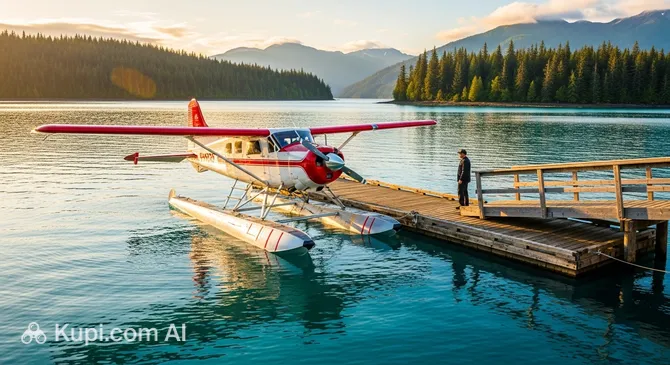
Port Williams Sea Plane Base. Source: Kupi.com Binoculars

Port Williams Airport (Sea Plane Base) is not merely a transport hub, but a true gateway to the Alaskan wilderness, where aircraft are greeted by the water's surface instead of a concrete runway. Situated in picturesque seclusion, this seaplane base offers travellers a unique experience where the flight itself turns into a breathtaking excursion over fjords and forests even before landing. There is no hustle and bustle of giant terminals here, and the only sound breaking the silence after the engine stops is often just the splashing of waves against the seaplane floats.

IATA Code KPR
ICAO Code None
City Port Williams
Distance to centre 0 km (located within the settlement)
Status Domestic (Seaplane Base)
Passengers per year Data not published (mostly private flights)
Schedule Please check with the air carrier

Features and advantages of the airport:

The main feature of Port Williams (Sea Plane Base) lies in its format. It is a classic seaplane base, making every arrival and departure an unforgettable spectacle. Passengers can enjoy panoramic views of Alaska from a low altitude, and landing on water adds an element of romance and adventure to the journey.

Another undoubted advantage is the complete absence of bureaucratic delays typical of major aviation hubs. There are no long queues for security checks, complex transfers between gates, or the risk of getting lost in the terminal. The entire procedure from arriving at the dock to takeoff takes mere minutes, allowing you to make the most efficient use of your travel time.

Finally, the base's location makes it an ideal starting point for wildlife enthusiasts. Seaplanes deliver tourists directly to fishing, hunting, or bear-watching spots, bypassing the need for long ground transfers. This ensures instant immersion in the atmosphere of the harsh yet beautiful north of the USA.

Contact Information

Finding detailed contact data for a small seaplane base like Port Williams (Sea Plane Base) (KPR) can be challenging, as it functions differently from large international airports. Most services, including ticket sales and passenger support, are provided directly by the airlines (most often local air taxis).

  • Official Website: Port Williams Airport (Sea Plane Base) does not have its own official website. The facility is managed by the Alaska Department of Transportation & Public Facilities (DOT&PF).
  • Information Desk Phone: There is no direct telephone line for enquiries at this small airport. For all questions related to schedules and tickets, it is recommended to contact the air carrier whose services you plan to use directly.
  • Airport Address: Port Williams, Kodiak Island Borough, Alaska, United States.
  • Email: There is no dedicated email address for contacting the airport.
  • Social Media: The airport does not have official pages on social networks.
  • Lost Luggage Information: For questions regarding lost or damaged luggage, please contact the airline that operated your flight directly.
  • Passenger Support Contacts: Passenger support is provided by the air carriers. Please contact your airline for assistance.

How to Get to the Airport

You can get to Port Williams Seaplane Base in several ways, but it is worth noting that this is a small and remote base in the United States, so transport options differ from those offered by major city airports. The main options are oriented towards individual transport.

The most common and reliable way to get to the seaplane base is by taxi or pre-booked private transfer. Given the compact size of the Port Williams settlement, a trip from any point will take just a few minutes. It is highly recommended to arrange transport in advance, especially if you are travelling with bulky luggage or as part of a group. The cost of the trip is usually fixed, but it is always better to confirm this at the time of booking.

Car rental can be a good choice for travellers who value independence and plan to explore the surroundings. However, it is important to remember that in such a remote location, the choice of rental agencies may be extremely limited or non-existent. Often, a car must be booked in larger settlements in the region, for example, in Kodiak, and arrangements made for its delivery.

There is no conventional public transport, such as city buses, trains, or a metro, in Port Williams. This is typical for secluded Alaskan settlements. Regarding parking, the seaplane base usually has a small unguarded parking area. Leaving a car here for a short time is not difficult, but if you plan long-term parking, it is better to consult with representatives of your airline in advance.

Since Port Williams (Sea Plane Base) is primarily a base for seaplanes serving local routes, travellers often have to use larger airports for longer flights. For example, the region's main aviation hub, Kodiak Benny Benson State Airport, located approximately 83 km away, offers significantly more flights and services. Top tip: plan all ground movements in advance by contacting your hotel or a local carrier to organise a transfer.

Terminals and Map

The Port Williams (Sea Plane Base) (KPR) airport is a base for seaplanes, and its layout differs significantly from large international airports. There is no division into multiple terminals in the usual sense of the word. All infrastructure is typically concentrated in one compact building or even a simple pavilion on the shore, which simultaneously serves as a waiting area, check-in point, and arrival location.

The airport scheme is extremely simple: it consists of a dock for mooring seaplanes and a small service room. Navigation is intuitively clear, as everything is located in one place and it is practically impossible to get lost here. Since there is only one very small terminal, the question of transfers between them does not arise. Departure and arrival zones are effectively combined — passengers wait for boarding in a small hall or directly at the dock, and upon arrival, disembark from the aircraft onto the same pier.

Registration and security procedures at Port Williams Airport are very quick and simplified in nature. Typically, check-in is reduced to a simple confirmation of the booking with an airline representative or directly with the pilot. Standard multi-stage security screening procedures typical of large airports are usually absent here or kept to a minimum. The entire process takes just a few minutes.

The main recommendation for travellers is to check the schedule with their air carrier in advance, as seaplane flights are highly dependent on weather conditions. Since the infrastructure is very simple, the best strategy is to arrive shortly before departure and follow the staff's instructions. You will not have to worry about complex navigation or long queues here — everything is organised as simply and efficiently as possible.

Airport History

The Port Williams (Sea Plane Base) (KPR) is not quite an airport in the traditional sense. It is a hydro-aerodrome, meaning a specially designated area of water surface intended for the takeoff and landing of seaplanes. Its history is closely linked to the development and needs of the isolated settlement of Port Williams in Alaska, for which aviation is a vital transport artery.

Unlike large commercial airports, such small functional facilities as Port Williams (Sea Plane Base) often do not have an exact founding date or grand opening. Its appearance was dictated by practical necessity — ensuring a connection with the outside world for local residents and workers of fishing or logging enterprises. Most likely, it began to be used in the mid-20th century, when hydro-aviation became the main means of transport in remote coastal areas of Alaska.

There is no need to speak of major stages of development, reconstructions, or modernisations in this case. The infrastructure of the seaplane base is typically minimal and may include only a dock or pier for mooring aircraft. Its history is not one of construction and expansion, but a history of uninterrupted fulfilment of its main function: ensuring the transport of people, mail, and vital cargo. This is precisely where its main achievement and significance for the region lie.

Thus, although the seaplane base in Port Williams does not have a loud history with records and famous events, it is an integral part of the life of the local community, serving as a reliable bridge connecting this secluded corner of Alaska with the rest of the world.

Services and Facilities

When setting off on a journey through Port Williams Airport (Sea Plane Base), it is important to understand that this is a small seaplane base, not a large commercial airport. The infrastructure here is minimal and focused on ensuring the takeoff and landing of seaplanes. Therefore, most services customary for large aviation hubs are absent here.

On the territory of the Sea Plane Base, you will not find restaurants, cafes, or shops. We strongly recommend taking care of food, drinks, and other necessary goods in advance while in the town of Port Williams. This will allow you to wait comfortably for your flight without unnecessary hassle.

Amenities such as high-comfort waiting lounges (VIP lounges), public Wi-Fi, or fixed charging stations for electronic devices are not provided here. Passengers should rely on mobile internet and carry portable power banks to recharge gadgets.

ATMs, currency exchange points, and medical centres are absent from the territory of the seaplane base. All financial transactions and issues related to medical assistance must be resolved in the town itself, which is part of the United States.

Specialised services for passengers with children, such as playrooms or mother-and-child rooms, are not provided. Passengers with reduced mobility should contact the air carrier in advance to discuss all details and possible options for assistance during boarding and disembarking.

There are no hotels, conference halls, or business centres in the immediate vicinity of the Sea Plane Base. Accommodation options should be sought in the town and its surroundings. When planning a business trip, consider that all necessary infrastructure for meetings and work is located outside the airport.

Thus, when preparing for departure from Port Williams (Sea Plane Base), treat it as the start of an exciting adventure. Charge your devices, take everything you need with you, and enjoy the unique experience of flying on a seaplane in one of the most picturesque corners of Alaska.

Where to Eat

When planning a trip through Port Williams Airport (Sea Plane Base) (KPR), it is important to consider its specific nature. It is a very small seaplane base which primarily serves as a hub for seaplanes and is focused on servicing local and charter flights, rather than providing a wide range of services for passengers as found in large commercial airports.

On the territory of the seaplane base itself, there are no restaurants, cafes, or bars. The infrastructure here is minimal and does not include catering establishments. Therefore, travellers are strongly advised to arrange food and beverages in advance.

Our recommendations for passengers:

  • Eat beforehand: It is best to have a full lunch or dinner in the nearest settlement before heading to the airport.
  • Bring your own: Be sure to bring your own snacks, sandwiches, and drinks, especially if you have to wait some time for departure. This is the only reliable way to have a snack.
  • Dietary needs: If you have specific dietary requirements (such as Halal, vegetarian, gluten-free, etc.), preparing your own food supplies becomes critically important, as finding suitable options on-site will be impossible.

Thus, for a comfortable wait for your flight at Port Williams (Sea Plane Base), it is worth relying exclusively on your own supplies of food and drinks.

Travel Tips

Planning a trip through Port Williams Airport (Sea Plane Base)? This is a unique seaplane base in the town of Port Williams, United States, and flying from here is an adventure in itself. To ensure your journey goes smoothly, make use of our tips.

Arrival time and check-in. Unlike large airports, all procedures here are significantly faster. Typically, it is sufficient to arrive 1-1.5 hours before departure. Registration and security screening usually take minimal time due to the low passenger flow. Nevertheless, it is always better to clarify your airline's recommendations, especially during peak season.

Seat selection and hand luggage. When flying on a seaplane, there is a pleasant bonus — there are almost no bad seats. Try to take a seat by the window to enjoy breathtaking views of the coast and islands during takeoff and landing. Pay special attention to hand luggage: strict weight and size limits apply on small aircraft. Clarify these rules with your carrier in advance to avoid extra charges. Standard restrictions on carrying liquids over 100 ml, sharp objects, and flammable substances also apply.

Transfers and customs. If you have a transfer planned, allow enough time between flights. Seaplane flights are highly dependent on the weather, and delays are possible. As the airport serves domestic flights, customs control is not required. You will only need identification for registration and boarding.

Savings and unforeseen situations. To save money, book tickets in advance, especially in the summer months. Travel light to avoid paying for excess baggage. In the event of a flight delay, which happens most often due to fog or strong wind, remain calm and stay in touch with the airline representative. This is a small price to pay for the opportunity to see some of the most picturesque corners of Alaska from a bird's-eye view.

Reached the end of the page?

That means the route is fully explored