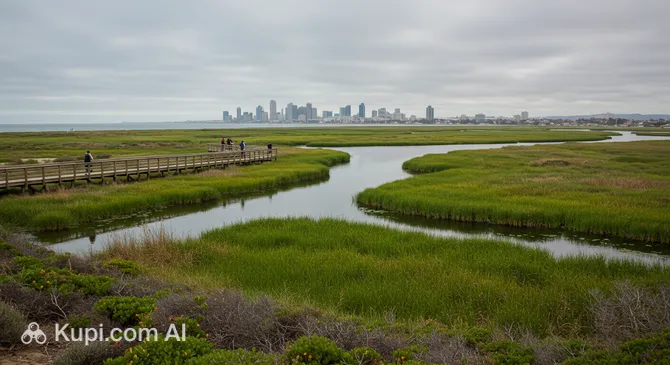
Imagine a unique natural corner where the river's fresh water meets the salty tides of the Pacific Ocean. The Tijuana River National Estuarine Research Reserve is a protected area of over 1,000 hectares located right on the border of the USA and Mexico. It’s not just a park, but one of the largest remaining coastal wetland ecosystems in Southern California.
Tijuana River National Estuarine Research Reserve. Illustration.
Source: Kupi.com AI
Traveler photos:
For visitors to San Diego, this place offers a rare opportunity to see pristine beaches, sand dunes, salt marshes, and floodplain forests. The reserve is recognized as a "wetland of international importance" under the Ramsar Convention, highlighting its exceptional ecological value. Hundreds of species of animals and plants find refuge here, many of which are endangered.
Walking its trails, you can feel the contrast between the silence of the wilderness and the proximity of the metropolis. The reserve is an important part of the National Estuarine Research Reserve System, combining the functions of a scientific base and a beautiful spot for ecotourism accessible to every traveler.
Contacts
For planning your visit or clarifying event details, you can use the reserve's official contact information. The administration is always ready to help tourists with information on current trail conditions and special programs.
Outdoor enthusiasts and nature lovers are offered about 6 kilometers of well-maintained trails suitable for visitors of all ages. The routes are open daily from dawn to dusk, allowing you to enjoy the silence and the fresh sea breeze. One of the most popular activities is birdwatching: over 370 bird species have been recorded in the reserve. If you're lucky, you can spot rare inhabitants like the Light-footed Ridgway’s Rail or the California Least Tern.
Special attention should be paid to organized events that make a visit even more informative. Themed nature walks are held on Saturdays. For example, on the first Saturday of the month, you can walk with a docent as part of the "Experience Without Sight" program to focus on the sounds and smells of nature, and on the fourth Saturday, learn more about the complex connections within the ecosystem. On Sundays at 10:00, professionals organize bird walks for everyone interested.
For those seeking inspiration, the creative walk "Colors of the Estuary" is held on Tuesdays. This is a unique experience combining light meditation and outdoor watercolor classes. In the reserve, you can not only observe mudflats and coastal scrub but also actively participate in the life of this fragile world, discovering new facets of ecotourism.
Getting There
The reserve is conveniently located at 301 Caspian Way in Imperial Beach, just 24 kilometers south of downtown. If you are traveling by private or rental car, the optimal route is via Interstate 5. You need to take the Coronado Avenue (Exit 4) and follow the signs that will lead you to the parking lots at the Visitor Center.
For those who prefer public transport, buses run from the city center to Imperial Beach. However, keep in mind that you may need to walk from the nearest stop to the reserve entrance. You can also always use taxi services or popular ridesharing apps, which provide maximum comfort and will take you directly to the start of the hiking trails.
Nearest city: San Diego
History & Facts
The history of preserving this unique natural corner officially began in 1982, when the area was included in the National Estuarine Research Reserve System. Today, the site is jointly managed by the California Department of Parks and Recreation and the U.S. Fish and Wildlife Service, highlighting its national significance.
The Tijuana River Estuary stands out among other coastal zones in Southern California for its integrity. Unlike many other lagoons, it has remained largely unfragmented, allowing the natural ecosystem to be preserved. In 2005, the significance of this place was confirmed at a global level: the reserve was recognized as a site of international importance under the Ramsar Convention.
Serious scientific research has been conducted here for over thirty years. An important milestone in protecting the local ecology was the construction of specialized sediment basins in Goat Canyon in 2005, which help control sedimentation and protect sensitive tidal areas. Visiting this place, you touch the result of years of painstaking work by ecologists and scientists.
Time Needed
To fully enjoy the beauty of the wilderness and take a leisurely stroll along the main trails, we recommend setting aside 2 to 4 hours for your visit. This time is quite sufficient to combine an active walk with contemplative relaxation and observing rare fauna.
Travelers typically spend about 1–2 hours exploring trails independently, such as the River Loop. If you plan to stop by the Visitor Center or join one of the free themed tours, you should count on a longer stay. The reserve is an ideal place for those who want to escape the city noise for half a day and immerse themselves in an atmosphere of tranquility.
Working Hours
When planning your route, it's important to know that access to natural treasures and infrastructure is distinct. The hiking trails within the reserve are open to visitors daily from dawn to dusk, allowing you to enjoy morning or evening landscapes at any time convenient for you.
The Visitor Center has a specific schedule: it welcomes guests from Wednesday to Sunday, 10:00 AM to 5:00 PM. The center is closed on Monday and Tuesday. As schedules for special tours and events are subject to change, we recommend checking the reserve's official website before your trip.
Day
Working hours
Monday
Закрыто
Tuesday
Закрыто
Wednesday
10:00–17:00
Thursday
10:00–17:00
Friday
10:00–17:00
Saturday
10:00–17:00
Sunday
10:00–17:00
Nearby
The area surrounding the estuary offers many options for continuing your journey along the southern coast. After quiet birdwatching and walks through the dunes, you can switch to a more active or entertaining leisure format, as famous theme parks and recreation areas are within a half-hour drive.
Exploring nearby locations will allow you to see the versatility of the region: from exciting rides and water shows to modern sports facilities. Below is a list of interesting places to consider visiting on the same day.