Support

Washington Pavilion

About

In the heart of Sioux Falls, South Dakota, lies a remarkable place — the Washington Pavilion. It is not just a building, but a large-scale cultural center that brings together the worlds of art, science, and exciting entertainment under one roof. For travelers visiting the USA, this venue has become a must-see stop on any itinerary thanks to its versatility and unique atmosphere.
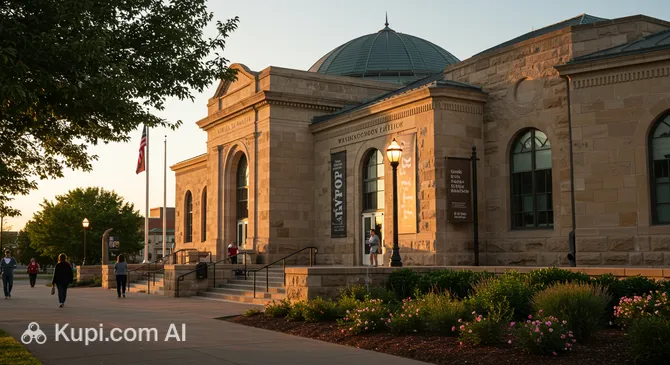
Washington Pavilion. Source: Kupi.com AI

The complex includes modern exhibition halls, a high-tech planetarium, and a theater that regularly hosts world-class performances. Here you can find both interactive exhibits dedicated to physics and biology, as well as galleries featuring works by talented artists. The Pavilion is rightfully considered the region's cultural hub, attracting thousands of guests annually with its commitment to making knowledge accessible and interesting for everyone.

The site's role in heritage preservation adds special value. Walking through its corridors, you can feel a connection through time: from the history of the land's settlement to futuristic scientific projects. High ratings and positive reviews confirm that a visit here leaves a lasting impression on both children and adults alike.

Contacts

To clarify information about current events or to book tickets, you can use the official communication channels. The center's administration is always ready to help visitors plan their visit.

Address 301 S Main Ave, Sioux Falls, SD 57104, USA
Phone +1 605-367-6000
Official Website washingtonpavilion.org
Google Maps View on map

What to Do

Inside the Washington Pavilion, an endless stream of discoveries awaits you. Be sure to check out the interactive science halls, where physics and astronomy stop being dry textbook terms. Here, everyone can become a participant in an experiment: trigger lightning, study the laws of gravity, or dive into the mysteries of biology with the help of visual aids.

For lovers of contemplative relaxation, art galleries are open, showcasing works by both local South Dakota masters and famous national artists. Special attention should be paid to the planetarium shows — projections of the starry sky on a massive dome create the complete sensation of a space journey. If you're lucky, you might catch a theatrical production or a concert held in the grand theater hall.

Don't forget to have your camera ready: the futuristic interiors and unique exhibits provide opportunities for impressive photos. Temporary exhibitions dedicated to technological innovation are frequently updated, so every visit can bring something completely new and unexpected.

Getting There

Finding the Washington Pavilion is easy, as it is located at 301 S Main Ave, right in the heart of the city's activity. If you are traveling by car, there are convenient parking areas near the complex, allowing you to leave your vehicle in close proximity to the entrance.

For those who prefer public transport, the Sioux Area Metro (SAM) bus network is an excellent choice. Routes pass through the central districts, and the nearest stop is just a couple of minutes' walk away. If you are at other iconic spots, such as Falls Park, a walk to the Pavilion will take about 10–15 minutes, allowing you to enjoy the atmosphere of the city streets.

Tourists arriving via the Sioux Falls Regional Airport (FSD) can reach the site by taxi or rental car in 15–20 minutes. The distance is about 10–15 kilometers, and direct roads make the journey quick and comfortable.

History & Facts

The history of this venue is closely linked to the ambitious development of Sioux Falls at the turn of the millennium. At that time, the city was actively transforming from a primarily agricultural center into a modern cultural hub, striving to create a space that would unite art and science under one roof.

The city itself was founded in the mid-19th century on the banks of the Big Sioux River, where the energy of the waterfalls and the quarrying of unique Sioux quartzite became engines of progress. It was this rich heritage that formed the basis of the Pavilion's concept, which was intended to become a symbol of a new stage in the region's life.

By the end of the 20th century, thanks to an influx of investment and the growth of the financial sector, the Pavilion project became a reality. It did not just fill a gap in the infrastructure but also became an important educational tool, telling stories ranging from the lives of indigenous peoples to the achievements of modern immigrants who shape the face of today's South Dakota.

Time Needed

To fully appreciate the variety of exhibitions and halls, a typical visitor is recommended to set aside 2 to 4 hours. This is enough time to leisurely explore the main science exhibits and art galleries.

If your plans include attending a session at the planetarium or watching a theater performance, you should add another hour or hour and a half to your visit. Families with children often spend about 3 hours here, as the interactive zones require time for experiments and play, which little explorers often find hard to leave.

Working Hours

When planning your visit, please note the center's operating hours. The Washington Pavilion is open to guests throughout the week, though Sunday hours differ slightly from weekdays.

Current schedule:

  • Monday — Saturday: 10:00 AM – 5:00 PM
  • Sunday: 12:00 PM – 5:00 PM
It is recommended to arrive at least a couple of hours before closing to have time to explore the main exhibits.

Nearby

Exploring the surroundings of the Washington Pavilion can significantly enrich your trip. The city center offers many interesting locations within walking distance or a short drive, allowing you to create a full day's itinerary.

Below are some notable sites worth visiting while in this part of the state:

Name Distance (km)
The Coliseum 1
Queen Bee Mill Ruins 1.4
McKennan Park 1.5
Mount Pleasant Cemetery 2.4
Great Plains Zoo 2.8
Thunder Road of Sioux Falls 2.8
The Pioneer Memorial 3.6
Butterfly House & Aquarium 5
Sioux Falls Aquatics 5.3
Hayward Park Spray Park 5.7

Reached the end of the page?

That means the route is fully explored