Support

Manatee Viewing Center

About

The Manatee Viewing Center (Tampa Electric's Manatee Viewing Center) is a unique attraction located in the Tampa suburb of Apollo Beach, on the picturesque coast of Florida, USA. It is a specially created site where anyone can closely observe amazing marine mammals—manatees, also known as sea cows—in their natural habitat.
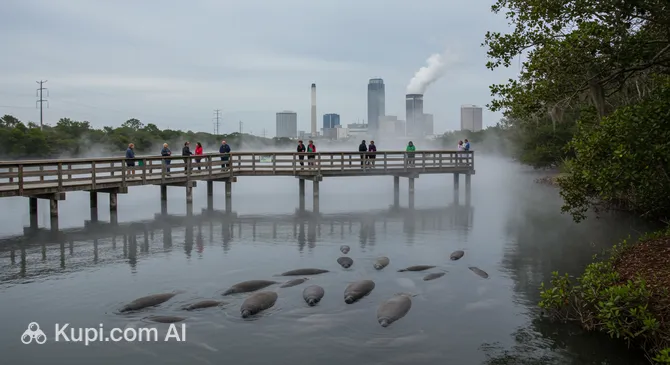
Manatee Viewing Center. Illustration.
Source: Kupi.com AI

Traveler photos:

The center's distinctive feature is its location next to the Big Bend Power Station. During the cold winter months, manatees instinctively swim to this spot, attracted by the warm waters discharged by the power plant. Thanks to this, visitors have a rare opportunity to see these gentle giants in large numbers, observing their behavior and graceful movements in the water.

The Manatee Viewing Center is not just a tourist site but an important ecological attraction. It provides educational programs and information about the conservation of these unique animals and their habitat. What is especially pleasant is that visiting the center, including parking, is absolutely free, making it accessible to everyone who wants to get a closer look at these peaceful creatures and learn more about Florida's nature.

Contacts

For current information on opening hours, contact methods, and exact directions to the Manatee Viewing Center, it is recommended to visit the attraction's official website. Useful information can also be found on Tampa tourism portals or at local visitor information centers.

How to contactContact
Address6990 Dickman Rd, Apollo Beach, FL 33572, USA
Phone number+1 813-228-4289
Websitewww.tampaelectric.com

What to Do

At the Manatee Viewing Center, the main activity is, of course, watching these incredible marine inhabitants. Visitors can comfortably settle on specially equipped wooden boardwalks and observation platforms, which offer a beautiful view of the warm waters that attract the manatees. Depending on the season and the time of your visit, you may see anywhere from a few individuals to a whole hundred of these gentle giants swimming and feeding gracefully. In addition to the manatees, rays are often spotted here, and if you are lucky with the water's clarity, you might see other marine life, including small sharks.

Beyond direct observation, the center offers a rich educational program. On-site, there is an interesting exhibit dedicated to both the manatees themselves and the operation of the power plant that made this place their refuge. Here you will find colorful information boards and posters detailing the anatomy, lifestyle, and migration patterns of these marine mammals. For a deeper immersion into the subject, interactive educational programs dedicated to the manatees' habitat are available.

For younger visitors, there are engaging activities, including special puzzles that help them learn more about manatees in a playful way. Additionally, there are picturesque nature trails throughout the center. Walking along them, you can not only enjoy nature but also observe the diverse wildlife inhabiting the area, making the visit even more fulfilling and interesting.

Getting There

The Manatee Viewing Center is located in the picturesque Tampa suburb of Apollo Beach, at the intersection of Hillsborough and Tampa Bays. The most convenient way to reach the center is by car, whether from Tampa itself or from neighboring cities. A pleasant bonus for visitors is the free parking available directly on the center's grounds.

If you are considering public transport, please keep in mind that direct service to Apollo Beach may be limited. Therefore, it is strongly recommended to check current routes and schedules before your trip. Alternatively, taxis or rideshare services from downtown Tampa or nearby major transport hubs may be a more predictable option.

Nearest city: Tampa

History & Facts

The history of the Manatee Viewing Center is inextricably linked to the Big Bend Power Station, owned by TECO Energy. The beginning of this amazing synergy between humans and nature was established after the station's first power units were launched in 1970, followed by another newer unit in 1985. It was then that people first noticed these gentle marine giants beginning to gather in the waters near the station.

The reason for this behavior lies in the power plant's technological process. Big Bend Power Station uses bay water to cool its systems, which is then returned to the bay after being heated. This creates a kind of warm oasis, particularly attractive to manatees during the cold winter months. As warm-blooded animals, manatees instinctively seek out such warm refuges to survive cool periods in Florida waters. The warm-water discharge canal became an ideal wintering spot for them.

Over time, this accidental "discovery" by the manatees caught the attention of not only locals but also scientists. Recognizing the uniqueness of the situation and the growing public interest, TECO Energy decided to organize a special area for visitors. Thus, the Manatee Viewing Center was born, designed so that people could safely and comfortably observe these incredible marine mammals without intruding into their natural environment or causing them distress.

Today, the Manatee Viewing Center in Tampa is more than just a popular tourist spot. It has evolved into an important ecological and educational facility. Its activities are focused on studying and preserving the manatee population, as well as educating the public about the importance of protecting the USA's marine ecosystem. It is a wonderful example of how an industrial facility can unexpectedly play a key role in supporting wildlife.

Time Needed

To fully experience the Manatee Viewing Center in Tampa, most visitors usually need 1 to 2 hours. This time is generally sufficient to leisurely explore the information exhibits dedicated to manatees and the power plant's operation, walk along the observation decks and nature trails, and, of course, observe the manatees themselves and other marine life that might appear in view.

Within this timeframe, you can get a general overview of these amazing animals' lives and their habitat. You'll have time to take photos, enjoy the views, and soak in the atmosphere of this unique place. However, if you are traveling with children and plan to spend time on interactive programs or a more detailed study of each exhibit, it might be worth setting aside a bit more time—up to 2.5 to 3 hours—to ensure your visit is unhurried and pleasant.

Working Hours

The Manatee Viewing Center in Tampa operates seasonally, as manatees primarily swim to the power station's warm waters during the winter months. Typically, the center is open to visitors from approximately November to March. However, exact operating hours can vary from year to year and depend on weather conditions and manatee activity.

Since specific operating hours are not listed in available sources, it is strongly recommended to check the current schedule on the official website of the Manatee Viewing Center or verify information at local tourism offices before planning your visit. There, you can also find out if advance booking or registration is required, although entry to the center is usually free. This will help you plan your trip effectively and avoid any potential inconvenience.

Nearby

A visit to the Manatee Viewing Center in Tampa will certainly be a highlight of your trip. However, to make your journey even more fulfilling and complete, it is worth paying attention to other interesting places located nearby. Exploring the surroundings will allow you to get a deeper sense of Tampa's diversity and its unique atmosphere.

Near the center, you can find both natural corners and other tourist attractions that will complement your experience with the marine life. Below is a list of some attractions that are relatively easy to reach from the Manatee Viewing Center.

NameDistance
Davis Islands Dog Beach13.9 km
Westside Aquarium & Pets16.4 km
Indoor Skydiving Center16.8 km
The Florida Aquarium17.3 km
Tampa Arena17.4 km
Tampa Theatre18.4 km
Glazer Children's Museum18.4 km

Have you reached the end of the page?

So the route has been studied inside and out