Support

Music House Museum

About

In the picturesque surroundings of Traverse City lies a true treasure for music lovers and history enthusiasts — the Music House Museum. Located on a historic farm in the USA, this unique cultural center features a rare collection of mechanical musical instruments dating from the late 18th century to the mid-20th century.
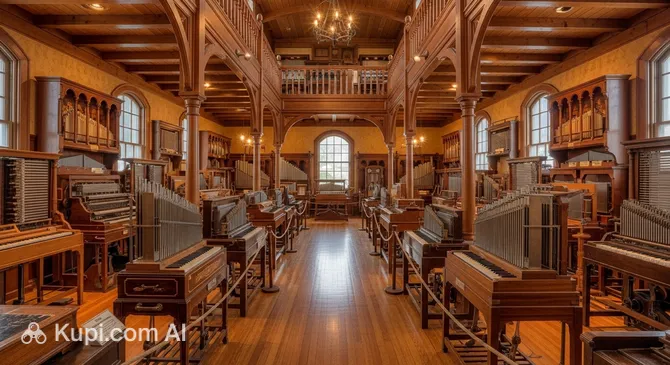
Music House Museum. Source: Kupi.com AI

The museum's exhibits are housed in meticulously restored buildings from 1910, where vintage interiors — from cozy parlors to an authentic saloon — serve as the backdrop for automated engineering marvels. Here, you can see and, most importantly, hear rare phonographs, music boxes, and massive self-playing organs that once replaced entire orchestras.

What makes the collection particularly valuable is that nearly all exhibits are in working condition. Recognized as one of the best of its kind in the world, the museum offers guests more than just a tour of display cases; it provides a full immersive experience into an era when music was born from complex mechanisms and punch cards.

Contacts

For more information about visiting or booking group tours, you can use the following contact details:

Address: 7377 US-31, Williamsburg, MI 49690, USA
Phone: +1 231-938-9300
Official Website: musichouse.org

What to Do

The highlight of any visit is the interactive guided tour. Accompanied by knowledgeable guides, you’ll walk through galleries where the amazing mechanisms of the past come to life. You’ll hear the powerful sound of the 1922 Mortier Amaryllis Belgian dance organ and the majestic Wurlitzer theater organ, which once provided the soundtrack for the first silent films. This is a rare chance to hear George Gershwin’s "Rhapsody in Blue" exactly as it sounded on a player piano in the 1920s.

After the main program, take some time to explore the galleries on your own. Be sure to stop by the miniature town of Traverse City — a painstakingly recreated model of the historic city center with 24 buildings that delights visitors with its intricate detail. The museum also houses an impressive collection of early radios, jukeboxes, and Edison phonographs, demonstrating the evolution of sound recording.

If you're lucky, you might catch one of the special events: the museum regularly hosts silent movie nights, where films are screened to live organ accompaniment, as well as chamber concerts. For those who want to take a bit of this musical magic home, there is a gift shop featuring themed souvenirs and rare recordings.

Getting There

Getting to the museum is quite easy, as it is located just a 15–20 minute drive northeast of downtown Traverse City. The main route follows scenic US-31 North. For those traveling by car, convenient free parking is provided right on the grounds of the historic farm.

If you are arriving in the region by air via Cherry Capital Airport (TVC), the drive by car or taxi will take about 20–25 minutes. Keep in mind that public transportation is limited in this rural area, so for comfortable travel, it’s best to rent a car or order an Uber/Lyft from the city.

The trip to the museum is a great opportunity to enjoy the Michigan countryside. In the summer, this route is popular with cyclists touring Grand Traverse County, who often combine a visit to the exhibits with a ride through the local orchards.

History & Facts

The history of this site began long before the first exhibits arrived. The land where the museum stands today was once the heart of the Stiffler family farm, established in the early 1880s. Originally a dairy farm, the massive barn that now serves as the main exhibition hall was built in 1910.

The idea to transform the old farm into a "house of music" came from architect David Stiffler, a descendant of the farm's founders, and engineer Dean Junker. In 1979, they began an extensive renovation of the buildings, carefully connecting the old dairy barn and the granary with a special gallery. The museum officially opened to the public in May 1984, following the restoration of the first large instruments.

One of the most iconic events in the museum's history was the 1982 acquisition of the massive Belgian Amaryllis organ. Restoring this instrument required a colossal effort, but it became the "heart" of the collection. Since its opening, the museum has welcomed over 500,000 visitors, turning a private initiative into one of the region's most significant cultural landmarks.

Time Needed

To fully enjoy the collection and soak in the atmosphere of the past, most visitors need between 1.5 and 2 hours. Most of this time is spent on the fascinating guided tour, which lasts about an hour and includes live demonstrations of the instruments.

We recommend leaving at least another 30–40 minutes after the tour for self-guided exploration of the phonograph gallery, viewing the detailed miniature town, and visiting the gift shop. If you plan your visit on a day with a concert or a silent movie screening, your stay may be longer.

Working Hours

Since the museum's operating hours can vary by season (it is often more active in the summer and has limited hours during the winter), we strongly recommend checking the current schedule before your visit.

The best way to do this is to check the official website at musichouse.org or call the museum directly. Please note that group tours and special events, such as concerts or film screenings, typically require advance booking.

Nearby

A visit to the Music House Museum can easily be combined with exploring other attractions in the Grand Traverse region. The area is famous for its wineries, historic architecture, and scenic parks that allow for a deeper dive into the atmosphere of Northern Michigan.

Attraction Distance (km)
Peninsula Cellars 7.5
Grand Traverse County Courthouse 10.6
Traverse City Cherry Festival Fair 11
Old City Hall 11
Discovery Pier 11.6
Central Neighborhood Historic District 11.6
Traverse City State Hospital 12.8
The Botanic Garden at Historic Barns Park 13.4
The Cathedral Barn at Historic Barns Park 13.5
Great Wolf Lodge Water Park | Traverse City 13.9

Reached the end of the page?

That means the route is fully explored