Support

White Sands

About

White Sands is a truly unique destination that captivates visitors with its surreal landscape of wave-like dunes of glistening gypsum sand. Often described as one of the world's great natural wonders, this area offers an experience that feels almost like stepping onto another planet. The blindingly white sands stretch for miles, creating a stark and beautiful contrast against the vivid blue sky and the surrounding mountains.

Located in the Tularosa Basin of New Mexico, in the southwestern United States, this location is defined by its dramatic desert climate. While the days can be warm and bright, the nights often bring a refreshing coolness to the high desert air. Although not a traditional city, the area serves as a major hub for exploration, drawing nature enthusiasts, photographers, and adventurers from around the globe to witness its rare geological features.
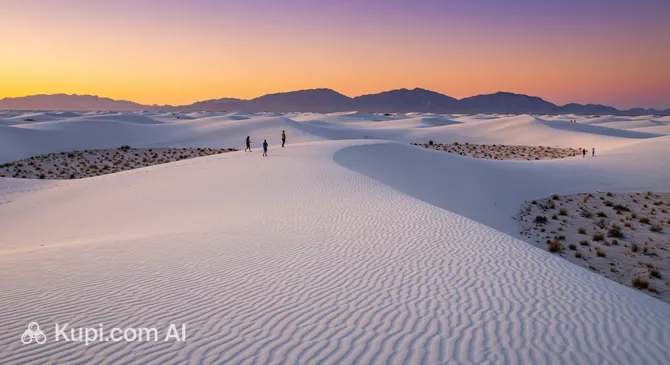
White Sands. Source: Kupi.Binoculars

The region is not just visually stunning; it also possesses a compelling heritage. The history of White Sands is deeply rooted in the geological transformations of the past, where ancient lakes evaporated to leave behind the massive gypsum deposits seen today. Understanding the natural forces and human stories that shaped this land adds a profound layer of depth to any visit.

Tourists flock here to experience the world's largest gypsum dunefield, which offers a variety of memorable activities. You can hike along scenic trails that wind through the heart of the dunes, enjoy the unique thrill of sledding down the soft white slopes, or simply watch the landscape transform with vibrant colors during sunset. The interplay of light and shadow across the ridges provides endless inspiration for photography.

If you are looking for an escape into nature that is both tranquil and awe-inspiring, White Sands is the perfect choice. We invite you to walk barefoot on the cool sands and immerse yourself in the quiet majesty of this extraordinary desert treasure.

Weather Overview

The climate in this region is typical of the high desert, featuring distinct seasonal changes and plenty of sunshine. Summer months, particularly June and July, are hot with average temperatures climbing to around 28°C and daily highs reaching up to 35°C. In contrast, winters are cool and crisp; January is usually the coldest month with an average temperature of 7.7°C and overnight lows dipping to 1.5°C.

Rainfall is scarce for most of the year, although late summer sees a brief monsoon season where July and August can have 8 to 9 wet days. Overall, visitors should expect hot summers with occasional rain and cold, dry winters. To help plan your activities around the forecast, you can view more details about the weather in White Sands.

Interesting Facts

Beyond the main attractions, White Sands holds many fascinating secrets that reveal the area's deep geological and biological history. This landscape is not just a scenic backdrop but a dynamic environment full of rare phenomena and ancient mysteries.

  • The World's Largest Gypsum Dunefield: Unlike the quartz sand found on most beaches, the dunes here are made of gypsum, a soft mineral that typically dissolves in water. Because the Tularosa Basin has no outlet to the sea, rain dissolves the gypsum from the surrounding mountains and pools it in the basin, where it eventually crystallizes to form these massive white dunes.

  • Cool to the Touch: A surprising feature for a desert is that the sand rarely burns your feet. Gypsum is an excellent reflector of solar energy and does not absorb heat like silica sand does, allowing visitors to walk barefoot comfortably even during the peak of summer heat.

  • Ghost Tracks: The area is famous for its "ghost tracks," which are fossilized footprints of Ice Age megafauna such as mammoths and giant ground sloths, as well as ancient humans. These prints are often invisible until the sand becomes wet, appearing suddenly before vanishing again as the ground dries.

  • Rapid Evolution: The stark white environment has acted as a powerful evolutionary pressure. Several animal species, including the bleached earless lizard and the Apache pocket mouse, have evolved a unique white coloration to camouflage themselves against the bright dunes, distinguishing them from their darker relatives found just a few miles away.

How to Get There

Reaching this unique destination requires a bit of planning, as the area is located in a remote part of the Tularosa Basin. Since there are no direct flights to the dunes themselves, most visitors fly into a nearby city and rent a car to complete the journey. For a detailed overview of all your travel options, you can read more about how to get to White Sands.

The most convenient entry point for travelers is El Paso International Airport (ELP), located in the city of El Paso. Situated approximately 65 km from White Sands, this major transport hub offers the shortest drive to the dunes, typically taking about 1 hour by taxi or rental car.

Another significant option is Albuquerque International Sunport (ABQ), found in Albuquerque. While it is located further away at a distance of about 295 km, it is a larger facility with numerous flight connections. The journey from here takes approximately 3 to 4 hours by road, offering a scenic drive through New Mexico.

For clarity, here is a summary of the main airports:

Airport Name City Passenger Traffic Distance (km)
Albuquerque International Sunport Albuquerque Large 295.0
El Paso International Airport El Paso Large 64.9
Abraham Gonzalez International Airport Ciudad Juarez Medium 83.2
Roswell International Air Center Roswell Small 209.9
Grant County Airport Silver City Small 158.9

Main Attractions

While the vast expanse of the national park is the primary draw, the area offers several distinct sites and trails that allow visitors to experience the gypsum dunes in different ways. From scenic drives to educational walks and challenging hikes, here are the top attractions to explore during your visit.

Dunes Drive is the main artery of the park and an attraction in itself. This 13-kilometer scenic road leads visitors from the visitor center deep into the heart of the gypsum dunefield. The first section is paved, but the road eventually transitions into hard-packed white sand, offering a driving experience unlike any other. Along the route, you will find numerous pull-outs, picnic areas with shaded tables, and access points for hiking and sledding, making it the perfect introduction to the landscape.

For those seeking a true backcountry adventure, the Alkali Flat Trail offers one of the most rewarding experiences in the region. Despite its misleading name, this is not a flat walk; it is a strenuous 8-kilometer loop that traverses up and down steep dunes. The trail leads hikers to the edge of the ancient Lake Otero bed, providing breathtaking views of the San Andres Mountains and the endless white horizon. It is the best place to find solitude and capture photos of pristine, wind-sculpted sand.

Interdune Boardwalk provides a more accessible and educational perspective on the desert environment. This elevated wooden path stretches for about 600 meters and allows visitors to walk comfortably above the sand while protecting the fragile ecosystem below. The boardwalk is lined with interpretive signs that explain how hardy plants and animals have adapted to survive in the shifting gypsum, making it an excellent stop for families and nature enthusiasts.

Just a short drive away in the nearby town of Alamogordo, the New Mexico Museum of Space History is a fascinating stop that complements a trip to the dunes. The region has played a pivotal role in the development of the U.S. space program, and this museum showcases that heritage through exhibits on astronomy, the Space Race, and the International Space Hall of Fame. Visitors can also see the grave of Ham, the famous astrochimp who was the first hominid launched into space.

Local Cuisine

While there are no dining facilities located directly within the white gypsum dunes, the culinary experience in the surrounding area is a highlight of any trip to the region. The gateway city of Alamogordo and the broader Tularosa Basin offer a fantastic introduction to authentic New Mexican cuisine, a distinct culinary tradition that blends Native American, Spanish, and Mexican influences with a heavy emphasis on locally grown ingredients.

The undisputed star of the local menu is the chile pepper. When ordering, you will often be asked the official state question: "Red or green?" If you cannot decide, simply answer "Christmas" to try both sauces. A must-try dish is the Green Chile Cheeseburger, a regional icon where the smoky heat of roasted chiles perfectly complements the savory beef. Another staple is stacked enchiladas, often made with blue corn tortillas and served flat like pancakes, topped with cheese, onion, and a fried egg.

For dessert, look for sopapillas. These puffy, deep-fried pastries are a beloved tradition, typically served warm with honey to drizzle over them, providing a sweet finish that helps cool the palate after a spicy meal. Regarding beverages, the region has a surprising history of viticulture, so sampling local wines is highly recommended. Additionally, with numerous pistachio groves nearby, you can find unique local treats like refreshing pistachio milkshakes.

The food culture here is laid-back and unpretentious. Most dining takes place in family-owned diners, drive-ins, and casual restaurants in Alamogordo where the portions are generous and the hospitality is warm. Since the park offers beautiful picnic areas with shaded tables, a popular choice for tourists is to pick up takeout from a local eatery or pack a cooler with supplies, allowing for a memorable meal amidst the surreal landscape of the dunes.

Travel Tips

Preparing for a trip to White Sands is exciting, but the unique high-desert environment requires a bit of foresight to ensure a smooth experience. Here is a set of practical tips to help you navigate the area safely and make the most of your adventure among the glistening gypsum dunes.

  1. Clothing and Gear: The desert climate is characterized by extremes, so dressing in layers is essential. Even in summer, early mornings can be chilly, while afternoons become scorching. Because the white sand reflects sunlight intensely, high-quality sunglasses and sunscreen are non-negotiable to prevent sunburn and eye strain. Wear comfortable hiking shoes if you plan to trek, but sandals or slip-ons are great for easily transitioning to barefoot walking on the soft dunes.

  2. Transportation: There is no public transportation within the park itself, so renting a car is practically mandatory. You will need a vehicle to access the Dunes Drive and move between the visitor center and the various trailheads. While ride-hailing apps might work in the nearby town of Alamogordo, getting a signal to call a ride back from the dunes can be unreliable, making a personal vehicle the safest choice.

  3. Finances: The local currency is the US Dollar (USD). Credit and debit cards are widely accepted at the park entrance station and the gift shop. However, it is wise to carry some cash for small purchases or in case card systems are down. If you dine in nearby towns, remember that tipping is a standard part of American culture; leaving 15-20% of the bill is customary for good service.

  4. Health and Safety: The most critical safety rule here is to carry more water than you think you need—at least one gallon (4 liters) per person per day is recommended. Dehydration happens quickly in the dry air. For medical needs, pharmacies and urgent care facilities are located in Alamogordo, about 15 minutes away. Always check the park's website before you go, as the main road occasionally closes for up to three hours due to missile testing at the adjacent White Sands Missile Range.

  5. Communication: English is the primary language spoken. Cell phone reception can be spotty to non-existent once you drive deep into the dunes. It is highly recommended that you download offline maps and save important information to your phone before entering the park. Most accommodations and cafes in Alamogordo offer Wi-Fi, but do not rely on connectivity while out on the trails.

  6. Local Etiquette: As a protected National Park, the principle of "Leave No Trace" is strictly enforced. Do not remove sand, plants, or historical artifacts. When interacting with others, a friendly "hello" on the trails is common. Be respectful of the silence; many visitors come here for the tranquility, so keep noise levels down, especially at sunset.

  7. What to Avoid: Avoid starting a long hike during the hottest part of the day (12:00 PM to 4:00 PM) in the summer months, as heat exhaustion is a real danger. Also, never wander off the marked trails without a compass or GPS; the landscape is disorienting, and it is surprisingly easy to lose your sense of direction among the identical-looking dunes.

  8. Sledding Tip: A unique activity here is sledding down the dunes. For the best experience, use a plastic snow saucer, which you can buy at the visitor center or Bring Your Own. The pro tip is to wax the bottom of your sled thoroughly (wax is also sold at the shop) to ensure you actually slide on the sand rather than getting stuck.

By keeping these tips in mind, you will be well-equipped to handle the desert elements and fully enjoy the surreal beauty of White Sands. Pack your sunglasses, bring plenty of water, and get ready for one of the most photogenic adventures of your life!

Entertainment & Nightlife

Entertainment and nightlife in the White Sands area offer a distinct change of pace from the silent, starry majesty of the dunes. Since the national park itself is a protected natural environment with no commercial facilities, the hub for evening activities is the neighboring city of Alamogordo. Here, the nightlife is less about high-energy nightclubs and more about relaxed social gatherings, local breweries, and a welcoming community atmosphere that reflects the laid-back spirit of the Southwest.

The primary district for evening entertainment runs along White Sands Boulevard. This main thoroughfare is where you will find a selection of dining spots, bars, and entertainment venues. The crowd is typically a mix of locals, military personnel from the nearby bases, and tourists, creating a friendly and unpretentious vibe. The dress code is almost universally casual; jeans and comfortable shoes are acceptable everywhere, making it easy to transition from a day of hiking to a night out.

For those looking to unwind with a drink, the local craft beer scene is a highlight. 575 Brewing Company is a standout venue that captures the local culture perfectly. It offers a variety of unique microbrews often inspired by regional ingredients, served in an industrial-chic setting that frequently hosts live music and food trucks. Another popular destination is Tall Pines Beer and Wine Garden, which provides a cozy patio atmosphere ideal for enjoying a quiet evening under the stars with a glass of New Mexico wine or a cold pint.

If you are seeking more active evening entertainment, the Rocket City Family Fun Center is a go-to spot. It features bowling lanes, an arcade, and a sports bar area, making it a lively option for groups or families looking for fun after the sun goes down. For movie lovers, the local cinema on White Sands Boulevard screens current releases and offers a classic American movie-going experience.

Regarding practical advice, nightlife here wraps up earlier than in major metropolitan areas. Most bars and restaurants close by 10:00 PM or 11:00 PM on weekdays, though hours may extend to midnight or later on Fridays and Saturdays. Prices are generally very affordable compared to larger US cities. Getting around at night requires planning; ride-sharing services like Uber or Lyft can be scarce or unavailable late at night. It is highly recommended to have a designated driver or arrange transportation in advance if you plan to drink.

Safety in the area is generally very good, and the main commercial districts are safe for walking near venues. However, because the town is spread out, walking between different entertainment spots is not always practical. The biggest safety tip for night driving is to be vigilant for wildlife, such as deer or elk, which frequently cross the roads in the outskirts of town after dark.

During the daylight hours, the area offers several cultural and recreational diversions beyond the dunes. The Alameda Park Zoo is the oldest zoo in the Southwest and provides a charming, shaded retreat to see native and exotic animals. For culture enthusiasts, the Flickinger Center for Performing Arts hosts concerts, theater productions, and musicals throughout the year, serving as the cultural heart of the community.

Parks & Museums

While the glistening gypsum dunes are the undisputed crown jewel of the region, the area surrounding White Sands offers a surprising variety of green spaces and cultural institutions. The landscape transitions dramatically from high desert basins to pine-covered mountains, providing diverse outdoor experiences, while local museums preserve the fascinating history of the American frontier and the dawn of the space age.

Oliver Lee Memorial State Park is a standout natural area located at the foot of the Sacramento Mountains, just a short drive south of the dunes. Unlike the open sands, this park is defined by the rugged Dog Canyon, a dramatic geological feature with steep rock walls and a year-round stream that creates a lush oasis in the desert. It is an excellent spot for hiking, offering trails that range from easy nature walks to challenging climbs, and it provides a stunning contrast of geology and vegetation compared to the basin floor.

For a complete change of scenery, visitors can head up into the Lincoln National Forest. Rising high above the Tularosa Basin, this expansive forest offers a cool, alpine retreat filled with towering pines and aspen trees. It is a popular escape during the summer heat, offering miles of trails for hiking, mountain biking, and wildlife viewing. The sudden shift from the white desert sands to a green mountain woodland is one of the most unique geographical experiences in the area.

Alameda Park serves as the green heart of the nearby city of Alamogordo. Stretching along the main thoroughfare, this linear park is shaded by mature cottonwood trees, providing a welcome respite from the sun. It is a community hub that features picnic areas, playgrounds, and walking paths. While it houses the zoo mentioned earlier, the park itself is a destination for those looking to relax on the grass or enjoy a quiet afternoon walk in a classic city park setting.

The region's history is deeply intertwined with military advancement, and the White Sands Missile Range Museum is a must-visit for history buffs. Located on the active military installation, this museum explores the origins of the U.S. missile and space programs. The outdoor rocket park displays a collection of over 50 missiles and rockets, including the famous V-2 and the Patriot. Inside, exhibits detail the prehistoric cultures of the basin as well as the events of the Atomic Age, offering a comprehensive look at how this quiet desert became a center for global technology.

To understand the human story of the valley, the Tularosa Basin Museum of History in Alamogordo offers a more intimate perspective. Housed in a historic building, this museum showcases artifacts and stories from the early pioneers, ranchers, and railroad workers who settled the area. Exhibits cover everything from Native American pottery to the impact of World War II on the local community, providing a rich cultural context that grounds the visitor's experience of the region.

A significant historical site worth exploring is the Frenchy’s Cabin ruins located within Oliver Lee Memorial State Park. This site tells the story of François-Jean "Frenchy" Rochas, a 19th-century settler who built a homestead and irrigation system in Dog Canyon. Seeing the remains of his stone walls and terraced gardens offers a glimpse into the incredible resilience required to survive and thrive in this harsh desert environment over a century ago.

For a truly local experience, look for the giant pistachio sculpture that marks the entrance to the region's pistachio ranches. Taking a farm tour here is a delightful way to learn about desert agriculture. You can walk through the orchards and see how these hardy trees flourish in the Tularosa Basin, ending the visit with a taste of locally grown nuts and wine.

Getting Around

It is important to clarify immediately that White Sands is a federally protected National Park located in a remote desert basin, not a traditional city with an urban infrastructure. Consequently, there is no public transport system within the park or directly servicing it. You will not find metros, trams, trolleybuses, or a municipal bus network here. The area is defined by its natural wilderness, and the "transport system" relies almost exclusively on private vehicles.

Because there are no public shuttles running from nearby cities like Alamogordo or Las Cruces to the dunes, the primary mode of transport for visitors is a rental car. This gives you the freedom to drive the scenic Dunes Drive and access various trailheads at your own pace. Most tourists arrange their vehicle rentals upon arrival at regional transport hubs such as El Paso or Albuquerque before making the drive to the park.

Regarding payment and access, since there is no public transit, there are no travel passes, transport cards, or ticket validation machines to worry about. Instead, your transport costs will consist of fuel and the park entrance fee. The entrance station accepts major credit and debit cards as well as cash. If you are visiting multiple national parks in the region, you might consider purchasing an "America the Beautiful" annual pass, which covers entry fees but is not a transport ticket in the traditional sense.

While public buses do exist in the neighboring city of Alamogordo via the Z-Trans (South Central Regional Transit District) network, these services are designed for local commuters and do not offer scheduled stops at the White Sands Visitor Center. Therefore, tourists should not rely on this regional bus system for visiting the dunes. It is strictly a local service for the town and does not connect to the park's recreational areas.

Alternatives such as taxis and ride-sharing apps (like Uber or Lyft) are technically available from Alamogordo, but they come with significant caveats. You may be able to find a driver to take you to the park, but getting a return trip is notoriously difficult. Cellular signal is often non-existent within the dunes, making it impossible to use an app to summon a ride back. Additionally, the cost of a round-trip taxi fare often exceeds the price of a daily car rental.

For those who absolutely cannot drive, the only viable alternative is to book a seat with a private tour operator or a commercial shuttle service, usually departing from El Paso or Las Cruces. These are not public transport but rather guided experiences that must be booked in advance. However, for the vast majority of travelers, a personal vehicle remains the only practical and reliable way to navigate the area.

Accommodation

When planning a visit to this unique destination, the first thing to understand is that there is no accommodation available directly within the white gypsum dunes themselves. White Sands is a protected National Park surrounded by a military missile range, meaning there are no hotels, lodges, or rental cabins inside the park boundaries. Consequently, visitors must base themselves in the nearby communities, which offer a range of comfortable options just a short drive away.

The most popular and convenient place to stay is Alamogordo, located approximately 24 kilometers (about a 15-minute drive) from the park entrance. This town serves as the primary gateway for tourists and offers the widest selection of lodging in the immediate vicinity. The accommodation landscape here is dominated by familiar mid-range chain hotels and budget-friendly motels, most of which are clustered along the main thoroughfare, White Sands Boulevard. These options provide reliable amenities such as swimming pools, free breakfast, and easy access to local dining.

For travelers willing to drive a bit further, the city of Las Cruces offers a broader variety of choices. situated about an hour southwest of the dunes, this larger city features historic hotels, boutique inns, and more upscale resorts. Staying here allows you to combine a trip to the dunes with the cultural attractions and vibrant dining scene of the Mesilla Valley. It is an excellent option for those seeking a more luxurious stay or a romantic getaway.

Nature enthusiasts and RV travelers will find excellent facilities in the region. While backcountry camping within the dunes is sometimes available (permits are required and subject to availability), most campers prefer the developed campgrounds nearby. Oliver Lee Memorial State Park, located south of Alamogordo, offers scenic campsites with electric hookups and showers, set against the dramatic backdrop of the Sacramento Mountains. There are also several private RV parks in Alamogordo that cater to road-trippers with full-service amenities.

Regarding costs, the price range for accommodation in this area is generally very reasonable compared to other major tourist destinations in the United States. You can expect to find:

  • Budget: Simple motels and economy stays, often available for under $80 per night.
  • Mid-Range: Standard chain hotels and comfortable inns typically ranging from $100 to $160 per night.
  • Higher End: While true luxury is rare in the immediate area, upscale options in Las Cruces or historic properties can range from $180 upwards.

Booking is typically straightforward through major online travel platforms or by booking directly with the property. However, a crucial tip is to book in advance if you plan to visit during the peak seasons of spring (March-May) and autumn (October-November), or during a full moon when the park hosts special evening events. During these times, the most convenient hotels in Alamogordo can fill up quickly.

Nearby Cities

For those looking to explore the surroundings, White Sands serves as an excellent base for day trips to several interesting nearby locations. The region is rich in history, culture, and natural beauty, offering diverse experiences ranging from vibrant city life to quirky historical towns.

Las Cruces is the closest major city and a fantastic destination for culture and cuisine. Sitting at the foot of the jagged Organ Mountains, it offers access to the historic village of Mesilla, where you can wander through adobe architecture, visit artisan shops, and dine on authentic New Mexican food in a traditional plaza setting. It is a perfect spot for those who want to combine outdoor scenery with rich local heritage.

Just to the south lies El Paso, a bustling metropolitan hub located on the border with Mexico. As the "Sun City," it boasts a unique blend of Texan and Mexican cultures. Visitors can explore the Mission Trail, enjoy panoramic views from the Franklin Mountains State Park, or visit top-tier museums. It offers the amenities of a large city while maintaining a distinct desert charm.

For a truly unique experience, a trip to Roswell is unforgettable. Famous worldwide for the 1947 UFO incident, this town embraces its extraterrestrial reputation with the International UFO Museum and Research Center and alien-themed streetlights. Beyond the sci-fi allure, it also features art museums and beautiful parks, making it an entertaining drive for the curious traveler.

City Population Distance (km)
El Paso 794344 69
Las Cruces 141399 28
Roswell 92688 216
South Valley 36583 292
Socorro 34687 189

These nearby destinations offer a glimpse into the diverse culture and landscapes of the region, ensuring that your visit to the Southwest is filled with variety and discovery.

Shopping & Souvenirs

Shopping in the White Sands area offers a distinct experience that reflects the region's unique blend of desert nature, agricultural heritage, and space history. While the National Park itself is a protected natural zone with limited commercial activity, the visitor center provides a curated selection of goods. For a broader retail experience, visitors typically head to the adjacent city of Alamogordo, which serves as the commercial hub for the Tularosa Basin, offering everything from local specialty boutiques to standard retail conveniences.

The primary destination for shopping within the immediate vicinity is White Sands Boulevard in Alamogordo. This main thoroughfare runs the length of the city and is lined with a variety of businesses. Here, you can find Western wear stores offering cowboy boots and hats, antique shops filled with Americana, and local art galleries showcasing the work of Southwestern artists. It is a drive-friendly strip where you can easily hop between stores to find unique items.

For a more traditional shopping experience, the White Sands Mall located on North White Sands Boulevard is the area's principal enclosed shopping center. While it is smaller than the mega-malls found in larger metropolitan areas, it provides a convenient collection of department stores, apparel chains, and specialty retailers. It is a good place to pick up travel essentials, clothing, or camping gear if you forgot to pack something for your dune adventures.

A highlight of the local shopping scene is the focus on agriculture, particularly at venues like McGinn's Pistachio Tree Ranch and Heart of the Desert. These are not just stores but major local attractions where you can buy farm-fresh pistachios in dozens of flavors, from chili-lime to garlic. They also feature country stores selling local wines, gourmet foods, and ice cream, making them essential stops for edible souvenirs.

When looking for souvenirs to bring home, the region offers several iconic options. Bags of locally grown pistachios or pecans are the most popular choice. Native American jewelry, particularly pieces featuring turquoise and silver, is also widely available and represents the deep cultural history of the Southwest. Additionally, given the proximity to the missile range and space museum, space-themed memorabilia is a fun and quirky keepsake. Inside the park, the gift shop sells plastic snow saucers for sledding, which many visitors keep as a memento of their slide down the dunes.

Markets in the area are seasonal and community-focused. The Otero County Farmers Market, typically held at the Alamogordo Fairgrounds during the warmer months, is a great place to find fresh produce, including the famous New Mexico green chiles when they are in season. You can also find handmade crafts, local honey, and baked goods, offering a direct connection to the local community.

Opening hours generally follow standard United States business practices. The National Park visitor center gift shop is usually open daily from 9:00 AM to 5:00 PM, though hours can vary by season. Retail stores in Alamogordo typically operate from 10:00 AM to 9:00 PM Monday through Saturday, with reduced hours on Sundays. Payment is straightforward, with credit and debit cards (Visa, MasterCard, American Express) being universally accepted. Cash is useful for small purchases at farmers markets, but digital payments are standard everywhere else.

Regarding taxes, the United States does not have a national VAT refund system for tourists. New Mexico applies a Gross Receipts Tax to most goods and services. Visitors should expect this tax to be added at the register, and there is generally no mechanism for international travelers to claim a refund on these taxes upon departure.

Reached the end of the page?

That means the route is fully explored