Support

Muynak

About

Muynak is a destination unlike any other, offering a profound and moving experience for travelers. Once a bustling port city, it now stands as a silent witness to one of the world's most significant ecological changes. Located in the autonomous republic of Karakalpakstan in northwestern Uzbekistan, this small city possesses a hauntingly beautiful atmosphere that attracts photographers, adventurers, and those interested in environmental history.

Geographically, the city is situated in the heart of what is now the Aralkum Desert. With a population of approximately 18,000 people, Muynak has transformed from a maritime center into a desert outpost. The climate here is sharply continental, characterized by hot summers and cold winters, which adds to the rugged allure of the landscape.

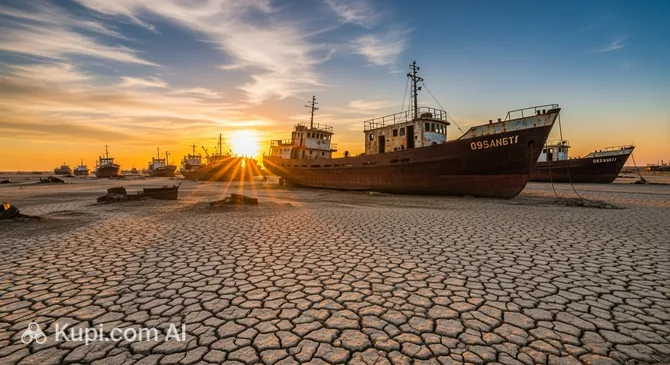
Muynak. Source: Kupi.Binoculars

The history of Muynak is deeply intertwined with the fate of the Aral Sea. For decades, it was a thriving center of the fishing industry, but as the water receded, the sea moved over 100 kilometers away, leaving the town stranded in the sands. Today, visitors come to see the surreal Ship Graveyard, where the rusting hulls of abandoned fishing trawlers rest amidst the dunes, creating a striking and unforgettable visual.

Beyond the ships, the Museum of the Aral Sea offers a comprehensive look at the region's past, displaying photographs and artifacts from the era when the waves still lapped at the city's edge. A visit to Muynak is a journey of reflection and discovery, offering a unique opportunity to witness the power of nature and the resilience of local communities.

Weather Overview

The climate in this desert region is sharply continental, meaning visitors will experience distinct seasonal contrasts. Before heading out to explore the ship graveyard or the vast landscapes, it is helpful to consult the detailed weather in Muynak to ensure you are well-prepared. Generally, you can expect hot, arid summers and cold winters with minimal rainfall year-round.

Summer is the most intense season, particularly in July, when average temperatures rise to around 30.0°C and can peak at 36.4°C. The heat is dry and persistent, with almost no precipitation recorded from June through August. If you visit during this time, sun protection and hydration are absolutely essential, as there is typically only one "wet day" per month during the peak of summer.

In contrast, winters are freezing. January is usually the coldest month, with an average temperature of -3.4°C and lows dipping to -7.1°C. Although precipitation remains very low—often recorded as 0mm—the air is biting cold. Travelers arriving between December and February should pack heavy layers to stay warm while touring the outdoor sites.

The transitional months of spring and autumn often provide the most comfortable conditions for travel. May offers pleasant warmth with an average of 22.2°C, while September cools down to a manageable 19.6°C after the summer heat. These periods maintain the region's characteristic dryness but avoid the temperature extremes found in the height of summer or depth of winter.

Interesting Facts

Beyond the iconic imagery of stranded vessels, Muynak holds fascinating secrets that reveal the region's resilience and deep historical layers. This remote city is not just a monument to the past but a place of surprising transformation and ecological endeavors.

  • The World's Youngest Desert: Muynak is considered the gateway to the Aralkum Desert, which is often cited as the youngest desert on Earth. This vast new terrain formed on the dried seabed of the Aral Sea within a single generation, creating a unique geological phenomenon right at the city's doorstep.

  • Electronic Music in the Dunes: In a surreal blend of art and activism, the city hosts the Stihia Festival, an electronic music event held directly in the Ship Graveyard. Musicians and travelers gather amongst the rusting hulls to celebrate culture and raise awareness about the environmental catastrophe.

  • A Forest on the Seabed: To prevent toxic salt storms from spreading, a massive ecological project is underway to plant millions of Saxaul trees on the dry sea floor. These hardy shrubs are slowly turning the barren white sands into a man-made forest, acting as a green shield for the local climate.

  • Former Land of Tigers: Before the water receded, the Amu Darya delta surrounding Muynak was a lush wetland jungle known as tugai forests. Historically, this area was a habitat for the majestic Caspian tiger, which roamed the reeds long before the landscape turned into the arid desert seen today.

How to Get There

Reaching this remote destination is an adventure in itself, often involving a journey across the stark landscapes of Karakalpakstan. Since the city is located in a relatively isolated area, visitors typically arrive via neighboring transport hubs. For a detailed breakdown of routes and tips, you can read more about how to get to Muynak.

The city of Muynak does not have its own active airport, so most travelers fly into the regional capital. The most convenient option is Nukus Airport (NCU) located in the city of Nukus, which is approximately 151 km from Muynak. From there, a taxi or bus ride takes around 4 hours. Alternatively, you can fly into Urgench Airport (UGC) in Urgench. It is a busier hub but is situated about 276 km away, resulting in a significantly longer transfer time of over 7 hours by road.

For clarity, here is a summary of the main airports:

Airport Name City Passenger Traffic Km from City
Urgench Airport Urgench Large 276.3
Nukus Airport Nukus Medium 151.3

Traveling by train is another viable option, offering a scenic view of the desert terrain. The city of Muynak does not have a railway station, but you can arrive at the Kungrad Railway Station in the city of Kungrad. This is the closest rail link, situated just 82 km from Muynak. The subsequent drive by taxi or shared transport takes about 2.5 hours. Another major hub is the Nukus Railway Station in Nukus, located about 156 km away, which requires a transfer time of roughly 4 hours to reach the final destination.

Below is a list of the nearest railway stations:

Station City Passenger Traffic Km to Center
Nukus Railway Station Nukus Medium 156.1
Kungrad Railway Station Kungrad Medium 82.2
Khodjeyli Railway Station Khodjeyli Small 155.1
Qanlikoʻl Railway Station Qanlikoʻl Small 104.1
Shovot Railway Station Shovot 250.7

Main Attractions

While Muynak is a small and remote city, its attractions are powerful symbols of environmental change and human history. The sites here are not typical tourist destinations but rather places of reflection, offering a unique glimpse into a past where this desert landscape was once a thriving seaport.

The most iconic location is undoubtedly the Ship Graveyard. Located on the sandy bed of the former harbor, this surreal open-air museum features a collection of rusting fishing trawlers left stranded as the waters receded. Walking among the decaying hulls of ships with names like "German" and "Muynak" allows visitors to grasp the scale of the ecological disaster physically. It is a hauntingly photogenic spot, especially at sunset, where the skeletal vessels cast long shadows over the arid desert floor.

For a deeper understanding of the region's heritage, the Museum of the Aral Sea History is an essential stop. This small but well-curated museum preserves the memory of Muynak's days as a bustling fishing center. Exhibits include photographs of the city’s industrial peak, samples of products from the once-famous fish cannery, and vibrant paintings by local artists that depict the blue waters that used to surround the town. A documentary film is often screened for visitors, providing a moving narrative of the sea's disappearance.

Overlooking the former shoreline stands the Aral Sea Monument. This triangular stele marks the edge of the historic cliffs where waves once crashed. The monument features maps that visualize the dramatic shrinking of the Aral Sea from 1960 to the present day, offering a stark educational perspective. The viewing platform here provides a panoramic vista of the vast Aralkum Desert, helping travelers visualize the immense volume of water that has vanished from the landscape.

Although technically outside the city limits, Sudochye Lake is a key attraction for those based in Muynak. Located on the route to the current water's edge, this wetland remains a haven for migratory birds, including thousands of pink flamingos during migration seasons. It serves as a beautiful reminder of the region's natural diversity and offers a stark contrast to the dry seabed surrounding the city itself.

Local Cuisine

The local cuisine in Muynak offers a distinct culinary experience that reflects the traditions of the autonomous Karakalpak republic. While you will find staple Uzbek favorites here, the food culture is deeply influenced by the region’s nomadic heritage and its history as a former fishing port. The dishes are typically hearty and simple, designed to sustain people through the harsh desert climate.

One of the most famous dishes to try is Karakalpak Besbarmak. Unlike the version found in other parts of Central Asia, the local variation often uses a specific type of flat noodle and can sometimes be prepared with fish, a nod to the city's maritime past, although beef or lamb is now more common. Another unique specialty is Jueri Gurt (Zhuvery Gurt), a dish made from sorghum flour dumplings served with a rich meat broth and vegetables. This meal is rarely found outside Karakalpakstan and offers a truly authentic taste of the local culture.

Despite the recession of the Aral Sea, fish remains a nostalgic and popular element of the local diet. Freshwater fish brought in from nearby lakes, such as Sudochye, is often served fried with a side of bread and fresh onions. It serves as a culinary reminder of the era when Muynak was a bustling canning center supplying the entire Soviet Union.

Tea is the cornerstone of social life and hydration in the desert. Locals predominantly drink hot green tea, which is consumed throughout the day. For a more traditional experience, ask for Shirchay, a savory drink made with black tea, milk, salt, and butter. This rich, warming beverage is a breakfast staple for many Karakalpak families and provides essential energy for the day.

The dining scene in Muynak is modest and informal. You will not find luxury restaurants here; instead, the best food is often served in small, family-run cafes or "choyhanas" (teahouses) near the main market or the ship graveyard. Many tourists also enjoy home-cooked meals at local guesthouses (yurt camps), where hosts prepare traditional dinners in large cauldrons, inviting guests to share from a communal platter in the spirit of true desert hospitality.

Travel Tips

Traveling to Muynak is a journey to the edge of the world, offering a starkly beautiful experience that differs significantly from the Silk Road cities of Samarkand or Bukhara. Since this destination is remote and situated in a harsh desert environment, a little extra preparation is essential to ensure your trip is safe, comfortable, and memorable.

  1. Clothing and Gear: The desert climate is unforgiving, so pack according to the season. In summer, bring loose, light-colored cotton clothing, a wide-brimmed hat, and high-SPF sunscreen to protect against the intense sun. In winter, thermal underwear and windproof jackets are mandatory as the steppe winds are piercingly cold. Regardless of the season, wear sturdy, closed-toe shoes; you will be walking through sand and potentially near sharp, rusting metal at the Ship Graveyard.
  2. Transportation: Public transport within Muynak is virtually non-existent. The town is small enough to navigate the central areas on foot, but to reach the Ship Graveyard or the museum from the center, you might prefer a quick ride. There are no ride-hailing apps like Uber here. Most tourists hire a private driver or a shared taxi (marshrutka) from Nukus for the day. If you plan to visit Lake Sudochye nearby, a 4x4 vehicle is highly recommended due to rough terrain.
  3. Finances: Muynak operates almost entirely on a cash economy. The local currency is the Uzbek Som (UZS). While there may be an ATM in the town center, it is often out of service or out of cash. It is critical to withdraw all the money you will need in Nukus before you depart. International credit cards are rarely accepted at local guesthouses or small cafes.
  4. Health and Safety: The primary health risk here is dehydration and sunstroke. Always carry more bottled water than you think you need, as shops can be sparse on the outskirts. There is a small hospital and pharmacy in the town, but supplies are basic; bring your own personal medications and a small first-aid kit. Be cautious around the ships—climbing on them can be dangerous due to unstable, rusting metal.
  5. Communication: English is not widely spoken in Muynak. The main languages are Karakalpak and Uzbek, with Russian serving as a common second language for older generations. It is highly advisable to download offline maps (like Maps.me) and a translation app (like Google Translate) with the Russian or Uzbek language pack installed. Mobile internet works in the town center (Ucell and Beeline are reliable providers), but signal drops quickly in the open desert.
  6. Local Etiquette: The people of Karakalpakstan are known for their warm hospitality. A common greeting is a slight bow with your right hand placed over your heart, accompanied by the phrase "Assalomu Alaykum." Dress modestly out of respect for local customs; while not strictly conservative, covering shoulders and knees is appreciated. If you are invited into a local home or a yurt, always remove your shoes at the entrance.
  7. What to Avoid: Do not drink tap water; it has high salinity and mineral content that can upset your stomach—stick strictly to bottled water. Also, avoid taking photographs of locals, especially the elderly, without asking for permission first, as some may be camera-shy or private.
  8. Yurt Camp Experience: For a truly immersive experience, skip the standard hotel and stay in the Yurt Camp near the lighthouse and Ship Graveyard. Not only does this support local tourism, but it also offers an incredible opportunity to see the Milky Way clearly, as there is almost no light pollution in the desert at night.

By keeping these practical tips in mind, you can navigate the challenges of the Aralkum Desert with ease and focus on the profound beauty of the region. Muynak is a place for reflection and adventure, and with the right preparation, your visit to this "ghost port" will be a highlight of your travels in Central Asia.

Entertainment & Nightlife

Nightlife in Muynak is a world away from the bustling clubs and neon lights found in larger capital cities. As a remote town on the edge of the Aralkum Desert, it does not offer a traditional nightlife scene with discos, cocktail bars, or loud music venues. Instead, the evening entertainment here is defined by the profound silence of the desert, the crackle of campfires, and some of the most spectacular stargazing opportunities in Central Asia.

The primary hub for evening activity is the area surrounding the Ship Graveyard and the famous Muynak Yurt Camp. This is where the "nightlife" truly happens for travelers. The atmosphere is serene and communal, characterized by a slow pace and a deep connection to nature. Visitors typically spend their nights sitting around a fire at the yurt camp, sharing stories with fellow travelers, and enjoying traditional Karakalpak meals under the open sky. On special occasions, the hosts may organize performances of local folk music, providing a cultural soundtrack to the desert night.

For those looking for a place to eat or relax in the evening, options are limited but welcoming. Cafe Mayak, located near the former lighthouse and the history museum, is a well-known spot among visitors. While it is not a bar in the Western sense, it serves as a gathering place for a warm dinner after a day of exploring. Another venue to mention is the dining hall within the yurt camp itself, which effectively functions as a night restaurant for guests. Alcohol is not widely sold in standard town shops or cafes due to local customs, but it is often available at these tourist-focused accommodations.

When it comes to daytime entertainment, the focus shifts from relaxation to education and exploration. Aside from the main historical sites, the town has a local Culture Center which occasionally hosts community events or film screenings, though these are primarily for residents. The Museum of the Aral Sea History remains the most engaging daytime activity, offering a deep dive into the region's past. For a lighter experience, visitors can walk through the small parks in the town center, which have been recently renovated to provide green spaces in the arid landscape.

Practical advice for navigating Muynak at night centers on preparation. The streets are not well-lit, so carrying a flashlight is essential if you plan to walk from the town center to the monument area. There is no nightlife district to "hop" between; you generally pick one spot, usually your guesthouse or the yurt camp, and stay there. Taxis do not roam the streets looking for passengers after dark. If you need to move around, you must arrange transport in advance through your accommodation. The area is very safe for night walks in terms of crime, but be cautious of uneven ground and the desert cold.

Parks & Museums

While Muynak is not characterized by lush botanical gardens or sprawling green boulevards typical of other cities, its open spaces and cultural venues are deeply impactful. The city’s "parks" are often memorials to a vanished seascape, and its museums serve as poignant time capsules, preserving the memory of a fishing industry that once fed a nation. Exploring these sites offers a unique blend of ecological education and historical reflection.

The most significant natural area—and the city's defining landmark—is the Ship Graveyard. Functioning as an open-air park, this area occupies the former seabed just below the edge of the town. Visitors can walk among the rusting skeletons of abandoned trawlers, which are scattered across the sand dunes like sculptures in a gallery. It is a surreal landscape that allows for free exploration, offering a tangible connection to the ecological history of the region. The stark contrast between the decaying metal and the vast desert horizon makes it a compelling spot for photography and quiet contemplation.

For those seeking living nature, Sudochye Lake is a vital wetland located a short drive from the city. Unlike the dried Aral seabed, this area remains a lush oasis and a sanctuary for biodiversity. It is particularly famous among birdwatchers, as it serves as a nesting ground for thousands of flamingos and other migratory birds. The lake provides a glimpse of what the Amu Darya delta looked like before the water receded, offering a scenic and hopeful counter-narrative to the desertification seen elsewhere.

In terms of cultural institutions, the Museum of the Aral Sea History is the city's premier venue. Though compact, the museum houses a powerful collection that chronicles the life of Muynak from its days as a bustling port to the present. The exhibits include preserved artifacts from the fish cannery, maritime equipment, and a moving collection of photographs showing the shoreline's retreat over the decades. Of particular interest are the paintings by local artists who captured the blue waters of the Aral Sea on canvas, preserving the memory of the landscape's former colors.

Another key site is the Aral Sea Monument, an architectural landmark situated on the cliffs overlooking the former harbor. This triangular stele is located near the museum and serves as a viewing deck. It features maps depicting the shrinking surface area of the sea, providing a clear and educational visualization of the disaster. The plaza around the monument has been renovated in recent years, creating a paved promenade where visitors can sit and gaze out over the vast Aralkum Desert, which stretches to the horizon where the waves once rolled.

For a truly authentic experience, look for the Old Lighthouse near the museum complex. While it no longer guides ships, climbing near this structure at sunset offers a breathtaking perspective of the terrain. As the sun dips below the dunes, the shadows of the ships lengthen, and the desert sky turns a deep violet, creating a moment of profound silence and beauty that few other destinations can match.

Getting Around

Given the small size and remote location of Muynak, the public transport system differs significantly from what you might find in large metropolitan areas. There is no metro, tram, trolleybus, or large municipal bus network operating within the city limits. Instead, the local transport infrastructure is informal and relies heavily on shared minivans and private vehicles, reflecting the quiet, desert pace of life in this region.

The primary mode of shared transport consists of marshrutkas and small white vans known locally as Damas. These vehicles typically run along the main road that cuts through the town, connecting the residential areas with the central market, the bus station, and the approach to the Ship Graveyard. They do not follow a strict timetable or have designated stops with signage; instead, they operate on a "fill-up-and-go" basis or can be flagged down from the roadside.

For tourists, taxis are the most practical and comfortable alternative to walking. It is important to note that you will not find official, branded taxi cabs with meters. Local taxis are usually private cars whose drivers offer rides for a fee. Since ride-hailing apps like Uber or Yandex Go do not operate in Muynak, you will need to arrange a ride through your guesthouse, find a driver at the central bazaar, or ask a local to help you call one.

The payment system is strictly cash-only. There are no travel passes, transport cards, or mobile payment options for getting around the city. You must pay the driver directly in the local currency, the Uzbek Som (UZS). Fares for short trips within the town are generally very low. It is advisable to carry small denominations, as drivers may not always have change for large banknotes.

Walking is a viable and popular option for navigating the town center, but distances can be deceptive. The walk from the town entrance to the famous Ship Graveyard and the Museum of the Aral Sea can take considerable time and effort, especially under the intense desert sun. If you plan to visit these sites from the center, hiring a car or catching a passing Damas is recommended to save energy.

A unique feature of transport in this region is the reliance on private drivers for day trips. Since public transport does not service the surrounding desert attractions, such as the remote shores of the receding sea or Sudochye Lake, tourists typically hire a driver with a 4x4 vehicle for the entire day. This is often arranged directly by hotel owners or yurt camp managers and is the only reliable way to explore the rugged terrain beyond the city limits.

Accommodation

Where to Stay:

Accommodation in Muynak is modest and reflects the remote, desert nature of the destination. Travelers should not expect international luxury chains or high-end resorts here. Instead, the city offers a small selection of basic hotels, family-run guesthouses, and traditional yurt camps that provide a unique and immersive experience. The options are functional and clean, focusing on warm hospitality rather than opulence.

The most popular area for tourists to stay is undoubtedly near the Ship Graveyard and the Aral Sea Monument. This location offers the most atmospheric setting, allowing visitors to sleep under the stars within walking distance of the city's main attraction. Alternatively, the town center provides a few conventional lodging options, which are more convenient for accessing local shops, the bazaar, and transport stops.

One of the most sought-after experiences is staying in a Yurt Camp. These camps typically consist of traditional felt tents equipped with comfortable beds and electricity. Staying here allows travelers to enjoy the profound silence of the desert, evening campfires, and traditional Karakalpak meals served by the hosts. It is an ideal choice for those looking to connect with the local culture and environment.

For those preferring solid walls, there are a few small hotels and guesthouses in the town. These establishments usually offer standard rooms with private or shared bathrooms. Amenities are generally basic, with air conditioning being a crucial feature to check for during the hot summer months. The atmosphere in these places is often akin to a homestay, where interaction with the host family adds to the charm of the visit.

Booking Tip: Due to the limited number of beds in Muynak, it is highly recommended to book your accommodation in advance, especially during the peak travel seasons of spring and autumn. Arriving without a reservation can be risky, as the few available spots fill up quickly with tour groups.

Prices in Muynak are generally budget-friendly to mid-range. While some properties may appear on major online booking platforms, many local guesthouses and camps rely on direct bookings via phone or through travel agencies based in Nukus. It is essential to carry enough cash (Uzbek Som) to cover your stay, as credit card terminals are rare and ATMs may not always be reliable in this isolated region.

Nearby Cities

For those looking to explore the surroundings, Muynak serves as an excellent base for day trips to several interesting nearby locations. While Muynak itself offers a quiet, desert atmosphere, the neighboring cities provide a deeper dive into the history, art, and daily life of the Autonomous Republic of Karakalpakstan.

Nukus is the most significant destination for a day trip. Located about 3 hours away, it is the capital of Karakalpakstan and is world-renowned for the Savitsky Art Museum. This museum houses one of the largest collections of Russian avant-garde art in the world, often referred to as the "Louvre of the Desert." Beyond the art, Nukus offers bustling bazaars and a chance to experience the modern administrative heart of the region.

Another fascinating stop is Khodjeyli, situated near Nukus. The main attraction here is the ancient Mizdakhan Necropolis, a vast city of the dead that has been a sacred site for centuries. It features mausoleums, ruined fortresses, and the legendary "World Clock" building. Walking through this archaeological complex offers a hauntingly beautiful contrast to the Soviet-era history found in Muynak.

Closest to Muynak is the town of Kungrad, often called the gateway to the Ustyurt Plateau. While it has fewer traditional tourist sights, it is a vital transport hub and a great place to witness authentic local life. Travelers often stop here to stock up on supplies or explore the local market before venturing further into the deep desert landscapes.

City Population Distance (km)
Nukus 319,583 153
Urgench 150,000 281
Kungrad 80,090 80
Khodjeyli 67,800 154
Khiva 55,568 285

These nearby destinations offer a glimpse into the diverse culture and landscapes of the region, ranging from world-class art collections to ancient archaeological wonders.

Shopping & Souvenirs

Shopping in Muynak differs significantly from the commercial experiences found in larger Uzbek cities like Tashkent or Samarkand. As a remote desert town, it does not feature luxury boutiques, international brands, or sprawling retail complexes. Instead, the shopping scene here is modest and functional, catering primarily to the daily needs of locals and the specific interests of the tourists who visit the Ship Graveyard. Visitors should expect a quiet, authentic atmosphere where the focus is on basic essentials and unique, locally made souvenirs.

The town does not have a designated "shopping district" in the traditional sense. Most commercial activity is concentrated along the main road that runs through the center of Muynak. Here, you will find small, family-owned grocery stores (often marked as "Oziq-Ovqat"), pharmacies, and shops selling household goods. For tourists, the most relevant area is the plaza surrounding the Ship Graveyard and the Museum of the Aral Sea History. This is where local artisans and vendors set up stalls to sell memorabilia directly to visitors.

It is important to note that there are no shopping malls in Muynak. Travelers looking for fashion outlets, electronics, or entertainment centers will not find them here. The retail infrastructure is strictly traditional, consisting of standalone shops and open-air stalls. For any significant shopping needs, such as specialized hiking gear or electronics, it is advisable to make purchases in the regional capital, Nukus, before traveling to Muynak.

The heart of local commerce is the Dehkan Bazaar (Central Market). While much smaller than the grand bazaars of the Silk Road, it offers a genuine glimpse into daily life in Karakalpakstan. Here, residents buy fresh produce, seasonal fruits like melons and apricots, and locally baked bread. It is not a tourist trap but a functioning market, making it an interesting place to walk through if you want to see what locals eat and buy. You might also find simple clothing and utilitarian items suited for the desert climate.

For visitors, the highlight of shopping in Muynak is undoubtedly the souvenirs. The stalls near the Ship Graveyard offer a variety of items that commemorate the Aral Sea. Popular purchases include paintings by local artists depicting the sea as it once was, magnets, and small handicrafts. You can also find traditional Karakalpak items, such as embroidered skullcaps (tubeteikas) and textiles featuring local patterns. Some vendors may sell jars of brine shrimp (Artemia) or other novelty items related to the saline environment, serving as unique mementos of the ecological transformation.

Opening hours in Muynak are generally relaxed. Most small shops and market stalls open around 8:00 AM or 9:00 AM and close by sunset or around 6:00 PM. During the hot summer months, some shops may close for a few hours in the afternoon for a siesta. Payment is almost exclusively in cash (Uzbek Som). Credit cards are rarely accepted, even in souvenir shops, and finding a working ATM can be a challenge. It is crucial to bring sufficient cash in small denominations to cover your purchases.

Regarding Tax-Free shopping, Muynak does not participate in any VAT refund schemes for tourists. The tax-free system is generally not developed in remote regions of Uzbekistan, so visitors should not expect to claim refunds on purchases made in the town.
Reached the end of the page?

That means the route is fully explored