Support

Mui Ne

About

Mui Ne is a true gem of southern Vietnam, nestled along the coast of the South China Sea, about 220 kilometers east of Ho Chi Minh City. This small but incredibly popular resort town stretches along a long line of picturesque sandy beaches framed by coconut palms and exotic gardens. Mui Ne is famous for its unique atmosphere, blending a relaxed beach holiday with plenty of opportunities for active recreation.
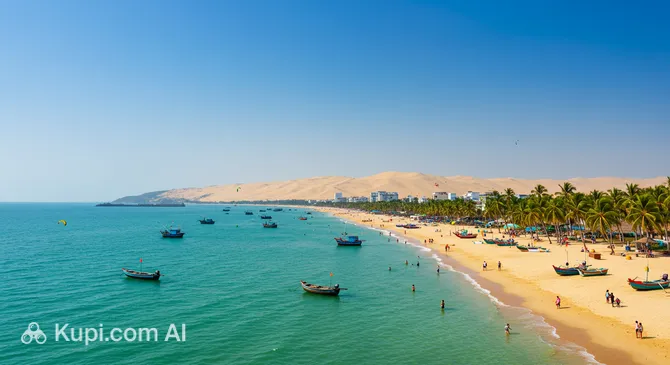
Mui Ne. Illustration.
Source: Kupi.com AI

Thanks to its special microclimate, it is almost always sunny and dry here, making Mui Ne an ideal destination year-round. Despite its popularity with tourists, the town, with a population of about 25,000, has managed to preserve the charm of an authentic fishing village. The atmosphere here is slow-paced and calm, and the locals are known for their hospitality. Administratively, Mui Ne is part of Binh Thuan province.

Mui Ne attracts travelers primarily for its natural beauty and unique landscapes. Among the main attractions are the famous Red and White Sand Dunes, reminiscent of desert landscapes, and the scenic Fairy Stream with its whimsical canyons. Furthermore, Mui Ne is a recognized mecca for kitesurfing and windsurfing enthusiasts, thanks to its consistent winds and warm waters.

If you are looking for a place where you can enjoy the sun, the sea, and active sports while immersing yourself in a distinctive culture, Mui Ne is an excellent choice. This resort offers a wonderful combination of natural harmony, tranquility, and vibrant experiences, leaving every guest wanting to return.

You can find more interesting facts on the Mui Ne city history page.

Weather Overview

Mui Ne enjoys warm weather year-round. Average air temperatures range from 26.1°C in January to 29.1°C in May. Expect a hot summer with frequent but usually brief showers, especially from May to October, and drier but still very warm weather from January to March when rainfall is minimal. For instance, there is practically no rain in February, while in July-September, the number of rainy days can reach 25 per month. Maximum daytime temperatures often exceed 30°C, particularly between March and August.

For a more detailed look at weather conditions and to plan your trip, check the detailed forecast: Mui Ne Climate.

Average monthly temperature

Average monthly precipitation

Interesting Facts

Beyond its famous beaches and kitesurfing opportunities, Mui Ne hides many amazing stories and unique features. This Vietnamese resort is not just a point on a map, but a place with a rich past and a colorful present, full of unexpected discoveries for the curious traveler.

  • Traces of the ancient Cham civilization are preserved in the vicinity of Mui Ne. Here you can see the Po Shanu Towers—the ruins of a Hindu temple complex dating back over a thousand years. Notably, these are not just ancient stones: locals still come here to pray, and colorful national festivals are sometimes held here.

  • One of the most photographed and unusual attractions is the sand dunes. The Red Sand Dunes stand out in particular, taking on incredible hues at sunset and, as they say, serving as an inexhaustible source of inspiration for local artists. No less famous are the White Dunes, where you can feel like you're in a real mini-desert.

  • Few people know that the local Fairy Stream (Suoi Tien) is shrouded in many legends. According to lore, its waters have healing properties, and nature spirits dwell in its whimsical sandy banks. Walking barefoot along the cool bed of this stream is a popular activity for both tourists and locals.

  • Mui Ne’s fishing harbor is not just a place to buy fresh seafood, but a real cultural phenomenon. Every morning, a colorful spectacle unfolds: hundreds of multicolored boats return with their catch, and fishermen set up a lively market right on the shore. One of the unique features of the harbor is the traditional round basket boats, which have become the unofficial symbol of this coastal town.

Red Sand Dunes. Illustration.
Source: Kupi.com AI

Traveler photos:

How to Get There

The most convenient way to reach the resort village of Mui Ne in Vietnam is through one of the nearest major cities, as Mui Ne does not have its own airport. The main air gateways for international travelers are the large airports in Ho Chi Minh City and Nha Trang, from where you can reach Mui Ne by bus or taxi.

The most popular option is flying into Tan Son Nhat International Airport (IATA: SGN), located in Ho Chi Minh City. This is Vietnam's largest airport, handling many international and domestic flights. The distance from Ho Chi Minh City to Mui Ne is about 180 km. A trip by taxi or a pre-arranged transfer will take approximately 4-5 hours, depending on traffic. Comfortable tourist buses also depart regularly from Ho Chi Minh City to Mui Ne, which is a more economical way to reach the resort.

Another popular international airport is Cam Ranh International Airport (IATA: CXR), which serves Nha Trang and its surrounding areas. It is located about 156 km from Mui Ne. A transfer from here by car or taxi usually takes about 3.5-4.5 hours. This option is particularly convenient if you plan to combine a vacation in Nha Trang with a trip to Mui Ne. The closest airport to Mui Ne is Lien Khuong Airport (IATA: DLI) in Da Lat, located about 91 km away. This airport is smaller and primarily handles domestic flights. The journey from Da Lat to Mui Ne by car takes about 2.5-3 hours, allowing you to enjoy scenic mountain landscapes.

In addition to airport transfers, Mui Ne is easily accessible by intercity buses from various Vietnamese cities, such as Ho Chi Minh City, Nha Trang, Da Lat, and others. This is a popular and relatively inexpensive way to travel around the country. Taxi services and car rentals are also available for those who prefer more freedom of movement.

For your convenience, here is a summary of the main airports used to reach Mui Ne:

AirportPassenger trafficDistance
Lien Khuong Airport2.5 mln91 km
Cam Ranh International Airport7 mln156 km
Tan Son Nhat International Airport41 mln179 km
Phung-Duc Airport1 mln193 km
Tuy Hoa Airport620 000260 km

Main Attractions

Mui Ne, once a quiet fishing village, now attracts tourists with its unique natural landscapes and opportunities for active recreation. There are interesting spots for every traveler here, from beach relaxation lovers to adventure seekers.

One of the most iconic landmarks is the Red Sand Dunes. These impressive sand hills, colored in rich red and orange tones, create an almost Martian landscape. The dunes are especially beautiful at sunrise or sunset when the sun paints the sand in incredible shades. Tourists come here to admire the views, take striking photos, and ride down the sandy slopes on plastic sleds—a popular local pastime.

Red Sand Dunes. Illustration.
Source: Kupi.com AI

Traveler photos:

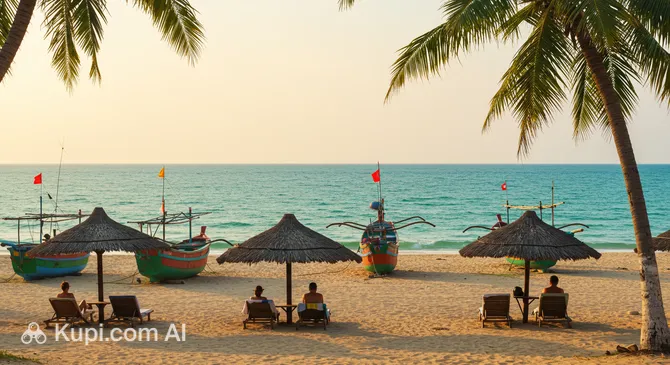
Of course, you can't talk about Mui Ne without mentioning its beaches. Mui Ne Beach is a long strip of golden sand washed by the warm waters of the South China Sea. It is a great place for sunbathing, swimming, and, most importantly, water sports. Thanks to the constant winds, Mui Ne has become a mecca for kitesurfers and windsurfers from all over the world. Many hotels, restaurants, and water sports schools are located along the beach.

Mui Ne Beach. Illustration.
Source: Kupi.com AI

Traveler photos:

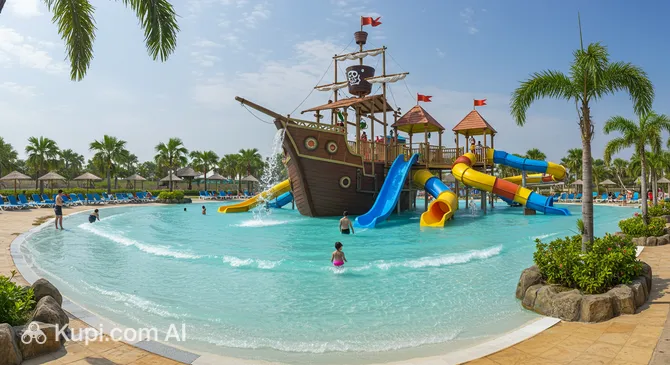
For a family vacation or just a fun time, the Mirage Water Park Mui Ne is a perfect choice. It features various water slides, pools for adults and children, and relaxation areas. It is a wonderful opportunity to cool off on a hot day and get a boost of positive emotions, especially if you are traveling with children.

Mirage Water Park Mui Ne. Illustration.
Source: Kupi.com AI

Traveler photos:

Another scenic spot is Hon Rom Beach. It is located a bit away from the main tourist center and offers a more secluded atmosphere. This beach is famous for its beautiful scenery, clear water, and peaceful setting, making it ideal for those seeking silence and relaxation.

Local Cuisine

The gastronomic scene in Mui Ne is a true paradise for seafood lovers. Thanks to its coastal location, the town is famous for its fresh seafood, which arrives daily at local markets and numerous cafes. Here you can enjoy a variety of fish, squid, shrimp, crabs, and even try exotic sea urchins prepared in many different ways.

Be sure to try Mui Ne's signature dishes. Start with "lau tha"—a flavorful seafood hot pot that will warm you up and provide an unforgettable taste experience. Don't miss out on grilled scallops with garlic and herbs—a simple yet incredibly delicious dish. Of course, it's worth trying the traditional Vietnamese seafood pho, crispy "banh khoai" pancakes stuffed with shrimp and pork, as well as the local variation of the famous "banh mi" baguette, which is often prepared here with fresh seafood and savory sauces.

Food culture in Mui Ne is closely linked to street food and lively markets. Along the promenade, you'll find many stalls offering mouth-watering grilled squid, octopus skewers, and sweet rice cakes. In the morning, local markets turn into a real gastronomic festival, where the aromas of fresh spices, herbs, and, of course, the sea create a unique atmosphere. This is a great place to observe local life and try something authentic.

Among local drinks, the refreshing sugarcane juice is particularly popular, perfectly quenching thirst on a hot day. Also, be sure to try the variety of fruit smoothies made from succulent local mangoes, pineapples, and dragon fruits. For those who want to dive deeper into the local culinary tradition, pay attention to the fermented fish sauce "nuoc mam"—the region's trademark, which adds a unique flavor to many Vietnamese dishes.

Travel Tips

Planning a trip to sunny Mui Ne? Great choice! To ensure your journey through this charming Vietnamese resort goes smoothly and leaves only pleasant impressions, we've prepared a few practical tips.

  1. Clothing and Essentials: Mui Ne has a tropical climate, so bring light, breathable clothing made of natural fabrics. Swimsuits, high SPF sunscreen, a hat, and sunglasses are essential. For walking on sand dunes and beaches, sandals or flip-flops are ideal. While Mui Ne is primarily about beach holidays, if you decide to visit local temples outside the area, bring clothing that covers your shoulders and knees. Don't forget a universal power adapter for your electronics.
  2. Transportation: The most popular way to get around Mui Ne is by renting a scooter or motorbike, which gives you the freedom to explore the surroundings. However, be careful on the roads and ensure you have relevant experience and, preferably, an international driving permit. Taxis and motorcycle taxis (xe om) are also available; it's better to agree on the price beforehand or use ride-hailing apps like Grab. For short distances along the main tourist street, you can get around on foot or by bicycle.
  3. Finances: The local currency is the Vietnamese Dong (VND). You can exchange money at banks in Phan Thiet (the nearest major city) or at exchange offices and some hotels in Mui Ne itself, though the rate might be less favorable. Credit cards (Visa, Mastercard) are accepted in most hotels, restaurants, and larger shops. However, for purchases at markets, small cafes, and from street vendors, always have cash on hand. ATMs are available, but it's better to withdraw money from ATMs of major banks. Tipping in Vietnam is not mandatory but always appreciated for good service (5-10% in restaurants or rounding up the bill).
  4. Health and Safety: Mui Ne has pharmacies with basic medications, but staff may not always speak English. It's recommended to carry a small first-aid kit with necessary medicines. For serious medical assistance, you may need to go to clinics in Phan Thiet. Be sure to get travel insurance before your trip. Mui Ne is considered a fairly safe resort, but watch out for petty theft on beaches and in crowded places. Do not leave valuables unattended. Be careful when renting scooters and always wear a helmet.
  5. Communication: The official language is Vietnamese. In Mui Ne's tourist areas (hotels, restaurants, travel agencies), many people speak English, but knowing a few phrases in Vietnamese (e.g., "Xin chào" – hello, "Cảm ơn" – thank you) will be appreciated by the locals. Mobile connection and internet are of good quality; a SIM card with a favorable plan can be bought upon arrival or at local shops. Wi-Fi is available in most hotels and cafes.
  6. Local Etiquette: The Vietnamese are friendly and hospitable people. A greeting is usually accompanied by a slight nod and a smile. When visiting markets, it's customary to haggle, but do so politely and with a smile. Avoid overly revealing clothing outside of the beach. When photographing locals, especially elderly people or children, always ask for permission.
  7. What to Avoid: Avoid raising your voice or showing aggression in public; in Asian culture, it’s important to "save face." Also, try not to point at people or objects with your foot, as this is considered impolite. Be careful when crossing the road, as traffic can be chaotic.
  8. Special Tip for Mui Ne: Be sure to visit the famous sand dunes (Red and White) at sunrise or sunset—this will not only save you from the daytime heat but also provide incredible views and photos. Mui Ne is also a world capital for kitesurfing and windsurfing, especially during the windy season (November to March). If you've always dreamed of trying, the conditions here are perfect!

We hope these tips help you better prepare for your trip and get the most out of your stay in Mui Ne. We wish you an unforgettable holiday in Vietnam!

Entertainment & Nightlife

When the sun sets over the South China Sea, Mui Ne transforms, offering tourists various options for evening and night recreation. Although this place is better known for its relaxed beach style than for noisy metropolitan clubs, there are definitely places to have a good time after dark. The nightlife in Mui Ne centers around cozy bars, restaurants with live music, and beach parties that create a laid-back atmosphere.

The main artery of Mui Ne's nightlife is Nguyen Dinh Chieu Street, which stretches along the coast. This is where most restaurants, bars, and cafes are located. In the evening, the street comes alive: venues open their doors, music plays, and tourists and locals stroll around looking for a place for dinner or a cocktail. You won't find massive nightclubs here, but you can enjoy pleasant company in one of the many beach bars where you can sit right on the sand, listening to the sound of the waves.

The evening atmosphere in Mui Ne is very casual. There is no dress code as such—beachwear or comfortable casual clothes are appropriate almost everywhere. The crowd is mixed: from surfers and backpackers to couples and tourists looking for a quiet getaway. Many establishments offer happy hours for cocktails, especially at sunset. Some restaurants and bars host live music nights, ranging from Vietnamese pop to covers of international hits. Many resorts, such as Muine Bay Resort or Pandanus Resort, also offer evening programs for their guests or have cozy bars on-site where you can enjoy drinks in a pleasant setting.

Muine Bay Resort. Illustration.
Source: Kupi.com AI

Traveler photos:

As for practical tips, most bars start to liven up after 8:00 PM or 9:00 PM and stay open until midnight or slightly later. Prices in Mui Ne are quite budget-friendly: a cocktail in a bar will cost on average between 80,000 and 150,000 VND. Getting around at night is most convenient by taxi or motorcycle taxi (xe om). Always agree on the price of the trip in advance if it is not a metered taxi.

Mui Ne is generally considered a safe place for evening walks, especially along the main Nguyen Dinh Chieu Street. However, as with anywhere, you should take basic precautions: don't leave your belongings unattended and avoid poorly lit, deserted areas. You can call a taxi through your hotel reception or simply hail one on the street—official taxis are usually green or white and are equipped with meters.

During the day, Mui Ne also offers plenty of entertainment. Families with children can visit Mirage Water Park Mui Ne or stop by Mango Beach Zoo. Nature lovers will appreciate the famous Red Sand Dunes, especially at sunset, or spend time on one of the beautiful beaches, such as Mui Ne Beach or Hon Rom Beach. While Mui Ne lacks large theaters or traditional world-class museums, its charm lies in its natural beauty and relaxing atmosphere.

Parks & Museums

Mui Ne is primarily a resort famous for its unique natural landscapes, which take the place of traditional urban parks. While there aren't many classic museums here, the cultural heritage and local flavor can be felt through exploring historical sites and daily life.

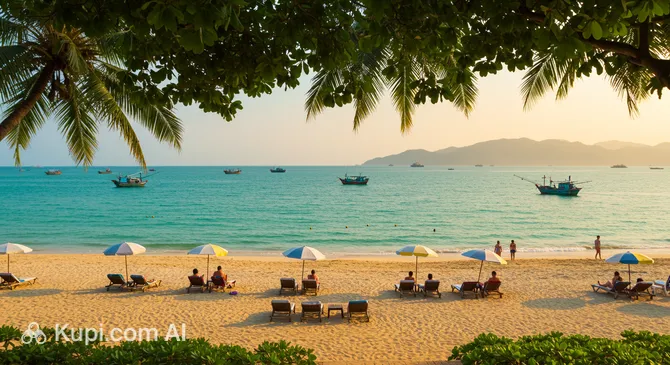
Instead of the usual parks, Mui Ne invites you to enjoy its famous sand dunes. One of the most impressive spots is the Red Sand Dunes. These Martian-like landscapes are especially beautiful at sunrise or sunset and are also popular for sandboarding. Another iconic natural formation is the White Dunes, which are more extensive and offer ATV rides. Of course, the main relaxation zones are the beaches. The spacious Mui Ne Beach is the hub for water sports enthusiasts, particularly kitesurfing and windsurfing. For a quieter getaway, Hon Rom Beach is ideal, known for its scenic bay and fewer crowds.

Hon Rom Beach. Illustration.
Source: Kupi.com AI

Traveler photos:

Regarding museums in the traditional sense, there are almost none in Mui Ne. Cultural immersion here happens differently. To learn about the region's history, it's worth visiting the Po Sah Inu Cham Towers located nearby. These ancient structures are an important monument of Cham culture and architecture, offering a beautiful view of the surroundings.

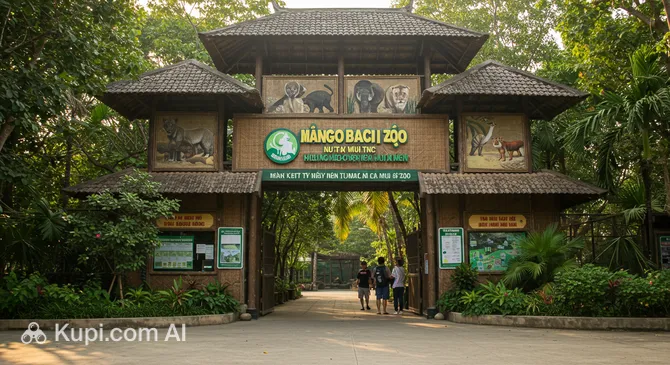
For family leisure and meeting local fauna, you can visit the Mango Beach Zoo. It’s a pleasant place for a stroll, featuring various animals and birds. If you’re traveling with children or just want to have some fun, check out the Mirage Water Park Mui Ne, which offers a variety of water attractions.

Mango Beach Zoo. Illustration.
Source: Kupi.com AI

Traveler photos:

To get a deeper understanding of local life, visit the Mui Ne fishing village early in the morning. You’ll see fishermen returning from their night catch and sorting fish and seafood—a vibrant and authentic sight that lets you touch the real life of the resort, hidden from the eyes of most tourists.

Getting Around

Public transportation in Mui Ne is not as extensive as in major cities, due to its nature as a resort and its elongated structure along the coast. However, you can move around this popular holiday destination in several ways, choosing the one most convenient for you.

The main form of public transport available to tourists is local buses. Most commonly, this is Bus No. 1, which runs between Phan Thiet and Mui Ne and along the main street of the resort area, Nguyen Dinh Chieu. Buses run quite frequently during the day, usually from early morning (around 6:00 AM) until early evening (around 6:00–7:00 PM), with intervals that can vary. Fares are paid in cash to the conductor directly on the bus; the cost is usually low, starting from a few thousand dong (e.g., 10,000–20,000 VND depending on the distance). This is an economical way to reach various beaches, shops, or cafes located along the coast.

In addition to buses, motorcycle taxis (xe om) are very common in Mui Ne. They can be found almost everywhere. The cost of a trip should be negotiated with the driver in advance, as there are no fixed rates; for example, a short trip around the resort area might cost between 20,000 and 50,000 VND, with longer trips costing more. Always clarify the price before starting your journey. A motorcycle taxi is a fast way to get to your destination, especially if you are traveling alone or as a pair.

For more comfortable trips, especially for long distances or with luggage, you can use taxi services. Mui Ne has official taxi companies with metered cars (such as Mai Linh and Vinasun) as well as private drivers. It is recommended to use official taxis or agree on the cost of the trip with a private driver beforehand to avoid misunderstandings. Using the Grab mobile app to order both cars and motorcycle taxis is also popular, often providing more predictable pricing and convenience.

The most popular alternative to public transport among tourists is renting motorbikes (scooters). Rental points are found at every turn. This provides maximum freedom of movement and the opportunity to explore the surroundings at your own pace. When renting, make sure you have a helmet and check the technical condition of the bike. You can also rent a bicycle for leisurely rides over short distances.

It’s worth noting that Mui Ne has no metro, trams, or trolleybuses. The focus is primarily on bus services and individual modes of transport. When planning your movements, consider the length of the resort area and choose the method that best suits your needs and budget.

Accommodation

In Mui Ne, travelers will find a variety of accommodation options to suit every taste and budget. Choices range from budget-friendly guesthouses and hostels, popular among backpackers, to comfortable mid-range hotels and luxury resort complexes with their own pools, spas, and direct beach access. Apartment and villa rentals are also available, which can be a convenient option for families or groups of friends.

Most hotels, resorts, and guesthouses are located along the main coastal road, Nguyen Dinh Chieu Street, which stretches for many kilometers. The central part of this area, often called Ham Tien, offers the most vibrant atmosphere with easy access to numerous restaurants, cafes, bars, and shops. Areas located further from the center tend to be quieter and more secluded, perfect for those seeking a peaceful getaway.

Among the popular accommodation options with good reviews are resort hotels such as Muine Bay Resort and Pandanus Resort. They offer guests a high level of service and a wide range of amenities for a comfortable stay.

Muine Bay Resort. Illustration.
Source: Kupi.com AI

Traveler photos:

Regarding price range, you can find both very budget options and luxury accommodations in Mui Ne. In general, prices are considered affordable compared to many other popular resorts. You can book accommodation through well-known international online platforms, directly on hotel websites, or upon arrival—though the latter is less predictable, especially during peak season. It is highly recommended to book your accommodation in advance if your trip falls during the high tourist season (usually December to April) or during national holidays to guarantee the best selection and prices.

Nearby Cities

For those looking to explore the surroundings, Mui Ne serves as an excellent starting point for day trips to several interesting nearby locations:

Right next to Mui Ne is the city of Phan Thiet, the administrative center of Binh Thuan province. It is a busy port city where you can see colorful fishing boats, visit local markets, learn about Cham culture at the Po Sah Inu Towers, or stop by the Van Thuy Tu whale temple. Phan Thiet offers an authentic look at local life and culture.

For a change of scenery and cooler air, it's worth heading to Da Lat, located in the mountains. This charming city, known as the "City of Eternal Spring," attracts travelers with its flower gardens, lakes, waterfalls, and French colonial architecture. The trip will take longer, but the picturesque landscapes and unique atmosphere of Da Lat are well worth it.

Another interesting option for a day trip is the coastal city of Vung Tau. It is popular for its beaches, such as Front Beach and Back Beach, the giant Christ the King statue offering panoramic views, and an old lighthouse. Vung Tau offers a combination of beach relaxation and cultural attractions, making it a popular holiday spot for both locals and tourists.

CityPopulationDistance
Ap Phu Hai12 62413 km
Phan Thiet299 68020 km
Phan Ri Cua45 80541 km
La Gi112 55865 km
Di Linh27 64575 km

These nearby destinations provide a more complete picture of the region's diverse culture and landscapes, complementing the experience of a holiday in Mui Ne.

Shopping & Souvenirs

Shopping in Mui Ne offers tourists colorful local goods and souvenirs rather than large shopping malls. You won't find massive malls here like in Vietnam's major cities, but you can purchase interesting keepsakes and enjoy the atmosphere of local markets and small shops.

The main shopping activity in Mui Ne is concentrated along the main Nguyen Dinh Chieu Street, which runs parallel to the coast. Here you'll find many small shops, souvenir stalls, pharmacies, mini-marts, and boutiques offering beachwear, jewelry, local crafts, and food items. This is the main artery for strolling and hunting for purchases.

Mui Ne has no large shopping centers in the conventional sense. Shopping here is more decentralized and focused on small private shops and markets. If you're looking for specific branded items, it's better to save those purchases for visits to larger cities like Ho Chi Minh City or Hanoi.

Markets hold a special place in Mui Ne's shopping culture. Ham Tien Market is a lively place where you can find fresh fruit, vegetables, seafood, spices, as well as some household items and inexpensive clothing. Early in the morning, it's worth visiting the Mui Ne Fishing Village, where you can not only see the fishermen returning with their catch but also buy the freshest seafood. While this is more of a colorful spectacle than a traditional tourist market, it’s where you can feel the true atmosphere of the region.

From Mui Ne and its surroundings, tourists often bring back pearl jewelry (be careful when choosing and check for authenticity), souvenirs made from shells and coconut wood, and local textiles, including silk products. The famous Vietnamese fish sauce (nuoc mam), especially from the neighboring city of Phan Thiet, is very popular and considered one of the best in the country. You can also buy local coffee, tea, dried fruits, seafood, and traditional non la conical hats.

Most shops in Mui Ne are open from approximately 8:00–9:00 AM to 8:00–9:00 PM. Markets, especially food markets, start their work very early in the morning. For payment in small shops and at markets, cash in Vietnamese Dong (VND) is preferred. Credit cards may be accepted in some hotels, restaurants, and larger souvenir shops, but it’s best to always have enough local currency with you. ATMs are available in the Mui Ne tourist zone.

Tax-free shopping exists in Vietnam, but it generally applies to large purchases made at authorized stores in major cities and international airports. In Mui Ne, with its focus on small shops and souvenir stalls, this service is less common and unlikely to be relevant for most purchases. If you make a significant purchase in a larger store, it's worth checking with the seller about the possibility of a Tax-Free refund.

Have you reached the end of the page?

So the route has been studied inside and out