Support

Dinh Co Temple

About

Dinh Co Temple is an iconic historical and religious structure located in the coastal city of Vung Tau, in Vietnam. This temple is not just an architectural landmark but also an important spiritual center, attracting both locals and curious travelers who wish to connect with the history and culture of the region.
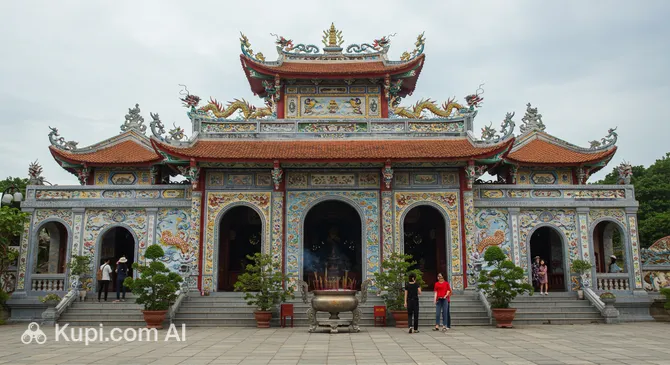
Dinh Co Temple. Illustration.
Source: Kupi.com AI

Traveler photos:

Built during the reign of the Minh Mang dynasty, between 1820 and 1840, Dinh Co Temple is dedicated to the founders of Vung Tau. Its creation was an act of reverence and gratitude toward those who laid the first stones of the settlement, which eventually transformed into a bustling port city. A visit to the temple allows for a deeper understanding of Vung Tau's historical roots and the importance of traditions to the local population.

The architecture of Dinh Co Temple is designed in a traditional Vietnamese style, reflecting the cultural and aesthetic features of the era of its construction. Located in a picturesque part of a city that itself has a rich history dating back to the 14th-15th centuries—when three small fishing villages stood in its place—the temple offers visitors not only spiritual peace but also the opportunity to enjoy the beauty of the surrounding landscapes. This is a place where history intertwines harmoniously with natural beauty.

Contacts

For the latest information on Dinh Co Temple's opening hours and potential guided tours, it is recommended to check the official tourism resources of Vung Tau or clarify the details directly on-site. Generally, the temple is easily accessible from anywhere in the city via local transport or taxi, and its exact location can be found on Vung Tau tourist maps.

How to contactContact
Address96PM+JMP, Đ. Hai Bà Trưng, TT. Long Hải, Long Điền, Bà Rịa - Vũng Tàu, Vietnam

What to Do

Visiting Dinh Co Temple is a unique opportunity to touch the heart of Vietnamese spirituality and culture. Here, you can closely examine the traditional Vietnamese architecture characteristic of religious buildings. Since the temple is an active place of worship and reverence for the city's founders, visitors can see various ritual objects, colorful offerings, and other attributes of traditional Vietnamese cults that create a special atmosphere of reverence.

Inside and around the temple, you will have plenty of reasons for observation and discovery. Study the exquisite architectural details that tell stories of the past, and don't forget to take commemorative photos of this authentic place. Immerse yourself in the calm and peaceful atmosphere of the temple, which offers an escape from the city's hustle and bustle. Furthermore, from the temple grounds, as is often the case with Vietnamese shrines, there may be a picturesque view of the Vung Tau surroundings, adding another dimension to your visit.

Getting There

Getting to Dinh Co Temple is quite simple, especially if your journey begins in Ho Chi Minh City, the largest city in Vietnam, located approximately 125 kilometers northwest of Vung Tau. The most popular way to travel from Ho Chi Minh City to Vung Tau is by bus. The bus ride typically takes from 2 to 3 hours, depending on traffic conditions. You can also consider renting a car, which offers more flexibility for planning your route and making stops along the way.

Upon arrival in the city of Vung Tau, Dinh Co Temple itself is easily reached via local transport. Taxis are at your service, providing a convenient and relatively inexpensive way to get around the city. A more authentic and budget-friendly option is the motorcycle taxi (xe om), a popular mode of transport in Vietnam. If you prefer independence, you can rent a scooter or bicycle and ride to the temple while enjoying the views of Vung Tau. The temple is a well-known landmark, so locals and taxi drivers will have no trouble showing you the way.

Nearest city: Vung Tau

History & Facts

Dinh Co Temple is not just a place of worship, but a living witness to the history of Vung Tau. Its construction dates back to the reign of Emperor Minh Mang, between 1820 and 1840—a period marked by the active development of this coastal region of Vietnam. The temple was built as a sign of deep respect for the city's founders, and since then, it has held a special place in the hearts of locals, serving as an important cultural and historical landmark.

The history of Vung Tau itself goes back much further, to the 14th-15th centuries, when three small fishing villages were located on this site. Gradually, they grew, transforming into a significant port city. Thus, Dinh Co Temple appeared during a mature period of Vung Tau's history, becoming a symbol of the continuity of generations and the careful preservation of the past. It serves as a bridge connecting the early settlements with the modern face of the city.

The reign of Emperor Minh Mang, during which the temple was founded, was an important stage in the history of Vietnam. Dinh Co Temple became a reflection of the religious traditions and beliefs of the local population, carefully preserving the region's cultural heritage for nearly two centuries. Today, it remains not only a place of worship but also a reminder of the rich history and spiritual roots of Vung Tau, attracting those who seek to understand the soul of this unique Vietnamese city.

Time Needed

To explore Dinh Co Temple in Vung Tau, most visitors usually need from 1 to 2 hours. This time is generally sufficient to tour the main grounds of the temple, admire its traditional Vietnamese-style architecture, examine the interior decor, and soak in the atmosphere of this revered site.

During this time, you can take a leisurely stroll through the complex, pay attention to the detailed carvings and decorations, take commemorative photos, and perhaps observe the locals who come here for prayer or offerings. If you decide to spend more time in silence, meditating or simply enjoying the tranquility, your visit may last a bit longer.

However, if you are particularly interested in the history and culture of Vietnam or religious traditions and wish to study each element of the temple more thoughtfully or wait for a special event (if one is taking place), it's worth allocating a bit more time. Overall, Dinh Co Temple is a fairly compact attraction that can be comfortably explored without dedicating an entire day to it.

Working Hours

Dinh Co Temple is generally open to visitors throughout the day, but exact opening hours may vary. Typically, such religious sites in Vietnam are accessible from early morning until late evening. To get the most up-to-date information on opening hours, it is recommended to check the official website of the Vung Tau tourism board, if available, or clarify the information on-site upon arrival—for example, at your hotel or with local guides. The temple is likely open year-round, as it is an important place of worship.

Regarding ticket bookings, for individual visits to temples of this type in Vietnam, advance registration or ticket purchases are usually not required; entry is often free or for a nominal fee. However, if you plan to visit the temple as part of a large tour group or during major religious holidays when a surge of pilgrims is expected, it is better to check the visiting conditions in advance. In any case, verifying current information before your visit will help you plan your trip in the best possible way.

4:00 – 17:00

Nearby

A visit to Dinh Co Temple will certainly be a highlight of your journey to Vung Tau. However, to make your experience even more enriching and complete, it is worth exploring other interesting places nearby. Studying the surroundings will allow you to dive deeper into the atmosphere of this coastal city of Vietnam and discover new facets of its culture and daily life.

Near Dinh Co Temple and in its vicinity, you will find other attractions that can complement your impressions. These can range from natural beauty to other cultural or entertainment sites. Below is a list of some of them, along with approximate distances.

NameDistance
Long Cung Beach11.8 km
Tan Long Hung Restaurant12.8 km
Ba Ria Square Park13.4 km
Vias Hotel Vung Tau15 km
Ba Ria City Gate15 km
The Malibu Hotel15.8 km
Vung Tau War Heroes Monument16 km

Have you reached the end of the page?

So the route has been studied inside and out