Support

Independence Palace

About

Independence Palace, also known as Reunification Palace (Dinh Thống Nhất), is an iconic historical and architectural landmark located in the heart of Ho Chi Minh City, Vietnam. The building is a unique symbol of the city and is a must-visit for every traveler interested in history and culture.

The palace is a striking example of 1960s architecture, harmoniously blending contemporary trends of that time with traditional Eastern motifs. It was designed by the Vietnamese architect Ngo Viet Thu. The building is set within extensive parkland, creating an impressive contrast with the bustling urban development surrounding it.
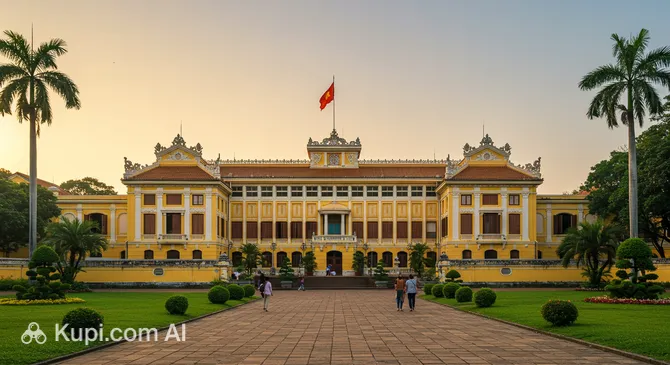
Independence Palace. Illustration.
Source: Kupi.com AI

Traveler photos:

Originally built as the official residence of the President of South Vietnam, the Independence Palace witnessed many key events in the country's history. Today, its doors are open to everyone, and it has become one of the city's most popular tourist attractions. Visitors can explore spacious reception halls, offices, and descend into the underground bunker with its command center to immerse themselves in the atmosphere of the past and better understand important chapters of Vietnamese history.

Contacts

To plan your visit to the Independence Palace, you can use the following contact details. It is recommended to check the current opening hours and ticket prices directly before your visit, for example, by phone.

How to contactContact
AddressBen Thanh, District 1, Ho Chi Minh City, Vietnam
Phone number+84 28 3822 3652
Websitewww.dinhdoclap.gov.vn

What to Do

Visiting the Independence Palace is an opportunity to literally touch the history of Vietnam. Visitors can move freely around its grounds, exploring numerous halls, offices, and historical exhibits. Of particular interest are the original interiors, furniture, and equipment from the 1960s and 1970s, which have been carefully preserved, allowing guests to feel the atmosphere of that era. You can see the president's office, reception halls, and even private apartments.

One of the most exciting parts of the tour is descending into the underground bunker located beneath the main building. This area housed command posts and shelters equipped with old maps and communication equipment. This part of the palace leaves a strong impression, clearly demonstrating the strategic role the site played. Walking through these corridors allows for a deeper understanding of the tense atmosphere of key historical moments.

In addition to self-guided tours, the palace grounds regularly host themed exhibitions and various cultural events. To get the most out of your visit, you can use the services of a guide. Guided tours will help you not miss important details and hear fascinating facts about the palace's role in the country's history. There is a helipad on the roof of the building offering a panoramic view of Ho Chi Minh City, and in the park, you can see military equipment, including the tank that became a symbol of the end of the war.

Getting There

Independence Palace is conveniently located in the heart of Ho Chi Minh City, in District 1, at 135 Nam Ky Khoi Nghia Street. This central location makes it easily accessible for tourists from any part of the city. Additionally, the palace is within walking distance of other key attractions such as Saigon Notre Dame Cathedral and the Central Post Office, allowing you to combine your visit with a stroll through the historic center. You can walk to the palace from the tourist district or Ben Thanh Market in just 15–20 minutes.

For those who prefer comfort, the easiest way to reach the palace is by taxi or motorbike taxi, which can be easily booked through popular mobile apps in Asia. A trip from most parts of the city will be quick and affordable. You can also use public transport—several city bus routes pass near the palace. For tourists wishing to see as much as possible in one day, the Hop-On Hop-Off sightseeing bus is an excellent choice, as it stops at all the city's main attractions, including Independence Palace.

Nearest city: Ho Chi Minh City

History & Facts

The history of Independence Palace dates back to the French colonial era, when Norodom Palace was built on its site. This building served as the residence for the French Governor-General and was a symbol of power in the region. Thus, the territory where the famous palace stands today was originally the center of administrative life in colonial Saigon.

The modern building was the result of dramatic events. In 1962, the old palace was heavily damaged during an airstrike, leading to the decision to demolish it and build a new one. The project was entrusted to the outstanding Vietnamese architect Ngo Viet Thu. Construction lasted from 1962 to 1966, resulting in a structure that became a striking example of modernist architecture with national motifs.

The most significant historical fact associated with the palace occurred on April 30, 1975. On this day, a North Vietnamese army tank crashed through the palace gates, marking the end of the conflict and becoming a symbol of the country's unification. It is because of this event that the palace received its second name—Reunification Palace, by which it is just as well-known as its primary one.

Time Needed

When planning a visit to the Independence Palace, it is worth setting aside 1.5 to 2.5 hours for its exploration. This time is usually sufficient to comfortably see all the main exhibits, walk through the adjacent park, and explore the famous underground rooms. Such a timeframe will give you a complete picture of this important historical site.

During the allotted time, you will have enough time to visit several floors of the palace itself, including the reception rooms, former presidential apartments, and offices where the authentic 1960s-70s atmosphere has been preserved. Special attention should be paid to the underground bunker with the command center, which will take up a significant portion of your time. Also, don't forget to set aside time for a walk in the park, where military equipment is displayed, and to visit the rooftop helipad. If you plan to delve deeper into the history and use an audio guide (available in Russian) or study all the information stands in detail, you should budget a bit more time—about 2–3 hours.

Working Hours

Independence Palace is open for visits year-round, making it easy to include in your Ho Chi Minh City travel itinerary. Generally, it is open to guests daily from 8:00 to 17:00; however, keep in mind the lunch break, which usually lasts from about 11:00 to 13:00. Ticket sales at the box office end earlier, around 15:30.

For individual visits, you usually don't need to book tickets in advance; they can be purchased directly at the ticket office. Nevertheless, it is strongly recommended to check the current operating schedule just before your visit, especially if it falls on public holidays, as the schedule may change. It is best to check the information by phone to avoid any inconvenience and plan your time effectively.

8:00 – 15:30

Nearby

A visit to the Independence Palace offers an excellent opportunity for further exploration of Ho Chi Minh City, as many of the city's iconic landmarks are located in the immediate vicinity. The palace's central location makes it an ideal starting point for a walking tour of the historic center. Exploring the surrounding area will allow you not only to dive deeper into the history of Vietnam but also to feel the dynamic rhythm of modern life in this amazing metropolis.

Just a few minutes' walk away, you will find famous architectural monuments, bustling markets, and important museums. This concentration of attractions makes it easy to plan a full one-day itinerary, harmoniously combining visits to historical relics with culinary discoveries and shopping.

NameDistance
Ben Nghe Street Food Market0.3 km
Propaganda Vietnamese Bistro0.4 km
War Remnants Museum0.4 km
Ben Thanh Pizza Restaurant0.5 km
Notre-Dame Cathedral Basilica of Saigon0.5 km
Trong Dong Theater0.6 km
Ben Thanh Market0.6 km

Have you reached the end of the page?

So the route has been studied inside and out