Support

Ho Chi Minh City

About

Ho Chi Minh City is a high-octane metropolis of commerce and culture that drives the country forward with pulsating energy. Often still referred to by its former name, Saigon, this vibrant city offers a sensory overload of sights, sounds, and smells, seamlessly blending traditional heritage with modern dynamism.

Located in the southeastern region of Vietnam, the city sits along the Saigon River and serves as the nation's economic heart. It is the most populous city in the country, with a staggering population of over 15 million people. The climate is tropical, characterized by distinct wet and dry seasons, ensuring warm weather for travelers year-round.

Ho Chi Minh City. Source: Kupi.Binoculars

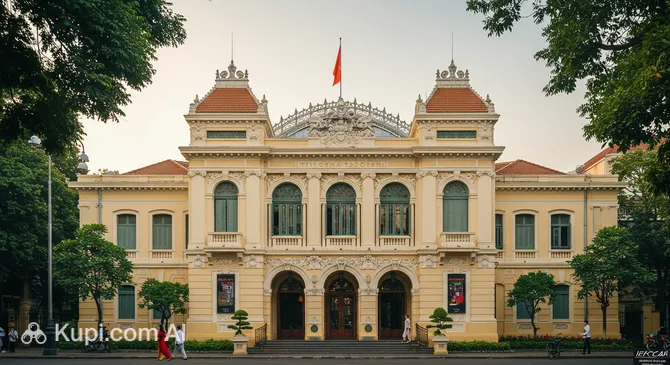
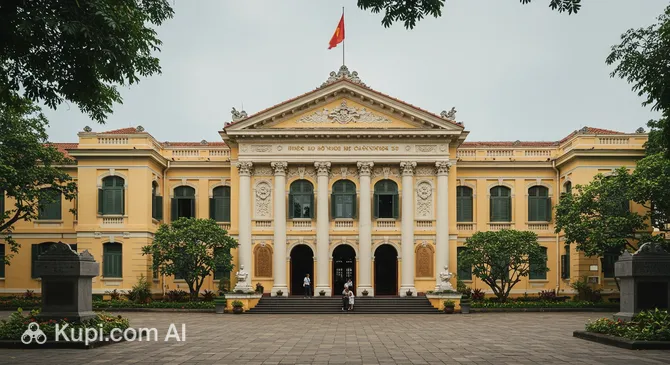
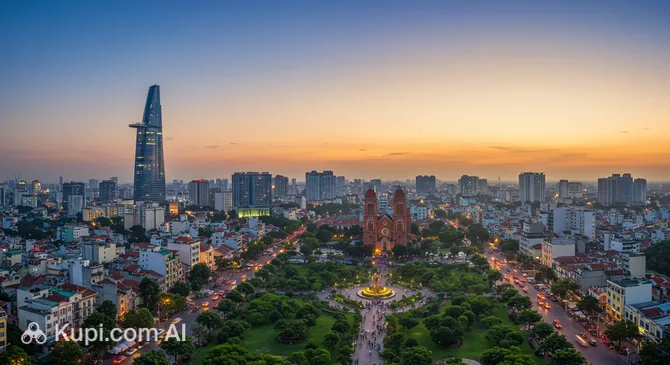
The urban landscape is a testament to the complex and fascinating history of Ho Chi Minh City. Visitors can wander through districts adorned with timeless French colonial architecture, such as the majestic Notre Dame Cathedral Basilica of Saigon and the historic Central Post Office. These landmarks stand in striking contrast to the sleek skyscrapers that define the modern skyline, creating a unique visual dialogue between the past and the future.

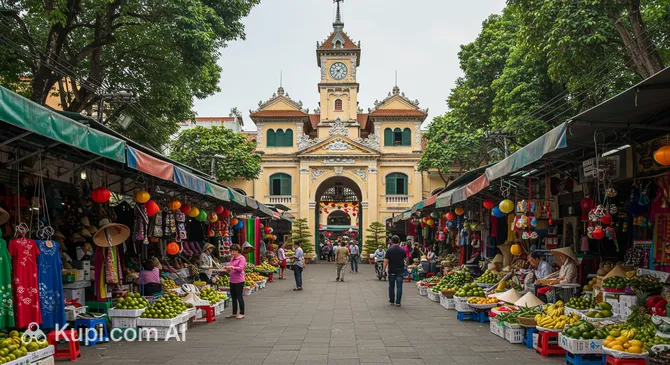
Beyond its architecture, the city is famous for its incredible street life. The iconic Ben Thanh Market is a must-visit destination where tourists can shop for local handicrafts and taste authentic Vietnamese cuisine. Whether you are sipping strong iced coffee at a sidewalk cafe or navigating the bustling streets on a scooter tour, Ho Chi Minh City promises an unforgettable adventure for every traveler.

Weather Overview

Ho Chi Minh City experiences a tropical climate defined by consistent warmth and two distinct seasons. Travelers can generally expect hot conditions year-round, with average temperatures rarely dropping below 26°C, though the humidity and rainfall patterns vary significantly depending on the time of year.

The dry season, spanning roughly from December to April, is often considered the most comfortable time for sightseeing. During these months, rainfall is minimal, particularly in February which records the fewest wet days. However, the heat builds up steadily, peaking in April when average temperatures reach around 30°C with highs climbing up to 34°C. For a more detailed breakdown of conditions for your trip, you can consult the guide to the weather in Ho Chi Minh City.

From May to November, the city transitions into the rainy season. While the air remains warm, the frequency of rain increases dramatically, with July seeing precipitation on nearly every day of the month. Despite the high number of wet days, the showers are often short and heavy, bringing a brief respite from the tropical heat rather than washing out entire days.

Interesting Facts

Beyond the main attractions, Ho Chi Minh City holds many fascinating secrets that reveal the depth of its character and history. From architectural curiosities to unique local habits, there is much more to this metropolis than meets the eye.
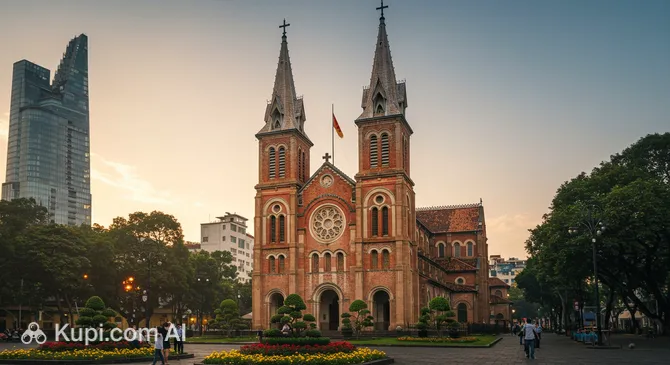
Notre-Dame Cathedral Basilica of Saigon. Source: Kupi.Binoculars
  • The iconic Notre-Dame Cathedral Basilica of Saigon is a true piece of France in Southeast Asia. Every single building material used in its construction, from the distinctive red bricks to the intricate stained glass windows, was imported directly from France in the late 19th century.

  • The city is famously known as the "motorbike capital of the world." With millions of scooters weaving through the streets daily, it is estimated that there is roughly one motorbike for every two people, creating a mesmerizing, flowing river of traffic that never seems to stop.

  • Book lovers can find a rare pedestrian sanctuary at the Ho Chi Minh City Book Street. Located on Nguyen Van Binh Street, this leafy avenue is dedicated entirely to reading culture, lined with open-air bookstores, publishing houses, and cozy cafes under the shade of ancient tamarind trees.

  • One of the most unique buildings in the city is the "Cafe Apartment" at 42 Nguyen Hue. This nine-story mid-century apartment block has been spontaneously transformed by locals into a vertical complex of independent boutique cafes, fashion shops, and coworking spaces, all visible from the walking street below.

How to Get There

As the economic powerhouse of Vietnam, the city is extremely well-connected to the rest of the world. Most international and domestic travelers arrive by air, landing directly in the heart of the metropolis. For a comprehensive guide on all transport options, including buses and trains, you can read more about how to get to Ho Chi Minh City.

The primary gateway is Tan Son Nhat International Airport (IATA: SGN), which handles the vast majority of traffic. Uniquely located within the urban area of Ho Chi Minh City, it is only about 2.5 km from the city center. Due to the city's bustling traffic, the journey by taxi or car typically takes around 25 to 30 minutes. This airport is the busiest in the country, serving millions of passengers annually with a wide range of international and domestic flights.

For those exploring the Mekong Delta region before heading to the city, the Can Tho Airport (IATA: VCA) is a viable regional option. It is not located in Ho Chi Minh City itself but in the city of Can Tho, approximately 130 km away. From there, travelers can reach Ho Chi Minh City by bus or taxi, a journey that generally takes about 3.5 to 4 hours depending on road conditions.

For clarity, here is a summary of the main airports in the region:

Airport Name City Passenger Traffic Km from City
Tan Son Nhat International Airport Ho Chi Minh City Very Large 2.5
Phnom Penh International Airport Phnom Penh Medium 210.8
Lien Khuong Airport Da Lat Medium 215.9
Can Tho Airport Can Tho Medium 129.5
Con Dao Con Dao Small 231.3

Beyond air travel, Ho Chi Minh City is a major hub for overland transport. The city is the southern terminus of the famous Reunification Express railway line, with trains arriving at Saigon Railway Station in District 3. Additionally, an extensive network of long-distance sleeper buses connects the city to destinations throughout Vietnam and neighboring Cambodia, making it easily accessible for budget-conscious travelers.

Main Attractions

Ho Chi Minh City offers a compelling mix of historical landmarks and modern marvels, providing visitors with a journey through time. From the remnants of the 20th century to the soaring heights of contemporary architecture, the city's attractions tell the story of a nation in constant evolution.

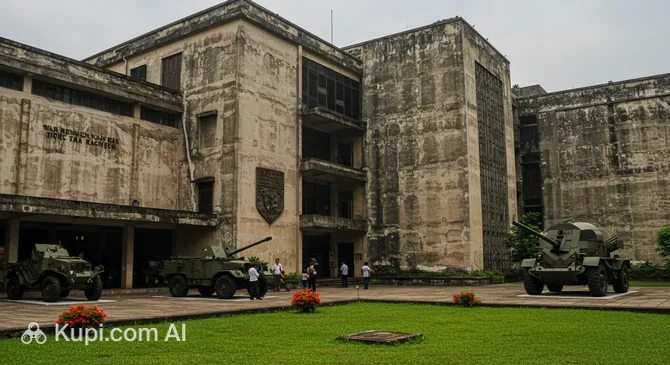
For a profound look into the country's turbulent past, the War Remnants Museum is an essential stop. This institution is one of the most visited museums in Vietnam, housing a vast collection of artifacts, photographs, and military equipment from the Vietnam War. The outdoor courtyard displays varying types of aircraft, tanks, and artillery, while the interior galleries offer a somber and educational perspective on the conflict's impact. It is a moving experience that provides deep insight into history.

War Remnants Museum. Source: Kupi.Binoculars

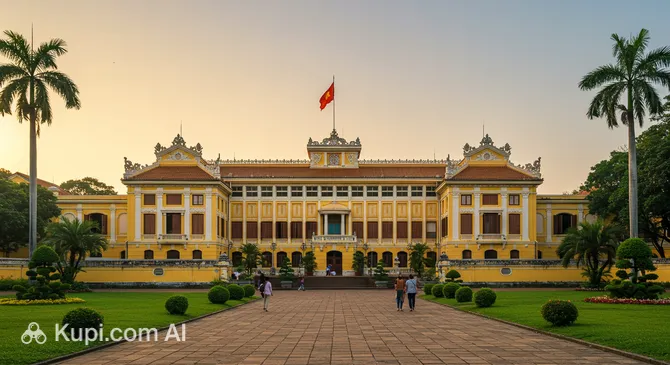
Just a short distance away stands the iconic Independence Palace, also known as the Reunification Palace. This landmark is famous for being the site where the Vietnam War effectively ended in 1975, when a tank crashed through its main gate. Today, it serves as a time capsule of 1960s architecture and design. Visitors can tour the preserved meeting rooms, the presidential living quarters, and the fascinating underground command bunkers, all of which remain largely unchanged.

Independence Palace. Source: Kupi.Binoculars

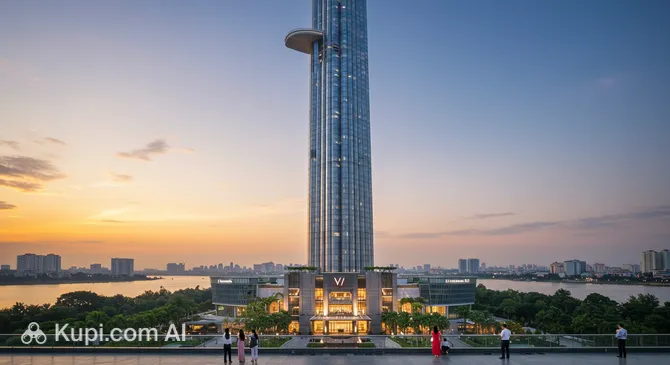
Representing the modern face of the metropolis is Landmark 81, the tallest building in Vietnam. Rising above the clouds, this skyscraper dominates the skyline and offers a stark contrast to the colonial buildings in District 1. Tourists flock here for the "Landmark 81 SkyView" observation deck, which provides breathtaking panoramic views of the city and the winding Saigon River. The complex also houses a luxury hotel, a shopping mall, and numerous high-end restaurants.

Landmark 81. Source: Kupi.Binoculars

For those seeking vibrant nightlife and local energy, Bui Vien Walking Street is the place to be. As the sun sets, this street transforms into a bustling hub of activity, lined with neon lights, bars, restaurants, and street food vendors. It is a popular gathering spot for international backpackers and locals alike, offering a sensory overload of music, performances, and the chance to socialize in a lively atmosphere.

If you prefer a quieter escape into nature, the Saigon Zoo and Botanical Gardens offers a green sanctuary in the heart of the city. Established in 1865, it is one of the oldest zoos in the world. The expansive grounds are perfect for a leisurely stroll among ancient trees, rare orchids, and various animal exhibits, making it an excellent destination for families and history enthusiasts looking to relax away from the traffic.

Local Cuisine

The culinary landscape of Ho Chi Minh City is as vibrant and chaotic as its streets. Known for its bold flavors and fresh ingredients, the local cuisine reflects the sweetness and abundance of the Mekong Delta. Unlike the salty and subtle dishes of the north or the spicy food of the central region, Saigon's food is characterized by a harmonious blend of sweet, sour, and savory notes, often accompanied by a mountain of fresh herbs.

One cannot visit the city without trying Com Tam, or "broken rice." Originally a peasant dish made from fractured rice grains, it has become a beloved staple for breakfast or lunch. It is typically served with a grilled pork chop, a steamed egg meatloaf, and pickled vegetables, all drizzled with a sweet and savory fish sauce dressing. It is the quintessential Saigon meal that fuels the city's workforce.

Another icon of the city's food scene is the Banh Mi. While found all over Vietnam, the Saigon version is particularly famous for its size and variety of fillings. These crispy baguettes are stuffed with pâté, cold cuts, roasted pork, cucumber, cilantro, and chili, creating a perfect explosion of textures and flavors. It is the ultimate street food, available at countless stalls on nearly every corner.

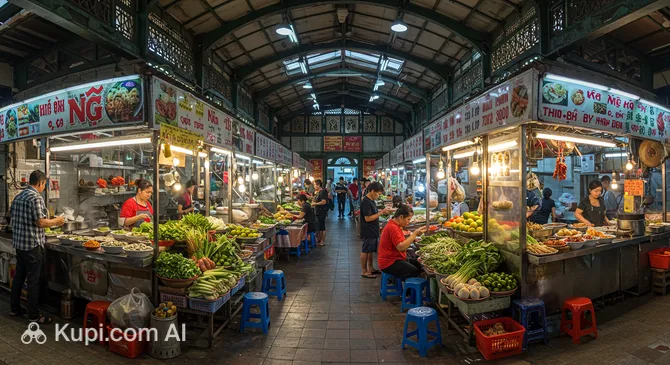
For those looking to sample a variety of dishes in one place, markets are the best destination. The famous Ben Thanh Market offers a bustling food court where you can taste everything from fresh spring rolls to sweet soups. For a slightly more modern and trendy atmosphere, the Ben Nghe Street Food Market is an excellent choice, gathering numerous vendors in a vibrant, open-air setting.

Ben Nghe Street Food Market. Source: Kupi.Binoculars

Coffee culture is also deeply ingrained in the daily life of the locals. The signature drink is Ca Phe Sua Da, an iced coffee made with strong dark roast and sweetened condensed milk. Whether enjoyed at a low plastic table on the sidewalk or in a retro-styled cafe, sipping this potent brew is a must-do experience.

Beyond street stalls, the city boasts a growing scene of restaurants that elevate traditional recipes. Places like Propaganda Vietnamese Bistro offer a creative take on Vietnamese classics in an artistic setting, allowing visitors to enjoy the local flavors in comfort. Whether you prefer fine dining or street-side snacking, Ho Chi Minh City promises a gastronomic adventure that caters to every palate.

Travel Tips

Navigating the energetic streets of Ho Chi Minh City can be an exhilarating experience, provided you come prepared for its unique rhythm and tropical environment. To help you embrace the chaos and charm of this bustling metropolis with confidence, here are some essential practical tips for your journey.

  1. Clothing and Gear: Given the tropical climate, pack lightweight, breathable fabrics like cotton or linen to stay cool in the humidity. Comfortable walking shoes are a must for exploring, though sandals are convenient for frequent stops. If you plan to visit temples or pagodas, remember to dress modestly by covering your shoulders and knees. During the rainy season (May to November), a lightweight raincoat or poncho is far more practical than an umbrella.
  2. Transportation: The most convenient way to get around is by using ride-hailing apps like Grab, which offer both car and motorbike options with fixed prices, eliminating the need to haggle. Traditional taxis are also available; stick to reputable companies like Vinasun or Mai Linh and insist on using the meter. While public buses exist, they can be challenging for first-time visitors to navigate, so ride-hailing is generally the preferred choice.
  3. Finances: The local currency is the Vietnamese Dong (VND). While credit cards are widely accepted in hotels, malls, and upscale restaurants, cash is king on the streets. You will need small denominations for street food vendors, markets, and small cafes. ATMs are plentiful across the city. Tipping is not mandatory but is increasingly appreciated in the service industry; rounding up the bill or leaving a small amount is a kind gesture.
  4. Health and Safety: Pharmacies (look for signs saying "Nhà Thuốc") are easy to find and often have English-speaking staff. Tap water is not safe for drinking; always rely on bottled or filtered water. In terms of safety, be vigilant with your belongings, especially smartphones and cameras, as drive-by snatching on motorbikes can occur. Keep your phone away from the roadside and your bag strapped diagonally across your chest.
  5. Communication: Vietnamese is the official language, but English is widely spoken in District 1 and other tourist areas. It is helpful to learn a few basic phrases like "Xin chào" (Hello) and "Cảm ơn" (Thank you). Wi-Fi is exceptionally common and usually free in almost every cafe and restaurant. For constant connectivity, purchasing a local SIM card (Viettel, Vinaphone, or Mobifone) at the airport or a convenience store is cheap and easy.
  6. Local Etiquette: The "face" concept is important in Vietnam; avoiding public conflict and maintaining a calm demeanor is crucial. When entering a local home or a religious site, always remove your shoes. Greeting locals with a smile and a slight nod is polite. If you are using chopsticks, never leave them sticking vertically into your rice bowl, as this resembles incense burning for the dead.
  7. What to Avoid: Avoid losing your temper or shouting in public, as this causes a loss of face for everyone involved and rarely resolves issues. Additionally, do not take photos of military installations or government buildings unless you are sure it is permitted, as this can lead to uncomfortable situations with authorities.
  8. The Art of Crossing the Street: Crossing the road in Ho Chi Minh City is a unique skill due to the endless flow of motorbikes. The trick is to step off the curb and walk at a steady, consistent pace. Do not run, and do not stop suddenly. The motorbike drivers will predict your movement and flow around you like water around a rock; hesitation is what causes confusion.

Armed with these tips, you are ready to dive into the vibrant life of Saigon without hesitation. Embrace the noise, taste the incredible street food, and enjoy the warmth of the local hospitality for a truly memorable Vietnamese adventure.

Entertainment & Nightlife

When the sun sets, Ho Chi Minh City sheds its business attire and transforms into a vibrant playground of lights, music, and energy. The nightlife scene here is incredibly diverse, offering everything from chaotic street parties to sophisticated rooftop lounges. Whether you are looking to sip a cheap beer on a plastic stool or enjoy a craft cocktail with a panoramic view of the skyline, this city has a spot for you.

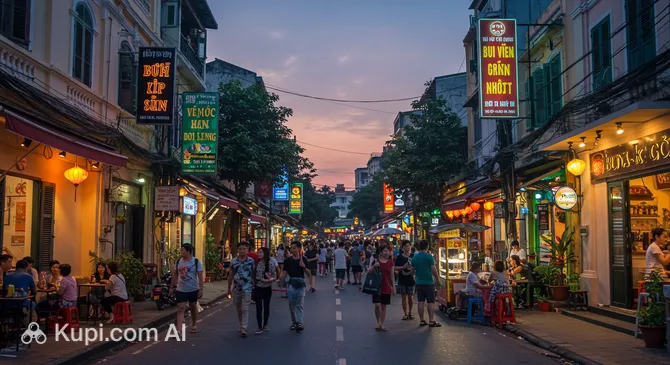
The epicenter of the action for many travelers is the famous Bui Vien Walking Street in District 1. Known as the backpacker district, this pedestrian-only zone is a sensory overload of neon signs, thumping bass, and street performers. It is the perfect place to grab a "bia hoi" (fresh beer), meet fellow travelers, and soak in the electric atmosphere that lasts until the early hours of the morning.

Bui Vien Walking Street. Source: Kupi.Binoculars

For a more local and immersive experience, karaoke is an absolute must. Singing is a beloved pastime in Vietnam, and you will find venues scattered across every district. A popular choice for a fun night out is ICOOL Karaoke, which offers private rooms with high-quality sound systems and eclectic decor. It is a fantastic way to bond with friends in a comfortable, air-conditioned environment away from the street noise.

If you prefer a relaxed evening with a view, the city's rooftop bar scene is world-class. Rising above the traffic allows you to enjoy the cool river breeze and admire the glittering cityscape. Chang Vang Rooftop is a great venue to unwind, offering a chill vibe and a front-row seat to the illuminated skyline. The dress code for rooftop venues is generally "smart casual," so it is best to leave the flip-flops at the hotel if you plan to visit these higher-end spots.

For those seeking a cultural evening, the magnificent Saigon Opera House is the premier destination. This architectural gem hosts a variety of performances, including ballet, symphony orchestras, and the renowned AO Show—a spectacular "bamboo circus" that blends acrobatics with traditional Vietnamese music. It provides a sophisticated contrast to the wild energy of the walking streets.

Saigon Opera House. Source: Kupi.Binoculars

Before the night begins, the city offers plenty of daytime entertainment options. Families can cool off at Dam Sen Water Park, an expansive complex with slides and pools, or catch a variety show at the Trong Dong Theater. These venues provide a fun break from sightseeing and are easily accessible from the city center.

Practical Tips for Nightlife:

  • Timing: Bars and clubs typically get busy after 9:00 PM, while street food spots are bustling from 7:00 PM onwards.
  • Transport: The safest and most convenient way to get around at night is by using ride-hailing apps like Grab. They are reliable and track your journey. Avoid hopping on random motorbikes late at night.
  • Safety: District 1 is generally safe for night walks, but petty theft can happen. Keep your phone in your pocket and your bag secured across your chest. Avoid holding your phone out near the roadside to prevent drive-by snatching.
  • Prices: Costs vary wildly. A beer on the street might cost 20,000 VND, while a cocktail at a sky bar can range from 200,000 VND and up.

Parks & Museums

While Ho Chi Minh City is famous for its frenetic energy and endless traffic, the city also maintains several green lungs and cultural institutions where visitors can catch their breath and delve deeper into local history. These spaces offer a distinct contrast to the busy streets, providing a glimpse into the everyday leisure habits of the residents and the nation's storied past.

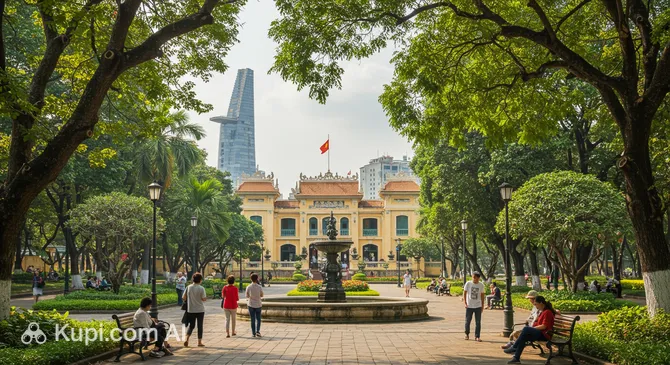
Located in the heart of District 1, April 30th Park serves as a lush, shaded corridor connecting the Notre Dame Cathedral and the Independence Palace. Named after the date of the country's reunification, this park is a favorite gathering spot for students and young people who come to play acoustic music or practice English with tourists. A walk under its canopy of tall, ancient trees offers a peaceful respite during a day of sightseeing.

April 30th Park. Source: Kupi.Binoculars

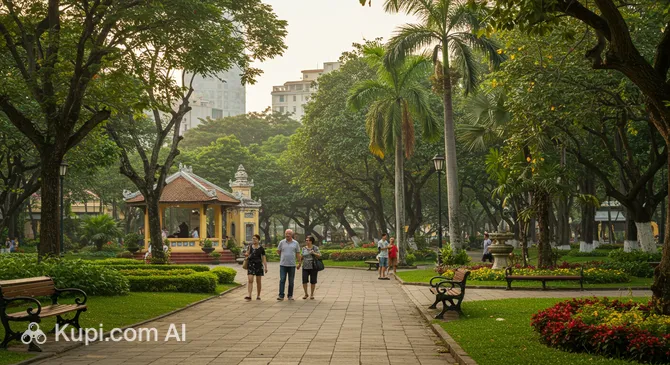
Another vital urban sanctuary is the September 23rd Park, situated conveniently near the Ben Thanh Market and the backpacker district. This long, narrow strip of greenery is a hub of community life, bustling with locals exercising, dancing, and playing badminton in the early mornings and evenings. It frequently hosts cultural festivals and outdoor markets, making it an excellent place to observe the vibrant social culture of the city.

September 23rd Park. Source: Kupi.Binoculars

For those interested in history beyond the main war-related sites, the Dragon Wharf – Ho Chi Minh Museum is a compelling destination. Perched at the junction of the Saigon River and the Ben Nghe Canal, this distinctive building blends French and Vietnamese architectural styles. It marks the historic location where the young Ho Chi Minh departed in 1911 to seek a path for national salvation. Inside, visitors can explore a rich collection of artifacts and photographs documenting his life and revolutionary journey.

Dragon Wharf – Ho Chi Minh Museum. Source: Kupi.Binoculars

To experience the city's connection to the river, a visit to Bach Dang Wharf is highly recommended. This riverside promenade has been revitalized into a modern public space with statues, gardens, and sweeping views of the skyline. It connects the historical center with the water, offering a scenic route for an evening stroll. For families and those seeking larger recreational areas, modern developments like Grand Park are expanding the city's green footprint, providing expansive open spaces for leisure and entertainment further from the city center.

Getting Around

Public transport in Ho Chi Minh City is a developing network that primarily relies on an extensive bus system, supplemented by emerging modern rail lines and unique river transport. While the city is famous for its motorbike traffic, tourists have several viable options for navigating the metropolis, ranging from affordable public buses to convenient ride-hailing services.

The backbone of the city's public transit is the public bus network. Easily recognizable by their green exterior, these buses cover nearly every corner of the city, including major tourist attractions and the airport. For visitors, the most useful tool for navigating this system is the "BusMap" mobile app, which provides routes, stops, and arrival times in English. Tickets are incredibly cheap, typically costing between 5,000 and 7,000 VND per ride. Payment is usually made in cash directly to the conductor on board, so it is essential to carry small bills, as they may not have change for large denominations.

A more scenic and increasingly popular way to travel is the Saigon Waterbus. This river transit system connects District 1 with the riverside districts, offering a traffic-free journey with stunning views of the skyline. The route runs along the Saigon River, making stops at key locations like Bach Dang Wharf and Landmark 81. Tickets can be purchased at the station counters or online, and seats are assigned. It is a fantastic way to combine sightseeing with transportation, especially during sunset.

The city is also in the process of modernizing with the Ho Chi Minh City Metro. Line 1 (Ben Thanh – Suoi Tien) connects the city center with the eastern districts. As the network is still in its early stages compared to other Asian metropolises, its coverage is currently limited to specific corridors. Stations are modern and equipped with automated ticket machines, offering a cool and fast alternative to the congested streets above.

For most tourists, however, the most practical and flexible alternative to public transport is ride-hailing. Apps like Grab, Gojek, and Be are ubiquitous and highly recommended. They allow you to book both cars and motorbike taxis (known locally as "Xe Om") with a fixed price upfront, eliminating the language barrier and the risk of overcharging. Riding on the back of a motorbike taxi is a quintessential local experience and often the fastest way to cut through traffic.

Traditional taxis are also plentiful. Reliable companies include Vinasun (white cars) and Mai Linh (green cars). When taking a traditional taxi, always ensure the driver turns on the meter at the start of the journey. If you prefer a slower pace, "cyclos" (three-wheeled bicycle taxis) are available in tourist areas, but these are more for sightseeing than practical transport; always negotiate the price firmly before getting in.

A few practical tips will smooth your journey: public buses generally operate from 5:00 AM to around 9:00 PM, so alternative transport is needed for late-night outings. Avoid public transport during rush hours (7:00 AM – 9:00 AM and 5:00 PM – 7:00 PM) if possible, as buses can get extremely crowded and stuck in gridlock. Finally, while walking is an option in District 1, be prepared for sidewalks often occupied by parked motorbikes and street vendors.
Accommodation

Where to Stay:

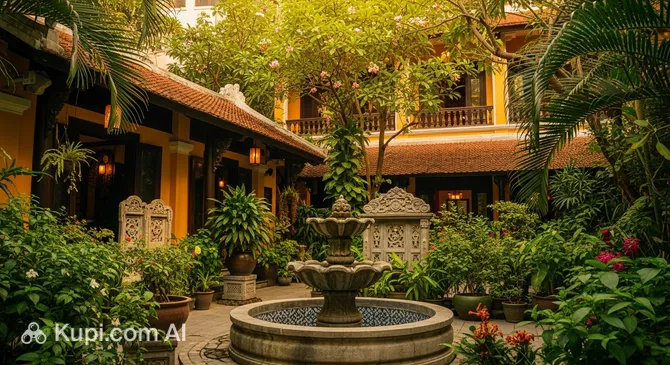
Finding the perfect place to rest your head in Ho Chi Minh City is relatively easy, as the metropolis offers an impressive array of accommodation options to suit every budget and preference. The choices range from ultra-affordable backpacker hostels and lively guesthouses to charming mid-range boutique hotels and world-class luxury resorts. Whether you prefer a room with a view of the glittering skyline or a quiet retreat tucked away in a colonial-era alley, the city has something to offer.

For most tourists, District 1 is the most convenient area to stay. This central district places you within walking distance of major attractions like the Ben Thanh Market and the Independence Palace. Within this area, the streets around Dong Khoi and Nguyen Hue are home to upscale establishments, while the Pham Ngu Lao and Bui Vien areas serve as the hub for budget travelers, packed with hostels and affordable eateries. For a slightly more relaxed atmosphere that still retains a central location, District 3 offers beautiful colonial architecture and tree-lined streets, providing a more local feel.

Travelers seeking a resort-style experience or specific amenities can find excellent properties within the region. For instance, the Secret Garden Hotel offers a distinctive stay for visitors looking for comfort. Additionally, those willing to explore areas slightly further afield or looking for business-class facilities might consider the Binh Duong New City Hotel, which caters to travelers seeking modern conveniences.

Secret Garden Hotel. Source: Kupi.Binoculars

Booking Tips and Prices:

Accommodation prices in Ho Chi Minh City are generally very reasonable compared to Western standards. A bed in a dormitory can cost as little as $5–$10 USD per night, while comfortable mid-range hotels typically range from $30 to $60 USD. Luxury experiences can start from $100 USD and up. It is highly recommended to book your accommodation in advance, especially if you are visiting during the Tet Holiday (Lunar New Year), which usually falls in January or February, as many hotels fill up quickly and prices may rise.

Most travelers book their stays through popular online platforms like Agoda or Booking.com, which offer competitive rates and reliable reviews. However, for smaller guesthouses or homestays, contacting the property directly can sometimes secure a better deal or a more personalized experience.

Nearby Cities

For those looking to explore the surroundings, Ho Chi Minh City serves as an excellent base for day trips to several interesting nearby locations.

Just a short drive north lies Thu Dau Mot, the capital of Binh Duong province. It is renowned for its traditional craft villages, particularly those specializing in ceramics and lacquerware. The city is also home to the expansive Dai Nam Wonderland, a massive tourism complex that combines spiritual temples, an open zoo, and amusement facilities, making it a popular spot for families.

To the east is Bien Hoa, a major industrial center that surprisingly harbors scenic gems like the Buu Long Tourist Area. Often described as a "Miniature Ha Long Bay" of the South, this park features limestone islets rising from a tranquil lake, offering a peaceful escape from the urban hustle. The city also boasts a rich history with several ancient temples and communal houses.

Heading southwest, travelers will find Tan An, which acts as a gateway to the lush Mekong Delta region. This city offers a glimpse into the riverine lifestyle of southern Vietnam, with greener landscapes and a slower pace of life. It serves as an ideal starting point for those wishing to explore the network of canals and rice paddies that define the delta's geography.

City Population Distance (km)
Bien Hoa 1,104,000 28
Thu Duc City 1,013,795 13
Tan An 618,984 40
Tan Uyen 466,053 29
Thu Dau Mot 417,000 19

These nearby destinations offer a glimpse into the diverse culture and landscapes of the region.

Shopping & Souvenirs

Shopping in Ho Chi Minh City is a vibrant and essential part of the travel experience, offering a delightful mix of traditional bustling markets and ultra-modern retail complexes. The city is a treasure trove for bargain hunters and luxury seekers alike, where you can find everything from high-end international fashion brands to handcrafted local souvenirs. Whether you are navigating narrow aisles stacked high with goods or strolling through air-conditioned corridors, the retail scene here reflects the city's dynamic energy.

For an authentic Vietnamese shopping experience, markets are the place to be. The most iconic destination is undoubtedly Ben Thanh Market in District 1. Housed in a French colonial-era building, this market is a sensory overload of colors and scents, selling clothes, textiles, luggage, watches, and handicrafts. It is the perfect spot to practice your bargaining skills, as prices are rarely fixed. In the evening, the streets flanking the market transform into a lively night market, offering souvenirs and street food under the stars.

Ben Thanh Market. Source: Kupi.Binoculars

If you prefer a more comfortable and modern environment, the city boasts several impressive shopping malls that rival those in other Asian metropolises. These complexes offer a respite from the tropical heat and feature a wide range of international and local brands, cinemas, and food courts. Tan Phu Mall, part of the AEON network, is a popular choice for families, offering a vast array of Japanese and Vietnamese products, a large supermarket, and entertainment facilities. It represents the modern face of consumer culture in Vietnam.

Beyond markets and malls, specific streets are renowned for particular goods. Dong Khoi Street is the center for upscale shopping, lined with boutiques selling silk, lacquerware, and designer fashion. For book lovers and those seeking unique postcards or stationery, the Ho Chi Minh City Book Street (Nguyen Van Binh Street) is a charming pedestrian zone. Shaded by trees and lined with quaint bookstores and cafes, it offers a peaceful atmosphere to browse for literary treasures and cultural souvenirs.

When it comes to souvenirs, Ho Chi Minh City offers plenty of unique items to take home. Vietnamese coffee is a top choice; look for high-quality Robusta or Arabica beans and the traditional metal drip filter (phin). Other popular gifts include "Non La" (conical hats), tailored "Ao Dai" (traditional tunics), lacquerware, and silk products. Hand-embroidered textiles and propaganda art posters are also distinctive mementos that capture the local culture.

Most shops and malls are open daily from around 9:00 AM to 10:00 PM. While shopping malls, supermarkets, and upscale boutiques accept credit cards, cash is still king at local markets and street stalls. It is advisable to carry the Vietnamese Dong (VND) in smaller denominations for easier transactions. Additionally, Vietnam offers a VAT refund scheme for international tourists at participating stores; look for the "VAT Refund for Tourists" signage and keep your receipts and passport handy to claim your refund at the airport upon departure.

Reached the end of the page?

That means the route is fully explored