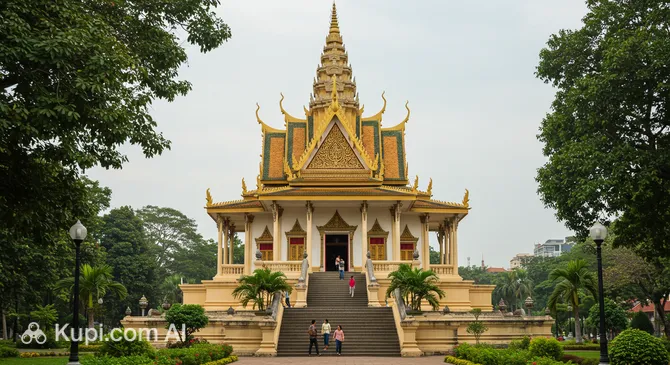
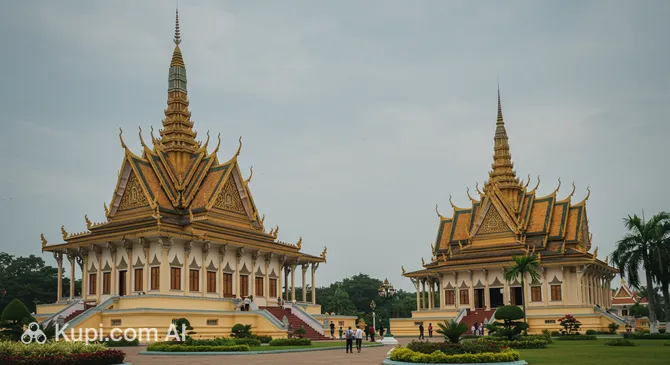
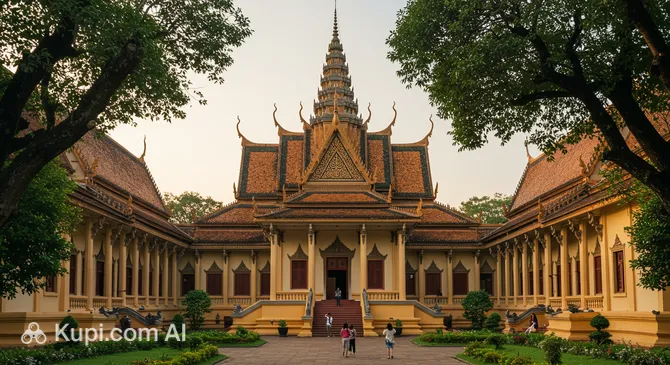
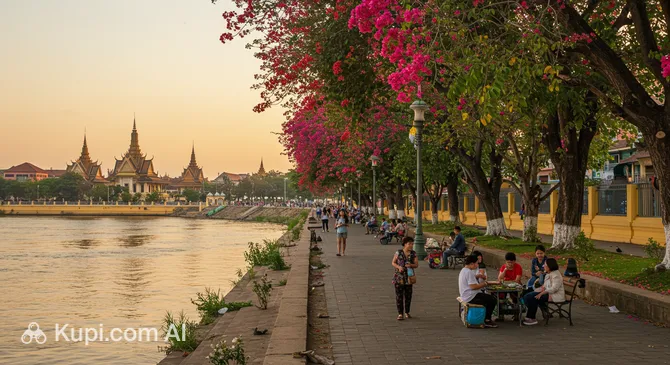
Phnom Penh, the bustling capital of Cambodia, is a city where ancient traditions meet modern dynamism. Situated at the confluence of three rivers—the Mekong, the Bassac, and the Tonlé Sap—this energetic metropolis serves as the nation's cultural, economic, and political heartbeat. Once known as the "Pearl of Asia," it captivates visitors with its unique blend of traditional Khmer architecture and French colonial influences.
Home to over 2 million residents, the city is a vibrant hub that reflects the resilience and spirit of the nation. While it is a rapidly developing urban center, it retains a welcoming atmosphere. Exploring the history of Phnom Penh offers travelers a deeper understanding of how this riverside city has evolved from a small trading post into the thriving destination it is today.
Phnom Penh. Source: Kupi.Binoculars
The city is packed with fascinating sights, most notably the glittering Royal Palace and the adjacent Silver Pagoda, which stand as stunning examples of classic Khmer design. For art enthusiasts, the National Museum houses one of the world's largest collections of Khmer sculpture and ceramics. As the sun sets, the riverside promenade along Sisowath Quay comes alive, offering a perfect spot to enjoy a cool breeze, local street food, and the lively local culture.
Whether you are navigating its colorful markets or admiring its golden spires, Phnom Penh promises an unforgettable experience. It is a city that invites you to linger, explore, and discover the warmth of its people and the richness of its heritage.
Weather Overview
Phnom Penh features a tropical climate defined by consistent heat and high humidity throughout the year. The city generally experiences two main seasons, which significantly influence the travel experience. For a detailed breakdown of what to expect during your trip, you can check the weather in Phnom Penh to help you prepare.
The dry season, spanning from December to April, is often considered the best time to visit. During this period, rainfall is scarce, with February recording the fewest wet days. However, temperatures rise steadily as the season progresses, reaching their peak in April, where average highs can climb to 35.2°C. This time of year is ideal for outdoor exploration, though the heat can be intense in the afternoons.
From May through November, the rainy season brings frequent showers and lush greenery to the region. Precipitation becomes a daily occurrence during the peak months, with September seeing rain on up to 28 days. Despite the wet weather, it remains warm, with average temperatures hovering between 27°C and 30°C. Expect hot conditions year-round with a distinct monsoon season bringing frequent rain from late spring to autumn, followed by a drier and slightly cooler period in winter.
Interesting Facts
Beyond the bustling boulevards and historic landmarks, Phnom Penh holds many fascinating secrets that surprise even seasoned travelers. From ancient legends to geographical marvels, the city's backstory is as captivating as its skyline.
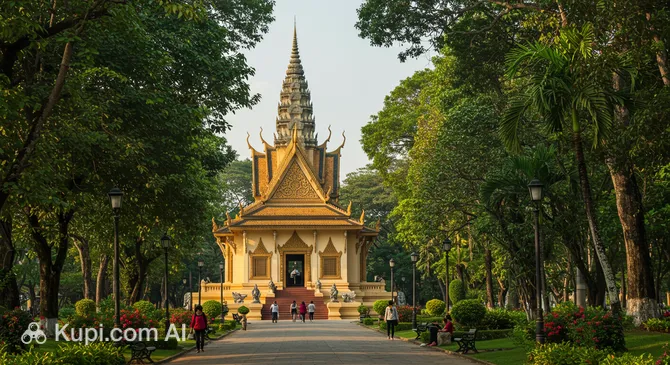
Wat Phnom. Source: Kupi.Binoculars
The Legend of Lady Penh: The city derives its name from a wealthy widow named Daun Penh. According to local folklore, she discovered four bronze Buddha statues inside a hollow floating tree trunk. She raised a hill (Phnom) to house the sacred relics, establishing the sanctuary now known as Wat Phnom, which literally translates to "Hill of Penh."
A River That Flows Backwards: Phnom Penh sits at the "Chaktomuk" or "Four Faces," the confluence of the Mekong, Bassac, and Tonlé Sap rivers. This location witnesses a rare natural phenomenon: during the monsoon season, the sheer volume of water from the Mekong forces the Tonlé Sap river to reverse its course, flowing upstream into the lake instead of towards the ocean.
A Floor Made of Silver: Within the grounds of the Royal Palace of Cambodia stands the spectacular Silver Pagoda. While it houses many treasures, its most literal hidden gem is underfoot; the floor is paved with over 5,000 silver tiles, weighing approximately five tons, making it one of the most opulent temple floors in the world.
The Pearl of Asia: In the 1920s, Phnom Penh was celebrated internationally as the "Pearl of Asia." It was renowned as one of the loveliest French-built cities in Indochina, praised for its well-planned canals, wide avenues, and a unique architectural style that harmoniously blended French colonial aesthetics with traditional Khmer design.
How to Get There
Reaching the Cambodian capital is increasingly convenient thanks to its growing connectivity. The city serves as a major transportation hub for the country, welcoming visitors from around the globe. Whether you are arriving directly by air or traveling overland from neighboring regions, you can find all ways to reach the city and plan your journey accordingly.
The most direct entry point is Phnom Penh International Airport (IATA: PNH), located just 9.2 km from the city center. It is the busiest airport in the country, handling a steady flow of international and domestic flights. Upon arrival, a taxi or tuk-tuk ride to the downtown riverside area typically takes around 35 minutes, depending on traffic. This airport is the best option for travelers wanting to land right in the heart of the action without the need for long ground transfers.
For those exploring the wider region, Tan Son Nhat International Airport (IATA: SGN) in Ho Chi Minh City, Vietnam, is a significant alternative. Although it is situated approximately 205 km away, it is a massive regional hub with extensive global connections. Travelers landing here can continue their journey to Phnom Penh by bus, which takes about 6 hours, or by a connecting flight. Another option within Cambodia is Sihanouk International Airport (IATA: KOS) in Sihanoukville, located about 178 km away, serving as a gateway to the coast before heading to the capital.
For clarity, here is a summary of the main airports:
Airport Name
City
Passenger Traffic
Km from City
Tan Son Nhat International Airport
Ho Chi Minh City
Very Large
205.2
Phu Quoc Airport
Phu Quoc
Large
184.2
Phnom Penh International Airport
Phnom Penh
Medium
9.2
Can Tho Airport
Can Tho
Medium
183.9
Sihanouk International Airport
Sihanoukville
Small
177.7
Main Attractions
Phnom Penh is a city of captivating contrasts, where shimmering royal structures stand alongside bustling markets and vibrant public spaces. The capital offers a wealth of architectural and cultural treasures that provide deep insight into the Kingdom's heritage. From golden spires to serene river views, the main sights are centrally located and easily accessible for visitors.
Dominating the skyline with its classic Khmer roofs and ornate gilding, the Royal Palace of Cambodia is undoubtedly the city's most iconic landmark. Built in the 1860s, it serves as the official residence of the King and a symbol of the nation's sovereignty. Visitors are welcomed to explore the manicured gardens and admire the intricate Throne Hall, which is used for coronations and official ceremonies. The complex is a masterpiece of traditional design, offering a glimpse into the regal history of the country.
Royal Palace of Cambodia. Source: Kupi.Binoculars
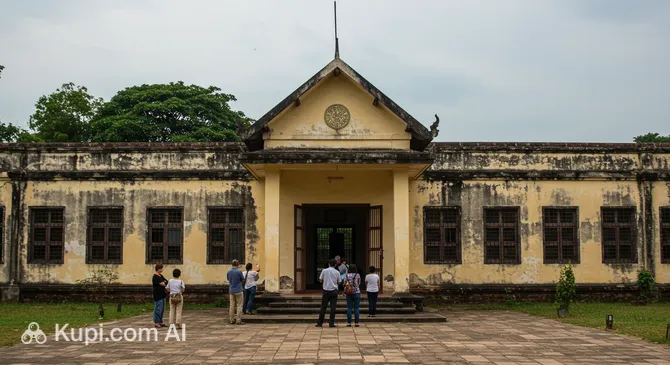
Just north of the palace lies the National Museum of Cambodia, a stunning terracotta-red building inspired by ancient temple architecture. It houses the world's finest collection of Khmer sculpture, including statues from the Angkor era, bronze artifacts, and ethnological objects. Walking through its open-air pavilions and peaceful central courtyard is a journey through centuries of artistic achievement, making it an essential stop for history enthusiasts.
National Museum of Cambodia. Source: Kupi.Binoculars
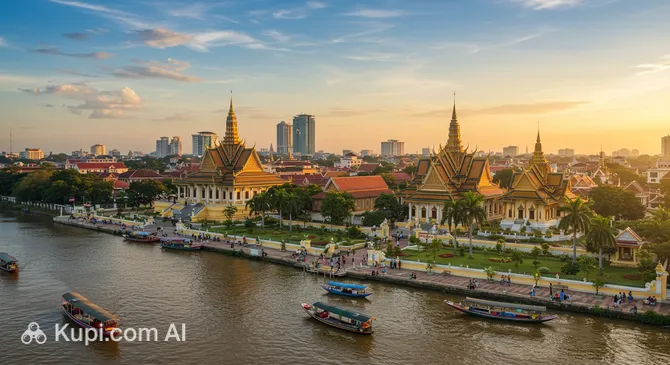
For a taste of local life, a stroll along the Sisowath Riverside Park is a must. This bustling promenade stretches along the intersection of the Mekong and Tonlé Sap rivers and comes alive in the early evening. Locals gather here for exercise and socializing, while tourists can enjoy the breeze, watch the boats glide by, or explore the array of cafes and restaurants that line the quay. It is the perfect spot to soak up the city's energetic yet laid-back atmosphere.
Sisowath Riverside Park. Source: Kupi.Binoculars
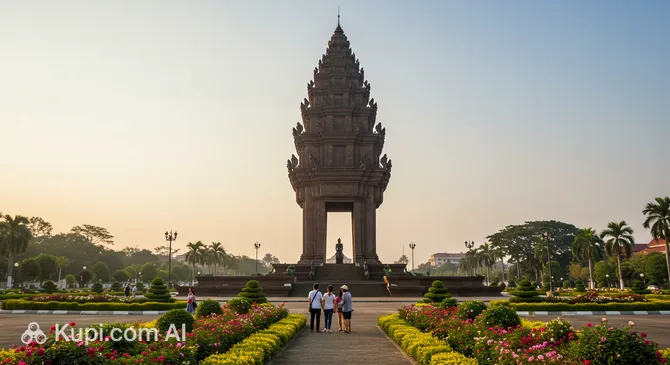
Standing tall at the intersection of Norodom and Sihanouk Boulevards is the majestic Independence Monument. Designed in the shape of a lotus-shaped stupa, it commemorates Cambodia's independence from France in 1953. While visitors cannot enter the monument, it is a spectacular sight, especially at night when it is illuminated by colorful floodlights. The surrounding park is a popular place for an evening walk, offering a view of the monument's elegant silhouette against the dark sky.
Independence Monument. Source: Kupi.Binoculars
Local Cuisine
The culinary landscape of Phnom Penh is a delightful reflection of Cambodia's history, blending ancient Khmer traditions with subtle French colonial influences. The local food philosophy balances four primary flavors: salty, sweet, spicy, and sour, creating dishes that are complex yet surprisingly approachable. Unlike the fiery heat often found in neighboring cuisines, Khmer food relies heavily on aromatic herbs, pickled vegetables, and distinct pastes like prahok (fermented fish paste) to build depth.
No visit to the capital is complete without trying Fish Amok, widely considered the national dish. This creamy curry is made with fresh river fish, coconut milk, and kroeung (a Khmer curry paste), gently steamed in a banana leaf until it achieves a mousse-like texture. Another staple, particularly for breakfast, is Bai Sach Chrouk. It consists of thinly sliced pork marinated in garlic and coconut milk, grilled over charcoal, and served over broken rice with a side of pickled cucumbers and ginger.
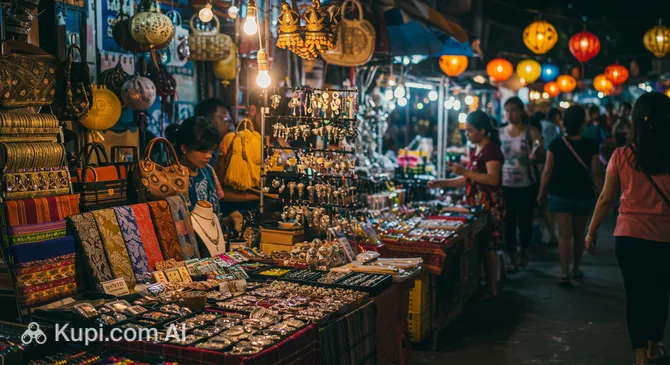
For a taste of the city's vibrant street food culture, the Phnom Penh Night Market is an essential stop. Here, you can sample a variety of grilled skewers, noodle soups, and spring rolls while sitting on traditional mats laid out on the ground. It is a communal and relaxed way to enjoy dinner like a local. For those seeking fresh ingredients and authentic snacks during the day, Orussey Market offers a bustling, immersive experience packed with food stalls serving everything from noodle soups to sweet desserts.
Phnom Penh Night Market. Source: Kupi.Binoculars
When it comes to beverages, the locals love their coffee strong and sweet. Khmer iced coffee is typically brewed with a slow drip filter and mixed with a generous amount of sweetened condensed milk, making it a refreshing treat in the tropical heat. Fresh fruit shakes, sugarcane juice, and coconut water are also ubiquitous on street corners. In the evenings, you can enjoy locally brewed draft beers, which are light, crisp, and very affordable.
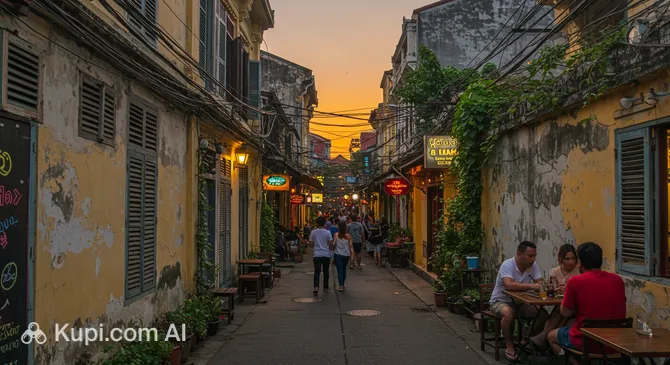
Beyond traditional markets, the city's dining scene has evolved to include trendy districts that merge food with nightlife. Bassac Lane has become a favorite hangout for both expats and tourists. This narrow alleyway is lined with chic micro-bars and eateries offering everything from fusion tapas to craft cocktails, providing a modern contrast to the classic riverside dining experience.
Bassac Lane. Source: Kupi.Binoculars
Another beloved dish to look out for is Beef Lok Lak, a legacy of French influence. It features stir-fried beef served atop a bed of lettuce, tomatoes, and onions, accompanied by a dipping sauce made of lime juice and Kampot pepper. Whether you are grabbing a quick num pang (Cambodian sandwich) from a cart or sitting down for a multi-course meal, Phnom Penh offers a gastronomic journey that is both affordable and unforgettable.
Travel Tips
Welcome to Phnom Penh, a city that rewards the curious traveler with its infectious energy and warm hospitality. To help you navigate the bustling streets and cultural nuances of the Cambodian capital with confidence, here are some practical essentials to keep in mind.
Clothing and Gear: The climate is hot and humid year-round, so pack lightweight, breathable fabrics like cotton or linen. Comfortable walking shoes are a must, but slip-on footwear is particularly convenient as you will need to remove shoes frequently when entering temples and homes. For visits to religious sites like the Royal Palace or Wat Phnom, modest dress is strictly enforced; ensure your shoulders and knees are covered to show respect and gain entry.
Transportation: The most popular and convenient way to get around is by remork (Cambodian tuk-tuk) or the smaller, modern rickshaws. To ensure a fair price and avoid language barriers, it is highly recommended to use ride-hailing apps like Grab or PassApp. These allow you to book rides at fixed rates without the need for haggling. Public buses exist but are less frequently used by tourists, and there is no metro system, so ride-hailing is your best friend.
Finances: Cambodia operates on a dual-currency system, using both the Cambodian Riel (KHR) and the US Dollar (USD). While prices are often quoted in dollars, you will likely receive change in Riel. It is critical to carry small bills and ensure your USD notes are in pristine condition; bills with even the slightest tear, ink mark, or crease are often rejected. ATMs are widespread, and credit cards are accepted in major hotels and restaurants, but cash is king for street food and markets.
Health and Safety: Phnom Penh is generally safe, but petty theft, such as bag snatching from passing motorbikes, can occur. Always keep your bag strapped across your chest and away from the road, and avoid using your phone openly while walking near traffic. Pharmacies are plentiful, with chains like U-Care offering reliable service and imported medications. Stick strictly to bottled or filtered water for drinking and brushing your teeth.
Communication: The official language is Khmer, but English is widely spoken in hospitality, markets, and tourist areas. Learning a simple "Sous-dey" (Hello) or "Aw-kun" (Thank you) goes a long way with locals. SIM cards are incredibly cheap and easy to purchase at the airport or convenience stores upon arrival; providers like Smart or Cellcard offer excellent 4G coverage. Wi-Fi is also standard in almost every cafe and hotel.
Local Etiquette: The traditional greeting is the Sampeah, where you press your palms together at chest level and bow slightly; the higher your hands, the more respect you show. The head is considered the most sacred part of the body in local culture, so never touch anyone's head, even children. Conversely, the feet are considered the lowest, so avoid pointing your feet at people or Buddha statues when sitting.
What to Avoid: Public displays of anger or shouting cause a "loss of face" for everyone involved and will not resolve problems; staying calm and smiling is far more effective. Additionally, be mindful not to photograph people without permission, especially monks, whom you should treat with high deference.
Additional Tip: Embrace the "siesta" culture. The midday heat between 12:00 PM and 3:00 PM can be intense. Follow the local lead by starting your day early to explore markets and temples, taking a break in the air-conditioning or by a pool during the peak heat, and venturing out again in the late afternoon when the city cools down and the riverside comes alive.
By keeping these tips in mind, you will be well-prepared to dive into the vibrant life of Phnom Penh. Enjoy the delicious food, the rich history, and the genuine smiles that make this city such a memorable destination.
Entertainment & Nightlife
As the sun sets over the Mekong, Phnom Penh sheds its bustling daytime persona and transforms into a vibrant hub of evening entertainment. The city's nightlife scene has evolved rapidly, offering a diverse mix of experiences ranging from laid-back riverside watering holes to sophisticated rooftop lounges. Whether you are looking for a quiet craft cocktail, a lively dance floor, or a scenic spot to unwind, the Cambodian capital has something to suit every mood.
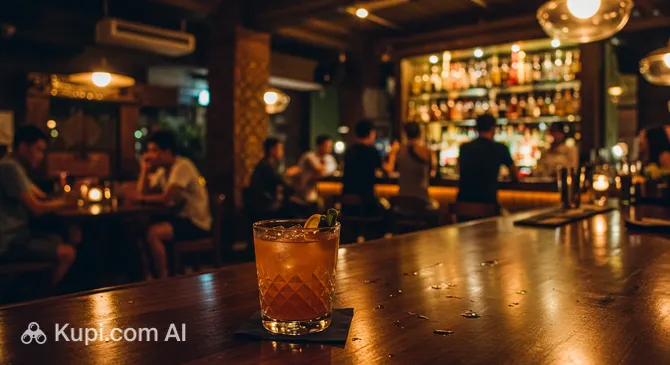
The most iconic nightlife district is undoubtedly the area along Sisowath Quay (Riverside). Here, the streets are lined with open-air bars and restaurants that cater to a mix of backpackers and locals. It is a high-energy zone where music spills out onto the street and the party often goes late into the night. For a more upscale and trendy atmosphere, travelers head to the BKK1 district or the charming alleyways of Bassac Lane. This area is known for its chic micro-bars and hidden speakeasies, attracting a stylish crowd of expats and young professionals.
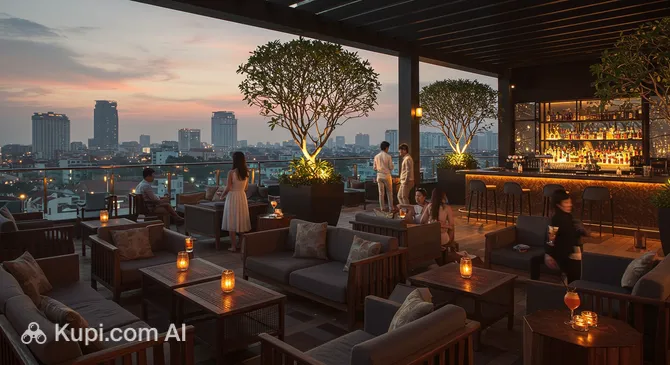
For those seeking breathtaking views of the city skyline and the converging rivers, HighGround Sky Bar is a standout choice. Located in the heart of the city, it offers a sophisticated setting to enjoy signature cocktails while taking in the panoramic lights of Phnom Penh below. The dress code here leans towards smart casual, so it is worth swapping flip-flops for something a bit more polished.
HighGround Sky Bar. Source: Kupi.Binoculars
If you prefer a more relaxed, garden-style environment, Wild Phnom Penh is a favorite among those in the know. Tucked away in a renovated colonial house, this venue specializes in creative spring rolls and refreshing drinks, providing a cozy and intimate atmosphere perfect for conversation. It is an excellent example of the city's growing boutique bar scene, where the focus is on quality ingredients and unique ambiance.
Wild Phnom Penh. Source: Kupi.Binoculars
Practicalities for a night out are straightforward. The nightlife generally kicks off around 8:00 PM, though many places offer "Happy Hour" specials earlier in the evening. Prices are very affordable compared to Western standards, with local beers often costing less than a dollar and cocktails ranging from $4 to $8. Getting around is safest and easiest using ride-hailing apps like Grab or PassApp, which spare you the hassle of negotiating fares late at night.
While Phnom Penh is generally safe for tourists, it is wise to exercise caution. Stick to well-lit, busy areas and avoid walking alone in quiet alleys after dark. Bag snatching can occur, so keep your belongings secure and away from the roadside. Taxis and tuk-tuks are plentiful, so there is rarely a need to walk long distances at night.
Beyond the bars and clubs, the city offers daytime and early evening entertainment for families and groups. Venues like Dinosaurs Alive provide a fun diversion with animatronic exhibits, offering a playful contrast to the city's historical sites. Additionally, traditional Apsara dance shows are frequently held at the National Museum or specialized theaters, showcasing the elegance of Khmer culture.
Dinosaurs Alive. Source: Kupi.Binoculars
Parks & Museums
While Phnom Penh is a rapidly urbanizing capital, it maintains several open spaces that serve as communal living rooms for its residents, alongside institutions that preserve the nation's complex history. Beyond the famous riverfront, the city's parks and museums offer profound insights into both the daily life of the Khmer people and the resilience of their spirit.
For those seeking to understand Cambodia's recent past, the Tuol Sleng Genocide Museum is a somber but essential destination. Once a high school known as S-21, it was converted into a prison during the Khmer Rouge regime. Today, it stands as a testament to the victims, preserving the classrooms and cells much as they were found. A visit here is an emotional experience that provides necessary context for the country's modern history.
A short drive from the city center lies the Choeung Ek Genocidal Center, often referred to as the Killing Fields. This memorial site is located in a peaceful orchard that belies its tragic history. The centerpiece is a Buddhist stupa filled with skulls recovered from the mass graves, serving as a poignant memorial to those who perished. An audio tour guides visitors through the grounds, offering a respectful and educational narrative about the events that took place here.
On a lighter note, the SOSORO – Preah Srey Içanavarman Museum offers a modern and interactive look at Cambodia's history through the lens of its economy and currency. It is a high-tech facility that makes learning about the Kingdom's economic evolution engaging and accessible.
In terms of green spaces, Wat Botum Park is a favorite among locals for evening relaxation. Located south of the Royal Palace, this elongated park features a large playground, golden statues, and plenty of open space for aerobics and jogging. It is a fantastic spot to people-watch and see how Phnom Penh's residents unwind after a work day.
Wat Botum Park. Source: Kupi.Binoculars
Directly in front of the monarch's residence is the Royal Palace Park. This manicured open space is popular for families and friends who gather on the grass to enjoy the cool evening breeze. It offers one of the best photo opportunities in the city, with the illuminated pavilion of the Royal Palace providing a majestic backdrop against the night sky.
For a truly authentic escape from the urban bustle, take a ferry across the Mekong to the Silk Island Community Center on Koh Dach. This area feels worlds away from the city, offering a glimpse into rural village life where you can watch artisans weaving silk on traditional wooden looms and enjoy the tranquility of the countryside.
Getting Around
Navigating Phnom Penh is an adventure in itself, characterized less by a structured network of trains and metros and more by a vibrant, flowing stream of road-based transport. The city currently does not have an operational metro, tram, or trolleybus system. Instead, the streets are dominated by a mix of public buses and a massive fleet of informal transport options, primarily tuk-tuks and motorbikes, which serve as the lifeblood of urban mobility.
The Phnom Penh City Bus is the only formal public transport option. Operated by the City Bus Authority, the network consists of several lines that cover major thoroughfares and key destinations, including the airport and the central markets. The buses are modern, air-conditioned, and generally comfortable, offering a welcome respite from the tropical heat. However, the network is not comprehensive, and buses can be slow due to the city's heavy traffic, making them a better choice for budget-conscious travelers with time to spare rather than those in a rush.
For the vast majority of visitors, the most practical and popular way to get around is by tuk-tuk. There are two distinct types you will encounter. The traditional Remork consists of a carriage hitched to a motorbike; it offers a breezy, spacious ride and is perfect for groups or sightseeing with luggage. The more modern "Rickshaw" (often referred to as an "Indian tuk-tuk") is a smaller, three-wheeled vehicle powered by LPG or CNG. These are nimble, cheaper, and fully enclosed, making them ideal for quick trips across town.
Payment methods vary by mode of transport. For the public city bus, the fare is a flat rate, typically around 1,500 Riel (approximately $0.37 USD) per ride. You must pay in cash using the exact change, dropping the money into the fare box upon entry. There are no travel cards or day passes widely available for tourists, so carrying a supply of small Riel notes is essential. For tuk-tuks and taxis, cash is also the standard, though the rise of digital platforms has changed how transactions are handled.
The best advice for any tourist is to download ride-hailing apps like Grab or PassApp immediately upon arrival. These apps have revolutionized transport in the city by allowing you to book cars, SUVs, tuk-tuks, and even motorbikes at fixed, transparent rates. This eliminates the language barrier and the need to haggle, which can be daunting for newcomers. You can link your credit card to these apps or choose to pay the driver in cash at the end of the ride.
Motorbike taxis, known locally as moto-dops, are another ubiquitous option. Drivers often wait at street corners and offer rides to passersby. While they are the fastest way to weave through traffic, they are not recommended for the faint of heart due to safety concerns. If you do choose a moto, always insist on wearing a helmet. Metered taxis are available but are rarely hailed on the street; they are mostly found at the airport or booked via telephone or apps.
While there is no historic metro, the city does offer a unique transport experience in the form of river ferries. These boats shuttle passengers and vehicles across the Mekong and Tonlé Sap rivers, connecting the city center to areas like Arey Ksat and the serene Silk Island. Taking a ferry is not only a practical way to cross the water but also an inexpensive scenic cruise, offering beautiful views of the skyline from the water.
Traffic in the city can be chaotic, particularly during rush hours (7:00 AM to 9:00 AM and 5:00 PM to 7:00 PM). During these times, travel distances that usually take 15 minutes can turn into an hour-long journey. Walking is an option for short distances within districts like the Riverside, but be aware that sidewalks are often used for parking or stalls, requiring pedestrians to share the edge of the road with traffic.
Accommodation
Where to Stay:
Accommodation in Phnom Penh caters to a wide spectrum of travelers, offering everything from backpacker-friendly hostels to colonial-style boutique hotels and high-end luxury chains. The city's hospitality scene has grown significantly, providing comfortable and stylish options that are often surprisingly affordable compared to other Southeast Asian capitals. Whether you prefer a room with a river view or a quiet sanctuary tucked away in a leafy lane, you will find a place that suits your style and budget.
For most visitors, the location is key to the experience. The area along Sisowath Quay (Riverside) is the most popular choice for first-timers. Staying here puts you within walking distance of the Royal Palace, the National Museum, and a vibrant nightlife scene. Alternatively, the Boeung Keng Kang 1 (BKK1) district offers a more upscale, cosmopolitan vibe. Known as the "foreigner district," it is packed with trendy cafes, international restaurants, and modern apartments, making it ideal for those who prefer a quieter, more residential atmosphere.
If you are looking for a tropical oasis right in the heart of the city, the Plantation Urban Resort & Spa is a standout option. Located just behind the Royal Palace, this resort is famous for its lush gardens and massive swimming pool, offering a serene escape from the urban bustle while keeping you close to the main attractions.
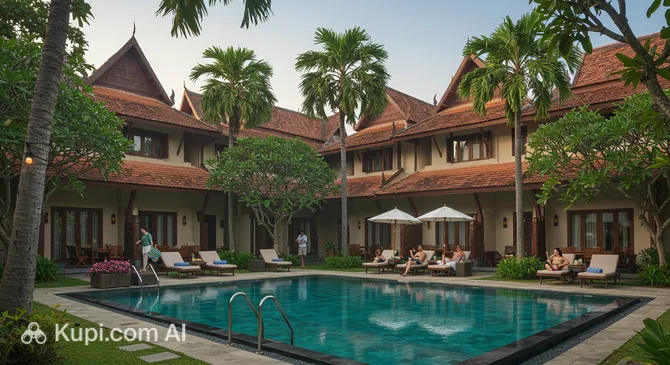
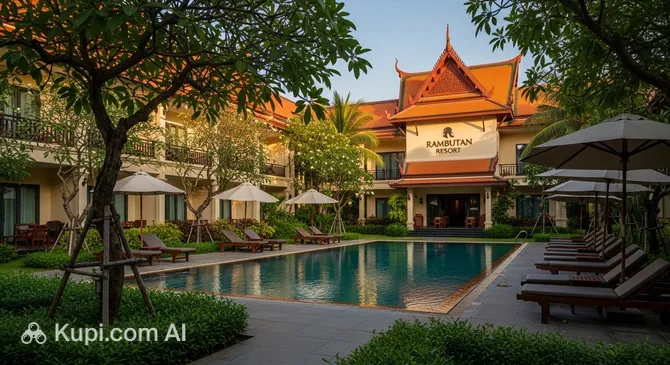
For a more intimate boutique experience, the Rambutan Resort provides a stylish and welcoming environment. Situated in a quieter neighborhood, it features Khmer-inspired modern design and a relaxed pool area, making it a favorite for travelers seeking a personalized touch.
Rambutan Resort. Source: Kupi.Binoculars
Booking Tip: While it is often possible to find a room on arrival, it is highly recommended to book in advance if you are visiting during the peak dry season (November to February). During the Khmer New Year in April and the Water Festival in November, accommodation fills up quickly, and prices can rise.
In terms of cost, Phnom Penh offers excellent value. Budget travelers can find dormitory beds for as little as $5 to $10 USD per night, while private rooms in guesthouses range from $15 to $25 USD. Mid-range hotels with pools and breakfast typically cost between $30 and $70 USD. Luxury stays can range from $100 to over $300 USD depending on the brand and amenities. Most bookings can be easily made through major online platforms, though some smaller guesthouses still appreciate direct bookings via social media or email.
Nearby Cities
For those looking to explore the surroundings, Phnom Penh serves as an excellent base for day trips to several interesting nearby locations:
Located just a short distance south of the capital, Ta Khmau offers a quick escape from the big city bustle. As the capital of Kandal Province, it sits peacefully along the Bassac River and serves as a gateway to the Tonle Bati lake and the ancient laterite temple of Ta Prohm. Its proximity makes it an effortless half-day or full-day excursion for those who want to see a quieter side of Cambodian urban life without traveling far.
For a deeper dive into the countryside, Kampong Cham is a rewarding destination situated further up the Mekong River. Known for its lingering French colonial architecture and relaxed pace, it provides an authentic glimpse into provincial culture. Visitors can explore the fusion temple of Wat Nokor or cross the river to Koh Pen island, famous for its seasonal bamboo bridge constructed during the dry season.
These nearby destinations offer a glimpse into the diverse culture and landscapes of the region.
Shopping & Souvenirs
Shopping in Phnom Penh offers a fascinating contrast between the traditional and the ultra-modern. The city is a treasure trove for those looking for authentic handicrafts, textiles, and antiques, while simultaneously developing a scene of glossy shopping centers that rival those in neighboring capitals. Whether you enjoy the thrill of haggling in a bustling market or browsing international brands in air-conditioned comfort, the Cambodian capital has plenty to offer.
For a more curated shopping experience, the streets surrounding the Royal Palace and the National Museum are lined with charming boutiques and galleries. Street 240 is particularly famous for its ethical fashion shops, silk boutiques, and bookstores, offering a relaxed atmosphere behind leafy trees. Nearby, Street 178, often called "Art Street," is the go-to destination for local art, sculpture, and lacquerware, where you can often see artisans at work.
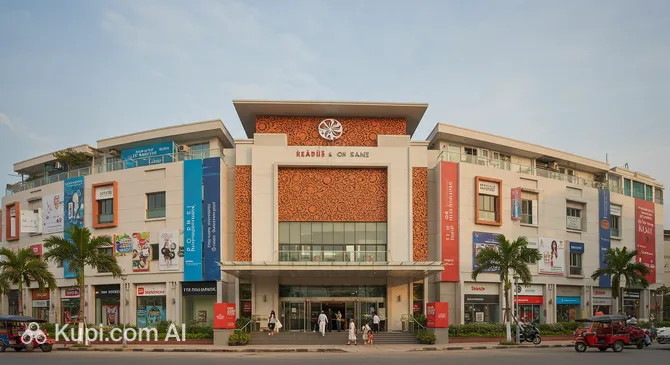
The city's retail landscape has transformed significantly with the arrival of large-scale shopping complexes. Sen Sok Mall is one of the premier destinations for families and shoppers alike, featuring a vast array of international clothing brands, a cinema, and extensive dining options. It represents the modern face of Phnom Penh, providing a cool escape from the midday heat.
Sen Sok Mall. Source: Kupi.Binoculars
Another significant addition to the modern shopping scene is Mean Chey Mall. This sprawling complex caters to a wide demographic with its mix of retail outlets, supermarkets, and entertainment zones. These malls are not just places to buy goods but are social hubs where locals gather on weekends to eat, shop, and relax.
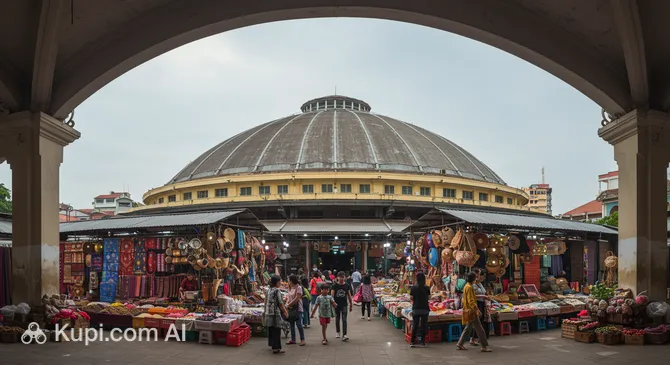
Despite the rise of malls, the heart of commerce remains in the traditional markets. While the Central Market and Russian Market are famous, the Olympic Market is a hidden gem for textile enthusiasts. Located near the Olympic Stadium, this three-story market is a wholesale hub known for its incredible selection of fabrics, traditional Khmer outfits, and shoes. It offers a more local experience compared to the tourist-heavy spots.
Olympic Market. Source: Kupi.Binoculars
For a truly immersive local atmosphere, Orussey Market is a labyrinth of stalls selling everything from fresh food and hardware to electronics and housewares. It is loud, crowded, and unapologetically authentic, making it an interesting stop for adventurous travelers who want to see where the locals shop for their daily needs.
When searching for souvenirs, the Krama—a sturdy traditional checkered scarf made of cotton or silk—is the quintessential Cambodian keepsake. Other popular items include high-quality Kampot pepper, silver jewelry, and hand-carved wood or stone statues. Silk products, such as scarves and bags, are also widely available and make for beautiful, lightweight gifts.
Opening hours vary by location. Traditional markets typically open early, around 7:00 AM, and close by 5:00 PM. Shopping malls and supermarkets generally operate from 9:00 AM to 10:00 PM. In terms of payment, cash is essential for markets and street stalls; while US dollars are widely accepted, small change is usually given in Cambodian Riel. Credit cards are commonly accepted in shopping malls, hotels, and upscale boutiques.