Support

War Remnants Museum

About

The War Remnants Museum (Bảo tàng chứng tích chiếnтра), also known as the Museum of War Victims, is one of the most significant and visited military museums in Ho Chi Minh City. Located in the city's 3rd District, it is an important historical site for anyone visiting Vietnam with an interest in its complex past. The exhibition is entirely dedicated to the Vietnam War and its severe consequences for the country and its people.

Managed by the Vietnamese government, this museum attracts more than half a million visitors from around the world annually. Its mission is to preserve evidence of the destructive nature of war for future generations. The exhibition includes captured military equipment located in the courtyard and several themed halls inside the building with thousands of documents, photographs, and artifacts.

The modern museum building was constructed in 2002 using state funds. A visit to this site leaves a deep impression and makes one reflect on the value of peace. American military equipment, including tanks, planes, and helicopters, is displayed in the courtyard, while the internal halls tell the stories of those affected by the conflict.
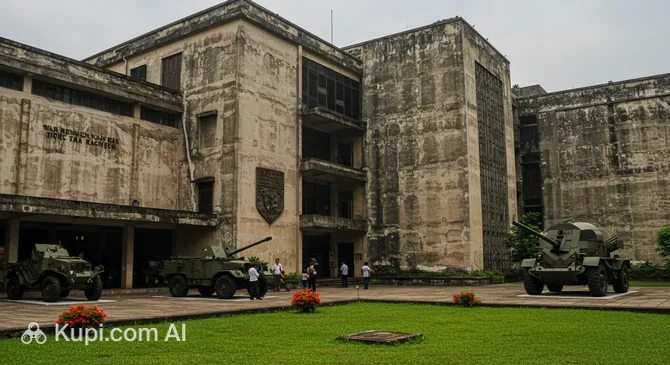
War Remnants Museum. Illustration.
Source: Kupi.com AI

Traveler photos:

Contacts

To plan your visit and clarify any details, you can use the official contact information for the War Remnants Museum. All up-to-date information is usually available on their website or by phone.

How to contactContact
AddressPhường 6, Quận 3, Hồ Chí Minh 700000, Vietnam
Phone number+84 28 3930 5587
Websitebaotangchungtichchientranh.vn

What to Do

A visit to the War Remnants Museum is an opportunity to dive deep into Vietnam's history through an extensive collection of exhibits. Inside the building and in the museum courtyard, visitors can explore thousands of artifacts, documents, and photographs. The exhibition is structured to tell the story of past events sequentially, providing a better understanding of the country's culture and historical path. The museum's primary goal is not just to display items, but to present them as historical evidence that helps one realize the devastation caused by any military conflict.

The exhibition is divided into several themed zones. Visitors can see halls dedicated to international support for Vietnam and galleries demonstrating the consequences of the use of chemical weapons. The museum has collected personal belongings, letters, and documents, as well as larger objects. Special attention is paid to photo exhibitions, which include works by famous international photojournalists who captured the events of those years. Each hall offers a unique perspective on various aspects of history.

Over time, the museum's ideological focus has changed, and today its main mission is to preserve historical memory and promote the idea of peace. The institution has become an important educational center that strives to convey the value of a peaceful life to visitors from all over the world. The exhibits serve as a powerful reminder of the past and call for reflection on the future, making a visit to the museum more than just a tour, but a profound and memorable experience.

Getting There

The War Remnants Museum is located in the central part of Ho Chi Minh City, in District 3, at 28 Vo Van Tan Street. Thanks to its convenient location, reaching it from any part of the city is easy. You can use public transport, such as buses No. 06, 14, or 28, to better experience the rhythm of the metropolis, or take a taxi for maximum comfort. Another popular and authentic way to get around Vietnam is by motor-taxi, which will quickly take you to your destination.

For those who prefer to explore the city on their own, renting a scooter or bicycle is an excellent option. This allows you to move at your own pace and easily combine a museum visit with seeing other sights. The museum's convenient location makes it an ideal stop on a city itinerary, as other iconic spots like the Independence Palace are nearby, allowing you to plan a full day of sightseeing.

Nearest city: Ho Chi Minh City

History & Facts

The history of the War Remnants Museum is closely intertwined with the history of Vietnam itself and reflects its journey toward peace and reconciliation. The museum's predecessor appeared as early as 1959 in Saigon—it was a small Army Museum opened for the 15th anniversary of the people's armed forces. However, the modern museum in its current form was founded after the end of the conflict, on September 4, 1975. Initially, it was given a very long and direct name: "Exhibition House for Crimes of American Imperialism and the Puppet Government of South Vietnam". Its primary mission was to collect artifacts, photographs, and documents that would serve as evidence of the tragic events of the recent past.

Over time, the museum's name changed, symbolizing shifts in the country's political course and its relations with the world. In 1990, the name was shortened to the "Museum of American War Crimes." By 1995, amid the warming and normalization of diplomatic relations between Vietnam and the USA, the name was softened to a more neutral version—the "Museum of War Victims." The current name, "War Remnants Museum," was eventually established, reflecting the Vietnamese society's desire to move away from accusations and focus on preserving historical memory and humanistic values.

The museum's physical space has also evolved. Initially, the exhibition was housed in several old buildings that had served as the US Information Service during the war. However, in 2002, a new, modern building was constructed in their place, allowing the exhibition halls to be expanded and better organized. This transformation—from temporary premises to a major museum complex—underscores the significance of this site for the nation and its changed role: from a propaganda tool to an important cultural and educational center calling for peace.

Time Needed

When planning a visit to the War Remnants Museum, you should set aside approximately 1.5 to 3 hours. Most visitors agree that two hours is enough for a leisurely viewing of all the main exhibitions. Of course, you could quickly see the halls in an hour, but for a thoughtful engagement with the materials and an understanding of the context, it is better to budget a bit more time.

The museum tour is roughly divided into two parts. The first is the outdoor exhibition, which displays captured military equipment, including aircraft, tanks, and helicopters. This usually takes about 20–30 minutes. The majority of the time is spent in the three-story building, which houses the indoor galleries. Here, thousands of photographs, documents, and artifacts are on display, each requiring careful attention and time for reflection.

Ultimately, the length of the visit is a personal matter, as the exhibits can be emotionally intense. The ideal time depends on your personal interest in history and how deeply you wish to immerse yourself in the exhibition. It is recommended to set aside at least a couple of hours to fully appreciate the significance of this place without rushing and to take breaks if needed.

Working Hours

The War Remnants Museum in Ho Chi Minh City is open to visitors year-round, including public holidays, making it accessible at any time during your trip to Vietnam. The museum is open daily from 7:30 AM to 5:00 PM. It is important to note that there is a break in the middle of the day, usually from 12:00 PM to 1:30 PM. It is recommended to arrive early so you have enough time to see all the exhibitions.

Advance ticket booking for individual visits is generally not required—they can be purchased directly at the ticket office at the entrance. However, to avoid potential queues, especially during the peak tourist season, or for greater convenience, you may consider purchasing tickets online. Online tickets are often offered as part of comprehensive city tours. If you are planning a visit as part of a large group, it is worth checking the conditions on the official museum website in advance.

7:30 – 17:30

Nearby

Visiting the War Remnants Museum is a profound and emotional experience. To balance these impressions and see more than a single museum can offer, it is worth exploring the surrounding area. The museum's central location in Ho Chi Minh City makes it an ideal starting point for a walk through one of the city's most vibrant districts. This is a great opportunity to combine historical exploration with an immersion into the daily life of the metropolis, discovering its many facets.

Within walking distance of the museum, you will find iconic landmarks, cozy cafes, and authentic restaurants that help you better understand the culture of modern Vietnam. Important sites like the Independence Palace and the Saigon Notre-Dame Basilica are located nearby. Below is a list of interesting spots that are easy to reach on foot.

NameDistance
Independence Palace0.4 km
Propaganda Vietnamese Bistro0.7 km
Ben Nghe Street Food Market0.7 km
ICOOL Karaoke0.7 km
Hai Ba Trung Pizza Restaurant0.7 km
Trong Dong Theater0.8 km
Notre-Dame Cathedral Basilica of Saigon0.8 km

Have you reached the end of the page?

So the route has been studied inside and out