Support

Munirensay Khmer Buddhist Temple

About

Amidst the vibrant colors and bustling streets of Can Tho lies a true island of tranquility — the Munirensay Khmer Buddhist Temple. This majestic structure is not just a religious site, but a vital cultural center for the Khmer community living in the south of the country. The temple stands out for its unique architecture, which instantly transports your thoughts to the ancient traditions of neighboring Cambodia.
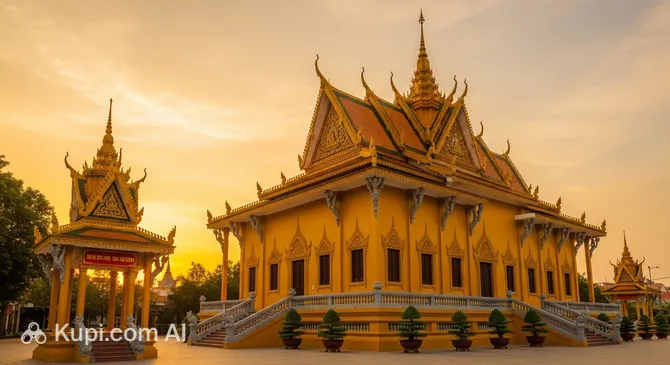
Munirangsyaram Khmer Buddhist Temple
Munirangsyaram Khmer Buddhist Temple. Иллюстрация. Источник: Kupi.com AI

The main feature of the temple is its style: here you can see characteristic pointed roofs, an abundance of gold decor, and detailed murals. At the entrance, visitors are traditionally greeted by statues of guardian lions, which, according to belief, protect the sacred place. For many travelers journeying through Vietnam, this temple becomes one of the most memorable spots thanks to its exotic appearance and spiritual significance.

Located in the Ninh Kiều district, the Munirensay Temple offers a rare chance to experience the Khmer branch of Buddhism without leaving the city limits. It is a place of attraction for those seeking harmony, interested in ethnography, or simply wishing to admire exquisite Eastern art amidst a typical Vietnamese cityscape.

Contacts

For those planning a visit, below is the essential contact information for this religious and architectural landmark.

How to contactContact
Address36 Đ. Hoà Bình, Tân An, Ninh Kiều, Cần Thơ, Вьетнам

What to Do

Upon arriving, the first thing to notice is the exterior decoration. Take a walk around the main building to examine the mythical creatures adorning the eaves and the impressive lion figures standing guard at the entrance. The temple's bright golden hues against the blue sky create perfect conditions for memorable photos.

A special atmosphere reigns inside the halls. Visitors can see magnificent Buddha altars surrounded by flowers and incense. Locals are often found here performing daily rituals: lighting incense sticks, bringing fresh fruit, and offering prayers. Observing these quiet rites allows for a deeper understanding of the everyday faith of the local Khmer people.

If you're lucky, you might meet monks in their traditional orange robes. Sometimes they are open to interaction and can share a bit about life in the temple. For those weary of the metropolitan bustle, this is a wonderful place to simply sit in the shade, meditate, or reflect on the eternal while enjoying the soft chime of bells and the peaceful energy of the space.

Getting There

The temple is located in the very heart of the city, in the Ninh Kiều district, making it easily accessible for most travelers. If you are arriving from Can Tho Airport, a taxi or Grab ride will take about 20–30 minutes (the distance is approximately 15 km).

For those already in the central part of the city, it is most convenient to walk or use a bicycle — the area is quite compact and pleasant for strolling. Local buses running along the main streets also stop in the immediate vicinity.

Travelers heading from Ho Chi Minh City first need to take an intercity bus (which takes 4 to 6 hours) to the city's central bus station, and then transfer to a taxi to Hoà Bình Street. There is a small parking area for motorbikes near the temple, though traffic in this area can be quite heavy during peak hours.

Ближайший город: Can Tho

History & Facts

This site is a living embodiment of Khmer cultural heritage in the Mekong Delta. For centuries, the Khmer diaspora has preserved its unique traditions here, with the temple serving as the community's primary spiritual anchor. While exact construction dates may vary, such structures were actively built in the 19th and 20th centuries, becoming centers for preserving faith and identity in Vietnam.

The building's architectural appearance is clearly inspired by the Angkor style. Many decorative elements, from the shape of the roofs to the delicate carvings, are reminiscent of the great temple complexes of Cambodia. This highlights the deep historical connection between the two cultures that have coexisted peacefully in this region for generations.

In addition to its religious role, the temple serves as an important venue for traditional festivals. The most vibrant of these is Chol Chnam Thmay (Khmer New Year), when the space fills with music, dancing, and special festive rites. For locals, it is not just an architectural monument but the heart of their community life, symbolizing the country's religious tolerance and cultural diversity.

Time Needed

To leisurely explore the grounds and soak in the atmosphere, most visitors need about 1 to 2 hours. This is enough time to study the architectural details of the facade, go inside the main halls, and take quality photographs.

If you plan more than just a quick look and wish to participate in an offering ritual, practice meditation, or simply sit in silence away from the city noise, it's worth setting aside a bit more time. Morning and evening hours are especially good for catching the temple in its most serene state.

Working Hours

The temple is open to visitors daily, making it a convenient stop on any itinerary. The main opening hours are from 07:30 to 20:00. During this time, access to the main halls and the grounds is open.

Keep in mind that during major religious holidays or festivals, the schedule may change slightly due to closed ceremonies. If you want to enjoy the quiet, it is best to come on weekdays in the morning. It is recommended to check for up-to-date information on official resources or ask local guides for details before your visit.

07:30–20:00

Nearby

A visit to the Khmer temple can easily be combined with exploring other interesting city spots. A walk around the neighborhood will allow you to feel the local flavor more deeply and see how modern life intertwines with tradition.

NameDistance
Military Zone 9 Museum0.3 km
Luu Huu Phuoc Park0.3 km
Can Tho Museum0.4 km
Ong Pagoda0.5 km
Luxury Can Tho Hotel1.2 km
Can Tho Resort1.2 km
The Grand ANAN Hotel Nightclub1.4 km

Reached the end of the page?

That means the route is fully explored