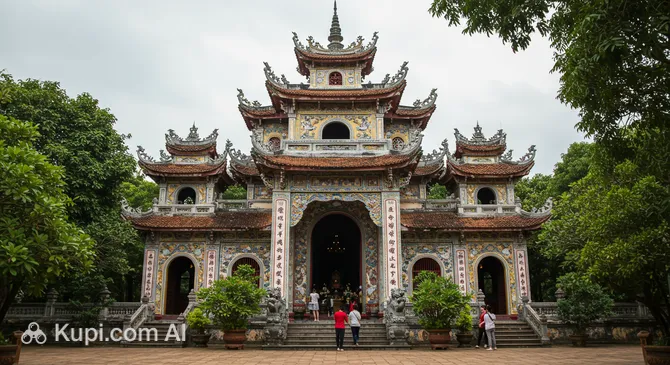
In the heart of the bustling city of Can Tho lies Ong Pagoda — one of the most colorful and significant religious sites, rightfully considered a national treasure that Vietnam is proud of.
Ong Pagoda. Illustration.
Source: Kupi.com AI
Traveler photos:
This temple is the most important spiritual center for the local Chinese community. Its architecture is a magnificent example of Oriental craftsmanship, where every decorative element is steeped in deep symbolism. The tiled roof, adorned with intricate porcelain figures of dragons and phoenixes, is particularly eye-catching.
An interesting detail of the exterior is the human statues placed on both sides of the roof. They hold symbolic representations of the sun and moon, as if guarding the peace of this sacred place. Inside the pagoda, an atmosphere of serenity prevails, highlighted by the scent of incense and exquisite wood carvings.
Contacts
For planning your visit and clarifying details, you can use the following contact information:
A visit to this temple is an excellent opportunity to experience the living traditions carefully preserved by the Chinese community living in southern Vietnam. Here, you can spend hours examining the details of the exterior decoration: mythological scenes rendered in ceramics and vibrant patterns typical of traditional Chinese sanctuaries.
Inside the pagoda, guests can observe religious rites and rituals. The air here is thick with smoke from huge spiral-shaped incense coils suspended from the ceiling, creating a unique mystical atmosphere. It is an ideal spot for those seeking peace and wanting to take unique photographs of the region's cultural heritage.
Since Ong Pagoda is often included in city sightseeing tours, its visit is conveniently combined with a walk along the waterfront or a visit to local markets to fully experience the rhythm of life in the Mekong Delta.
Getting There
The sanctuary is located in the heart of the city, in the lively Ninh Kieu district. The exact address is 32 Đ. Hai Bà Trưng. Thanks to its central location, the temple is easy to reach from any part of the city. The most convenient way is to take a taxi or use the popular Grab app to call a motorbike taxi, which will quickly take you to the pagoda's entrance.
If you are already strolling along the Can Tho waterfront, the pagoda is just a few minutes' walk away on foot. For travelers coming from Ho Chi Minh City, the journey takes about 3-4 hours by intercity bus, as the city is 170 km away from the southern capital. Can Tho is a major transport hub for the Mekong Delta, so transport links here are very well developed.
Nearest city: Can Tho
History & Facts
The history of this magnificent structure began at the end of the 19th century. Built between 1894 and 1896, the pagoda was an answer to the growing Chinese diaspora's need for their own spiritual and community center in Can Tho.
Official recognition of this architectural monument came in 1933, when Ong Pagoda was included in the list of national heritage sites maintained by Vietnam. Although the first temples in this area were built back in the 17th century, the current building has retained its original appearance, coming down to us through the centuries practically unchanged.
For over a hundred years, the temple has served not only as a place for prayer but also as a guardian of the cultural identity of the Chinese people in the Mekong Delta. Today, it is a living testament to the harmonious blending of different cultural traditions, making it a must-see for any traveler.
Time Needed
To fully appreciate the beauty and details of the interior, most visitors need between 45 minutes and 1 hour. This is enough time to examine the unique tiled roof, step inside the temple, and observe the locals coming here to pray.
If you plan to study every decorative element in detail or are passionate about photography, it's worth setting aside a bit more time. A visit to the pagoda is usually not tiring and can easily be combined with other short stops during a walk through the center of Can Tho.
Working Hours
Ong Pagoda hospitably opens its doors to both worshippers and tourists every day. The temple operates on a consistent schedule, making it easy to plan a visit either in the morning or later in the evening.
Opening hours: from 07:00 to 20:00 daily, with no weekend closures or lunch breaks.
7:00 – 20:00
Nearby
The pagoda's central location allows tourists to easily add other interesting locations to their itinerary. Exploring the surrounding area will help you better understand the daily life of locals and enjoy a variety of leisure activities — from visiting ancient family temples to modern recreation areas.