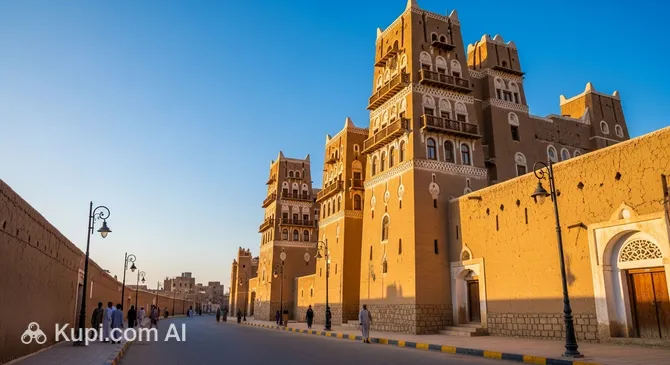
Shopping in Sayun is a journey back in time, offering an experience that contrasts sharply with the modern, air-conditioned retail environments found in many other parts of the world. Here, commerce is deeply rooted in tradition, social interaction, and the trade of locally produced goods. The city is not a destination for high-end fashion or international luxury brands; instead, it is the perfect place to discover authentic Hadhrami craftsmanship, exotic spices, and regional specialties that have been traded along these routes for centuries.
Main Shopping Areas and Streets
The primary shopping district in Sayun is concentrated in the heart of the city, radiating outwards from the area surrounding the Sultan Al Kathiri Palace. The streets here are lined with small, family-run shops and open-fronted stalls that sell everything from daily household items to traditional clothing. Walking through these bustling thoroughfares allows visitors to immerse themselves in the local atmosphere, where the scent of burning frankincense often wafts from the storefronts. This central zone is compact enough to explore on foot, making it easy to browse the various offerings while admiring the mud-brick architecture.
Shopping Malls
Travelers should be aware that Sayun does not possess large, Western-style shopping malls or sprawling retail complexes. The retail culture here is strictly traditional. While there may be small commercial centers or multi-story buildings housing a collection of shops, they function more like indoor markets than modern malls. Visitors looking for a shopping experience should adjust their expectations to focus on independent vendors and the vibrant street life rather than food courts and cinema complexes.
Markets
The soul of Sayun's commercial life is the Seiyun Souq. This central market is a labyrinth of narrow alleys and shaded walkways where the true character of the Hadhramaut Valley comes alive. It is a general market serving the local population, meaning you will find sections dedicated to fresh produce, grains, and meats alongside goods for tourists. The souq is particularly famous for its spice vendors, who display colorful mounds of turmeric, cumin, and chili. There is also a dedicated area for livestock, which, while perhaps not for shopping, offers a fascinating glimpse into the region's agricultural heritage.
Souvenirs
When looking for keepsakes to bring home, Sayun offers several unique items that reflect the region's culture. The most prized purchase is undoubtedly Sidr Honey. Harvested from the sacred Lote trees in the surrounding valleys (particularly Wadi Do'an), this honey is world-renowned for its quality and medicinal properties. Another essential buy is Frankincense and Myrrh, recalling the region's ancient history as a trade hub for aromatics. For handicrafts, look for intricate silver jewelry, often fashioned in Bedouin styles, or the colorful woven fabrics used to make the traditional men's skirt, known as a fouta or ma'awiz. Pottery and palm-leaf woven baskets are also charming and affordable gifts.
Opening Hours and Payment
Shopping hours in Sayun follow the traditional rhythm of the Arabian Peninsula. Shops typically open around 8:00 AM or 9:00 AM and remain open until noon. There is a significant midday break during the hottest hours, from approximately 1:00 PM to 4:00 PM, when most businesses close for lunch and rest. Activity resumes in the late afternoon and continues well into the evening, often until 9:00 PM or 10:00 PM. On Fridays, the weekly holiday, most shops are closed in the morning and may only open in the late afternoon or evening.
Regarding payment, Sayun is almost exclusively a cash economy. Credit cards are rarely accepted in local shops or the souq. Visitors must carry sufficient amounts of Yemeni Rials (YER) to cover their purchases. Bargaining is a standard and expected practice in the souq, particularly for souvenirs, handicrafts, and spices. It is done with a smile and polite conversation, turning the transaction into a social exchange.
Tax-Free
There is no formal tax-free or VAT refund system for tourists in Sayun. The price you negotiate and pay is the final price, and visitors should not expect to claim any taxes back upon departure.