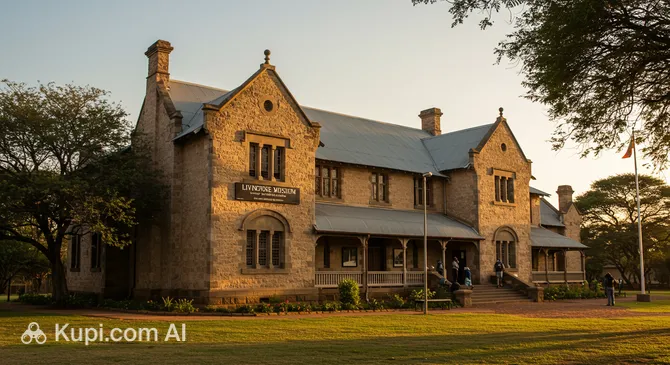
Located in the heart of Livingstone, the Livingstone Museum is the oldest and largest cultural institution, rightfully considered the primary guardian of the heritage Zambia is proud of. Founded in 1934, this museum offers guests a unique journey through the ages: from ancient geological epochs to the modern cultural traditions of Southern Africa.
Livingstone Museum. Illustration.
Source: Kupi.com AI
Traveler photos:
The museum's exhibitions cover a wide range of topics, including archaeology, ethnography, and natural history. It houses rare artifacts such as fossils of prehistoric animals, stone tools, and rich collections of everyday objects from various ethnic groups. The museum plays a crucial role in preserving material culture, which began to disappear under the influence of globalization as early as the first half of the last century.
Of particular value is the section dedicated to the life and work of the famous missionary and explorer David Livingstone. The halls store his authentic diaries, letters, and personal equipment, allowing visitors to touch the era of great discoveries. This place is a must-visit for anyone who wants to understand the true soul of the African continent.
Contacts
To plan your visit to the Livingstone Museum, you can use the following contact details. It is recommended to check for information on temporary exhibitions on the institution's official website.
Visitors to the Livingstone Museum can expect a rich program exploring several themed galleries. It is worth starting with the Archaeological Gallery, where human evolution in Zambia is vividly presented. Here, you can see ancient tools and the remains of extinct animals, providing a fascinating insight into life during the Stone and Iron Ages.
In the Ethnographic and Art Gallery, guests can discover the diversity of cultural traditions of local peoples. Be sure to look for the collection of musical instruments, traditional costumes, and handcrafted items. This is a perfect opportunity to see how people's daily lives changed over the centuries and which crafts have survived to this day.
Equally fascinating is exploring the history section dedicated to the development of the mining industry and, of course, the legacy of David Livingstone himself. The explorer's personal notes and maps create an atmosphere of true adventure. After touring the main halls, you can stop by the museum shop to purchase commemorative souvenirs or join a themed guided tour, which museum staff often conduct.
Getting There
The attraction is located at 317 Mosi - Oa - Tunya Road, in the heart of the city. Thanks to its central location, the Livingstone Museum is easy to find by following the main streets and signs. It is situated just a few kilometers from the famous Victoria Falls, making it a must-visit spot on any tourist's itinerary.
If you are arriving by air, the nearest airport is Harry Mwaanga Nkumbula International Airport (LVI). It is about 10–15 kilometers from the museum, and the easiest way to cover this distance is by taxi. The trip takes no more than 15 minutes. Additionally, many hotels in the city offer shuttle services to their guests.
For getting around the city, you can use local taxis or a rental car — parking is available on the museum grounds. The site is within walking distance of other interesting locations, such as the Railway Museum, allowing you to combine several excursions into one walk.
Nearest city: Livingstone
History & Facts
The history of this institution dates back to the early 20th century, when interest in the region's cultural heritage began to grow rapidly among researchers. The collections started forming in 1930 on the initiative of the Secretary for Native Affairs, who recognized the importance of preserving the disappearing traditions of local tribes. The David Livingstone Memorial Museum officially opened its doors in 1934.
In 1937, the organization's status was elevated: it became part of the Rhodes-Livingstone Institute, turning the museum into an important center for anthropological and sociological research. An interesting fact: in 1948, the museum management seriously considered purchasing the fossils of the famous "Rhodesian Man", but the deal never took place due to budget constraints.
After the country gained independence in 1964, the museum received its current name. During this period, the focus of the exhibitions shifted from colonial research to national history, highlighting the achievements and identity of indigenous peoples. Today, the museum remains a vibrant scientific center actively engaged in preserving the languages, folklore, and crafts of the region.
Time Needed
To get acquainted with all the exhibits without rushing, the average visitor is recommended to set aside about 2–3 hours. This is sufficient time to carefully examine the archaeology and ethnography galleries, as well as study the unique collection of David Livingstone's personal belongings in detail.
If you are a history enthusiast who enjoys reading every archival letter, your visit might take a bit longer. However, thanks to the well-thought-out layout of the halls, even in a couple of hours, you can gain a complete and vivid impression of the cultural and natural richness of this African region.
Working Hours
When planning your visit to the Livingstone Museum, you can count on a convenient and stable operating schedule. The museum is open to visitors daily, making it easy to fit into your travel plans even on weekends.
The institution's opening hours are from 09:00 to 16:30, Monday through Sunday. This schedule allows you to leisurely explore all the exhibitions in the morning or drop by in the afternoon before a stroll to Victoria Falls.
9:00 – 16:30
Nearby
Exploring the surroundings of the Livingstone Museum will allow you to dive deeper into the city's atmosphere and enjoy local hospitality. Very close to the historical halls, there are cozy establishments where you can relax after an eventful tour.
Numerous interesting sites are concentrated around the museum — from authentic grill bars to historical locations associated with the first settlements in the region. Below are the nearest attractions and places to relax: