Support

Jeki

Airports in the city

About the Airport

Jeki Airport is not merely a runway; it is your gateway to the very heart of the wild nature of Zambia. Imagine: the landing gear of your light aircraft touches the ground, and you are immediately surrounded by the sounds and scents of the African savannah. Located directly within the territory of the famous Lower Zambezi National Park, this airstrip serves as the starting point for unforgettable safari adventures, minimizing travel time and maximizing your immersion in nature.
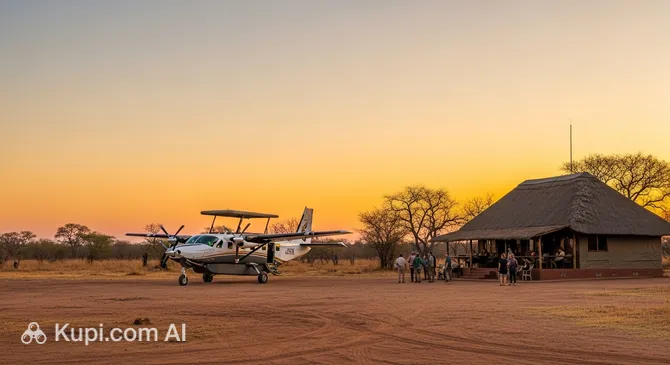
Jeki. Source: Kupi.com Binoculars
IATA Code JEK
ICAO Code FLJK
City Lower Zambezi National Park
Distance to center Located directly within the park territory
Status Domestic, for charter and private flights
Passengers per year Exact data unavailable, serves tourist charters
Popular Airlines Proflight Zambia, local charter airlines

The main advantage of Jeki Airport is its unique location. You will not have to spend hours transferring from a major city; your safari begins almost immediately after landing. The airstrip serves numerous lodges and camps located along the Zambezi River, ensuring quick and convenient access to them.

The flight to Jeki is an adventure in itself. Flights are operated on small aircraft, from the windows of which breathtaking views of the Zambezi River, endless plains, and herds of wild animals open up. Do not be surprised if, upon arrival, you spot elephants or antelopes right by the runway — here, nature is the true host.

It is worth noting that Jeki is a typical "bush airstrip". There are no conventional terminals, shops, or restaurants here. The infrastructure is minimal and functional, created exclusively for welcoming and sending off park guests. Representatives from your lodge usually meet you right at the aircraft to immediately set off towards the wild nature.

Contact Information

Jeki Airport (Jeki Airstrip) is a small airfield in the heart of the national park, primarily serving charter flights for safari lodge guests. Due to its specific nature, standard contact details common for major airports are absent here. All necessary support is provided directly by air carriers and tourism companies.

  • Official Website: Jeki Airport does not have its own official website. All information regarding flights, rules, and services is provided by the airlines operating charters or the safari lodges.
  • Inquiry Service Phone: There is no direct public telephone line for the airstrip. For all inquiries, it is recommended to contact your air carrier or tour operator.
  • Address: Jeki Airstrip, Lower Zambezi National Park, Zambia.
  • Email: There is no public email address for contacting the airstrip administration.
  • Social Media: The airport does not maintain official pages on social networks.
  • Lost Luggage Information: In case of loss or damage to luggage, you must contact the airline that operated your flight directly.
  • Passenger Support Contacts: Passenger support is carried out by representatives of your air carrier or the tourism company that organized the trip.

How to Get to the Airport

Jeki Airstrip is not a standard city airport, but a runway in the heart of the wilderness, serving guests of safari lodges in Lower Zambezi National Park. Therefore, the ways to get here differ radically from familiar urban routes. The main rule is that all transport must be organized in advance.

Transfer from Safari Lodges

This is the most common and recommended method of travel. Practically all lodges and camps in the park provide transfers for their guests to and from the airstrip. The journey is made in specially equipped 4x4 off-road vehicles, often open-topped. The trip itself is already part of the adventure — along the way, you may encounter elephants, antelopes, and other park inhabitants. Travel time depends on the location of your lodge and can range from 30 minutes to one and a half hours. The cost of the transfer is usually already included in the accommodation package.

Charter Flights

For many travelers, the road to Jeki begins with a flight. Small charter planes connect this airstrip with major airports, such as Kenneth Kaunda International Airport in Lusaka, as well as with other national parks in Zambia. This is the fastest way to reach the park. Such flights should be booked well in advance through your tour operator along with the main safari tour.

Car Rental

Independent travel in a rented car is an option for experienced and prepared drivers. You will need a reliable 4x4 SUV, rented in one of the major cities, for example, in Lusaka. The roads in the park are unpaved, their condition depends heavily on the season, and navigation can be difficult. This method requires complete autonomy (fuel reserves, water, food) and is not recommended for novices.

Public Transport and Taxis

In the conventional sense, public transport (buses, trains) and taxi services are absent in Lower Zambezi National Park. You will not be able to hail a taxi or board a scheduled bus to get to Jeki Airstrip.

Parking at the Airport

There is no official guarded parking at Jeki Airstrip. It is simply a runway without accompanying infrastructure. Leaving a car here for a long term is not provided for and is not recommended.

Terminals and Map

Jeki Airport (JEK), serving the Lower Zambezi National Park, is essentially a bush runway rather than a major transport hub. Its structure is maximally simple and functional, which is part of its unique charm and allows travelers to immerse themselves in the atmosphere of wild nature almost immediately after landing.

Structure and Navigation

The airport consists of one small terminal, which more closely resembles a modest building or even an open pavilion. There is no complex layout, multiple boarding gates, or long corridors here. All services and zones are located in one compact space, making navigation intuitively clear and fast. It is practically impossible to get lost here.

Departure and Arrival Zones

Arrival and departure zones are not strictly separated. Upon arrival, passengers walk from the aircraft to the terminal building, where they are met by representatives of lodges and safari operators. The departure zone is, in essence, the same waiting area where passengers await the invitation to board. The entire process takes place in an informal and friendly atmosphere.

Procedures and Time

Flight check-in and security checks are very quick. Usually, this takes no more than 15-20 minutes. There are no check-in counters of major airlines here; most often it is a simple desk where a staff member checks passenger lists and weighs luggage. Security screening is minimal but complies with requirements for light aviation. There is no need to arrive at the airport several hours before departure — usually, arriving 30-45 minutes prior is sufficient.

Recommendations

The main advice for travelers using Jeki Airport is to relax and enjoy the simplicity. You will not need maps or navigation apps. Ground staff and pilots will always tell you where to go. This is more like a private flight experience than traveling through a major international airport, and therein lies its charm.

History of the Airport

The history of Jeki Airport (JEK) is closely intertwined with the development of tourism in Lower Zambezi National Park. It is important to understand that this is not a major international hub, but rather a small airfield (or airstrip), playing a key role in the logistics of safari tours in this part of Zambia. The exact date of its founding is not as widely documented as that of large airports, but its emergence is directly linked to the declaration of Lower Zambezi as a national park in 1983 and the subsequent growth of interest in this unique region.

The main stage of the airfield's development was its creation to ensure fast and convenient access for tourists to remote lodges and camps in the park. Instead of years of construction and terminal expansion, its history is a history of maintaining and improving an unpaved or gravel runway capable of receiving small charter aircraft, such as the Cessna Caravan. Its development has always kept pace with the growth in the number of safari camps and the increase in tourist flow.

Significant historical events here are not the signing of international agreements, but rather the daily adventures that begin right from the moment of landing. Jeki Airstrip does not have an imposing terminal — often it is just a small canopy for protection from the sun, which immediately immerses travelers in the atmosphere of wild nature. One of the most interesting facts lies in its location: the runway is situated in the middle of the bush, and pilots often have to make an extra circle before landing to ensure there are no elephants, buffaloes, or other animals on the strip.

Thus, the history of Jeki Airport is not a tale of records and massive reconstructions, but a story of how a small airfield became a vital artery for eco-tourism, opening one of the most picturesque corners of Africa to travelers from all over the world. Its modest infrastructure and proximity to wild nature are not a disadvantage, but one of the main features, making arrival at the park an unforgettable start to a great adventure.

Services and Facilities

Jeki Airport (JEK) is essentially a runway serving as the gateway to Lower Zambezi National Park. It is important to understand that this is not a major commercial airport, and its infrastructure is minimal and focused on functionality. Here you will not find restaurants, cafes, or shops. Passengers are recommended to carry a supply of water and light snacks. Main meals are provided at the safari lodges that meet guests upon arrival.

The waiting area at Jeki Airport consists of a simple shelter or small building for protection against the sun and weather. There are no VIP halls or lounges with enhanced comfort here. Also, do not count on the availability of public Wi-Fi and charging stations for electronic devices. Ensure that all your gadgets are fully charged before flying to Jeki.

There are no banks, ATMs, or currency exchange points on the airport territory. All financial operations, including money exchange, must be completed in advance in the major cities of Zambia, such as Lusaka. There are also no specialized medical points. Basic first aid can be provided by lodge staff, but travelers are strongly advised to carry a personal first aid kit and valid travel insurance.

Special services for passengers with children, such as mother and child rooms or play areas, are not provided at Jeki Airport. Passengers with reduced mobility should notify their airline in advance and the receiving safari lodge about the need for assistance. Staff will be able to assist with boarding and disembarking, however, the runway infrastructure itself is not equipped with ramps or special amenities.

There are no hotels directly on the airport territory. Guests arriving at Jeki typically head to pre-booked safari lodges and campsites located within the park, representatives of which organize the transfer. Business centers or conference rooms are absent at the airport, as it is intended exclusively for tourism purposes.

Where to Eat

When planning travel through Jeki Airstrip (JEK), it is important to note that there are absolutely no commercial dining establishments on its territory: there are no restaurants, cafes, or juice bars here. This airstrip is a runway in the heart of the wilderness, designed to serve guests of Lower Zambezi National Park, and its infrastructure is minimal.

Typically, food and beverages for arriving travelers are taken care of by representatives of safari lodges and tour operators. Upon arrival, you will be met and most likely offered water and light refreshments for the duration of the transfer to your accommodation. All further dining will be organized at the lodge itself. Most lodges can cater to specific dietary requirements, such as Halal, if requested in advance.

In this regard, we strongly recommend that passengers prepare for arrival in advance. Be sure to bring a personal supply of drinking water and non-perishable snacks (for example, energy bars, nuts, or dried fruits). This will allow you to wait comfortably for your lodge representative and endure the journey, especially on a hot day or in case of unforeseen delays.

Travel Tips

A trip to Lower Zambezi National Park is a true adventure that begins right at the airport. Jeki Airstrip (Jeki Airstrip) is not a major international hub, but a typical bush runway serving small safari planes. Understanding its specific features will help make your journey as comfortable as possible.

Arrival and Check-in: Forget the "arrive 3 hours early" rule. Your safari lodge or charter airline will inform you of the exact time you need to be on-site, usually 30-60 minutes before departure. Check-in here is an informal procedure: a staff member with a passenger list will weigh your luggage and escort you to the aircraft. Security procedures are minimal and unlike those in large airports.

Luggage and Seat Selection: This is the most important point. Airlines flying into the bush of Zambia set strict limits on luggage weight (often 15-20 kg, including hand luggage). It is also almost always required to transport items in soft bags rather than hard suitcases, as they are easier to stow in a small luggage compartment. Seats on the plane are usually not selected in advance — they are assigned by the pilot to properly balance the aircraft. However, stunning views open up from any window.

Customs and Transfers: Jeki Airstrip serves only domestic flights. You will go through all passport and customs controls at the international airport of arrival, for example, in Lusaka. A transfer at Jeki is, as a rule, simply a move from the plane to the safari jeep of your lodge, which will be meeting you right by the runway.

Savings and Unforeseen Situations: The main way to save money is to adhere to luggage allowance rules to avoid costly excess weight fees. In case of a flight delay (most often due to weather), have patience. There are no waiting lounges or cafes at the airstrip. Your guide or airline representative will take care of you and provide all necessary information. Keep a book, water, and a light snack at hand.

Reached the end of the page?

That means the route is fully explored