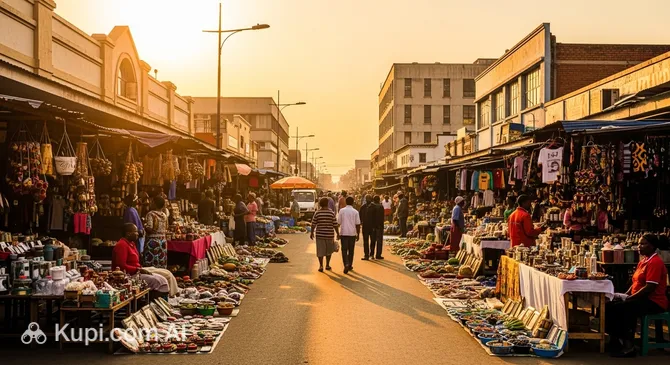
Chitungwiza is a dynamic and fast-growing city in Zimbabwe, often referred to as a "dormitory town" of the capital due to its close proximity to Harare. Despite its suburban status, it is an independent and vibrant metropolis with a population of over 370,000, where African flavor is evident in every street market and creative workshop.
Founded in 1978, the city merged three historical settlements — Seke, Zengeza, and St Marys. The city's history is closely tied to the need for expanding residential zones for the country's growing population. Today, Chitungwiza is the third most populous settlement in the nation, offering tourists a unique look at the region's modern urban life.
Chitungwiza. Illustration.
Source: Kupi.com AI
One of the most striking features of this place is its status as a cultural hub: the city is famous for its talented musicians and artists, especially masters of stone sculpture. While there are no classic world-class tourist sites here, the atmosphere of everyday hustle and bustle in the central squares and the sincere hospitality of the locals make a visit to the city a memorable experience.
We invite you to take a look at Chitungwiza to feel the real rhythm of modern Zimbabwe, get acquainted with the work of local craftsmen, and see how one of the youngest and most energetic cities in the country lives and develops.
Weather Overview
Chitungwiza is located in a subtropical climate zone, characterized by a clear transition between dry and wet seasons. Travelers should keep in mind that the hottest time of year here is October and November, when daytime temperatures often rise to +28...+29°C. If you plan a visit during this period, be sure to bring sunscreen.
The rainy season usually begins in November and lasts until March. Heavy downpours are possible during this time of year, though they are most often brief. The coolest and driest months are June and July. During the day, the temperature remains comfortable for walking (around +21°C), but nights can be quite cold, with the mercury dropping to +8...+9°C. You can always check the current weather in the city before your trip.
Expect a sunny and warm summer with occasional afternoon thunderstorms and dry, clear winter days with contrasting temperatures between day and night. The dry period (from May to September) is considered the most favorable time to visit the city, as the lack of precipitation and moderate heat make moving around the area as convenient as possible.
Average monthly temperature
Average monthly precipitation
Interesting Facts
The name of the city Chitungwiza has deep roots and comes from the shrine of the legendary spirit medium Chaminuka, highlighting the sacred significance of these lands for local tribes.
It is one of the "youngest" major cities in the country: it only received official city status in 1981, three years after the merger of three working-class settlements.
The city is a recognized cradle of Zimbabwean music — many famous performers in the Sungura and Chimurenga genres started their journey on the streets and in the pubs of Chitungwiza.
Despite its huge population (over 370,000 people), the city is still functionally highly dependent on the capital, as most of its residents commute daily to work in Harare and back.
How to Get There
Chitungwiza is located approximately 30 kilometers south of the capital, making it easily accessible for travelers arriving in the region. The main transport hub is the A3 highway, which connects the city with the country's primary transport arteries. The journey by car or public transport usually takes 40 to 60 minutes, though extra time should be allowed during peak hours due to heavy traffic entering Harare.
The nearest and most convenient airport for international travelers is Robert Gabriel Mugabe International Airport in Harare, located just 20–25 kilometers away. From the terminal, you can reach Chitungwiza by taxi or by booking a transfer, which is the most comfortable option for a tourist with luggage. You can find more details by exploring the section on how to get to this region.
Rail connections within the city itself are poorly developed, and the main passenger flows pass through the capital's central station. From there, commuter omnibuses (kombis) and buses run regularly to Chitungwiza. Traveling by "kombi" is the most popular and budget-friendly way to get around, allowing for total immersion in local life.
Station
Passenger traffic
Distance
Harare Station
1
21 km
Main Attractions
In Chitungwiza, you won't find the usual architectural monuments or ancient ruins; however, the city is interesting for its lively atmosphere and local points of interest. The main draws here are the central squares and the massive markets in the Seke, Zengeza, and St Marys townships. This is where life teems, and the air is filled with the aromas of local food and the sounds of street music.
Special attention should be paid to the artists' workshops. Chitungwiza is widely known as a cradle of talent in the field of stone sculpture. Many masters work directly in the yards of their homes or in small collectives, creating amazing works of art from serpentinite and other local stones, which later find their way into galleries all over the world.
For those who want to see the daily life of the residents, a walk through the central commercial zones is recommended. These are not tourist attractions, but real centers of social interaction where you can observe trade, chat with locals, and feel the genuine, unvarnished rhythm of an African suburb. Most tourists view the city as an interesting addition to a trip to the capital, allowing them to see the country as it truly is.
Local Cuisine
The gastronomic world of Chitungwiza is a celebration of traditional Zimbabwean flavors. The main dish on every table is sadza — a thick porridge made from maize meal that serves as the base for any meal. It is traditionally eaten with the hands, dipping pieces into savory sauces, stews (beef or chicken), or side dishes of leafy greens like spinach or pumpkin leaves.
For adventurous foodies, local markets may offer more exotic options, such as dried mopane worms, which are considered a valuable source of protein and a delicacy. It is also worth trying local fried fish from nearby waters and various stews with added peanut butter, which gives the dishes a unique creamy taste and aroma.
The food culture in the city is closely linked to street food. In the markets of the Seke and Zengeza townships, you can find many eateries where food is prepared right in front of you over an open fire. Among beverages, tea with milk and sugar is particularly popular, as is the local traditional beer Chibuku, sold in characteristic plastic containers. This is a thick, low-alcohol drink based on fermented maize, with a specific sour taste, and it is an important part of the local social culture.
Travel Tips
Chitungwiza is a place with a special character, and to ensure your trip goes smoothly and leaves only pleasant memories, we have prepared some practical tips.
Clothing and Essentials: Choose light clothing made from natural fabrics, as the region has a warm climate. In the winter months (June–August), it gets cool in the evenings, so bring a light jacket or sweater. Comfortable closed-toe shoes are essential for walking through markets and dusty streets.
Transport: The most accessible way to get around is by "kombi" minibuses. For maximum comfort and safety in the evening, use registered taxis.
Finances: The main currency for transactions is the US dollar. Try to carry plenty of small bills ($1, $2, $5), as shops and transport often lack change. ATMs may be unavailable or may not accept foreign cards.
Health and Safety: Drink only bottled water and avoid ice in drinks. In crowded places, especially markets, keep a close eye on your belongings and do not display valuables openly.
Communication: English is the official language and is widely spoken, so there will be no communication problems. Knowing a few phrases in Shona (the local language), such as "Mhoro" (hello), will bring a genuine smile to residents' faces.
Local Etiquette: Zimbabweans are very polite. Always start a conversation with a greeting. When handing over money or gifts, it is customary to use both hands — this is a sign of deep respect.
What to Avoid: Do not take photos of government buildings, police officers, or military sites — this can lead to serious legal problems.
Connectivity: You can buy a local SIM card (e.g., Econet) in shopping centers. This will provide you with inexpensive mobile internet, as public Wi-Fi is rare.
Following these simple rules will help you feel confident and fully enjoy the hospitality of this amazing African city.
Entertainment & Nightlife
The entertainment scene in Chitungwiza is predominantly local in character. There are no massive world-famous nightclubs here, but the city is known for its small bars and pubs where live music is often played. Local artists performing rhythmic African melodies create an incredibly soulful and energetic atmosphere in these venues, attracting young people from all around.
Evening life is concentrated around the markets and commercial zones in the townships, where evening eateries operate. These are places where people gather after a workday to discuss the news over a glass of a local beverage. It is worth remembering that life in residential areas quietens down quite early, and for larger-scale parties, theater visits, or modern cinemas, residents and guests usually head to nearby Harare.
Daytime entertainment in the city involves visiting sports fields and creative associations. You can often come across open rehearsals of dance or music groups, which adds to Chitungwiza's status as a regional cultural hub. Tourists are advised to plan their leisure time so that they spend the evening in trusted establishments or return to their hotel using official taxi services.
Parks & Museums
Because Chitungwiza is a young and intensively developed city, there are few classic park zones with landscaped alleys. Green spaces are mainly represented by small squares and public areas within the residential townships. Nevertheless, the open spaces of markets and squares often serve as places for rest and socializing for residents, replacing traditional parks.
As for museums, there are practically none within the city itself. However, cultural cravings are easily satisfied by visiting local art workshops. These are a kind of "open-air museum" where you can see the process of turning a block of stone into a graceful statue. Each such place is unique and reflects the artistic vision of a specific master or an entire family of artists passing down the secrets of the craft from generation to generation.
For a full introduction to the historical heritage and art of the region, city residents usually head to neighboring Harare, where the country's largest museums are located. Nevertheless, a walk through Chitungwiza itself provides an opportunity to see modern living art born right on the streets, which for many tourists proves more valuable than static museum exhibits.
Getting Around
The public transport system in Chitungwiza is primarily represented by a network of private minibuses known locally as "kombis". This is the main and cheapest way to move both within the city and for trips to Harare. Kombis do not have a fixed schedule — they depart as they fill up, and their routes cover all corners of the townships. A ride in such transport is a true local experience, accompanied by loud music and close proximity to fellow citizens.
The fare is paid in cash directly to the conductor inside the cabin. Prices are fixed and very affordable, but it is advisable to have small bills (US dollars) with you, as there may be difficulties with change. In addition to minibuses, larger municipal buses run between the city and the capital; they run less frequently but offer a bit more space.
For more comfortable and faster trips, tourists can use taxi services. Both official services and private drivers operate in Chitungwiza. It is important to agree on the fare in advance before you get into the car. Renting a car is also a good option if you plan to move around the area a lot; however, take into account the chaotic traffic during peak hours and the condition of some secondary roads in residential areas.
Accommodation
The hotel infrastructure in Chitungwiza is primarily geared towards short-term stays for business travelers and expats, so there are virtually no luxury five-star hotels here. The bulk of the accommodation consists of cozy guesthouses and small private hotels that offer basic comfort, a homey atmosphere, and a chance to experience local hospitality.
The most convenient area to stay in is considered the vicinity of the A3 highway. Staying here is advantageous in terms of transport accessibility: it is easiest to reach both the city's central markets and the capital from here. Many travelers prefer to rent apartments, which allows them to feel more independent and manage their own daily routine.
We recommend booking accommodation in advance, especially if you plan to visit during cultural festivals in neighboring Harare. Most local establishments accept cash (primarily US dollars), so it is worth clarifying this at the time of booking. If you are looking for a high level of service and a wide range of amenities, you might consider staying in the southern districts of the capital, from where you can reach Chitungwiza in half an hour.
Nearby Cities
Thanks to its location in the metropolitan region, Chitungwiza is an excellent starting point for exploring the central part of the country. Key economic and cultural centers are located just a few dozen kilometers away, each with its own character and set of interesting places.
Undoubtedly, the number one destination for a trip is Harare. The capital of Zimbabwe is just 21 kilometers away and is easily accessible by regular commuter omnibus. Here, shady parks, the National Gallery of Art, and bustling shopping centers await you. Another interesting option is a trip to the town of Ruwa, known for its agricultural lands and rapidly developing residential areas.
Exploring the surroundings allows you to see the diversity of landscapes and architectural styles in the region. Whether you choose the busy streets of the capital or quieter suburbs like Norton, such a trip will significantly enrich your understanding of life in Zimbabwe.
Shopping & Souvenirs
Shopping in Chitungwiza is primarily about visiting colorful local markets. The main trading floors are concentrated in the Seke, Zengeza, and St Marys townships. There are no fancy boutiques here, but you can find absolutely everything: from the freshest tropical fruits and vegetables to clothing and household items. The market atmosphere is filled with energy, the loud shouts of traders, and the chance to haggle, which is an essential part of the buying process.
If you are looking for something special to remember your trip, look for the works of local artisans. The city is famous for its stone sculptures and woven baskets. Buying a souvenir directly from a master in their workshop not only guarantees the best price but also gives confidence in the product's authenticity. It is a great chance to bring home a piece of the Zimbabwean soul embodied in stone or wood.
For a more familiar European-style shopping format with supermarkets and chain stores, visit the small shopping centers in the city center. Most shops are open from morning until early evening. It is important to remember that in Chitungwiza, cash (US dollars) remains the most reliable method of payment, as card terminals can be unstable. Tax Free returns are not available in small shops, so focus on the final price when calculating.