Iles De La Madeleine

About the Airport

Located in the heart of the Gulf of St. Lawrence, Îles-de-la-Madeleine Airport serves as the main air gateway to this picturesque archipelago belonging to the province of Quebec, Canada. This is the place where travelers first experience the salty sea breeze and the unique atmosphere of the Magdalen Islands, famous for their red cliffs and endless beaches.
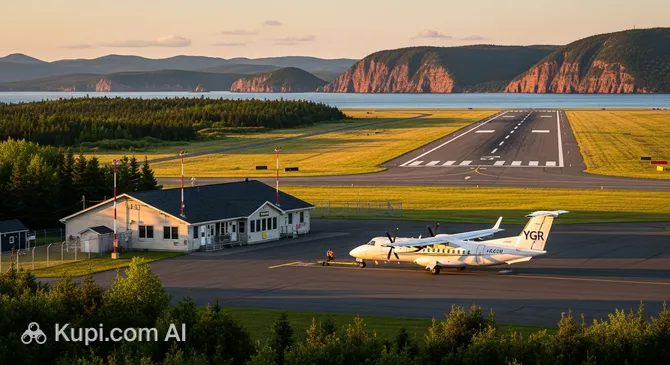
Îles de la Madeleine. Illustration.
Source: Kupi.com AI

Despite its modest size, the airport plays a critical role in the life of the local community and the development of tourism. It provides a reliable link between the islands and the mainland, allowing residents and guests to quickly reach the region's major cities. Inside the terminal, a calm and friendly atmosphere prevails, typical of small island airports where every passenger feels like a welcome guest.

CharacteristicValue
IATA codeYGR
ICAO codeCYGR
CityMagdalen Islands
CountryCanada
Time zoneAmerica/Halifax
Popular airlinesAir Canada, Pascan Aviation, PAL Airlines

The main passenger flow is handled by carriers such as Air Canada, connecting the archipelago with Montreal and Quebec City, as well as Pascan Aviation and PAL Airlines, which offer regional flights. Thanks to these airlines, reaching this remote corner of nature is much easier than by sea, especially during the winter period.

The infrastructure of YGR airport is constantly being modernized to meet modern safety and comfort standards. The runway is capable of accommodating medium-haul aircraft, making it a key transportation hub. For tourists, all necessary basic amenities are provided here, including car rental desks and cozy waiting areas.

One of the airport's distinctive features is its stunning location. Upon landing, passengers are treated to breathtaking views of lagoons, sandbars, and colorful houses scattered across the hills of Havre-aux-Maisons. This makes arriving at Îles-de-la-Madeleine a unique and unforgettable travel experience in itself.

Overall, Îles-de-la-Madeleine Airport is not just a transportation facility, but a symbol of hospitality and the islands' connection to the rest of the world. Most adventures on the archipelago begin and end here, and the administration does everything possible to ensure your stay leaves you with only the warmest memories.

Contact Information

  • Official Airport Website: www.aeroportdesiles.com
  • Inquiry Service Phone: +1 418-969-2320
  • Airport Address: 210 Chemin de l'Aéroport, Havre-aux-Maisons, QC G4T 5L2, Canada
  • Email: info@aeroportdesiles.com
  • Social Media: facebook.com/AeroportIlesdelaMadeleine
  • Lost Luggage Information: +1 418-969-2320 (ext. 224)
  • Passenger Support Service: contact@ygr-airport.ca

How to Get to the Airport

There are several ways to get from the airport to different parts of the Magdalen Islands, although it is worth noting that public transport here is not as developed as in large metropolitan areas. The main departure point is the terminal in the settlement of Havre-aux-Maisons, from where the main road leads to the rest of the archipelago's islands. A trip to the central settlement of Cap-aux-Meules usually takes about 15–20 minutes, depending on traffic conditions.

The most popular and convenient way for tourists to get around remains car rental. Major rental agencies like Hertz and the local company Leblanc Location have desks in the airport terminal. It is recommended to book a car in advance, especially during the peak summer season, as the demand for transport on the islands is extremely high. Rental costs start from approximately $50–$65 per day.

Taxis are another reliable option for reaching your hotel or the port. Cars usually wait for passengers at the terminal exit after the arrival of scheduled flights. The average cost of a trip to Cap-aux-Meules is about $18–$26. If you are traveling in a large group, it makes sense to book a transfer in advance through local companies to ensure the availability of a minivan.

For those who prefer budget options, there is a local bus service called Le Réseau de Transport des Îles (RETIM). However, their schedule is not always perfectly synchronized with flight arrivals, so it is worth checking current routes on the service's website. This is a great way to experience the local flavor while passing through scenic landscapes for just a few dollars.

Parking at YGR airport is organized quite simply. An open parking lot is located in front of the terminal, where the first 15–30 minutes are usually free for those dropping off or picking up passengers. For long-term car storage, special rates are provided, which are quite affordable compared to major international hubs.

If you plan to travel to other islands, such as Grosse-Île or Grande-Entrée, allow at least 45–60 minutes for the journey. The roads on the archipelago are narrow and very scenic, so the trip to or from the airport itself will be a pleasant part of your vacation. The main thing is to always keep an eye on the weather forecast, as strong winds and fogs can affect travel speed.

Terminals and Layout

Îles-de-la-Madeleine Airport (YGR) has one compact and functional passenger terminal that efficiently handles the flow of travelers. The building was designed to provide maximum convenience with minimal time spent moving between zones. Navigation inside the terminal is intuitive even for first-time visitors: all key services are within sight.

The check-in area is located in the central part of the hall. This is where the counters for Air Canada and Pascan Aviation are situated. Due to the small number of flights, queues are rare, but in the peak summer months, it is recommended to arrive 90 minutes before departure. Airport staff are known for their friendliness and readiness to help with any question, from baggage check-in to clarifying flight information.

After passing through security, which usually takes no more than 10–15 minutes, passengers enter the secure departure zone. The waiting lounge is equipped with comfortable seating and panoramic windows offering views of the airfield and surrounding landscapes. A small souvenir kiosk and a café where you can grab a snack before your flight are also located here.

The arrivals area is located in the same building and has a separate exit to the baggage claim belt. The process of receiving bags after landing is very quick, as planes park in close proximity to the terminal. Passengers can disembark and receive their luggage within 10 minutes, then head to the taxi stand or car rental desks.

For passengers with disabilities, the terminal provides ramps and specially equipped restrooms. The airport fully complies with accessibility standards. In addition, the terminal building is equipped with free Wi-Fi, allowing travelers to stay connected or handle work matters while waiting for boarding.

The terminal infrastructure also includes a tourist information desk where you can pick up maps of the islands and find out about current events. This is very convenient for those just beginning their acquaintance with the archipelago. Overall, the YGR terminal leaves the impression of a cozy and well-organized space that perfectly complements the overall feeling of a holiday in the Magdalen Islands.

Airport History

The history of aviation on the Magdalen Islands began long before the construction of the modern terminal, when the only way to connect with the mainland in winter was by mail boat or dangerous flights on light aircraft with ski landing gear. In the mid-20th century, it became clear that the archipelago needed a reliable airfield to ensure stable communication with the rest of Quebec. The first full-fledged airfield was established in the Havre-aux-Maisons area, which, thanks to its terrain, was best suited for runways.

The official opening of the airport took place in the 1960s, which was a real breakthrough for the local economy and healthcare. Before this point, residents were often isolated during storms or ice-overs. The arrival of scheduled flights allowed for the rapid delivery of goods and emergency transport of patients, significantly improving the quality of life on the islands. In those years, YGR airport mainly accepted small propeller planes capable of landing on relatively short runways.

In the 1970s and 80s, the airport went through several stages of modernization. The runways were lengthened and reinforced, allowing for heavier aircraft like the Dash 8 turboprops. This led to an increase in tourism: travelers from the mainland began to discover the beauty of the archipelago, which was previously difficult to access. The terminal building was also expanded to accommodate the increasing number of passengers.

A significant event in the airport's history was its transfer to the management of local authorities and the community, which allowed for a more flexible approach to the development of transport infrastructure. In the 2000s, work was carried out to update navigation and safety systems to comply with strict international aviation standards. Today, Îles-de-la-Madeleine Airport is a modern facility that has retained its historical significance as a vital lifeline for the region.

An interesting fact from the airport's history is related to its role during severe blizzards: YGR has repeatedly served as a temporary shelter for travelers and a site for rescue operations. Over the decades of its existence, it has transformed from a simple airstrip into a symbol of the islands' connection to the world, preserving in its history many personal meetings and departures against the backdrop of the harsh but beautiful northern nature.

Services and Facilities

Îles-de-la-Madeleine Airport (YGR) offers travelers a set of basic but high-quality services designed to make the wait for a flight as comfortable as possible. In the main terminal hall, there is a cozy café where you can order fresh coffee, pastries, and light snacks. This place is popular not only with passengers but also with locals who come to meet their loved ones. The atmosphere here is very homey, and prices remain at the level of city establishments.

For those who want to bring home a piece of the islands, there is a small souvenir shop at the airport. It offers a wide selection of local crafts, books about the history of the archipelago, and postcards with views of the famous red cliffs. Essential goods and press in French and English are also available. This is a great opportunity to buy last-minute gifts if you didn't have time during your trip around the islands.

Passengers are provided with free high-speed Wi-Fi throughout the terminal. The signal is stable, allowing you to check email, communicate in messengers, or watch videos without issues. In the waiting lounge, there are special areas with sockets and USB ports for charging mobile devices and laptops, which is particularly important for business travelers.

Financial services are represented by an ATM located near the check-in area. If you need to exchange currency, it is recommended to do so in advance at banks in town, as there is no full-fledged exchange office at the airport. For passengers with children, changing tables are provided in the restrooms, and a small play area helps keep little ones busy before the flight.

Special attention is paid to passengers with reduced mobility. The airport is fully equipped with ramps, and an assistance service is always ready to help with boarding or moving luggage. If you require wheelchair services, it is advisable to notify your airline 48 hours before departure for the most efficient service.

While there is no hotel in the airport building itself, there are several cozy guesthouses and motels in the settlement of Havre-aux-Maisons in the immediate vicinity (a 5–10 minute drive). This is convenient for those with an early morning flight. The information desk also provides details on nearby conference rooms and transport rental options, including bicycles for active travelers.

Dining

Despite its small size, YGR airport allows travelers to get acquainted with the gastronomic character of the region right in the terminal. The main place for a snack is Café de l'Aéroport, which offers a menu with an emphasis on fresh local products. Here you can try famous Quebec sandwiches, homemade soups, and traditional desserts. The establishment's operating hours are usually adjusted to the flight schedule, so you can always have a cup of hot tea before your trip.

For those who have time before check-in, visiting establishments in the immediate vicinity of the airport is a great option. In the settlement of Havre-aux-Maisons, you can find restaurants offering exquisite seafood dishes. For example, nearby is Quai 360, serving the freshest catches of the day accompanied by excellent wines. It is a wonderful place for a farewell lunch with a view of the marina before heading to the terminal.

If you are looking for something more authentic and simple, it is worth stopping by La Poissonnière. This place is famous for its fish snacks and smoked products, which can be purchased for a snack on-site or as a tasty souvenir to take with you. Vegetarian lovers will also find suitable options here—local salads and vegetable pies are in high demand.

The evening can be pleasantly spent at Les Pas Perdus—a popular bar and cultural space in Cap-aux-Meules, which can be quickly reached by taxi. A relaxed atmosphere reigns here, live music often plays, and the menu includes craft beer from local breweries and hearty burgers. This place is perfect for reflecting on your journey in the company of friends or locals.

It is important to remember that inside the secure departures area, food choices are limited to vending machines and a small buffet. Therefore, if you are planning a full meal, it is better to do so in the public area of the airport or at one of the city's restaurants. The average bill for lunch on the islands ranges from $15 to $33, and the hospitality of local restaurateurs will make your meal truly memorable.

Travel Tips

When planning your departure from Îles-de-la-Madeleine Airport, first take into account the capricious nature of the island weather. Fog and strong winds are common in this part of Canada, which can lead to flight delays. We recommend checking your flight status online at least 3-4 hours before departure and subscribing to notifications from your airline to stay updated on schedule changes.

It is worth arriving at YGR airport 1.5–2 hours before departure, even if you do not have luggage. Although security procedures usually go quickly, the small building can get crowded when two flights are being serviced simultaneously. Additionally, security staff here check carry-on luggage very thoroughly, so ensure all liquids up to 100 ml are packed in a transparent zip-lock bag.

If you are carrying local delicacies, such as the famous smoked herring or cheeses from local farms, be sure to check the transport rules. Hard cheeses are usually allowed in carry-on luggage, but products with a strong odor or liquid preserves are better off in checked baggage. Pack such purchases as securely as possible to avoid damaging other items in your suitcase in case of pressure changes.

For travelers with connections in Montreal or Quebec City, we advise allowing at least 2-3 hours for the layover. Weather conditions on the islands can delay departure, and having extra time will save you from unnecessary stress. In the event of a major flight delay due to weather, airlines on the islands usually provide information about nearby hotels, but keep in mind that rooms fill up quickly.

To save money, try to book a car in advance. The demand for transport at Îles-de-la-Madeleine Airport often exceeds supply, and renting on the spot can cost one and a half to two times more. If you plan to use a taxi, it is better to team up with other passengers from your flight—many drivers are happy to take several passengers, allowing you to split the cost of the trip to Cap-aux-Meules.

Finally, don't forget your camera or phone during takeoff. The path from Îles-de-la-Madeleine lies over some of the most beautiful landscapes in Atlantic Canada. Choosing a window seat on the right side of the aircraft upon departure often provides a magnificent view of the chain of islands and the narrow sandbars connecting them. This will be the perfect final shot of your journey.

Reached the bottom of the page?

Looks like you know this route inside out

We use cookies and services to collect user information. This is essential for the functioning of the site and for marketing purposes. You can find out more in .