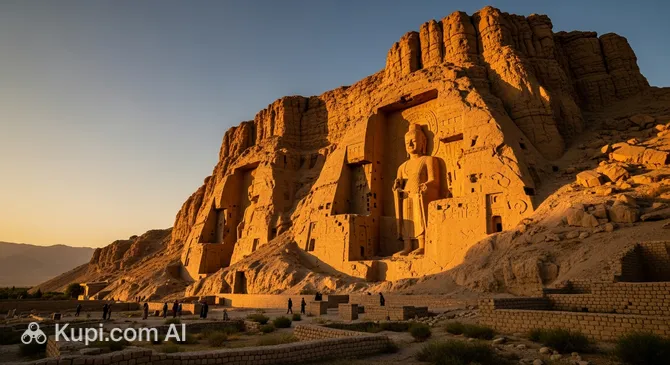
Imagine a majestic sandstone cliff, in the heart of which grand figures were carved as far back as the 6th century. The Buddhas of Bamiyan are a unique historical and cultural monument located in a picturesque valley graced by the city of Bamyan. For centuries, this complex in Afghanistan served as a vital spiritual center for pilgrims and traders of the Silk Road.
Buddhas of Bamiyan. Illustration.
Source: Kupi.com AI
Traveler photos:
This archaeological ensemble consists of two giant empty niches where statues 55 and 37 meters high once stood. The surrounding rock massif is riddled with hundreds of cave grottoes, once richly decorated with frescoes and serving as dwellings for monks. Art here achieved a striking synthesis: Indian, Greek, and Persian features characteristic of the Gandhara style can be discerned in the monuments.
In 2003, the entire cultural zone of the valley, including the remains of the ancient statues, monastic quarters, and fortress ruins, was officially inscribed on the UNESCO World Heritage list. This site remains a symbol of the resilience of the human spirit and an important object for studying the history of world religions.
Contacts
To visit this unique historical site, it's worth checking details locally in advance, as the tourism infrastructure is still developing. Below are the current contact details for orientation.
The main experience here is walking along the colossal empty niches, which still impress with their sheer scale. You can enter the ancient cave complexes, which include thousands of grottoes. While exploring these tunnels, pay attention to the surviving wall paintings: fragments of ancient frescoes with Buddhist motifs still retain their vibrant colors, recalling Byzantine and Indian influences.
Be sure to climb to the viewing platforms to see the panorama of the valley. The contrast between the rugged ochre cliffs and the emerald green gardens below creates perfect conditions for artistic photography. Attentive travelers can spot traces of architectural decor and imagine what the monasteries looked like in their heyday.
Archaeology buffs should head a bit further into the Kakrak Valley, where small niches and remains of ancient shrines are also preserved in the rocks. This place invites quiet contemplation and the study of ancient architecture in an atmosphere of complete solitude amidst the majestic nature of the Hindu Kush.
Getting There
The Bamyan Valley is located in the central part of the country, among majestic mountain ranges. The main route for travelers starts from Kabul: the car journey takes 4 to 6 hours (about 200–250 km). The road passes through picturesque mountain passes, so it is recommended to rent a 4WD vehicle for a comfortable and safe journey along the winding roads.
A faster, though schedule-dependent, option is a domestic flight to Bamyan Airport. From the terminal, it's only a 10–15 kilometer drive to the rock niches themselves. To travel between the city and the attraction, it is most convenient to use local taxi services or book a tour transfer from guides in the city center.
Plan to leave early in the morning—this is when the mountain landscapes look their most spectacular, and the soft light is perfect for viewing the ancient rocks and green oases of the valley.
Nearest city: Bamyan
History & Facts
From the 2nd to the 9th century, the valley flourished as one of the largest centers of Buddhism in the world. As a key point on the Great Silk Road, this place served as a bridge between East and West, where ideas, beliefs, and art blended in a unique melting pot. It was here that the Gandhara style was born, harmoniously combining Hellenistic canons of beauty with Indian and Persian aesthetics.
In the 7th century, the famous Chinese monk-traveler Xuanzang described this place as a thriving kingdom with dozens of monasteries and thousands of monks. His chronicles mention not only the two standing figures but also a massive reclining Buddha statue in a state of nirvana, as well as dazzling decor—gold and precious stones that once adorned the faces of the deities.
Created between 300 and 600 AD, these colossi watched over changing dynasties and merchant caravans for centuries. Despite the harsh trials of time and historical upheavals, such as the invasion of Genghis Khan in 1222, the complex remains a vital archaeological testament to the cultural diversity of ancient Central Asia.
Time Needed
A basic tour of the main niches and a walk along the base of the cliff will take about 1.5–2 hours. However, if you plan to explore the cave labyrinths in detail, climb to the upper levels, and examine the remaining fragments of paintings, you should allow at least 3–5 hours for your visit.
For those who want to fully experience the magic of this place and visit neighboring valleys like Kakrak, it is recommended to set aside a full day. This will allow you to enjoy the panoramic views and the silence of the ancient monastic complex without rushing.
Working Hours
Currently, the territory of the complex is accessible for viewing daily and around the clock. Visiting is not restricted by strict time limits, allowing tourists to come both at dawn and sunset when the cliffs take on a particularly rich hue.
Nevertheless, before your trip, it is strongly recommended to check current information on official travel resources or confirm access rules with local guides, as the operating hours may change depending on ongoing restoration work or local holidays.
Open 24 hours
Nearby
Exploring the surrounding valley will allow you to dive deeper into the atmosphere of an ancient civilization. Near the main niches are many other archaeological and cultural sites that complete the picture of the region's former greatness.