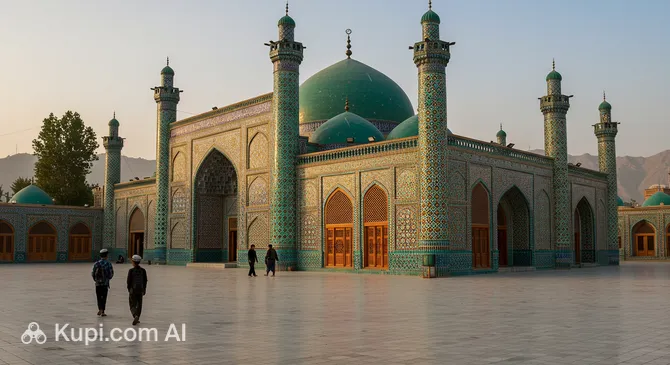
In the heart of the historic district stands the Pul-e-Kheshti Mosque, one of the most majestic and recognizable landmarks that Kabul takes pride in. Built at the turn of the 19th and 20th centuries, it serves as a striking example of classical Afghan architecture and an important spiritual center, bringing together generations of believers and architecture enthusiasts.
Pul-e Kheshti Mosque. Illustration.
Source: Kupi.com AI
Traveler photos:
Located near the banks of the Kabul River, this monumental building is distinguished by its spacious prayer hall and slender minarets. As an outstanding monument representing Afghanistan's cultural and historical diversity, the mosque attracts attention with its austere beauty and significant scale, making it the largest structure of its time in the city.
Thanks to careful restoration in the early 21st century, the mosque has preserved its authentic appearance. Today, it is not just a historical site but an active house of worship with a very warm atmosphere, highly praised by travelers for its expressiveness and significance to the country's cultural heritage.
Contacts
For further details before your visit or to get information about current events, you can use the following contact details:
A visit to the Pul-e-Kheshti Mosque is primarily an opportunity to immerse yourself in an atmosphere of peace and tranquility. Visitors can admire the exquisite architectural details, from the massive facades to the internal decorative elements that reflect the region's rich Islamic traditions. It is an excellent spot for those who appreciate the aesthetics of form and want to see how Afghan architecture has evolved.
It is recommended to walk around the building to appreciate its scale and take impressive photos against the backdrop of the minarets. Inside the mosque, you can observe the daily life and religious traditions of the local people, offering a deeper understanding of the city's cultural code. Especially interesting during the intervals between prayers when the silence emphasizes the grandeur of the space.
Since the mosque is located in a historic district, a visit here can easily be combined with exploring Old Kabul. A walk through the surrounding area will allow you to see other historical monuments and feel the rhythm of life in the ancient city, making for a rich and multifaceted excursion.
Getting There
The Pul-e-Kheshti Mosque is located in the historic center, in the old part of the city, right next to the Kabul River embankment. This central location makes it an excellent destination for those who prefer walking through the colorful streets of the capital. For precise navigation, you can use geographic coordinates or use the Gardens of Babur as a landmark, from which it is easy to reach the mosque by taxi or local transport.
If you are coming from the international airport, the car journey will take approximately 20–30 minutes, depending on traffic. Taxis are the most convenient and fastest way for tourists to get around. Drivers know this iconic building well, so there won't be any trouble finding the way.
For those already exploring the sights of the old city, the mosque will be a natural continuation of the route. Parking is available nearby, but keep in mind that traffic in the historic district can be quite heavy, so a walk from nearby landmarks is often more enjoyable.
Nearest city: Kabul
History & Facts
The history of this majestic house of worship dates back to the end of the 18th century. It was then that the foundation of the Pul-e-Kheshti Mosque was laid, quickly becoming one of the primary symbols of the city's spiritual life. Its construction coincided with a period when Kabul was actively developing as a cultural and religious hub of the region, shaping its unique architectural character.
A significant stage in the monument's life came in the 1960s, during the reign of King Zahir Shah. A large-scale restoration was carried out during this time, which helped not only strengthen the building but also preserve its authentic forms for future generations. These works highlighted the mosque's importance as a central element of Afghan architecture of that era.
In the early 21st century, the mosque underwent another cycle of restoration work. The reconstruction returned the building to its former expressiveness and splendor while maintaining historical continuity. Today, Pul-e-Kheshti is considered the largest religious structure of its period in Kabul, clearly demonstrating the evolution of local building techniques and traditions over several centuries.
Time Needed
To leisurely explore the Pul-e-Kheshti Mosque and soak in its atmosphere, it usually takes 1 to 2 hours. This is quite enough time to study the building's exterior, appreciate its scale, and go inside to view the prayer hall.
About 30–45 minutes should be dedicated to architectural details and facades, with the remaining time spent walking around the grounds and the riverbank. If you plan your visit during non-prayer times, you will have more opportunities for peaceful contemplation of the interiors and for taking memorable photos.
Working Hours
The Pul-e-Kheshti Mosque is open to visitors daily. You can visit anytime between 3:30 AM and 9:30 PM. This schedule applies to all days of the week, including weekends and Fridays, which is an important day for the Muslim community.
These long opening hours allow tourists to choose the most convenient time—whether it's the early morning hours to see the mosque in the rays of the rising sun or an evening visit when the building takes on a particularly solemn feel at twilight.
3:30 – 21:30
Nearby
Exploring the mosque's surroundings allows you to deeply experience the atmosphere of the old city and see the contrasts between modern and historical architecture. A walk through the adjacent neighborhoods will reveal many interesting locations, from quiet parks to lively public spaces.
Nearby are places frequented by locals, offering a great opportunity to observe the capital's daily life away from the standard tourist paths.