Support

The National Museum of Afghanistan

About

Located in the heart of an ancient region, the National Museum of Afghanistan is the primary guardian of the land's cultural heritage. Founded in 1919, it has evolved from a humble "Cabinet of Curiosities" into the country's largest cultural institution, now housing over 60,000 unique exhibits within its walls.
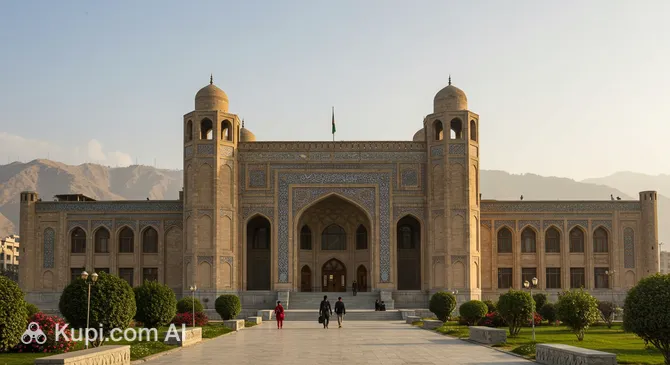
National Museum of Afghanistan
National Museum of Afghanistan. Иллюстрация. Источник: Kupi.com AI

Often referred to as the Kabul Museum, it is located in the city of Kabul and occupies an elegant two-story building in the Darulaman district. Its collections offer an incredible journey through time, illustrating the region's role as a key hub on the Great Silk Road. Here, the cultures of East and West meet: from prehistoric tools to exquisite Islamic miniatures.

Of particular value are the Buddhist stucco sculptures, ancient Hindu marble statues, and an impressive numismatic collection numbering around 30,000 coins. A visit to this museum offers a rare opportunity to see artifacts that have survived for centuries, preserving the spirit of the great empires of the past.

Contacts

To ensure your visit to the National Museum of Afghanistan is as comfortable as possible, we recommend saving the institution's contact details in advance. Finding the building in Kabul is quite straightforward if you navigate by the city's main thoroughfares.

How to contactContact
AddressF48C+R22, Darulaman Rd, Kabol, Афганистан

What to Do

Visitors can immerse themselves in ancient history by exploring the themed halls, which are organized chronologically. Be sure to look for the famous discoveries from archaeological expeditions, including gold artifacts and exquisite ceramics. A walk through the numismatic galleries allows you to see rare coins that once served as currency along the caravan routes.

Art lovers will find the Buddhist art collection and medieval Islamic manuscripts particularly fascinating. For a deeper understanding of the context, you can hire a guide for an educational tour, where they share the incredible stories behind the preservation of many exhibits. The museum also hosts regular temporary exhibitions highlighting specific eras or regions of the country.

Don't forget to take a moment to admire the architecture of the building itself, which blends classical European features with local style. Photography is permitted on the premises (subject to certain rules), allowing you to capture the majesty of ancient statues and royal regalia as a memento of your visit.

Getting There

The National Museum of Afghanistan is located in the Darulaman district, approximately 6 kilometers from the city center. The most convenient route is via Darulaman Rd, which connects the museum complex directly to the heart of the capital.

For most tourists, a taxi is the best option—the ride from central Kabul takes about 15–20 minutes. Public transport is also available, with regular shuttle minivans and buses running towards the Darulaman area. If you are coming from the airport, the drive will take roughly 20–30 minutes, depending on traffic conditions.

Ближайший город: Kabul

History & Facts

This landmark institution traces its origins back to 1919, when a "Cabinet of Curiosities" was established at the Bagh-e Bala pavilion by order of Emir Habibullah. The foundation of the initial collection consisted of unique manuscripts, ancient weapons, and artworks belonging to the royal family. The museum officially moved to its current two-story building, originally intended as a residence for King Amanullah Khan, in 1931.

Throughout the 20th century, the museum's holdings grew rapidly thanks to the active work of archaeological missions, particularly the Délégation Archéologique Française en Afghanistan (DAFA). By the 1990s, it housed over 100,000 priceless artifacts spanning a vast period from the Stone Age to the Islamic Middle Ages. This established the museum as one of the most significant cultural centers in all of Central Asia.

Following challenging periods in the region's history, a large-scale restoration of the building was carried out in 2003–2004 with international support. One of the most triumphant moments was the return of the legendary "Bactrian Gold," which had long been feared lost. Today, the collection continues to grow: in recent years, over 8,000 previously looted or exported items have been returned to the museum's halls.

Time Needed

To fully appreciate the rich exhibits, visitors are recommended to set aside at least 2–3 hours for their visit. This should be enough time to walk through the main themed halls, admire the details of ancient sculptures, and study the numismatic collection.

If you are a professional historian or an archaeology enthusiast, your visit could easily take half a day. Given the scale of the collection spanning millennia, it’s worth planning your visit for the morning, when the halls have the best natural light and fewer visitors.

Working Hours

The National Museum of Afghanistan is open to visitors throughout the week, except for Thursdays. Standard operating hours are from 08:00 to 15:30. Please note that on Fridays, the museum closes earlier, at 12:00, in observance of religious traditions.

As opening hours may change during holidays or for internal events, travelers are strongly advised to check for updated information on the official website or confirm the hours shortly before their visit.

DayWorking hours
понедельник08:00–15:30
вторник08:00–15:30
среда08:00–15:30
четвергЗакрыто
пятница08:00–12:00
суббота08:00–15:30
воскресенье08:00–15:30

Nearby

Exploring the surroundings of the museum complex can significantly enrich your travel experience and provide a fuller historical picture of the region. The Darulaman district is known for its monumental structures and modern recreation areas, which are worth visiting after your main tour.

A walk through the nearby locations will allow you to see the contrasts of the capital: from the majestic ruins of palaces to lively water parks where locals spend their time. Below is a list of the most notable sites within a few kilometers.

NameDistance
Darul Aman Palace0.2 km
Babur's Gardens5.3 km
Kabul Zoo5.7 km
Pul-e Kheshti Mosque7.7 km
Bukhara Restaurant7.9 km
Gulbahar Business Center7.9 km
Bagh-e Bala Palace8.1 km

Reached the end of the page?

That means the route is fully explored