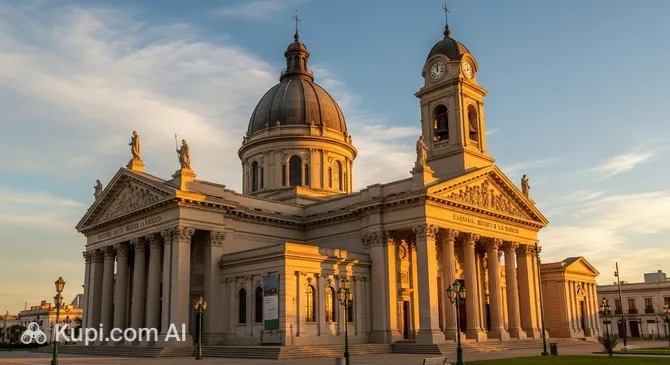
In the heart of the historical region, where the river meets tradition, rises the Cathedral of Our Lady of Mercy. This majestic church in the city of Carmen de Patagones is one of the most recognizable symbols of faith and architectural heritage carefully preserved by Argentina.
Cathedral of Our Lady of Mercy. Illustration.
Source: Kupi.com AI
Traveler photos:
The cathedral, erected in the early 20th century, is a magnificent example of Neo-Romanesque architecture with harmonious touches of classical style. It is the second church built on this site, underscoring its special spiritual significance to the local community. Its facade and tall towers create a solemn yet inviting look that captures the gaze of travelers.
Visitors appreciate this place not only for its artistic value but also for its atmosphere of exceptional peace and tranquility. As an active cathedral, it remains a living center of cultural and religious life, hospitably opening its doors to all who wish to touch the history of the Patagonian region.
Contacts
For those planning a visit to the cathedral, below is the essential contact information for navigation and communication:
The main reason to step inside the church is its interior decoration. The cathedral's interior is inspired by the best traditions of Catholic architecture: you can admire elegant columns as well as altars crafted with elements of Baroque and Rococo styles. Gilded details and ceiling paintings create a solemn atmosphere characteristic of the region's most important shrines.
In addition to a visual tour, at the cathedral you can:
Spend time in quiet prayer or meditation, enjoying the silence away from the city bustle.
Take high-quality photographs of the Neo-Romanesque facade and bell tower in daylight.
Attend a solemn service to experience the living energy of this place and hear the church singing.
After finishing your tour of the cathedral's architecture, be sure to take a stroll through the surrounding streets. The city's historical center and proximity to the banks of the Río Negro allow you to combine a visit to the church with a pleasant promenade, revealing picturesque panoramas and the spirit of old Patagonia.
Getting There
Finding this spiritual center is quite easy, as it is located at Irigoyen 27, essentially in the historical heart of the settlement. If you are already in the city center, the best option is a walk: the cathedral area is a pedestrian zone with a pleasant atmosphere, perfect for a leisurely exploration of the architecture.
For travelers arriving from the neighboring city of Viedma, the journey takes very little time—about 20 kilometers. You can use taxi services or local buses that regularly run across the bridge over the Río Negro. Public transport stops are located in the immediate vicinity of the church.
If you are traveling from other regions, such as Buenos Aires, it is most convenient to take an intercity bus to the city terminal, and from there, take a short walk or a taxi to the main gates of the cathedral. During daylight hours, the area is considered perfectly safe for tourists.
Nearest city: Carmen de Patagones
History & Facts
The history of this place is inextricably linked with the spiritual development of the country's southern frontiers. The modern Cathedral of Our Lady of Mercy became the second church built on this site. Its construction began in the early 1900s, marking a period of active expansion of Catholic influence in Patagonia.
The cathedral's architectural appearance reflects the Neo-Romanesque style popular at the time, skillfully complemented by classical elements. Similar structures were built across the country in the late 19th and early 20th centuries, becoming symbols of stability and cultural continuity in the developing provinces.
Interestingly, the cathedral is an important link in the historical chain of regional attractions. It organically complements the stories of the region's past found in local museums. Despite the absence of official world monument status, it has remained the primary guardian of historical memory and faith for the city's residents for over a century.
Time Needed
To leisurely explore the cathedral and soak in its serene atmosphere, you will typically need 30 to 60 minutes. This is quite enough time to study the building's facade, examine the interior details, and take commemorative photos of the architectural elements.
If you plan to stay for a service or simply want to sit in silence for a bit longer, it is worth budgeting a little over an hour. A short visit can be easily combined with a walk along the waterfront or a visit to neighboring historical buildings in the city center.
Working Hours
The cathedral welcomes visitors daily, adhering to a convenient schedule: from 08:00 to 21:00. The church is open from Monday to Sunday without lunch breaks, making it easy to include a visit in any tourist itinerary.
Despite the stable working hours, tourists are encouraged to show respect during religious ceremonies and to check information on the official website or social media before visiting, as access times may change during major holidays.
08:00–21:00
Nearby
A stroll around the cathedral allows you to immerse yourself deeper into the atmosphere of this unique region, where history is closely intertwined with the picturesque views of the Río Negro. Exploring the nearby streets will reveal many memorial sites and cozy corners of the city.
Within walking distance of the church, there are memorial objects and interesting sculptures that make the route even more engaging: