Support

Museo Histórico Emma Nozzi del Banco Provincia de Buenos Aires

About

In the picturesque old port of Carmen de Patagones lies one of the region's most significant cultural spaces — the Emma Nozzi Historical Museum. This museum complex, located in Argentina, occupies several historical buildings recognized as national monuments. The museum's main building is designed in an exquisite Italian Renaissance style with elements of Spanish Romanticism, creating a unique atmosphere of antiquity as soon as you enter.
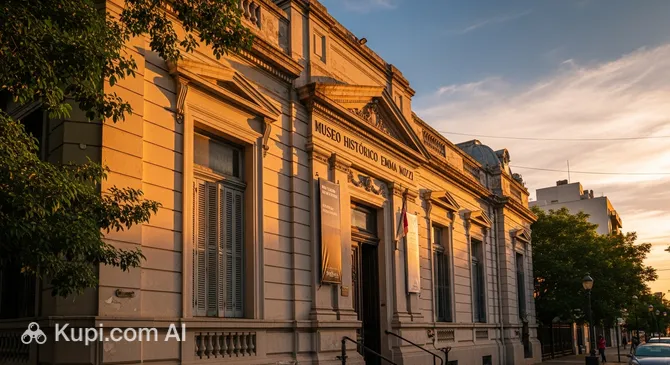
Emma Nozzi Historical Museum
Emma Nozzi Historical Museum. Иллюстрация. Источник: Kupi.com AI

Founded in 1951, the museum is now a key keeper of memory regarding life on the country's southern frontier. One of the complex's most remarkable features is the "Maragato cave" — an authentic dwelling carved directly into the rock by the first settlers in the 18th century. The museum brings together three unique structures: Casa del Banco, Casa Cagliero, and La Carlota, each holding a piece of Patagonia's settlement history.

Inside, visitors will find a rich collection of daily life objects from the 19th and early 20th centuries: from antique furniture and weapons to rare archaeological finds and archival photographs. The Emma Nozzi Historical Museum is not just an exhibition of things, but a true journey through time, allowing one to understand how the character of the inhabitants of this harsh yet beautiful land was formed.

Contacts

To clarify current information before your visit or to organize a group tour, you can use the following contact details:

How to contactContact
AddressJ. J. Biedma 64, B8504 Carmen de Patagones, Provincia de Buenos Aires, Аргентина
Phone+54 2920 46-4291
Websiteemmanozzi.org

What to Do

A visit to the museum offers a deep dive into the daily life of past centuries. You can explore exhibitions divided into five historical stages, which clearly show the region's evolution: from the first settlements in 1779 to the city's development in the 20th century. Special attention should be paid to La Carlota house, where colonial-style interiors have been recreated — it feels as if the owners have just stepped out of the room, leaving period household items on the tables.

Be sure to look into the courtyard to see the famous cave in the rock. This is a rare opportunity to see for yourself the harsh conditions in which the first "Maragatos" (residents of Patagones) lived. For those interested in details, the museum provides access to an extensive photo library and archive containing documents and old newspapers that recount the most significant events of the country's south.

Since the museum is located right by the river, after exploring the halls, it's pleasant to walk along the embankment or book a tour of the historical center, often organized by the museum staff. Thanks to free guides (available upon request), history comes to life in detail: you will learn about the origin of local traditions and see the city through the eyes of those who built it hundreds of years ago. It is an ideal place for a family visit and for taking atmospheric photos against the backdrop of old facades.

Getting There

Finding the museum is easy: it is located at J. J. Biedma 64, right across from the boat pier in the picturesque historical district of the old port. If you are traveling from Buenos Aires, it is most convenient to use the comfortable intercity buses from Plusmar or Andesmar; the journey to the Patagones terminal will take between 12 and 15 hours.

For those in the neighboring city of Viedma, the journey will be short: a taxi ride across the bridge over the Rio Negro or a local bus will take about 10 minutes. Also, small boats run between the cities, which will add pleasant river views to your trip.

Once in the center of Carmen de Patagones, the museum is an easy 5–10 minute walk away. The area is very pedestrian-friendly, and for those traveling by car, there is usually enough parking nearby. The narrow, cobblestone streets invite leisurely exploration of the architecture on your way to the main exhibition house.

Ближайший город: Carmen de Patagones

History & Facts

The history of this place began on July 14, 1951, when the museum was founded on the initiative of Mayor Carlos Augusto Tessari and with the support of local residents, originally bearing the name of Francisco de Viedma — the founder of the fort in these lands. The complex received its current name only in 1991 in honor of Emma Nozzi, an outstanding director who dedicated over 40 years to preserving the region's cultural heritage.

The building that houses the main part of the collection today — Casa del Banco — is an architectural monument. Over the years, it has housed a salting plant that played a key role in the 19th-century economy, religious missions, and even the first bank branch in Patagones. The museum's rooms literally "breathe" history, having survived even a massive flood at the end of the 19th century.

The museum's uniqueness is emphasized by its expansion in 2009 with the inclusion of Casa Cagliero (Cagliero House), the former residence of the Vicariate of Patagonia. Today, the museum's archive holds priceless documents from the period 1854 to 1973, allowing researchers and tourists to peek into the past of Argentina's southern territories and see how life developed on the boundary between civilization and the wilderness.

Time Needed

To leisurely explore all three buildings of the museum complex, look into the famous cave, and get acquainted with the main archival documents, it usually takes 1 to 2 hours. This is enough time to immerse yourself in the atmosphere of the colonial era and appreciate the variety of the collection.

If you plan to use a guide's services or are seriously interested in historical documents and old photographs in the library, you should set aside half a day for your visit. Fascinating stories about the life of the "Maragatos" — the town's original inhabitants — can significantly extend your stay within the museum walls.

Working Hours

The museum usually welcomes visitors on weekdays: from 10:00 to 12:00 in the morning and from 15:00 to 17:00 in the afternoon. Please note that the institution is most often closed to visitors on Saturdays and Sundays.

During the summer holiday period (from mid-February to December), the schedule may change: during this time, opening hours are often extended, and the museum opens its doors even on weekends in the evening. To ensure your visit goes as planned, it is recommended to check the current schedule in advance on the official website or Facebook page.

DayWorking hours
понедельник10:00–12:00, 15:00–17:00
вторник10:00–12:00, 15:00–17:00
среда10:00–12:00, 15:00–17:00
четверг10:00–12:00, 15:00–17:00
пятница10:00–12:00, 15:00–17:00
субботаЗакрыто
воскресеньеЗакрыто

Nearby

The surroundings of the historical port of Carmen de Patagones are a true treasure trove for those who appreciate atmospheric architecture and quiet walks by the water. Exploring the neighboring attractions will allow you to better feel the spirit of this unique southern city.

NameDistance
Molina Beer Bar0.1 km
Pucará Fountain0.4 km
Achavil0.4 km
Roma Beer Empire0.5 km
Verona Cocina & Café0.5 km
Berlin Beer Bar0.7 km
San Marzano Pizzeria Napoletana0.8 km

Reached the end of the page?

That means the route is fully explored