Support

Burketown

About

Burketown is a remote and colorful town located on the vast plains of the "Gulf Country" in the state of Queensland. This is a place where the red dust of the outback meets the waters of the Gulf of Carpentaria, creating a unique atmosphere on the edge of civilization. A trip here is a chance to see the true, wild side of an amazing continent like Australia.

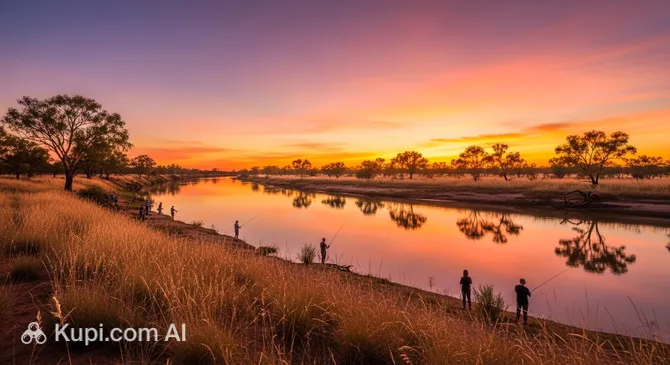
Burketown. Illustration.
Source: Kupi.com AI

Despite its modest size and population of fewer than 300 people, the town plays an important role in the region's life. The history of Burketown, founded back in 1865, makes it one of the oldest settlements in the north, preserving the spirit of the pioneers. The climate here is tropical savanna, so when planning a trip, it is important to consider the wet season, when roads can be difficult to traverse.

For tourists, Burketown has prepared several truly unique experiences. First, it proudly bears the title of "Barramundi Capital of the World," attracting anglers with the dream of a trophy catch. Secondly, it is here that you can observe a very rare meteorological phenomenon — the "Morning Glory Cloud." These giant roll-shaped clouds appear in the sky from September to November, gathering glider pilots from all over the world.

A visit to Burketown will give you an unforgettable sense of freedom and harmony with nature. It is an ideal destination for those seeking adventure far from noisy metropolises and wanting to enjoy incredible sunsets over the savanna.

Weather Overview

The climate in this region is defined by tropical conditions with a clear division into seasons. Expect a hot summer with frequent rains and warm, absolutely dry winters, typical for North Queensland.

The hottest period occurs in December and January, when the average temperature is around 30°C, and the thermometer often rises above 34°C. This is also the time of the wet season: for example, up to 19 rainy days are recorded in January, so travel can be complicated by washed-out roads.

The most comfortable weather in Burketown is established from June to August. In these months, the average temperature stays at a pleasant 21-23°C, and nights become cool (around 17°C). Notably, from June to September, the rains almost completely stop, and the number of days with precipitation drops to zero, making this period ideal for exploring the surroundings.

Average monthly temperature

Average monthly precipitation

Interesting Facts

In addition to its main attractions, Burketown holds many fascinating secrets and historical details that make it a truly unique place on the map. This remote corner, like all of Australia, is full of contrasts and amazing stories of survival.

  • The town's hot heart. One of the most unusual man-made attractions is the old artesian bore, drilled back in 1897. Water bursts from the depths of the earth at a temperature of about 68°C. Over more than a century, mineral salts have formed bizarre deposits around the source, and the cooling water has formed wetlands that have become home to many birds.

  • The "Gulf Fever" tragedy. In 1866, just a year after its founding, Burketown almost became a ghost town. An epidemic of an unknown disease (presumably typhoid), brought by the ship "Margaret and Mary," took the lives of most of the first settlers — about 100 people died. The town was practically evacuated and for many years had a bad reputation before being reborn again.

  • A name without a visit. The town is named after the famous explorer Robert O'Hara Burke, leader of the tragic Burke and Wills expedition. The irony is that Burke himself never set foot on the land where the houses now stand. The name was given to the river and the future settlement by another traveler, William Landsborough, who arrived in the region searching for Burke's missing party.

How to Get There

A trip to this remote corner of "Gulf Country" requires advance planning, as Burketown is located far from major tourist highways. There is no direct international connection here, so the route is usually built with transfers in major cities in the state of Queensland. You can find out more about how to get to Burketown to prepare in advance for the specifics of outback logistics.

The fastest and most reliable way to get to the town is by air. Burketown has a small regional airport that accepts flights from local airlines. Most often, tourists fly here from Cairns or Mount Isa. A flight over the endless expanses of savanna and winding rivers is an exciting sight in itself. It is worth considering that flights are operated on small planes, and the schedule may depend on weather conditions.

For those who prefer land transport, a trip to Burketown will be a real off-road adventure. The town is located on the famous Savannah Way, connecting Cairns and Broome. Roads in this region are often unpaved, so it is highly recommended to use a reliable four-wheel drive (4WD) vehicle for the journey. There is no railway station in the town itself; the nearest famous railway, where the "Gulflander" train runs, is in neighboring Normanton, but it serves more of a tourist function.

Main Attractions

Despite its modest size, Burketown and its surroundings offer tourists a unique set of experiences, combining wild nature, ancient culture, and the history of the continent's exploration. There are no glossy tourist centers here, but there is an authentic atmosphere of the Australian outback.

Leichhardt Falls is one of the most picturesque natural attractions in the region, located about 70 km from the town. Unlike classic high waterfalls, this cascade on the Leichhardt River is interesting for its stepped structure and wide rocky bed. During the wet season, a powerful torrent rages here, while in the dry season, the water recedes, revealing ancient rocks and creating calm pools. Tourists should be extremely careful: swimming here is prohibited due to saltwater crocodiles, which can often be seen basking on the rocks.

Yagurli Tours provide a rare opportunity to see the land through the eyes of its traditional owners — the Gangalidda and Garawa peoples. These are not just excursions, but a deep immersion into traditions and legends. The "Yaliya’s Stories" program — stargazing in one of the darkest spots on the planet — is particularly popular. Guides tell stories about the constellations through the lens of Aboriginal mythology, using modern telescopes to demonstrate the beauties of the southern sky.

The Saltpans surrounding the town create a truly alien landscape. These vast, absolutely flat spaces are covered with a crust of salt and clay that sparkles in the sun during the dry season. This is an ideal place for photographers wishing to capture the harsh beauty of the north. History buffs should also visit the ruins of the Boiling Down Works, located nearby. The rusting remains of 19th-century machinery serve as a silent reminder of the region's early industrial history.

The Albert River and the town wharf are the heart of local life and a magnet for anglers from all over the world. This is where you can try to catch the legendary barramundi, thanks to which Burketown received its unofficial title of fishing capital. Even if you are not into fishing, a walk to the river at sunset will reward you with stunning views of the calm water and mangroves painted in the golden tones of the setting sun.

Local Cuisine

Burketown's gastronomic scene is modest but has a vibrant character inherent to the remote corners of "Gulf Country." You won't find fine dining restaurants or trendy coffee shops here; the food culture in the town is built around honest, hearty meals and the freshest gifts of local nature. The region's main culinary treasure is fish, and many tourists provide their own dinner by casting a line into the Albert River.

The undisputed king of the local table is barramundi. Trying this legendary fish is a must-do for any guest. In local establishments, it is usually served in two variations: battered and fried with chips (classic fish and chips) or grilled with lemon, which better reveals the delicate flavor of the white meat. It is also worth paying attention to mud crabs and giant prawns caught in the Gulf of Carpentaria — their taste is considered among the best on the continent.

The center of social life and the main place to grab a bite remains the traditional Australian pub. A relaxed atmosphere reigns here, and the menu consists of classic outback dishes: huge steaks from local beef, meat pies, and hearty burgers "with the lot," which often include an egg, bacon, and beetroot. This is typical food for travelers who need to restore their strength after a long journey through the savanna.

As for drinks, in Queensland's hot climate, the locals' choice is obvious. The most popular drink is ice-cold lager, especially the varieties beloved in the north, such as "Great Northern" or "XXXX Gold." Non-alcoholic alternatives include cool lemonades and large portions of iced water, vital in the tropical heat. In the evenings, tourists and locals often gather for a barbecue to grill the day's catch and discuss the latest news under the open sky.

Travel Tips

A trip to Burketown is a true immersion into the wild nature of Queensland, requiring special preparation due to the location's remoteness from civilization. To ensure your journey to this land of red earth and salty winds goes smoothly and safely, we have compiled a list of important recommendations to help avoid surprises in the outback.

  1. Clothing and gear. Given the hot tropical climate, prefer loose clothing made of natural breathable fabrics (cotton, linen) in light colors. Be sure to take a wide-brimmed hat, quality sunglasses, and a powerful insect repellent — mosquitoes and flies here can be persistent. For walks in the bush, closed and sturdy footwear is required to protect against thorns and snakes.
  2. Transport. There is no public transport, metro, or usual taxi services like Uber in Burketown. The only reliable way to get around is a rental car, and a four-wheel drive (4WD) SUV is highly recommended. Many roads in the area are unpaved and require a vehicle with high ground clearance. Plan your rental in advance in major cities (e.g., Mount Isa or Cairns) from where you will begin your journey.
  3. Finances. The official currency is the Australian dollar (AUD). Although the local pub and gas station may accept cards, terminals rely on satellite links, which sometimes fail. Always have a supply of cash with you, sufficient to pay for fuel and food for several days. There are very few ATMs in town, and relying only on them is risky.
  4. Health and safety. The main safety rule in the region is "Be Crocwise" (be careful with crocodiles). Never go near the water's edge in rivers and do not swim in unverified places — dangerous estuarine crocodiles live here. There is a small clinic in town for primary care, but serious cases require evacuation by air, so be sure to have insurance.
  5. Communication. The main language is English. Be prepared for the fact that mobile network coverage in remote areas is predominantly provided by Telstra; SIM cards from other providers may simply not work here. Wi-Fi is available in some accommodations, but the speed is often low. Download offline maps of the area to your phone in advance.
  6. Local etiquette. In the outback, it is customary to greet everyone you meet — a simple nod or wave of the hand (especially to drivers on the highway) will suffice. This is a sign of friendliness and a signal that you are okay. Respect the culture of the Indigenous peoples (Gangalidda and Garawa): if you want to visit territories outside general tourist routes, check if a special permit is required.
  7. What to avoid. Categorically avoid driving at dusk and dawn. At this time, kangaroos and cattle come out onto the roads, creating a high risk of accidents. Also, you should not go on trips outside the town without a supply of drinking water (at least 5-10 liters) and a fuel canister — distances between gas stations can be enormous.
  8. Additional tip. If you plan to visit during the "dry season" (May to October), book accommodation several months in advance. Despite the town's tiny size, during the fishing season and the appearance of the "Morning Glory" clouds, places in caravan parks and motels run out very quickly.

Following these simple rules will allow you to focus on the main thing — the incredible beauty of the Australian north. Burketown is ready to give you a unique experience if you show it respect and foresight.

Entertainment & Nightlife

Nightlife in Burketown is fundamentally different from the usual rhythm of big cities. You won't find neon signs, noisy nightclubs, or bar districts open until dawn here. Evening leisure in this remote corner of Queensland is primarily about soulful communication, the incredible starry sky, and an atmosphere of true Australian mateship. Life slows down as the sun sets, giving way to the sounds of wildlife and quiet conversations on verandas.

The center of all social activity in the evening is the Burketown Pub, located in the historical hotel building on the main street (Musgrave Street). This is a classic outback establishment that serves as a community living room for the entire town. Local residents, farmers, fishermen, and travelers gather here to exchange news over a glass of ice-cold beer. The atmosphere is as democratic and friendly as possible: there is no dress code (shorts and flip-flops are perfectly appropriate), and newcomers are met with genuine interest.

For those looking for a quieter setting and a delicious dinner, the Morning Glory Restaurant, located at the Savannah Lodge, is an excellent choice. This is one of the few places in town where you can enjoy a full meal in a pleasant environment. The menu often includes dishes featuring fresh barramundi, and the open-air dining area allows you to enjoy the cool of a tropical evening. It's best to book a table in advance, as the establishment is popular with tourists.

A special kind of "nightlife" in Burketown is stargazing. Thanks to its distance from major cities and the absence of light pollution, the sky here looks simply fantastic. The Milky Way is visible to the naked eye, and the constellations of the Southern Hemisphere shine particularly brightly. Many tourists head to the town wharf or the outskirts of town (using caution) to simply admire the cosmos. Night fishing from the wharf is also popular, but it's important to remember the presence of crocodiles and remain vigilant.

Practical tips for evening leisure:

  • Opening hours: Kitchens in local establishments close early, usually around 8:00–8:30 PM. If you plan to have dinner, do not leave it until late in the evening.
  • Safety: Burketown is a safe place in terms of crime, but walking in the dark requires caution because of wild animals and snakes. Always take a flashlight with you.
  • Transport: There are no taxis in town. Since the settlement is very compact, most places can be reached on foot, but if you are staying at a campground outside the town limits, you will need a car. Remember: drink driving is strictly punished by law, and kangaroos often come out onto the roads at night.

Speaking of daytime entertainment, it is educational and nature-based. It's worth stopping by the Burketown Visitor Centre, located in the restored post office building, to learn more about the region's heritage. Historical walks through the town to see preserved buildings from the early settlement era and relaxing in small park areas by the water are also of interest.

Parks & Museums

In a settlement as small and remote as Burketown, one should not look for classic city parks with manicured lawns or massive museum complexes. Here, the "park" is the wild nature of the Australian outback itself, and the "museum" consists of historical buildings and sacred sites scattered across the red earth. The town's cultural and natural heritage is inextricably linked with the history of the continent's exploration and the traditions of its Indigenous peoples.

The main natural recreation area for locals and tourists is the banks of the Albert River. This picturesque spot replaces a city park: here you can have a picnic in the shade of eucalyptus trees, go birdwatching, or simply enjoy the silence by the water. Another unique natural site is the area around the Artesian Bore (Burketown Bore). Hot water gushing from underground has formed a small oasis and a system of wetlands around itself, attracting many species of birds, including brolgas and black swans, turning this place into a living garden in the middle of the dry savanna.

The role of the main cultural center is fulfilled by the Burketown Visitor Centre. It is located in the old post office building, which is a historical monument in its own right. Inside is a small but rich exhibition telling the dramatic history of the town's founding, the tragic Burke and Wills expedition, and the phenomenon of the "Morning Glory" clouds. Here you can also learn about the rich culture of the local Gangalidda and Garawa Aboriginal peoples by studying information stands and artifacts.

Among the historical and architectural attractions, a special place is occupied by the ruins of the old Boiling Down Works and the famous Landsborough Tree. This tree, marked by explorer William Landsborough in 1861 during the search for the missing Burke expedition, serves as a living monument to the era of great geographical discoveries. The Old Post Office building itself, built in 1887 after the first structure was destroyed by a cyclone, is a fine example of colonial architecture adapted to the tropics.

For those looking for a truly unique experience, we suggest heading to the saltpans at sunset. At this time, the endless white plains surrounding the town turn into a giant natural gallery where light plays with the texture of salt and clay, creating surreal landscapes worthy of an abstract artist's brush.

Getting Around

It is important to note right away that Burketown is a tiny settlement in a remote area, so the usual system of public transport does not exist here. There is no metro, trams, trolleys, or regular city buses in the town. The infrastructure is entirely designed for local residents with personal cars and independent travelers.

Given the town's compact size, the easiest way to get around its residential part is on foot. The main social facilities — the pub, general store, visitor center, and administrative buildings — are within walking distance of each other. A walk from one end of the settlement to the other along the main street will take no more than 15–20 minutes, making walking the most accessible way to explore the center.

The main and practically only means of transport for exploring the surroundings remains the car. It is better to rent a car in advance at major transport hubs (for example, in Mount Isa or Cairns), as there are no large rental chain services in Burketown itself. It is highly recommended to use a four-wheel drive (4WD) SUV, as leaving the few paved streets often means driving on dirt roads or rugged terrain.

Alternatives familiar to a city dweller, such as taxis or car-sharing and ride-hailing apps (Uber and similar), do not work here. It is impossible to catch a car on the street, and there are no specialized transport services. If you do not have your own transport, organized tours from local guides, which include a transfer in the price, will be the only option to reach remote attractions.

Since there is no public transport, tourists do not need to worry about buying travel tickets or validating cards. Your transport costs will consist exclusively of car rental and fuel expenses. It is worth considering that petrol and diesel prices in this part of the region are significantly higher than average, and the only gas station may have limited opening hours, so always keep an eye on the fuel level in the tank.

Accommodation

Accommodation options in Burketown are limited but possess a special charm characteristic of remote corners of Australia. You won't find five-star hotel chains or high-rise hotel complexes here. The main stock is represented by cozy motels, cabins, caravan parks, and traditional pub rooms. Housing here is focused on practicality and comfort after a long day in nature, offering a true outback atmosphere.

Since the town itself is very compact, the concept of "districts" is relative here. Most accommodation options are concentrated in the center of the settlement, within walking distance of the main street, the store, and administrative buildings. This is very convenient for tourists without personal transport. Another set of options is geared toward road travelers and camping enthusiasts, offering sites closer to nature but still within the town limits.

Among the most famous places, Savannah Lodge is worth highlighting. This establishment is often called an "oasis in the desert" thanks to its well-kept tropical garden and a swimming pool, which is a real lifesaver in the hot climate. Guests are offered comfortable individual cabins, and the popular Poppy Joe’s bar operates on-site. Another landmark is the historic Burketown Pub, which offers classic hotel-style accommodation. This is an excellent choice for those who want to immerse themselves in the town's social life, as the pub is the main meeting place for locals.

For travelers with motorhomes or tents, the town caravan park serves as the main stopping point. In addition to camping sites, simple stationary cabins with all amenities are often available here, making it a versatile option for budget and mid-range segments.

Important booking tip: The town's housing stock is small, and demand in the high season (May to August) and especially during the appearance of the "Morning Glory" clouds (September–November) exceeds supply. It is highly recommended to book accommodation several months before your trip. Many properties in this region still prefer direct booking by phone or email rather than through large online aggregators, so don't hesitate to contact the owners directly.

The price range varies from budget (camping) to mid-range and above average (comfortable cabins). It is worth considering that due to the remoteness of the region, prices may be slightly higher than for a similar level of comfort in major cities on the coast.

Nearby Cities

For those who want to explore the surrounding area, Burketown serves as an excellent starting point for day trips to several interesting nearby locations. Given the vast distances of the Australian north, the concept of "near" is quite relative here, but a trip to neighboring areas will allow for a deeper understanding of life in this harsh land.

The most accessible option is the settlement of Doomadgee, located about an hour's drive away. This is an Indigenous community where travelers often stop for excellent fishing on the Nicholson River and to learn about Aboriginal culture. The road here can be difficult during the wet season, so it is worth checking weather conditions in advance.

The main regional center is Mount Isa, which locals call the "oasis of the outback." Although the journey there is not short, the city attracts tourists with its rich mining history: here you can descend into a real mine and visit a unique underground hospital. This is a place where industrial power meets the wild nature of the desert.

Also worth noting is Cloncurry, known as the birthplace of the Royal Flying Doctor Service. History buffs will find interesting museums and monuments to pioneers here, telling of the heroic past of these lands' development.

CityPopulationDistance
Doomadgee1 30079 km
Gregory Downs105 km
Augustus Downs118 km
Karumba531141 km
Normanton1 100162 km

These nearby destinations provide an insight into the region's diverse culture and landscapes.

Shopping & Souvenirs

Shopping

Shopping in Burketown has its own unique characteristics, dictated by its remoteness and the settlement's modest size. You won't find the usual shopping malls, famous brand boutiques, or long shopping alleys here. Purchases in this corner of "Gulf Country" are predominantly utilitarian: travelers buy fuel, food, fishing tackle, and essential goods here. Nevertheless, even in such a small town, you can find interesting local products that will serve as a great reminder of a trip to wild Australia.

All commercial life in the town is concentrated along the main artery — Musgrave Street. This is where the key points of attraction for tourists and locals are located. Due to Burketown's compactness, all shops are within walking distance of each other, eliminating the need to find transport for a shopping trip.

There are no large shopping complexes or malls in Burketown. The role of the main commercial hub is performed by the Burketown Post Office & General Store. This is a classic example of an outback store that sells literally everything: from fresh bread, canned goods, and soft drinks to spare parts, camping equipment, and fishing lures. The assortment is selected to cover the basic needs of self-sufficient travelers.

Standard urban markets with stalls are not held here. However, occasionally as part of local festivals or community events (for example, during fishing competitions), small fairs may be organized where locals sell homemade baked goods or crafts. These are social events rather than regular shopping venues.

If you are looking for memorable gifts, be sure to stop by the Burketown Visitor Centre. This is the best place to buy souvenirs. Here you can find:

  • Unique works by local Indigenous artists reflecting a spiritual connection to the land.
  • Books on the region's history, flora, and fauna.
  • T-shirts, caps, and magnets with symbols of the famous "Morning Glory" cloud or trophy barramundi.
  • Postcards with views of the harsh landscapes of the saltpans.

When planning your purchases, keep the specific operating hours in mind. Shops are usually open from early morning (around 7:00–8:00 AM) and close quite early, often around 5:00 PM. On Saturday, the working day may be shortened until noon, and many spots are closed entirely on Sunday. As for payment, most places accept bank cards, but there are satellite communication outages in the region. Therefore, it is highly recommended to always have a supply of cash with you, sufficient to pay for fuel and food.

The tax refund system (Tax Free or TRS) operating in the country's major international airports is theoretically applicable to any purchases in Australia of 300 AUD or more on a single receipt. However, in Burketown's conditions, where there are no expensive electronics boutiques or jewelry stores, it would be difficult for a tourist to take advantage of this opportunity.
Reached the end of the page?

That means the route is fully explored