Support

Avalon Airport

About the Airport

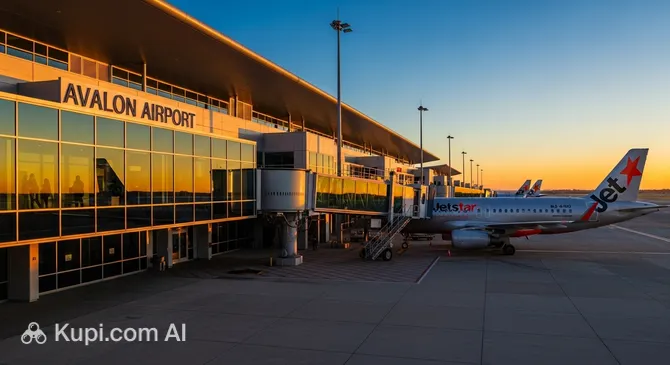
Avalon Airport. Source: Kupi.com Binoculars

Avalon Airport is a "secret weapon" for those wishing to avoid the hustle and bustle of Melbourne's main airport. Located between Australia's cultural capital and the coastal city of Geelong, it offers a completely different experience: there are no endless corridors, and the walk from the car park to the check-in counter takes just minutes. It is the ideal starting point for travellers planning to head straight on a road trip along the famous Great Ocean Road, bypassing city traffic. Avalon is renowned for its simplicity and efficiency, serving primarily low-cost airlines and hosting the spectacular Australian International Airshow.

IATA Code AVV
ICAO Code YMAV
City Melbourne (Avalon)
Distance to Centre 55 km
Status International
Passengers per Year About 900,000
Schedule See official website

Key Advantages and Features of Avalon Airport:

Speed and Convenience. Avalon is designed for maximum simplicity. There are no aerobridges here — passengers walk to the aircraft across the tarmac, which significantly speeds up boarding and disembarking. Thanks to the compact terminal, security screening and baggage claim take much less time than in major hubs.

Affordable Parking. One of the key benefits is the car park, located literally a few steps from the terminal entrance. Rates here are generally noticeably lower than at the main Tullamarine airport, making Avalon a popular choice for locals.

Gateway to Adventure. The airport's location makes it strategically convenient for those heading to the surf beaches of Torquay or the Great Ocean Road. You don't need to cross the entire metropolis: you land already on the right side of the bay, saving time and stress.

Aviation Heritage. Every two years, Avalon transforms into a centre of global aviation, hosting the Australian International Airshow. This is the largest airshow in the Southern Hemisphere, attracting hundreds of thousands of spectators and dozens of military and civil aircraft from around the world.

Contact Information

  • Official Website: For the most up-to-date information on flights, services, and regulations, visit the airport's official website: www.avalonairport.com.au.
  • Helpdesk Phone: For general enquiries, you can call: +61 3 5227 9100.
  • Airport Address: 80 Beach Rd, Lara VIC 3212, Australia.
  • Email: For most enquiries, it is recommended to use the feedback form on the official website, which ensures faster processing of your request.
  • Social Media: Follow news and updates on Avalon Airport's official pages on Facebook and Instagram.
  • Lost Luggage Information: In case of lost luggage during a flight, please contact your airline directly. If you have lost personal items within the terminal, contact the airport's lost property service via the contact form on the website.
  • Passenger Support Contacts: For assistance and advice, use the main helpdesk phone number or the feedback form on the official airport website.

How to Get to the Airport

Avalon Airport (AVV) is located approximately 55 kilometres southwest of the Central Business District of Melbourne, making it the second most significant airport serving the city. It is an important transport hub, especially for budget airlines, and offers several convenient ways to get to and from the city.

The most popular and economical way to get from Avalon Airport to the centre of Melbourne is to use the SkyBus Avalon City Express. Buses run between the airport and Southern Cross Station in the city centre, and their schedule is conveniently coordinated with flight arrivals and departures. The journey takes about 70 minutes depending on traffic conditions, and an adult ticket costs approximately 25 Australian Dollars. This is a reliable and proven option for most travellers.

For those who value comfort, travel with a lot of luggage, or are in a group, the ideal choice would be a taxi or ridesharing service (such as Uber). A car journey to the centre of Melbourne will take approximately 45–60 minutes excluding traffic jams. This is the fastest, but also the most expensive way to reach your destination — the estimated cost of the trip will be 100–130 Australian Dollars. Taxi ranks and rideshare pick-up zones are located right outside the terminal exit.

If you plan to explore the famous Great Ocean Road or other picturesque corners of Victoria, the best solution is car rental. Avalon Airport features counters of leading rental companies where you can find an option for any budget. Prices depend on the car class and rental period. The airport is conveniently located next to the major Princes Freeway (M1), allowing you to easily and quickly start your road trip around Australia. It is recommended to book a car in advance, especially during peak season.

For travellers arriving at the airport in their own vehicle, convenient parking is provided. Both short-term and long-term options are available at various prices. To save money, it is recommended to book a parking space in advance online on the official airport website — this is often significantly cheaper than paying on the spot.

Terminals and Map

Avalon Airport (AVV) is distinguished by its compactness and simplicity, making it particularly convenient for travellers. The main feature of the airport is its single passenger terminal, which serves both domestic and international flights. This structure completely eliminates the need to transfer between buildings and makes navigation intuitively clear even for those visiting for the first time.

The terminal layout is extremely logical. All main zones — check-in, security screening, boarding gates, and baggage claim — are located on one level, which simplifies movement. Upon entering the building, you will immediately see the check-in counters. Departure and arrival zones are located in the same building but are functionally separated for passenger convenience. The international sector is located here as well, and moving to it does not take much time.

Thanks to its small size and lower passenger flow compared to major hubs, completing all pre-flight formalities at Avalon is usually quick and simple. For domestic flights, it is recommended to arrive at the airport 60–90 minutes before departure. For international flights, allow the standard 2–3 hours, although queues for check-in and passport control here are typically much shorter than at large airports.

The main advice for navigating Avalon Airport is not to worry; getting lost here is practically impossible. Signs are clear and located everywhere. The compact arrangement of all services allows you to orient yourself quickly and reach the necessary gate without haste. It is an ideal choice for those who value their time and prefer stress-free travel.

Airport History

The history of Avalon Airport (AVV) is a fascinating journey from a strategic military facility to an important passenger hub. The airport was founded in 1952 and initially served as a manufacturing base for a government aircraft construction company. It was here that English Electric Canberra jet bombers were assembled for the Royal Australian Air Force, making it a key facility for the country's defence industry.

A turning point in the airport's history came in 1992, when Avalon became the permanent home of the Australian International Airshow. This grand event, held every two years, attracts hundreds of thousands of visitors and showcases the latest achievements in civil and military aviation, strengthening Avalon's reputation on the world stage.

In the early 2000s, a new era began — the era of commercial transport. A key event was the launch of regular flights by the low-cost airline Jetstar Airways in 2004. This decision turned Avalon into a popular and affordable alternative to the main airport of Melbourne, especially for tourists heading towards the famous Great Ocean Road.

Significant modernisation occurred in 2018 with the opening of a new international terminal. The first international carrier was AirAsia X, linking Victoria directly with Kuala Lumpur and other Asian destinations. This step officially made Avalon Melbourne's second international airport, opening new opportunities for travellers and strengthening its role in Australia's transport system.

Services and Amenities

Avalon Airport (AVV) offers passengers all necessary services for a comfortable wait for their flight. Despite its compact size, the terminal is well-equipped and designed for traveller convenience. Here you will find several cafes and dining outlets where you can have a snack, drink coffee, or have a full meal before departure. In the shops, you can purchase essentials, press, souvenirs, and gifts.

For those who need to stay connected, free Wi-Fi is available throughout the terminal. Special zones and power outlets for charging electronic devices are also provided. Financial services are represented by ATMs and currency exchange points, allowing you to settle monetary matters right at the airport.

The airport cares for passengers with special needs. For travellers with children, mother and child rooms are equipped. Passengers with limited mobility can use ramps, specially equipped toilets, and request assistance services, which are recommended to be booked in advance through the airline. In case of feeling unwell, a first aid station operates at the airport.

Although there are no dedicated VIP lounges or business centres at Avalon Airport, the general waiting areas are quite comfortable. If you require accommodation, there are several hotels located in close proximity to the airport, which can be quickly reached by taxi or shuttle, making it convenient for transit passengers or those with an early departure.

Where to Eat

Avalon Airport (AVV), being a compact and convenient transport hub, offers passengers several options for a snack or a full meal. All catering establishments are concentrated in the main departure zone, after passing security control (airside), allowing you to spend time comfortably while waiting for your flight.

The main choice centres around several key establishments. Here you will find bistro-style cafes where you can order classic Australian dishes: fresh sandwiches, salads, pastries, and, of course, quality coffee, which is an integral part of the local culture. For those preferring a more substantial hot meal, an Asian cuisine outlet operates, offering noodles and rice with various toppings — an excellent option for a quick and tasty lunch. There is also a lounge area in the departure hall where you can relax with a refreshing beverage before your flight.

Passengers with special dietary needs should verify the availability of suitable dishes directly with the staff at the establishments. typically, vegetarian options are available (for example, meat-free salads or sandwiches), and some cafes may offer gluten-free bread upon request. The selection of vegan or Halal dishes may be limited, so it is recommended to check information on site.

The price range in Avalon Airport establishments corresponds to the average price level in Australian airports — be prepared that the cost of food and drinks will be higher than in the city. The opening hours of all cafes and outlets are strictly tied to the flight schedule: they open well before the first departure and close after the last plane departs, ensuring that no passenger is left hungry.

Recommendations:

  • For a quick snack, a coffee with a croissant or a ready-made sandwich from a cafe is perfect.
  • For a full lunch, it is worth paying attention to hot Asian dishes or ordering a classic Australian bistro meal, if available on the menu.

Travel Tips

To ensure your journey through Avalon Airport goes as smoothly as possible, make use of these tips. Avalon (AVV) is the second airport of Melbourne, serving predominantly domestic flights, which makes it more compact and less congested compared to the main international airport.

Arrival Time and Check-in. For domestic flights, it is recommended to arrive at the airport 1.5–2 hours before departure. This time is sufficient to drop off luggage and pass security control without rushing. To save time, complete online check-in and save the boarding pass on your phone. Due to the small size of the airport, security queues here are usually shorter than in major hubs.

Seat Selection. If you want to enjoy views during take-off and landing, choose a window seat. For those who value freedom of movement and the ability to stretch their legs, an aisle seat is better. On popular flights, the best seats are taken quickly, so it is worth selecting them in advance during online check-in.

Hand Luggage. Strict rules apply in Australia regarding the carriage of liquids, aerosols, and gels. All containers must be no more than 100 ml in volume and packed in a single transparent resealable bag. Sharp objects are prohibited in hand luggage. Electronic devices with lithium batteries (phones, laptops) should be carried in hand luggage, not in checked baggage.

Transit Passengers. Avalon Airport is rarely used for complex connecting flights. Most flights are direct. If you do have a transfer planned, check with the airline whether you need to collect and re-check your luggage. Moving between gates at Avalon is very easy and quick thanks to its compactness.

Customs Control. Upon entering Australia, some of the strictest biosecurity rules in the world apply. You must declare all food products, plants, seeds, wooden items, and other objects of animal or plant origin. To avoid large fines, if in the slightest doubt, declare the items. The motto is simple: "If in doubt, declare it".

Saving Time and Money. Book parking and city transfers online in advance — this is often cheaper. Bring an empty reusable water bottle to fill after passing security control. Prices for food and drinks at the airport are traditionally higher, so you can bring light snacks with you (non-liquid).

In Case of Flight Delay. First of all, contact your airline representative for the latest information. Monitor updates on the departure boards and in the airline's app. Avalon Airport has cafes, shops, free Wi-Fi, and charging outlets to help pass the time while waiting.

Reached the end of the page?

That means the route is fully explored