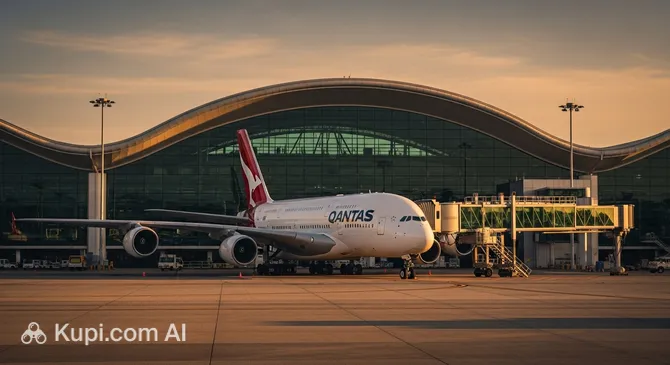
Source: Kupi.com AI
| Characteristic | Value |
|---|---|
| IATA code | MEL |
| ICAO code | YMML |
| City | Melbourne |
| Country | Australia |
| Time zone | Australia/Melbourne |
| Popular airlines | Air New Zealand, Qantas, Virgin Australia, Emirates, Jetstar Airways |
| Schedule | Online timetable |
| Characteristic | Value |
|---|---|
| IATA code | MEL |
| ICAO code | YMML |
| City | Melbourne |
| Country | Australia |
| Time zone | Australia/Melbourne |
| Popular airlines | Air New Zealand, Qantas, Virgin Australia, Emirates, Jetstar Airways |
| Schedule | Online timetable |
Tullamarine Airport (MEL), the main international hub of Melbourne, is located approximately 23 kilometers northwest of the city center. You can reach it in several ways, each offering its own advantages in terms of speed, cost, and convenience.
The most popular and balanced option is the SkyBus express bus. It operates 24/7 between the airport and Southern Cross Station in the city center, with departures every 10-15 minutes during the day. The trip takes on average 30-45 minutes depending on traffic conditions. SkyBus also offers routes to other areas of the city, such as St Kilda and Southbank, making it convenient for many tourists. Tickets can be purchased online or at kiosks at the stops.
For the most budget-conscious travelers, there are Public Transport Victoria (PTV) city buses. For example, the 901 SmartBus route connects the airport to Broadmeadows station, from where you can transfer to a train to the center. This route is significantly cheaper, but also longer — it can take up to 90 minutes. To pay for the fare, you will need a Myki card, which can be topped up at stations or in shops.
Taxis and ridesharing services (such as Uber, Didi) offer maximum comfort and will take you from door to door. This is the fastest way to get to the airport late at night or when there is no traffic; the travel time will be about 30 minutes. However, this is also the most expensive option, especially during peak hours. The airport has designated zones for picking up and dropping off taxi passengers.
If you are traveling in your own or a rented car, Tullamarine Airport provides excellent parking facilities. Various options are available: from short-term parking right next to the terminals to more budget-friendly long-term parking, from which free shuttles operate. It is recommended to book a parking space online in advance — this way you can save significantly.
When planning your trip, it is important not to confuse Tullamarine Airport (MEL) with the city's other airport — Avalon (AVV), which is located significantly further from the center and serves primarily budget airlines.
Melbourne Tullamarine Airport (MEL) is a modern and well-organized aviation hub consisting of four terminals, conveniently located within a single building complex. This structure significantly simplifies navigation and movement between them, making transfers quick and comfortable.
Each terminal has its own clear specialization, which helps passengers orient themselves easily.
The airport layout is designed for passenger convenience. Terminals T1, T2, and T3 are in the same building and flow seamlessly into one another. To move between them, you do not need to go outside — simply follow the signs inside the building. Terminal T4 is located in a separate but adjacent building and is connected to the others by covered pedestrian walkways. A walk from T3 to T4 takes about 5–10 minutes. All departure and arrival zones are clearly marked on numerous boards and signs.
The time required to complete formalities depends on the terminal and destination. For international flights from T2, it is recommended to arrive at the airport 3 hours before departure to check in, pass passport control, and security screening without rushing. For domestic flights from T1, T3, and T4, usually 1.5–2 hours is sufficient. Queues are possible during peak morning and evening hours, so it is always better to have a little extra time.
For quick navigation through Tullamarine Airport, we advise checking in advance which terminal your flight departs from. All information is duplicated on electronic boards in the halls. If you have a transfer between T4 and other terminals, allow at least 15 minutes for the transition to account for possible waiting times at security. Overall, thanks to the compact layout and clear signage system, orienting yourself at Melbourne Airport is quite simple even for those visiting for the first time.
The history of Melbourne Airport, known as Tullamarine, began in the mid-20th century when it became obvious that the old Essendon Airport could no longer cope with the growing passenger traffic and the arrival of new jet aircraft. The decision to build a new, more modern airport was made in 1959. The suburb of Tullamarine was chosen as the location, which gave it its unofficial name.
The official opening for international flights took place on July 1, 1970. This step marked a new era in aviation for the state of Victoria and all of Australia, allowing Melbourne to receive the largest passenger liners of that time. Domestic flights were moved to Tullamarine a year later, in 1971, which finally secured its status as the city's main air gateway.
Since opening, the airport has constantly developed. A key stage was privatization in 1997, after which a large-scale reconstruction and expansion program began. In subsequent years, existing terminals were modernized, new piers were built, and infrastructure was significantly expanded. One of the most important innovations was the opening of Terminal 4 in 2015, specifically designed to serve budget airlines, making air travel more accessible for many passengers.
An interesting fact: the initial airport design was forward-thinking. Architects positioned the terminals around a central multi-level car park, which ensured convenient access and left space for future expansion. This thoughtful layout allowed Tullamarine Airport to grow and adapt to the demands of the times, remaining one of Australia's most modern and convenient airports throughout its history.
Melbourne Tullamarine Airport (MEL) offers passengers a wide range of services and amenities to make their stay as comfortable as possible, regardless of the purpose of the trip.
Restaurants and Shops: Numerous restaurants, cafes, and dining venues for every taste are located in the airport terminals — from a quick snack to gourmet dishes. Travelers can enjoy coffee, try local cuisine, or relax with a beverage before their flight. Additionally, passengers have access to an extensive shopping area, including Duty Free shops, boutiques of famous brands, souvenir stalls, and travel essential stores.
Lounges and VIP Service: For those who value comfort and privacy, the airport features airline lounges as well as paid lounges accessible to all passengers. Here you can rest in silence, work, take a shower, and enjoy complimentary snacks and drinks. VIP escort services are also available.
Connectivity and Work: Free Wi-Fi is available throughout the airport, allowing you to stay connected or handle work matters. For passenger convenience, numerous charging stations for mobile devices are equipped. For business travelers, there are business centers and conference rooms equipped with everything necessary for meetings and negotiations.
Financial and Medical Services: Bank branches, currency exchange points, and ATMs are located in the terminals. In case of necessity, passengers can visit the medical center for first aid or purchase medicines at pharmacies.
Services for Families and Passengers with Special Needs: The airport is well-equipped for travelers with children: there are parents' rooms for changing and feeding, as well as play areas. For passengers with reduced mobility, a barrier-free environment has been created, and special restrooms, ramps, elevators, and escort services are provided.
Accommodation: For those with a long layover or an early flight, several hotels are located directly on the airport grounds and in the immediate vicinity, offering comfortable rooms and convenient access to the terminals.
Melbourne Tullamarine Airport (MEL) offers passengers a rich selection of venues for every taste and budget — from a quick snack on the run to a leisurely dinner before departure. Dining options are conveniently distributed across all terminals, both in the public area and after passing security control.
For a Quick Snack and Coffee. If you are short on time, numerous coffee shops, bakeries, and fast-food outlets are at your service. Melbourne is famous for its coffee culture, and the airport is no exception. Be sure to try drinks from famous local roasters to recharge your energy. Establishments such as McDonald's, Starbucks, and local cafes are located in all terminals, primarily in landside zones (before security control) and in airside food courts (after control).
Full Lunch or Dinner. For those who prefer to sit and relax before a flight, restaurants and dining venues with table service are available. For example, in the international terminal T2 and in terminal T4, you will find establishments offering modern Australian, Asian, and European cuisine. Here you can order steak, pasta, fresh salads, or seafood. Irish pubs are also popular, where you can enjoy a hearty burger in a lively atmosphere.
Dietary Preferences. Most restaurants and cafes at Melbourne Airport accommodate passengers with special dietary needs. The menus of many establishments include vegetarian, vegan, and gluten-free options. We recommend checking menus online in advance or clarifying information with staff on-site. Some establishments also offer Halal dishes.
Location and Opening Hours. The majority of cafes and eateries in the public zone (landside) open early in the morning with the first flights and operate until late evening. The largest selection of restaurants is located in the departure zones (airside) after passing passport and customs control. These establishments operate according to flight schedules, ensuring that you can always have a meal, even if you have a night flight. Prices vary from affordable in fast-food chains to mid-range and high-level in full-service restaurants.
When planning a trip through Tullamarine Airport in Melbourne, use these tips to make your journey as comfortable as possible. It is recommended to arrive at the airport at least 3 hours before departure for international flights and 1.5-2 hours for domestic ones. To avoid queues, check in for your flight online and save the boarding pass on your mobile device. This will allow you, if traveling without luggage, to head straight to security control.
When going through screening, remember the strict rules of Australia. All liquids, gels, and aerosols in carry-on luggage must be in containers of no more than 100 ml and packed in a single transparent bag. For international flights, there are also restrictions on carrying inorganic powders (e.g., salt, talc, sand) in volumes exceeding 350 grams. Check the contents of your carry-on luggage in advance to avoid delays.
If you are arriving in Melbourne from abroad, be prepared for very strict customs and biosecurity control. You are required to honestly declare all food products, plant materials (including wooden souvenirs), and items of animal origin on the Incoming Passenger Card. If in doubt, it is better to declare — fines for violating the rules are very high.
For passengers with transfers, it is important to remember: when transferring from an international flight to a domestic one, you generally need to pass passport control, collect your luggage, pass customs inspection, and re-check it for the next flight. Allow enough time for the transfer, especially during peak hours.
To save money, book your transfer to the city (for example, the SkyBus) online in advance, as tickets may be more expensive on-site. There are drinking fountains in the terminals, so you can take an empty water bottle with you and fill it after passing security control. In case of a flight delay, immediately contact your airline representative for information about your rights, including the possible provision of meals or accommodation.
Regarding seat selection on the plane, window seats when departing from or arriving in Melbourne can gift you unforgettable views of Port Phillip Bay or the city lights at night. If comfort and the ability to stand up freely are your priority, choose an aisle seat.
Have you reached the end of the page?
So the route has been studied inside and out